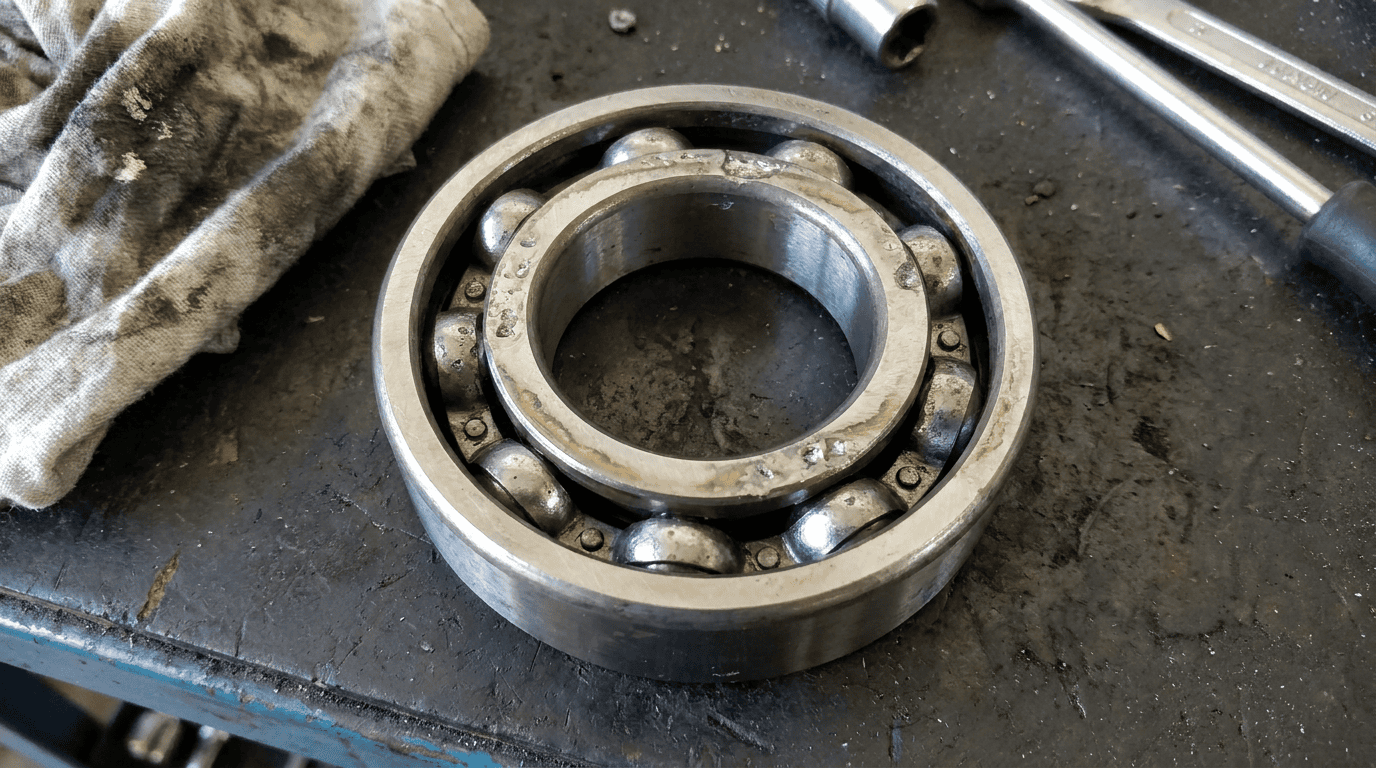
Understanding bearing failure in bevel gearboxes is essential for preventing unplanned downtime, secondary gear damage, oil contamination, shaft misalignment, and costly production losses. In industrial plants, bevel gearboxes are often used where power must turn 90 degrees, making bearing health critical to gear mesh accuracy and torque transfer. When bearings deteriorate, the gearbox may still run for a while, but vibration, heat, metal debris, and tooth contact issues usually accelerate quickly. For maintenance managers, reliability engineers, mechanics, plant engineers, and purchasing teams, the goal is not only to identify a failed bearing, but to understand why it failed and how to prevent repeat failures.
Bearing failure in bevel gearboxes is most often caused by lubrication problems, contamination, overload, misalignment, improper installation, electrical fluting, excessive heat, or fatigue. Common symptoms include abnormal noise, rising temperature, vibration, oil discoloration, metallic debris, seal leakage, and changes in gear tooth contact patterns. The best response is to shut down or reduce load when safe, inspect lubricant and filters, perform vibration and temperature analysis, check shaft endplay and backlash, inspect bearings and races, and determine whether repair or full gearbox replacement is the more reliable option.
Bearing failure in bevel gearboxes can significantly impact the performance and longevity of industrial machinery. For a deeper understanding of how variable frequency drives (VFDs) can influence gearbox operation and potentially mitigate bearing issues, you may find the article “Understanding Variable Frequency Drives” insightful. It discusses the relationship between VFDs and gearbox efficiency, which can help in preventing premature bearing failure. You can read the article here: Understanding Variable Frequency Drives.
Why Bearings Matter in Bevel Gearbox Reliability
Bevel gearboxes depend on precise alignment between intersecting shafts. Unlike many parallel-shaft reducers, bevel gear drives are especially sensitive to bearing condition because bearings control shaft position, gear mesh, backlash, and tooth contact pattern. Even minor bearing wear can shift the pinion or gear enough to create edge loading, excessive noise, and premature tooth damage.
In many industrial applications, bevel gearboxes support high radial and axial loads. Spiral bevel gears, hypoid bevel gears, and straight bevel gears all create forces that must be absorbed by properly selected and lubricated bearings. Tapered roller bearings, spherical roller bearings, cylindrical roller bearings, angular contact ball bearings, and deep groove ball bearings may all be used depending on the gearbox design.
When a bearing fails, the damage rarely stays isolated. A failing bearing can cause:
- Gear tooth pitting or spalling
- Shaft scoring or fretting
- Housing bore wear
- Seal failure and lubricant leakage
- Increased motor load
- Coupling misalignment
- Catastrophic gearbox seizure
- Contaminated lubrication systems
- Safety hazards near rotating machinery
For gearbox repair support, see Industrial Gearbox Solutions’ internal resources on industrial gearbox repair at https://industrialgearboxsolutions.com/industrial-gearbox-repair/ and gearbox inspection services at https://industrialgearboxsolutions.com/gearbox-inspection/.
Common Causes of Bearing Failure in Bevel Gearboxes
Lubrication Starvation
Lubrication starvation is one of the most common causes of bearing failure. Bearings require a continuous oil film to separate rolling elements from raceways. If the oil level is low, oil viscosity is incorrect, oil pathways are blocked, or splash lubrication is inadequate, the bearing can overheat and develop metal-to-metal contact.
Typical lubrication starvation causes include:
- Low oil level
- Incorrect oil viscosity
- Wrong lubricant type
- Blocked oil passages
- Failed oil pump
- Excessive foaming
- Oil leakage through worn seals
- Startup before lubricant reaches critical components
- High-speed operation with inadequate oil distribution
In bevel gearboxes, lubrication can be more challenging because the shaft arrangement and gear geometry may create areas where bearings receive less oil than expected. This is especially important in vertical, angled, or high-speed applications.
Noria provides excellent technical information on lubrication-related failure modes and oil analysis at https://www.noria.com.
Contamination
Contamination damages bearing surfaces and shortens gearbox life. Even small particles can indent raceways, disrupt oil films, and initiate fatigue cracks. Water contamination is especially damaging because it reduces lubricant film strength, promotes corrosion, and accelerates additive depletion.
Common contaminants include:
- Dirt and dust
- Metal wear particles
- Water or process fluid
- Sand or abrasive material
- Paint flakes or sealant debris
- Cleaning solvent
- Degraded lubricant sludge
- Rust particles
Plants with conveyors, crushers, mixers, mills, cooling towers, wastewater systems, or outdoor equipment should pay close attention to contamination control. A high-quality breather, effective seals, and routine oil analysis are critical.
Overload and Shock Loading
Bearings are designed for a specific dynamic and static load rating. When the gearbox experiences overloads, shock loads, jams, torque spikes, or frequent starts and stops, bearing life can be dramatically reduced.
Overload conditions may result from:
- Process jams
- Oversized motors
- Incorrect service factor
- Conveyor impact loading
- Crusher tramp material
- Mixer surging
- Improper clutch or brake operation
- Sudden reversals
- Incorrect gearbox selection
Purchasing professionals should ensure that replacement gearboxes or rebuilt units are selected based on actual operating conditions, not only nameplate horsepower. For help with replacement selection, visit https://industrialgearboxsolutions.com/gearbox-replacement/.
Misalignment
Misalignment is a major cause of bearing and gear failure. In a bevel gearbox, bearing positions control the gear mesh. If shafts are misaligned due to poor installation, housing distortion, soft foot, foundation movement, or worn bores, bearing loads become uneven.
Misalignment can cause:
- Uneven raceway wear
- High vibration at shaft speed
- Increased gear noise
- Edge loading on gear teeth
- Excessive heat
- Coupling failure
- Seal wear
- Reduced bearing life
Laser alignment, proper base preparation, and routine inspection after thermal growth are important preventive steps.
Improper Bearing Installation
Many bearing failures begin during installation. A bearing can be damaged before the gearbox ever returns to service if it is pressed incorrectly, overheated, contaminated, or handled improperly.
Installation errors include:
- Applying force through rolling elements
- Using a hammer directly on the bearing
- Incorrect heating temperature
- Installing bearings in dirty environments
- Reusing damaged locknuts or sleeves
- Incorrect preload or endplay
- Poor shaft or housing fit
- Mixing incompatible components
- Failing to verify gear contact pattern after assembly
SKF offers detailed bearing installation and maintenance guidance at https://www.skf.com, and Timken provides technical resources on bearing handling and installation at https://www.timken.com.
Incorrect Bearing Preload or Endplay
Bevel gearboxes often use tapered roller bearings or angular contact bearings that require controlled preload or endplay. Too much preload increases heat and friction. Too much endplay allows shaft movement, which disrupts gear mesh and can damage both gears and bearings.
Preload issues may appear after:
- Bearing replacement
- Shim changes
- Housing machining
- Gear set replacement
- Thermal expansion
- Incorrect torque on retaining hardware
- Wear of spacers or shoulders
Preload and backlash should always be measured according to the gearbox manufacturer’s specification.
Electrical Fluting
Electrical discharge through bearings can create fluting or washboard-like raceway patterns. This is often associated with variable frequency drives, poor grounding, or stray shaft currents. While electrical fluting is commonly discussed in motor bearings, gearbox bearings can also be affected when current passes through connected rotating equipment.
Symptoms may include:
- High-frequency vibration
- Audible whining or humming
- Gray or frosted raceway appearance
- Repetitive fluted marks
- Premature lubricant degradation
Prevention may require shaft grounding, insulated bearings, proper motor grounding, or VFD mitigation.
Fatigue and Normal Service Life
Not all bearing failures are due to mistakes. Bearings have a finite fatigue life. Over time, repeated rolling contact stresses can produce pitting, spalling, and raceway fatigue. However, if bearings fail much earlier than expected, the root cause should be investigated.
Factors that influence bearing fatigue life include:
- Load
- Speed
- Lubricant film thickness
- Operating temperature
- Contamination level
- Alignment
- Bearing quality
- Installation accuracy
- Duty cycle
AGMA standards and technical publications provide important information about gear drive design and reliability. Visit the American Gear Manufacturers Association at https://www.agma.org.
Industrial gearbox bearing failure can lead to costly downtime and production losses, so it’s important to address the issue promptly. Industrial gearbox bearing failure
Symptoms of Bearing Failure in Bevel Gearboxes
Noise Changes
Noise is often the first sign operators notice. A healthy bevel gearbox usually has a consistent operating sound. Bearing problems may produce grinding, rumbling, growling, whining, clicking, or intermittent knocking.
Noise symptoms can indicate different issues:
| Noise Type | Possible Cause | Recommended Action |
||||
| Rumbling or growling | Bearing raceway damage | Perform vibration analysis and inspect oil |
| High-pitched whine | Gear mesh issue, preload, or lubrication problem | Check temperature, backlash, and oil viscosity |
| Clicking or popping | Spalled bearing or damaged gear tooth | Inspect immediately |
| Grinding | Severe bearing damage or lubricant starvation | Shut down if safe and inspect |
| Intermittent knock | Loose bearing, shaft movement, or broken component | Check endplay and mounting hardware |
Excessive Heat
Rising gearbox temperature is a critical warning sign. Bearing failure increases friction, which increases heat. Excessive heat can further degrade lubricant, reduce oil viscosity, damage seals, and accelerate bearing failure.
Potential causes of heat include:
- Overfilled or underfilled oil
- Excessive bearing preload
- Incorrect lubricant viscosity
- Contamination
- Misalignment
- Overload
- Blocked cooling system
- Poor ventilation
- Bearing cage damage
Infrared thermography is useful for trending gearbox temperatures, but it should be combined with vibration analysis and lubricant inspection.
Vibration
Vibration analysis is one of the most effective methods for detecting bearing problems before catastrophic failure. Defects in the inner race, outer race, rolling elements, or cage often create frequency patterns that trained analysts can identify.
Common vibration indicators include:
- Increased overall vibration
- Peaks at bearing defect frequencies
- High-frequency acceleration
- Sidebands around gear mesh frequency
- Increased axial vibration
- Changes during load variation
- Impacts in time waveform data
Plant reliability teams should establish baseline vibration readings after installation or rebuild, then trend changes over time.
Oil Contamination and Metal Debris
Oil condition can reveal bearing distress. Metallic debris, discoloration, burnt smell, or cloudy oil should not be ignored. Magnetic drain plugs, filter inspection, and laboratory oil analysis can detect early warning signs.
Look for:
- Fine metallic shimmer
- Large flakes or chunks
- Bronze or brass particles from cages
- Dark oxidized oil
- Water haze or milkiness
- Sludge or varnish
- Abrasive particles
- Increased particle count
Oil analysis is particularly valuable because it can identify contamination and wear before vibration changes become severe.
Gear Mesh and Tooth Contact Changes
Because bevel gearbox bearings control shaft position, bearing wear may appear as a gear contact problem. Technicians may observe abnormal tooth contact patterns, excessive backlash, or localized pitting near the toe or heel of bevel gear teeth.
Symptoms may include:
- Gear tooth edge loading
- Uneven contact pattern
- Increased backlash
- Reduced backlash due to thermal growth or preload
- Tooth scoring
- Gear pitting
- Gear whine under load
If gear damage is found, the bearings should be inspected closely.
Understanding bearing failure in bevel gearboxes is crucial for maintaining the efficiency and longevity of industrial machinery. A related article discusses the importance of regular maintenance and timely repairs to prevent such failures, which can lead to costly downtime and extensive damage. For more insights on gearbox repair services in Texas, you can explore this informative resource that highlights best practices and solutions for ensuring optimal gearbox performance.
Troubleshooting Bearing Failure in Bevel Gearboxes
| Metrics | Data |
|---|---|
| Number of bearing failures | 25 |
| Root cause of failures | Improper lubrication |
| Impact on production | 10% decrease in efficiency |
| Cost of bearing replacements | 5000 per replacement |
Step-by-Step Field Troubleshooting
A structured troubleshooting process helps avoid misdiagnosis. Do not assume that replacing the bearing alone will solve the problem. The root cause must be identified.
| Step | Inspection Area | What to Check | Why It Matters |
|||||
| 1 | Operating conditions | Load, speed, duty cycle, starts/stops | Confirms whether gearbox is correctly applied |
| 2 | Lubricant level | Sight glass, dipstick, leaks | Low oil causes starvation |
| 3 | Lubricant condition | Color, odor, particles, water | Reveals contamination and wear |
| 4 | Temperature | Housing and bearing zones | Identifies friction or lubrication problems |
| 5 | Vibration | Overall and frequency data | Detects bearing and gear defects |
| 6 | Alignment | Couplings, soft foot, base | Prevents uneven bearing loads |
| 7 | Endplay/backlash | Shaft movement and gear mesh | Confirms bearing setting and gear position |
| 8 | Breathers/seals | Contamination entry points | Protects lubricant cleanliness |
| 9 | Internal inspection | Bearings, gears, shafts, bores | Confirms damage extent |
| 10 | Root cause review | Failure pattern and history | Prevents repeat failure |
Questions to Ask During Troubleshooting
Before opening the gearbox, collect operational history. These questions help narrow down the cause:
- When did the noise or vibration start?
- Was the gearbox recently rebuilt or repaired?
- Was the lubricant changed recently?
- Has the load increased?
- Did the equipment experience a jam or shock event?
- Has the motor or VFD been changed?
- Are there signs of oil leakage?
- Has the gearbox been running hotter than normal?
- Are breathers clogged or missing?
- Has the foundation shifted?
- Are there repeated bearing failures on the same shaft?
When to Shut Down the Gearbox
A gearbox may need immediate shutdown if there is evidence of severe bearing damage. Continuing operation can turn a bearing replacement into a complete gearbox replacement.
Consider shutdown when you observe:
- Rapidly increasing vibration
- Severe grinding noise
- Sudden temperature spike
- Metal chunks in oil
- Loss of oil pressure
- Heavy oil leakage
- Shaft movement
- Smoke or burnt lubricant smell
- Gearbox case cracking
- Imminent safety risk
If shutdown is not immediately possible, reduce load and speed if feasible while preparing a controlled outage.
Inspection Methods for Bearing Failure Analysis
Visual Bearing Inspection
Once the gearbox is disassembled, visual inspection can reveal the failure mode. Technicians should document the bearing condition before cleaning, then inspect raceways, rolling elements, cages, seals, shoulders, fits, and lubrication paths.
Common visual findings include:
| Bearing Appearance | Likely Cause |
|||
| Blue or black discoloration | Overheating or lubrication failure |
| Frosted raceway | Electrical discharge or micro-pitting |
| Flaking or spalling | Fatigue, overload, or contamination |
| Rust or corrosion | Water contamination or poor storage |
| Smearing | Sliding due to poor lubrication or speed issues |
| Brinelling | Shock loading or improper installation |
| False brinelling | Vibration while stationary |
| Cage fracture | Misalignment, overload, or lubrication failure |
| Polished wear track off-center | Misalignment or improper fit |
Photographs should be taken for documentation and warranty review.
Lubricant and Oil Analysis
Oil analysis is one of the best tools for understanding bearing failure in bevel gearboxes. A lab can identify wear metals, contamination, additive depletion, viscosity changes, oxidation, and water content.
Useful oil analysis tests include:
- Viscosity at 40°C and 100°C
- Karl Fischer water test
- Particle count
- Ferrous density
- Spectrometric wear metals
- Acid number
- Oxidation and nitration
- FTIR analysis
- Analytical ferrography
Routine oil sampling should use consistent sampling points and methods. Poor sampling can produce misleading results.
Vibration Analysis
Vibration analysis can detect bearing defects at early stages. Analysts look at bearing defect frequencies, gear mesh frequency, harmonics, modulation, time waveform impacts, and high-frequency acceleration.
For bevel gearboxes, vibration should be measured in multiple directions:
- Horizontal
- Vertical
- Axial
- Input shaft bearing locations
- Output shaft bearing locations
- Gear mesh housing area
Because bevel gears create axial thrust, axial vibration is especially important.
Gear Contact Pattern Inspection
Gear contact pattern inspection is essential after bearing replacement or gearbox rebuild. Marking compound can show whether bevel gears are contacting correctly across the tooth face.
Poor contact patterns may indicate:
- Incorrect bearing setting
- Worn housing bores
- Incorrect shimming
- Shaft deflection
- Gear wear
- Improper assembly
- Case distortion
- Foundation problems
Industrial Gearbox Solutions can support contact pattern review and rebuild evaluation through gearbox rebuild services at https://industrialgearboxsolutions.com/gearbox-rebuild/.
Dimensional Inspection
Bearing failure can damage the shaft and housing. Installing new bearings into worn fits may result in another premature failure.
Inspect:
- Shaft journals
- Housing bores
- Shoulders
- Spacer dimensions
- Seal surfaces
- Bearing seats
- Gear mounting surfaces
- Keyways and splines
- Shaft runout
- Housing alignment
Use calibrated micrometers, bore gauges, dial indicators, and surface finish tools where appropriate.
Prevention Strategies for Bevel Gearbox Bearing Failure
Improve Lubrication Practices
A strong lubrication program is one of the most cost-effective ways to prevent bearing failure.
Best practices include:
- Use the manufacturer-recommended oil viscosity and type
- Maintain correct oil level
- Use clean transfer containers
- Filter new oil before use
- Avoid mixing incompatible lubricants
- Label lubricants clearly
- Use desiccant breathers where appropriate
- Check oil levels on a consistent schedule
- Replace oil based on condition, not only calendar time
- Verify lubrication after startup and rebuild
Control Contamination
Contamination control should be treated as a reliability priority, not a housekeeping issue.
Recommended actions:
- Install high-quality breathers
- Upgrade seals if the environment is harsh
- Use quick-connect filtration carts
- Keep gearbox fill ports clean
- Store oil drums indoors or protected
- Use dedicated transfer equipment
- Inspect seals during PMs
- Maintain positive pressure or purge systems where needed
- Use magnetic plugs and filter carts
- Repair leaks promptly
Verify Alignment and Foundation Integrity
Even the best bearing cannot survive long in a misaligned gearbox. Check the entire drive system, not just the gearbox.
Alignment tasks include:
- Laser-align motor to gearbox
- Check driven equipment alignment
- Inspect coupling condition
- Correct soft foot
- Verify baseplate flatness
- Inspect hold-down bolts
- Account for thermal growth
- Recheck alignment after major repairs
- Monitor vibration after startup
Use Proper Installation Procedures
Bearing installation should follow manufacturer guidance and gearbox specifications.
Installation best practices:
- Keep bearings packaged until ready to install
- Work in a clean area
- Use induction heaters with temperature control
- Apply force only to the ring being fitted
- Measure shaft and housing fits
- Use correct tools and fixtures
- Set preload or endplay accurately
- Torque locknuts and fasteners to specification
- Confirm backlash and contact pattern
- Document all measurements
SKF and Timken both publish bearing maintenance references that can support proper installation procedures.
Monitor Condition Regularly
Condition monitoring helps detect failure early enough to plan repairs.
Recommended monitoring tools:
- Vibration analysis
- Infrared thermography
- Oil analysis
- Ultrasonic inspection
- Motor current analysis
- Visual inspection
- Magnetic plug inspection
- Online sensors for critical gearboxes
For critical production equipment, consider a risk-based inspection interval based on failure history, downtime cost, operating load, and environmental severity.
Repair vs. Replacement: Making the Right Decision
When Bearing Replacement May Be Enough
A bearing-only repair may be appropriate when damage is isolated and the gearbox internals remain within specification.
Bearing replacement may be practical if:
- Gear teeth are in good condition
- Shafts are not scored or worn
- Housing bores are within tolerance
- Lubrication system is clean and functional
- Root cause is understood
- No major misalignment exists
- Replacement bearings are available
- Downtime window is limited
However, the gearbox should still be inspected thoroughly. Replacing bearings without correcting the cause is rarely a long-term solution.
When a Full Gearbox Rebuild Is Recommended
A rebuild is often the better option when bearing failure has caused secondary damage.
Consider a rebuild if there is:
- Gear tooth pitting, scoring, or cracking
- Shaft journal wear
- Housing bore damage
- Seal surface wear
- Repeated bearing failure
- Severe contamination
- Unknown service history
- Excessive backlash
- Heat damage
- Case or cover distortion
A professional rebuild should include cleaning, inspection, bearing replacement, seal replacement, gear inspection, dimensional checks, proper shimming, backlash verification, and test run when possible.
When Replacement Is the Better Choice
Sometimes replacement is more cost-effective than repair. Purchasing professionals should compare total cost, lead time, reliability risk, and production impact.
Replacement may be preferred when:
- Gearbox housing is cracked
- OEM parts are obsolete
- Gear set is severely damaged
- Repair cost approaches replacement cost
- Existing gearbox is undersized
- Production demands have changed
- Repeated failures indicate design limitations
- A modern unit offers better efficiency or availability
Industrial Gearbox Solutions can assist with gearbox replacement options and reverse engineering at https://industrialgearboxsolutions.com/reverse-engineering/.
Repair vs. Replacement Comparison
| Factor | Repair Bearings Only | Full Rebuild | Replace Gearbox |
|||||
| Best for | Isolated bearing damage | Internal wear or multiple issues | Obsolete, undersized, or heavily damaged units |
| Typical cost | Lower | Moderate to high | Moderate to high |
| Reliability | Good if root cause is corrected | High if performed correctly | High if properly selected |
| Lead time | Shorter if parts available | Moderate | Depends on availability |
| Risk | Hidden damage may remain | Lower after full inspection | Application mismatch possible |
| Recommended for critical assets | Sometimes | Often | Often if design is inadequate |
Maintenance Best Practices for Bevel Gearbox Bearings
Preventive Maintenance Checklist
A practical PM checklist should be simple enough for mechanics to complete consistently but detailed enough to catch early warning signs.
| Frequency | Task |
|||
| Daily/Shift | Listen for abnormal noise, check for leaks, observe temperature |
| Weekly | Check oil level, inspect breather, inspect seals |
| Monthly | Record temperature, inspect mounting bolts, check vibration trends if available |
| Quarterly | Pull oil sample, inspect magnetic plug, verify alignment on critical drives |
| Semiannual | Inspect coupling, check backlash if symptoms exist, review oil analysis |
| Annual | Perform detailed inspection, review PM history, verify lubrication program |
| Outage | Inspect bearings, gears, seals, shafts, housing fits, and contact pattern |
Spare Parts Planning
Purchasing teams can reduce downtime by stocking the right components for critical gearboxes.
Recommended spare parts include:
- Bearings
- Oil seals
- Gaskets
- Shims
- Locknuts and lock washers
- Breathers
- Coupling inserts
- Lubricant
- Filter elements
- Magnetic plugs
- Complete spare gearbox for critical assets
When ordering bearings, verify part numbers, internal clearance, cage type, precision rating, seals/shields, and manufacturer equivalents. Do not assume that a visually similar bearing is suitable.
Documentation and Failure History
Good documentation improves reliability decisions.
Track:
- Bearing part numbers
- Installation date
- Lubricant type and changes
- Oil analysis reports
- Vibration readings
- Operating temperatures
- Failure photos
- Root cause findings
- Alignment readings
- Repair vendor reports
- Gearbox serial numbers
- Downtime cost
A repeated bearing failure pattern often becomes obvious when maintenance history is organized.
FAQs About Bearing Failure in Bevel Gearboxes
What is the most common cause of bearing failure in bevel gearboxes?
Lubrication problems are among the most common causes. Low oil level, incorrect viscosity, contamination, and oil degradation can all reduce lubricant film strength and cause bearing wear, overheating, and spalling.
Can a bevel gearbox keep running with a bad bearing?
It may continue running temporarily, but it is risky. A failing bearing can quickly damage gears, shafts, seals, and the housing. If vibration, heat, or metal debris is increasing, the gearbox should be inspected as soon as safely possible.
How do I know if the bearing or gear is causing the noise?
Bearing defects often create rumbling, growling, or high-frequency vibration, while gear issues often produce whining related to gear mesh frequency. However, bearing movement can cause gear mesh problems, so vibration analysis, oil inspection, and internal inspection may all be needed.
Why do bevel gearbox bearings fail after rebuild?
Post-rebuild bearing failure may be caused by incorrect preload, improper shimming, contamination during assembly, wrong bearing selection, poor fits, misalignment, or failure to correct the original root cause.
What oil should be used in a bevel gearbox?
Use the lubricant specified by the gearbox manufacturer or a qualified lubrication engineer. Selection depends on speed, load, temperature, gear type, bearing type, and operating environment. AGMA gear oil viscosity grades are commonly referenced for industrial gear drives.
How often should bevel gearbox oil be changed?
Oil change intervals depend on operating temperature, contamination, duty cycle, oil type, and analysis results. Condition-based oil changes using oil analysis are generally better than fixed calendar intervals for critical equipment.
What does metal in gearbox oil mean?
Metal in the oil indicates internal wear. Fine particles may signal early wear, while flakes or chunks may indicate severe bearing or gear damage. The gearbox should be inspected and oil analysis should be performed.
Can water contamination cause bearing failure?
Yes. Water reduces lubricant film strength, causes corrosion, accelerates additive depletion, and promotes fatigue. Even small amounts of water can significantly shorten bearing life.
Should bearings always be replaced during gearbox repair?
In many gearbox repairs, bearings are replaced as a standard reliability practice, especially if the gearbox has been disassembled or has significant operating hours. Reusing bearings may be acceptable only when condition, measurements, and application risk support it.
What standards or references are useful for gearbox bearing reliability?
Useful external resources include SKF bearing maintenance guidance, Timken bearing engineering resources, AGMA gear standards, and Noria lubrication best practices. These sources support proper bearing selection, installation, lubrication, and failure analysis.
Key Takeaways
- Bearing failure in bevel gearboxes often leads to gear mesh problems because bearings control shaft position and tooth contact.
- The most common causes include lubrication failure, contamination, overload, misalignment, incorrect installation, improper preload, electrical fluting, and fatigue.
- Early symptoms include noise, heat, vibration, oil contamination, leakage, and abnormal gear contact patterns.
- Troubleshooting should include lubrication review, vibration analysis, temperature checks, alignment verification, endplay/backlash measurement, and internal inspection.
- Oil analysis and vibration monitoring are two of the most valuable predictive maintenance tools.
- Replacing a bearing without correcting the root cause often leads to repeat failure.
- Repair, rebuild, or replacement decisions should consider gearbox condition, parts availability, downtime cost, and long-term reliability.
- Proper lubrication, contamination control, alignment, installation practices, and documentation can dramatically extend gearbox bearing life.
Suggested Branded Images
Image 1: Bevel Gearbox Bearing Failure Close-Up
Alt text: Failed bearing in an industrial bevel gearbox showing raceway spalling and metal debris
Caption: Bearing spalling in a bevel gearbox can quickly lead to gear tooth damage and unplanned downtime.
Image 2: Technician Inspecting Bevel Gear Contact Pattern
Alt text: Industrial gearbox technician checking bevel gear tooth contact pattern with marking compound
Caption: Gear contact pattern inspection helps confirm correct bearing setting, backlash, and shaft alignment.
Image 3: Oil Analysis Sample from Industrial Gearbox
Alt text: Maintenance technician collecting oil sample from bevel gearbox for laboratory analysis
Caption: Routine oil analysis can detect contamination, wear metals, and lubricant degradation before failure occurs.
Image 4: Vibration Analysis on Bevel Gearbox
Alt text: Reliability engineer using vibration analyzer on bevel gearbox bearing housing
Caption: Vibration analysis is one of the most effective tools for early bearing fault detection.
Image 5: Rebuilt Industrial Bevel Gearbox
Alt text: Rebuilt industrial bevel gearbox prepared for installation by Industrial Gearbox Solutions
Caption: A properly rebuilt bevel gearbox should include bearing replacement, dimensional checks, and gear mesh verification.
SEO Metadata
SEO Title
Understanding Bearing Failure in Bevel Gearboxes | Causes, Symptoms, and Repair
Meta Description
Learn the causes, symptoms, inspection methods, troubleshooting steps, and prevention strategies for bearing failure in bevel gearboxes. Expert guide for industrial maintenance teams.
Primary Keyword
Understanding bearing failure in bevel gearboxes
Secondary Keywords
- bevel gearbox bearing failure
- industrial gearbox bearing failure
- bevel gear reducer troubleshooting
- gearbox vibration and bearing damage
- gearbox bearing inspection
- bevel gearbox repair
- gearbox lubrication failure
- bearing failure analysis
- industrial gearbox maintenance
Suggested URL Slug
understanding-bearing-failure-in-bevel-gearboxes
Search Intent
Informational and commercial investigation. The article serves users who need to diagnose, prevent, repair, rebuild, or replace an industrial bevel gearbox with bearing-related problems.
Recommended Internal Links
- Industrial gearbox repair: https://industrialgearboxsolutions.com/industrial-gearbox-repair/
- Gearbox inspection: https://industrialgearboxsolutions.com/gearbox-inspection/
- Gearbox rebuild: https://industrialgearboxsolutions.com/gearbox-rebuild/
- Gearbox replacement: https://industrialgearboxsolutions.com/gearbox-replacement/
- Reverse engineering: https://industrialgearboxsolutions.com/reverse-engineering/
Authoritative External Sources
- SKF bearing maintenance and failure analysis: https://www.skf.com
- Timken bearing engineering resources: https://www.timken.com
- AGMA gear standards and technical resources: https://www.agma.org
- Noria lubrication and oil analysis knowledge base: https://www.noria.com
Conclusion
Bearing failure in bevel gearboxes is rarely random. It is usually the result of identifiable conditions such as poor lubrication, contamination, misalignment, overload, improper installation, incorrect preload, or operating conditions beyond the gearbox design. For maintenance and reliability teams, the key is to respond early, inspect systematically, and correct the true root cause before bearing damage turns into gear, shaft, housing, or production failure.
A disciplined maintenance program built around lubrication control, vibration analysis, oil analysis, alignment, accurate installation, and detailed documentation can significantly extend bevel gearbox service life. When failure does occur, evaluate whether bearing replacement, full rebuild, or gearbox replacement provides the best long-term reliability and lowest total cost of ownership.
If your bevel gearbox is running hot, making noise, showing vibration changes, or producing metal in the oil, request expert support before the damage spreads.
FAQs
What are the common causes of bearing failure in bevel gearboxes?
Common causes of bearing failure in bevel gearboxes include inadequate lubrication, contamination, overloading, misalignment, and improper installation.
How can inadequate lubrication lead to bearing failure in bevel gearboxes?
Inadequate lubrication can lead to bearing failure in bevel gearboxes by causing increased friction, heat, and wear on the bearings, leading to premature failure.
What types of contamination can contribute to bearing failure in bevel gearboxes?
Contamination such as dirt, dust, metal particles, and water can contribute to bearing failure in bevel gearboxes by causing abrasive wear, corrosion, and reduced lubrication effectiveness.
How does overloading impact bearing failure in bevel gearboxes?
Overloading can impact bearing failure in bevel gearboxes by causing excessive stress and fatigue on the bearings, leading to premature failure.
What are the signs of bearing failure in bevel gearboxes?
Signs of bearing failure in bevel gearboxes include increased noise, vibration, temperature, and decreased performance and efficiency of the gearbox. Regular inspection and maintenance can help identify and prevent bearing failure.