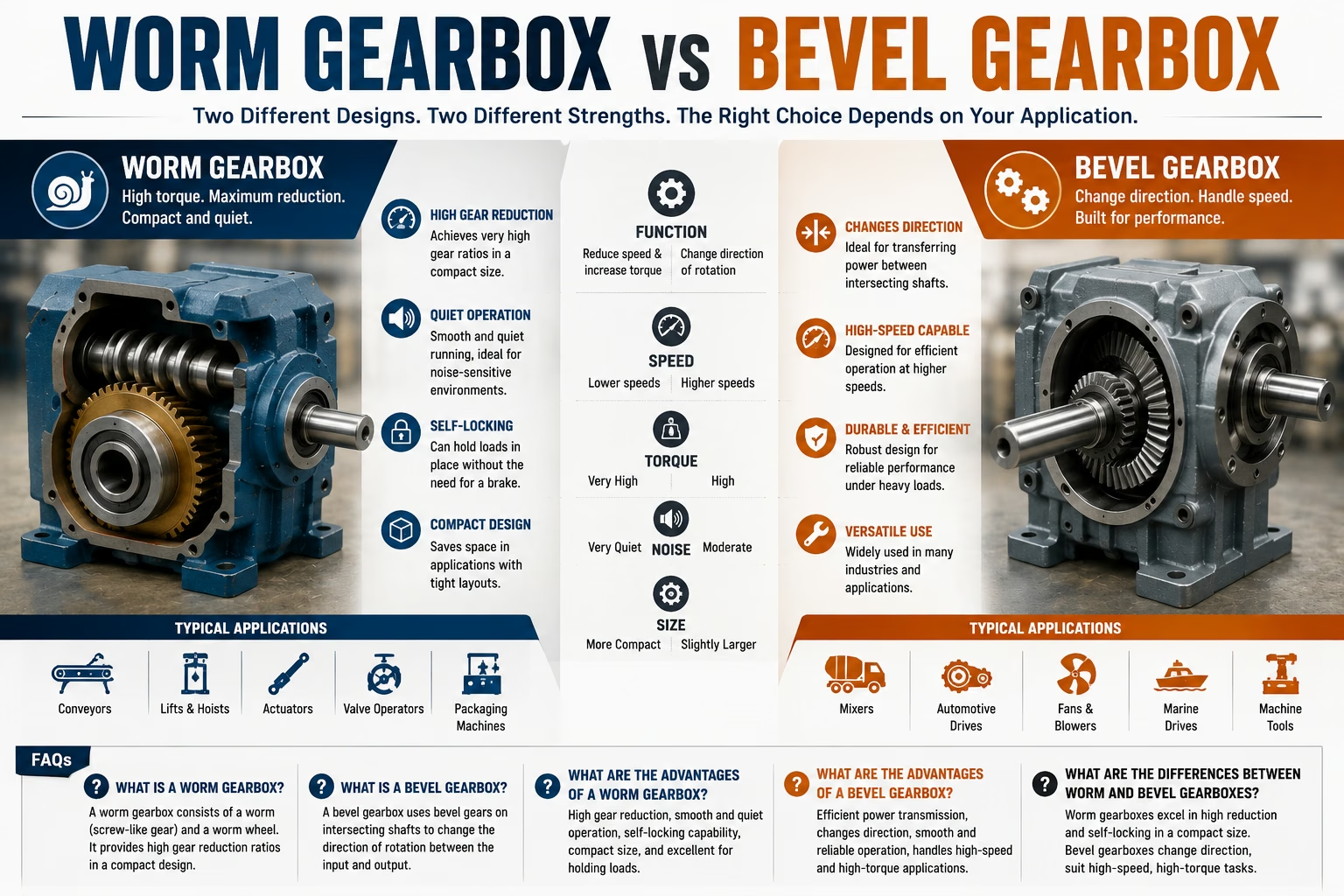
Choosing between a worm gearbox and a bevel gearbox isn’t simply a matter of selecting one design over another. Each gearbox is engineered for a different purpose, and the best choice depends on your equipment, operating conditions, efficiency requirements, and desired output.
In general, worm gearboxes excel when you need substantial speed reduction, high torque multiplication, compact installation, and quiet operation. Bevel gearboxes, by contrast, are designed to efficiently transfer power between intersecting shafts while maintaining higher operating efficiencies and handling greater input speeds.
Understanding how each gearbox works can help you select the right solution for your industrial application.
Need Help Choosing the Right Gearbox?
Selecting the wrong gearbox can lead to reduced efficiency, unnecessary downtime, and costly repairs. Whether you’re deciding between a worm gearbox and a bevel gearbox or need help identifying the best replacement for an existing unit, our gearbox specialists can help.
Industrial Gearbox Solutions provides expert gearbox selection, replacement, rebuilding, and repair services for a wide range of manufacturers and industrial applications. We can help you compare options, improve system performance, and find the right solution for your equipment.
Use the form below to request a quote, upload a gearbox nameplate photo, or speak with one of our gearbox experts today.
What Is a Worm Gearbox?
A worm gearbox uses a screw-shaped worm gear that meshes with a larger worm wheel. As the worm rotates, it gradually drives the wheel, creating large gear reductions within a relatively compact housing.
This unique design makes worm gearboxes ideal for applications that require:
- High reduction ratios
- Increased output torque
- Smooth, quiet operation
- Compact installation
- Self-locking capability in many applications
Because the gears slide against one another instead of rolling together, worm gearboxes typically generate more heat and have lower mechanical efficiency than other gearbox styles. However, that same sliding action contributes to their exceptionally smooth and quiet operation.
Common Applications
Worm gearboxes are frequently used in:
- Conveyors
- Packaging equipment
- Material handling systems
- Lift mechanisms
- Gates and doors
- Food processing equipment
- Valve actuators
What Is a Bevel Gearbox?
A bevel gearbox uses bevel gears mounted on intersecting shafts—most commonly at a 90-degree angle—to redirect rotational power while maintaining excellent efficiency.
Unlike worm gearboxes, bevel gearboxes rely primarily on rolling contact between gear teeth, which reduces friction and improves power transmission.
They are commonly selected for applications requiring:
- Directional changes in power transmission
- High-speed operation
- High efficiency
- Heavy-duty torque transmission
- Long service life
Straight bevel, spiral bevel, and hypoid designs are all commonly used depending on the application’s performance requirements.
Common Applications
Bevel gearboxes are often found in:
- Agricultural equipment
- Mining machinery
- Industrial conveyors
- Automotive drivetrains
- Marine equipment
- Heavy manufacturing
- Material processing systems
Worm Gearbox Advantages
Worm gearboxes remain popular because they offer several unique benefits that other gearbox designs cannot easily match.
High Gear Reduction
Single-stage worm gearboxes can achieve extremely large reduction ratios without requiring multiple gear stages.
Quiet Operation
The sliding contact between the worm and wheel creates less vibration and noise, making worm gearboxes ideal where quieter operation is important.
Compact Size
Their design allows significant torque multiplication while occupying relatively little installation space.
Self-Locking Capability
Many worm gearboxes cannot be back-driven, meaning the output shaft will remain stationary even when external loads are applied. This eliminates the need for additional braking systems in many lifting and positioning applications.
Bevel Gearbox Advantages
Bevel gearboxes excel where efficiency and power transmission are priorities.
High Mechanical Efficiency
Because the gears roll together instead of sliding, bevel gearboxes typically transmit more power while generating less heat.
Excellent Torque Capacity
They handle high torque loads while maintaining reliable performance over long operating cycles.
Directional Power Transfer
Bevel gears are specifically designed to transmit power between intersecting shafts, making them ideal whenever equipment layouts require a change in shaft direction.
Long Service Life
Lower friction means reduced wear, which often results in longer operating life when properly lubricated and maintained.
Worm Gearbox vs. Bevel Gearbox
| Feature | Worm Gearbox | Bevel Gearbox |
|---|---|---|
| Primary Function | High speed reduction | Change shaft direction |
| Efficiency | Moderate | High |
| Noise Level | Very quiet | Moderate |
| Torque Output | Excellent | Excellent |
| Gear Reduction | Very high | Moderate |
| Self-Locking | Often available | No |
| Heat Generation | Higher | Lower |
| Maintenance | Moderate | Low to moderate |
| Best For | Compact, high-ratio applications | High-efficiency power transmission |
Which Gearbox Should You Choose?
A worm gearbox is usually the better choice if your application requires:
- Maximum speed reduction
- High torque in a compact package
- Quiet operation
- Load-holding capability
- Limited installation space
A bevel gearbox is generally the better option if you need:
- High operating efficiency
- Continuous-duty performance
- Power transfer between intersecting shafts
- Higher input speeds
- Lower operating temperatures
Neither gearbox is universally better—the correct choice depends entirely on the demands of your equipment.
Final Thoughts
Worm and bevel gearboxes each solve different engineering challenges. Worm gearboxes prioritize compactness, torque multiplication, and smooth operation, while bevel gearboxes focus on efficient power transmission and changing the direction of rotation.
Evaluating your application’s speed requirements, torque demands, available space, efficiency goals, and operating environment will help determine which gearbox delivers the best long-term performance.
Frequently Asked Questions
What is a worm gearbox?
A worm gearbox uses a screw-shaped worm gear and a mating worm wheel to achieve high gear reduction ratios, increased torque, and smooth, quiet operation in a compact design.
What is a bevel gearbox?
A bevel gearbox uses bevel gears mounted on intersecting shafts to efficiently transmit power while changing the direction of rotation, most commonly by 90 degrees.
What are the advantages of a worm gearbox?
Worm gearboxes provide high reduction ratios, quiet operation, compact size, excellent torque multiplication, and, in many applications, self-locking capability that helps prevent back-driving.
What are the advantages of a bevel gearbox?
Bevel gearboxes offer high efficiency, reliable power transmission, excellent torque capacity, lower heat generation, and long service life, making them ideal for demanding industrial applications.
What is the biggest difference between worm and bevel gearboxes?
The primary difference is their purpose. Worm gearboxes are designed for high gear reduction and torque multiplication, while bevel gearboxes are designed to efficiently transfer power between intersecting shafts with minimal energy loss.