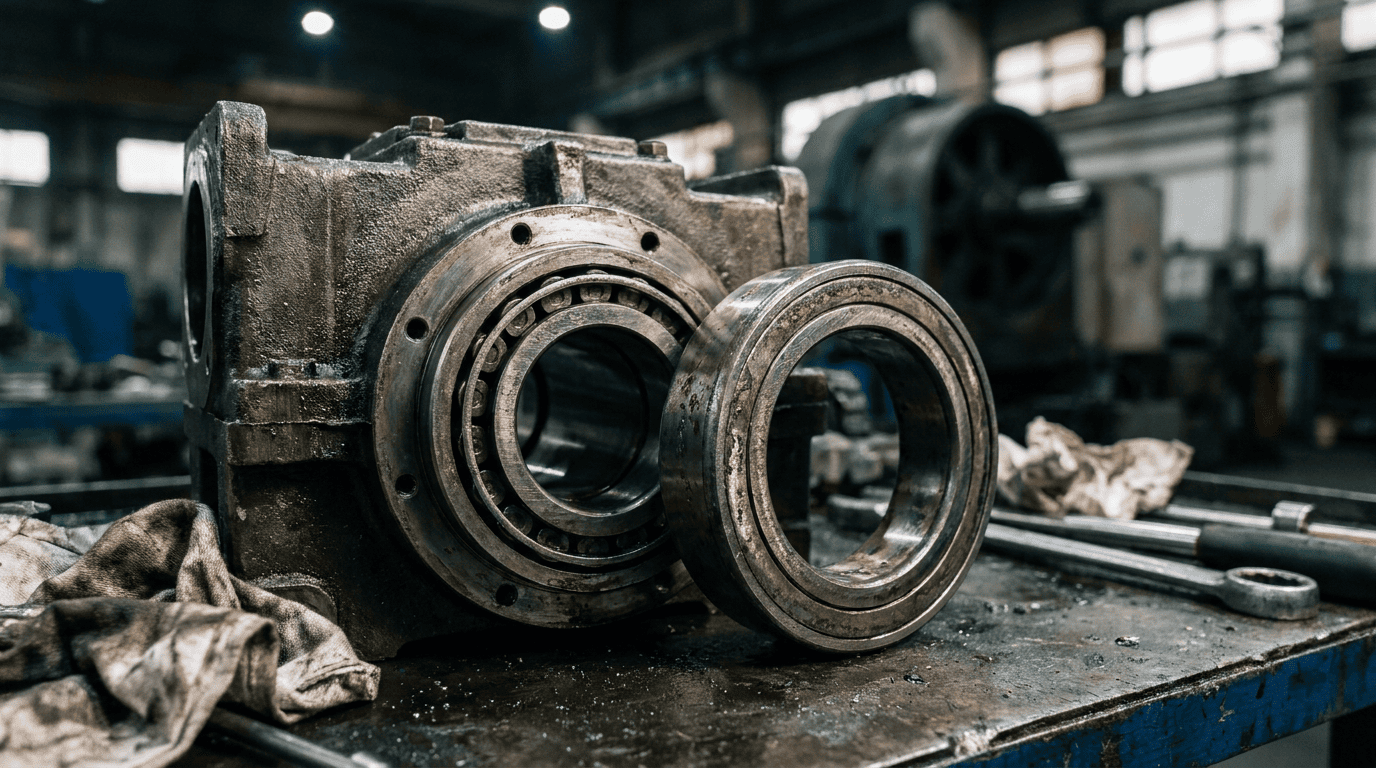
Industrial gearbox bearing life is one of the most important predictors of gearbox reliability, energy efficiency, and total operating cost in heavy industrial environments. When bearings fail prematurely, they often trigger secondary damage to gears, shafts, seals, housings, couplings, and connected equipment. For maintenance managers, plant engineers, reliability engineers, mechanics, and purchasing teams, maximizing bearing life means controlling lubrication, alignment, contamination, load, installation quality, and operating conditions. This guide explains how to identify early warning signs, troubleshoot root causes, improve inspection practices, and decide when bearing repair, gearbox rebuild, or replacement is the best long-term option.
To maximize industrial gearbox bearing life, maintain clean and correctly specified lubricant, prevent contamination, verify shaft and coupling alignment, control operating temperature, avoid overload, install bearings with proper tools and fits, and use condition monitoring such as vibration analysis, oil analysis, thermography, and routine visual inspections. Most premature bearing failures are not caused by bearing defects; they are caused by lubrication problems, contamination, misalignment, excessive load, improper installation, or unresolved gearbox operating issues.
For those interested in enhancing the longevity of industrial gearboxes, a related article that delves into effective repair strategies can be found at Industrial Gearbox Repair in Carmel, Indiana. This resource provides insights into common issues faced by gearboxes and offers practical solutions that can significantly extend the life of bearings and other critical components.
Why Industrial Gearbox Bearings Fail Prematurely
Industrial gearbox bearings operate under high loads, continuous rotation, shock, vibration, and changing thermal conditions. In many gearboxes, bearings are expected to support radial and axial loads while maintaining precise shaft positioning so gears mesh correctly. If the bearing system deteriorates, the entire gearbox becomes vulnerable.
Bearing failure rarely happens without warning. Most failures begin with subtle changes in lubrication condition, operating temperature, vibration signature, or noise level. By the time a mechanic hears grinding or sees metal debris in the oil, internal damage may already be advanced.
Common Causes of Reduced Bearing Life
The most common causes of shortened bearing service life include:
- Incorrect lubricant viscosity
- Lubricant contamination from water, dust, process material, or metal particles
- Inadequate lubricant flow or oil level
- Overlubrication or underlubrication
- Misalignment between motor, gearbox, and driven equipment
- Excessive radial or axial loading
- Improper bearing mounting or removal practices
- Incorrect shaft or housing fits
- Electrical fluting from stray current
- Overheating due to friction or poor cooling
- Gear tooth damage transferring shock loads to bearings
- Seal failure allowing contaminants into the gearbox
- Infrequent inspection or delayed corrective action
According to SKF’s bearing failure resources, contamination, poor lubrication, and incorrect mounting are among the most frequent contributors to premature bearing damage. SKF’s guidance on bearing damage and failure analysis is a valuable reference for maintenance and reliability teams: https://www.skf.com
Timken also provides useful technical resources on bearing selection, lubrication, and failure analysis: https://www.timken.com
Why Bearing Life Matters to Gearbox Performance
Bearings do more than support shafts. They maintain the correct position of rotating elements so gear teeth contact properly. When bearings wear, gear mesh can shift. This may cause:
- Uneven gear tooth contact
- Increased backlash
- Higher vibration
- Heat generation
- Lubricant degradation
- Accelerated gear wear
- Seal leakage
- Shaft damage
- Catastrophic gearbox failure
A $500 bearing problem can become a $50,000 gearbox failure if not detected early.
For related gearbox reliability topics, see Industrial Gearbox Solutions’ resources on gearbox repair and rebuild services: https://industrialgearboxsolutions.com/gearbox-repair/
Primary Symptoms of Industrial Gearbox Bearing Problems
Recognizing early symptoms is critical. Bearing failures usually progress through stages. The earlier a team detects the problem, the more options they have for planned maintenance instead of emergency downtime.
Noise Changes
Unusual gearbox noise is one of the most common early warning signs. Bearing-related noises may include:
- Whining
- Rumbling
- Growling
- Clicking
- Grinding
- Intermittent knocking
- High-pitched squealing
However, noise alone is not enough for diagnosis. Gear tooth wear, coupling issues, lubrication problems, or resonance can also cause abnormal sound. Noise should be combined with vibration analysis, oil analysis, and inspection findings.
Increased Vibration
Vibration is one of the strongest indicators of bearing distress. Bearing defects may appear at specific frequencies related to inner race, outer race, rolling element, or cage damage.
Common vibration-related warning signs include:
- Increasing overall vibration velocity
- High-frequency acceleration spikes
- Sidebands around gear mesh frequency
- Changes in bearing defect frequencies
- Sudden increases after startup or load changes
- Vibration increasing with temperature
Reliability engineers should trend vibration data over time rather than relying on one isolated reading.
Excessive Heat
Rising gearbox temperature may indicate bearing friction, lubricant breakdown, overload, misalignment, or cooling system problems.
Warning signs include:
- Bearing housing too hot to touch
- Temperature trending upward under the same load
- Localized hot spots near bearing locations
- Oil temperature exceeding recommended range
- Darkened or burnt-smelling lubricant
- Seal hardening or leakage from heat exposure
Thermal imaging is especially useful for identifying abnormal bearing temperatures without shutting down equipment.
Lubricant Contamination or Metal Debris
Oil condition often reveals bearing problems before major mechanical symptoms appear.
Warning indicators include:
- Metallic particles in oil
- Bronze, steel, or bearing material debris
- Water contamination
- Milky or cloudy oil
- Darkened oil
- Sludge or varnish
- Elevated particle counts
- Rising iron, chromium, or tin in oil analysis
Noria’s lubrication and oil analysis resources are excellent for understanding contamination control and lubricant failure modes: https://www.noria.com
Seal Leakage
Seal leaks are not just housekeeping problems. They often indicate pressure issues, shaft wear, contamination, excessive heat, or bearing movement. A leaking seal can allow lubricant out and contaminants in, both of which reduce bearing life.
Industrial gearbox bearing failure can lead to costly downtime and production losses, so it’s important to address the issue promptly. Industrial gearbox bearing failure
Root Causes of Bearing Damage in Industrial Gearboxes
A bearing failure investigation should move beyond the damaged component and identify why the bearing failed. Replacing a failed bearing without correcting the root cause often leads to repeated failure.
Lubrication Problems
Lubrication is one of the most important factors in bearing life. Bearings need the correct lubricant film thickness to separate rolling elements from raceways. If the oil film is too thin, metal-to-metal contact occurs.
Common lubrication problems include:
- Wrong viscosity grade
- Wrong base oil type
- Incompatible additives
- Low oil level
- Foaming
- Aeration
- Oxidation
- Water contamination
- Filter bypass or clogged filters
- Extended oil change intervals
- Grease incompatibility in grease-lubricated applications
A lubricant that is too thin may fail to support the load. A lubricant that is too thick may increase friction and operating temperature, especially at startup.
For gearbox oil guidance, refer to AGMA lubrication standards and technical information from the American Gear Manufacturers Association: https://www.agma.org
Contamination
Contamination is a leading cause of premature bearing wear. Even microscopic particles can dent raceways and rolling elements. Once denting occurs, vibration increases and fatigue damage accelerates.
Common contamination sources include:
- Worn or damaged seals
- Dirty breathers
- Open fill ports
- Improper oil transfer containers
- Dusty or wet operating environments
- Water washdown
- Process material ingress
- Wear debris from gears or bearings
- Poor maintenance practices
A high-quality desiccant breather, sealed oil transfer system, and filtration program can dramatically improve bearing life.
Misalignment
Misalignment places additional stress on gearbox bearings. Even if gears and bearings are correctly designed, misalignment between the motor, gearbox, and driven machine can create abnormal loads.
Misalignment may be caused by:
- Soft foot
- Poor baseplate condition
- Thermal growth
- Foundation movement
- Pipe strain
- Improper coupling installation
- Worn mounting bolts
- Inaccurate alignment methods
Laser alignment should be performed during installation and after major repairs. In some applications, alignment should be checked after the machine reaches operating temperature.
Overload and Shock Loading
Gearbox bearings are designed for specific load conditions. If process demands exceed design assumptions, bearing life can drop sharply.
Overload sources include:
- Jammed conveyors
- Crusher tramp events
- Frequent starts and stops
- High torque spikes
- Improper motor sizing
- Process changes
- Increased production rates
- Incorrect service factor
- Poorly tuned variable frequency drives
Shock loading can cause brinelling, raceway spalling, cage damage, or shaft movement.
Improper Installation
Even premium bearings can fail quickly if installed incorrectly. Mounting damage may not be obvious at startup but can significantly reduce life.
Common installation mistakes include:
- Hammering directly on bearing rings
- Applying force through rolling elements
- Using improper heating methods
- Contaminating the bearing during installation
- Incorrect bearing orientation
- Incorrect clearance or preload
- Damaged shaft or housing fits
- Reusing worn locknuts or sleeves
- Failure to verify endplay or axial float
Maintenance mechanics should use proper induction heaters, hydraulic nuts, pullers, mounting sleeves, and calibrated tools.
Electrical Damage
Electrical fluting occurs when stray current passes through a bearing. This is often associated with variable frequency drives, motors, or grounding issues.
Signs of electrical damage include:
- Washboard-like raceway patterns
- Frosted bearing surfaces
- High-frequency vibration
- Premature lubricant degradation
- Repeated bearing failure in motor-driven systems
Solutions may include insulated bearings, shaft grounding rings, improved grounding, or VFD filtering.
To enhance the longevity of industrial gearboxes, it is essential to consider various factors that contribute to bearing life. One insightful resource on this topic is an article that discusses effective strategies for extending industrial gearbox bearing life. By implementing proper maintenance practices and understanding the operational environment, businesses can significantly reduce wear and tear on their gearboxes. For more detailed information on gearbox repair and maintenance services, you can visit this link.
Troubleshooting Industrial Gearbox Bearing Problems
| Factors | Impact on Bearing Life |
|---|---|
| Lubrication | Proper lubrication can significantly extend bearing life by reducing friction and wear. |
| Alignment | Correct alignment of shafts and gears can prevent excessive loads on bearings, prolonging their life. |
| Load Distribution | Even distribution of loads across multiple bearings can prevent premature failure of individual bearings. |
| Contamination | Preventing ingress of contaminants such as dirt and water can help extend bearing life. |
| Temperature | Maintaining optimal operating temperature can prevent thermal damage and extend bearing life. |
Troubleshooting should be structured, evidence-based, and documented. The goal is to determine whether the bearing is the root cause or the symptom of another gearbox problem.
Step-by-Step Troubleshooting Process
Use the following process when bearing issues are suspected:
- Review operating history, load changes, and maintenance records.
- Check lubricant type, level, condition, and change interval.
- Inspect for leaks, contamination, and breather condition.
- Measure temperature at bearing locations.
- Collect vibration data at consistent points.
- Perform oil analysis and review trend data.
- Check coupling alignment and soft foot.
- Inspect foundation, fasteners, and mounting surfaces.
- Listen for abnormal noise using ultrasonic or acoustic tools.
- Schedule internal inspection if data suggests advanced damage.
Troubleshooting Table
| Symptom | Possible Bearing-Related Cause | Recommended Action |
||||
| Rising vibration | Race defect, looseness, misalignment, gear mesh issue | Perform vibration analysis and alignment check |
| High bearing temperature | Low oil, wrong viscosity, overload, excessive preload | Verify lubricant, load, clearance, and cooling |
| Metallic debris in oil | Spalling, cage damage, gear wear | Conduct oil analysis and plan inspection |
| Rumbling noise | Rolling element or raceway damage | Compare vibration data with bearing defect frequencies |
| Seal leakage | Shaft movement, worn seal, overfilled gearbox, pressure buildup | Inspect seals, breathers, shaft surfaces, and oil level |
| Repeated bearing failure | Root cause not corrected | Perform full failure analysis and application review |
| Milky oil | Water contamination | Replace oil, identify water source, upgrade breathers/seals |
When to Shut Down the Gearbox
Immediate shutdown may be necessary if:
- Vibration rises suddenly and sharply
- Oil contains large metal fragments
- Bearing housing temperature increases rapidly
- Grinding or knocking is present
- Shaft movement is visible
- Gearbox load becomes unstable
- Oil pressure or oil flow is lost
- A critical production or safety risk exists
If the gearbox is production-critical, consult an experienced gearbox repair specialist before continuing operation. Industrial Gearbox Solutions can help with emergency gearbox inspection and repair planning: https://industrialgearboxsolutions.com/contact/
To enhance the longevity of industrial gearboxes, understanding the factors that contribute to bearing wear is essential. A related article discusses various strategies for extending industrial gearbox bearing life, providing valuable insights into maintenance practices and design improvements. For more detailed information on gearbox repair services, you can explore this resource that highlights the importance of timely interventions and expert repairs in maintaining optimal gearbox performance.
Inspection Methods for Gearbox Bearings
Effective inspection combines condition monitoring, lubricant analysis, mechanical checks, and internal examination.
Vibration Analysis
Vibration analysis is one of the best tools for detecting bearing defects before catastrophic failure. It can identify early bearing damage, imbalance, misalignment, looseness, resonance, and gear mesh issues.
Key vibration techniques include:
- Overall vibration trending
- Spectrum analysis
- Time waveform analysis
- Envelope detection
- High-frequency acceleration analysis
- Bearing defect frequency analysis
Vibration data should be collected from repeatable locations under similar operating conditions.
Oil Analysis
Oil analysis helps determine lubricant health and machine condition. It is especially important for gearboxes that operate continuously or in harsh environments.
Important oil analysis tests include:
- Viscosity
- Water content
- Particle count
- Ferrous density
- Spectrometric analysis
- Acid number
- Oxidation
- Nitration
- Additive depletion
- Analytical ferrography
Oil analysis can identify wear metals associated with bearings, gears, shafts, and housings.
Thermography
Infrared thermography helps detect abnormal heat patterns around bearings, seals, lubrication lines, and cooling systems.
Thermography is useful for:
- Identifying overheating bearings
- Comparing similar gearbox assets
- Locating plugged coolers
- Detecting lubrication problems
- Finding misalignment-related heat
- Verifying post-repair temperature improvements
Borescope Inspection
A borescope allows visual inspection without full gearbox disassembly. It can help identify:
- Bearing race damage
- Gear tooth wear
- Lubricant deposits
- Corrosion
- Debris accumulation
- Oil distribution issues
- Internal housing damage
Borescope inspection is especially useful during planned outages.
Bearing Failure Analysis After Removal
Once a bearing is removed, document the condition before cleaning or discarding it. Photograph all components and inspect:
- Inner race
- Outer race
- Rolling elements
- Cage
- Lubricant residue
- Wear patterns
- Heat discoloration
- Fracture surfaces
- Corrosion marks
- Electrical fluting patterns
A failed bearing should be treated as evidence, not scrap.
Prevention Strategies to Extend Gearbox Bearing Life
The best maintenance strategy is to prevent bearing damage before it begins. Prevention requires a combination of good design, disciplined lubrication, precision installation, and ongoing monitoring.
Lubrication Best Practices
To improve bearing life through lubrication:
- Use the OEM-recommended lubricant or an engineered equivalent.
- Confirm viscosity for actual operating temperature.
- Maintain correct oil level.
- Use clean, sealed oil transfer containers.
- Filter new oil before adding it to the gearbox.
- Use desiccant breathers in humid or dusty environments.
- Establish oil analysis intervals based on asset criticality.
- Avoid mixing incompatible lubricants.
- Monitor oil temperature and oxidation.
- Keep fill ports, drain ports, and sight glasses clean.
New oil is not always clean enough for precision equipment. Filtering new oil before use is a low-cost reliability improvement.
Contamination Control
Contamination control should be part of every gearbox maintenance program.
Recommended practices include:
- Install high-efficiency breathers.
- Replace damaged seals promptly.
- Use quick-connect filtration carts.
- Keep oil containers closed and labeled.
- Prevent water spray near gearbox vents.
- Use proper washdown procedures.
- Improve housekeeping around gearbox assets.
- Inspect seal contact surfaces for wear.
- Maintain positive lubrication system pressure where applicable.
Precision Alignment
Precision alignment reduces bearing load and improves gearbox efficiency.
Best practices include:
- Use laser alignment tools.
- Correct soft foot before alignment.
- Account for thermal growth.
- Verify coupling condition.
- Check alignment after baseplate repairs.
- Recheck alignment after major gearbox work.
- Document final alignment readings.
- Train technicians in alignment procedures.
Proper Bearing Installation
Correct installation is essential for bearing reliability.
Bearing installation checklist:
- Verify bearing part number and specifications.
- Inspect shaft and housing fits.
- Measure shaft diameter and housing bore.
- Confirm cleanliness of components and work area.
- Use proper heating equipment if required.
- Avoid direct hammer blows.
- Apply mounting force to the correct ring.
- Verify internal clearance, preload, or endplay.
- Use correct locking devices and torque values.
- Lubricate according to specification.
- Rotate shaft by hand after assembly.
- Record installation measurements.
Load and Operating Condition Control
To prevent overload-related bearing failures:
- Confirm gearbox service factor.
- Monitor torque and motor current.
- Investigate process jams.
- Reduce shock loading where possible.
- Use soft starts or properly configured VFDs.
- Confirm driven equipment is not binding.
- Review production increases against gearbox ratings.
- Inspect couplings, belts, chains, and sheaves.
- Verify gearbox mounting and foundation integrity.
Repair vs. Replacement: Making the Right Decision
When bearing damage is discovered, the next decision is whether to repair the gearbox, rebuild it, replace bearings only, or replace the entire gearbox.
When Bearing Replacement May Be Enough
Bearing replacement may be appropriate when:
- Damage is limited to bearings.
- Gears, shafts, and housing are within tolerance.
- Lubrication system is clean and functional.
- Root cause is identified and corrected.
- No major misalignment or overload damage exists.
- Replacement bearings are available quickly.
- Downtime window is short but controlled.
However, bearing replacement should not be treated as a shortcut. If the gearbox has metal contamination, the entire unit may need cleaning, flushing, and inspection.
When a Gearbox Rebuild Is Recommended
A complete gearbox rebuild may be the better option when:
- Multiple bearings show damage.
- Gears have pitting, scoring, or abnormal wear.
- Shafts are worn, bent, or damaged.
- Housing bores are out of tolerance.
- Seals have damaged shaft surfaces.
- Metal contamination is widespread.
- Gear backlash or contact pattern is incorrect.
- Repeated failures have occurred.
- The gearbox is critical to production.
A professional rebuild can restore reliability by addressing bearings, gears, seals, shafts, lubrication passages, and housing fits together.
Learn more about industrial gearbox rebuild services here: https://industrialgearboxsolutions.com/gearbox-rebuild/
When Replacement Is the Best Option
Full gearbox replacement may be justified when:
- Repair cost approaches replacement cost.
- The gearbox is obsolete and parts are unavailable.
- Lead time for critical parts is excessive.
- Housing damage is severe.
- Application demands have exceeded original design.
- Efficiency upgrades are desired.
- A redesigned gearbox offers better reliability.
- Downtime cost makes a new unit more practical.
Purchasing professionals should compare total lifecycle cost, not just the purchase price. A cheaper replacement may cost more if it has poor support, inadequate service factor, or long parts lead times.
Repair vs. Replacement Decision Table
| Factor | Bearing Replacement | Gearbox Rebuild | Gearbox Replacement |
|||||
| Initial cost | Lower | Moderate to high | Highest |
| Downtime | Short to moderate | Moderate | Depends on availability |
| Reliability improvement | Limited if root cause remains | High if properly rebuilt | High if correctly specified |
| Best for | Isolated bearing damage | Multi-component wear | Obsolete or severely damaged units |
| Risk | Hidden damage may remain | Requires skilled rebuild provider | Fitment and lead time concerns |
| Long-term value | Good for minor issues | Often best for critical assets | Best for redesign or obsolete units |
Maintenance Best Practices for Long Bearing Life
Maintenance practices should be standardized, documented, and adjusted based on gearbox criticality.
Daily and Weekly Checks
Operators and mechanics should regularly check:
- Oil level
- Unusual noise
- Abnormal vibration
- Leaks
- Breather condition
- External temperature
- Foundation bolts
- Coupling guards and visible coupling condition
- Cleanliness around the gearbox
Small changes should be documented and communicated before they become major failures.
Monthly and Quarterly Maintenance
Recommended periodic tasks include:
- Inspect seals and breathers.
- Check alignment on critical assets.
- Review vibration trends.
- Perform oil sampling.
- Inspect lubrication system filters.
- Check oil cooler performance.
- Verify mounting bolts and base condition.
- Inspect coupling wear.
- Review operating load and motor current.
- Clean sight glasses and external surfaces.
Annual or Outage-Based Maintenance
During planned outages:
- Perform borescope inspections.
- Drain and inspect lubricant where appropriate.
- Flush contaminated systems.
- Inspect gear contact patterns.
- Check bearing endplay or shaft movement.
- Inspect housing condition.
- Replace seals if wear is present.
- Review lubrication specification.
- Validate spare bearing and seal inventory.
- Update maintenance records and asset history.
Recommended Maintenance Frequency Table
| Task | Typical Frequency | Notes |
||||
| Visual inspection | Daily to weekly | Increase frequency for critical gearboxes |
| Oil level check | Daily to weekly | Use sight glass or dipstick correctly |
| Temperature check | Weekly | Trend readings under similar load |
| Vibration route | Monthly to quarterly | Critical assets may need online monitoring |
| Oil analysis | Quarterly to semiannual | Adjust based on condition and criticality |
| Breather inspection | Monthly | Replace when saturated or clogged |
| Alignment check | Annually or after disturbance | Include thermal growth considerations |
| Borescope inspection | Annual outage | Useful for early detection |
| Full internal inspection | As condition indicates | Plan during shutdowns |
Selecting the Right Bearings for Industrial Gearboxes
Bearing selection affects gearbox load capacity, efficiency, heat generation, and reliability. Purchasing teams should avoid selecting bearings by price alone.
Bearing Types Commonly Used in Gearboxes
Common industrial gearbox bearing types include:
- Tapered roller bearings
- Spherical roller bearings
- Cylindrical roller bearings
- Deep groove ball bearings
- Angular contact ball bearings
- Thrust bearings
Each type has different strengths. Tapered roller bearings handle combined radial and axial loads well. Spherical roller bearings tolerate some misalignment and heavy radial loads. Cylindrical roller bearings are often used for high radial load applications.
Specification Considerations
Important bearing specification factors include:
- Load rating
- Speed rating
- Internal clearance
- Cage material
- Heat treatment
- Lubrication method
- Sealing arrangement
- Mounting style
- Shaft and housing fits
- Operating temperature
- Contamination exposure
- Axial load direction
- Expected service factor
Consult bearing manufacturers and gearbox specialists when modifying an application or replacing obsolete bearings.
How Condition Monitoring Improves Bearing Life
Condition monitoring turns gearbox maintenance from reactive to predictive. Instead of waiting for failure, teams can act when data shows degradation.
Online Monitoring
Online systems are valuable for critical gearboxes where downtime is expensive or safety risks are high. They may track:
- Vibration
- Temperature
- Oil condition
- Particle count
- Speed
- Load
- Acoustic emissions
Online monitoring can trigger alerts before damage becomes severe.
Route-Based Monitoring
Route-based monitoring is suitable for many plants. Technicians collect periodic vibration, temperature, and inspection data. The key is consistency. Measurements should be taken at the same locations under comparable operating conditions.
Data Trending
One reading rarely tells the full story. Trend data helps teams detect:
- Gradual bearing wear
- Lubricant degradation
- Progressive misalignment
- Seasonal temperature effects
- Repeated overload conditions
- Post-repair improvement or decline
A gearbox that is “within limits” but trending upward may still require attention.
Branded Image Suggestions
Use original branded images to improve user engagement, EEAT, and SEO performance.
Suggested Image 1
Image concept: Maintenance technician using a vibration analyzer on an industrial gearbox.
Alt text: Technician performing vibration analysis to extend industrial gearbox bearing life
Caption: Vibration analysis helps detect bearing defects before they cause unplanned gearbox failure.
Suggested Image 2
Image concept: Close-up of damaged gearbox bearing race with spalling.
Alt text: Spalled bearing race from industrial gearbox bearing failure
Caption: Bearing spalling often indicates fatigue, contamination, lubrication failure, or overload.
Suggested Image 3
Image concept: Oil sampling from a gearbox drain port into a clean sample bottle.
Alt text: Gearbox oil analysis sample for bearing wear detection
Caption: Oil analysis can identify contamination and bearing wear before major mechanical damage occurs.
Suggested Image 4
Image concept: Laser alignment of motor and gearbox coupling.
Alt text: Laser alignment of industrial gearbox coupling to prevent bearing overload
Caption: Precision alignment reduces unnecessary bearing loads and improves gearbox reliability.
Suggested Image 5
Image concept: Rebuilt industrial gearbox on a test stand at Industrial Gearbox Solutions.
Alt text: Rebuilt industrial gearbox being tested after bearing replacement
Caption: Post-rebuild testing verifies gearbox performance before return to service.
SEO Metadata Suggestions
SEO title: Maximizing Industrial Gearbox Bearing Life | Maintenance & Reliability Guide
Meta description: Learn how to maximize industrial gearbox bearing life with lubrication, alignment, inspection, troubleshooting, repair decisions, and maintenance best practices.
Primary keyword: industrial gearbox bearing life
Secondary keywords:
- gearbox bearing failure
- industrial gearbox maintenance
- gearbox lubrication best practices
- gearbox vibration analysis
- gearbox repair vs replacement
- gearbox bearing inspection
- bearing failure troubleshooting
- industrial gearbox reliability
Suggested URL slug: maximizing-industrial-gearbox-bearing-life
Suggested internal links:
- Gearbox repair: https://industrialgearboxsolutions.com/gearbox-repair/
- Gearbox rebuild: https://industrialgearboxsolutions.com/gearbox-rebuild/
- Emergency gearbox repair: https://industrialgearboxsolutions.com/emergency-gearbox-repair/
- Contact Industrial Gearbox Solutions: https://industrialgearboxsolutions.com/contact/
Authoritative external references:
- SKF bearing damage and failure analysis: https://www.skf.com
- Timken bearing engineering resources: https://www.timken.com
- AGMA gear standards and lubrication guidance: https://www.agma.org
- Noria lubrication and oil analysis resources: https://www.noria.com
FAQs About Maximizing Industrial Gearbox Bearing Life
What is the most common cause of gearbox bearing failure?
The most common causes are lubrication problems and contamination. Wrong lubricant viscosity, low oil level, water contamination, dirty oil, and poor filtration can all reduce bearing life significantly.
How do I know if a gearbox bearing is failing?
Common signs include increased vibration, abnormal noise, rising temperature, oil contamination, metal debris, seal leakage, and changes in gear mesh behavior. Vibration analysis and oil analysis are the best early detection tools.
Can a gearbox bearing be replaced without rebuilding the gearbox?
Yes, but only if damage is isolated and the root cause has been identified. If metal debris has circulated through the gearbox or gears and shafts are damaged, a full rebuild may be necessary.
How often should gearbox oil be analyzed?
Many industrial gearboxes benefit from quarterly or semiannual oil analysis. Critical gearboxes, harsh environments, or assets with known problems may require more frequent sampling.
Does misalignment really affect bearing life?
Yes. Misalignment creates additional radial and axial loads that bearings may not be designed to handle. It also increases vibration, heat, coupling wear, and gear mesh problems.
What temperature is too hot for a gearbox bearing?
Acceptable temperature depends on gearbox design, lubricant type, load, and environment. A sudden or consistent temperature increase is often more important than one absolute number. Always compare against OEM guidance and historical trends.
Should new gearbox oil be filtered before use?
Yes, in many reliability-focused programs. New oil can contain particles from manufacturing, packaging, and handling. Filtering new oil before adding it to a gearbox helps protect bearings and gears.
What is bearing fluting?
Bearing fluting is a washboard-like raceway pattern caused by electrical discharge through the bearing. It is commonly associated with stray shaft currents, motors, and variable frequency drives.
Can overfilling a gearbox damage bearings?
Yes. Overfilling can cause churning, foaming, heat generation, pressure buildup, and seal leakage. These conditions can reduce lubrication effectiveness and shorten bearing life.
When should I call a gearbox repair specialist?
Call a specialist when vibration rises quickly, metal debris appears in oil, bearing temperatures climb, repeated failures occur, or internal gearbox damage is suspected. Early expert evaluation can prevent catastrophic failure.
Key Takeaways
- Industrial gearbox bearing life depends heavily on lubrication, contamination control, alignment, load management, and installation quality.
- Most premature bearing failures are caused by operating or maintenance conditions, not bearing manufacturing defects.
- Vibration analysis, oil analysis, thermography, and borescope inspections are essential tools for early detection.
- Bearing replacement alone may not solve the problem if gears, shafts, housings, seals, or lubrication systems are also damaged.
- Clean oil, correct viscosity, proper breathers, and sealed oil transfer practices can significantly extend gearbox bearing life.
- Precision alignment and proper bearing installation reduce unnecessary stress on gearbox bearings.
- Repair vs. replacement decisions should be based on total lifecycle cost, asset criticality, downtime impact, and root cause findings.
- Documented maintenance practices and condition monitoring help teams move from reactive repairs to predictive reliability.
Conclusion
Maximizing industrial gearbox bearing life requires more than replacing worn bearings during outages. It requires a disciplined reliability strategy that addresses lubrication quality, contamination control, shaft alignment, operating load, installation practices, and condition monitoring. For maintenance managers, plant engineers, reliability engineers, mechanics, and purchasing professionals, the goal is to detect bearing distress early, correct the true root cause, and choose the repair or replacement path that delivers the lowest total cost of ownership.
A well-maintained gearbox can operate reliably for years, while a neglected bearing issue can quickly escalate into gear damage, shaft failure, production loss, and emergency repair costs. If your gearbox is showing signs of bearing distress or repeated failures, Industrial Gearbox Solutions can help evaluate the problem, recommend corrective action, and support repair, rebuild, or replacement decisions.
FAQs
What are the common causes of industrial gearbox bearing failure?
Common causes of industrial gearbox bearing failure include inadequate lubrication, contamination from dirt or debris, overloading, misalignment, and improper installation.
How can industrial gearbox bearing life be extended?
Industrial gearbox bearing life can be extended by using the correct type and amount of lubricant, ensuring proper installation and alignment, implementing regular maintenance and inspection schedules, and protecting the gearbox from contamination.
What role does lubrication play in extending industrial gearbox bearing life?
Proper lubrication is crucial in extending industrial gearbox bearing life as it reduces friction, dissipates heat, prevents corrosion, and protects against wear. Using the correct type and amount of lubricant, as well as maintaining proper lubrication levels, is essential.
What are the benefits of extending industrial gearbox bearing life?
Extending industrial gearbox bearing life can lead to reduced downtime, lower maintenance costs, improved equipment reliability, increased productivity, and longer service intervals.
How can misalignment impact industrial gearbox bearing life?
Misalignment can lead to increased stress and uneven loading on the bearings, causing premature wear and failure. Proper alignment of the gearbox components is essential in ensuring the longevity of the bearings.