Unlock the Secrets of Your Industrial Gearbox: A Masterclass in Nameplate Interpretation
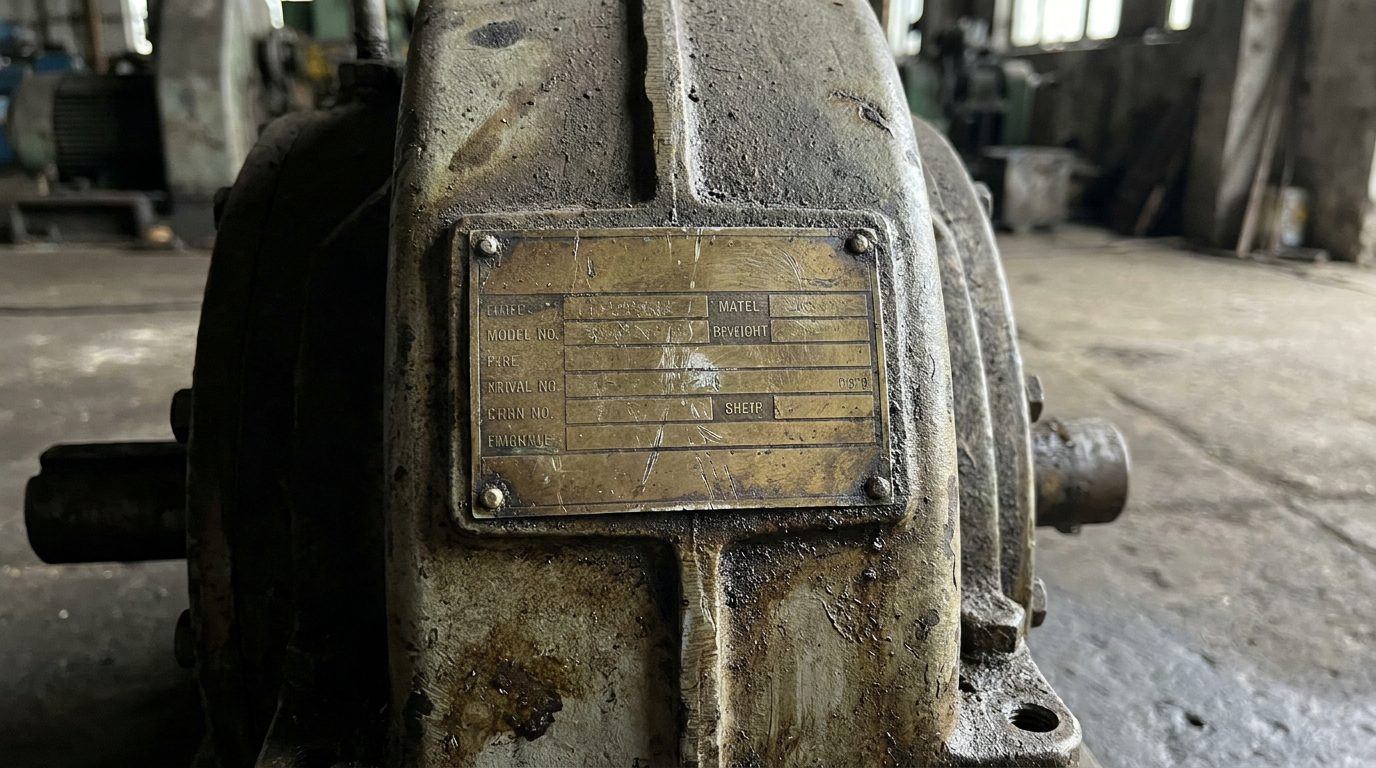
In the demanding world of industrial operations, the gearbox is a linchpin of efficiency, power transmission, and overall machinery reliability. Yet, understanding its intricate specifications can feel like deciphering a foreign language. This is where the humble, yet incredibly informative, industrial gearbox nameplate comes into play. Far more than just a collection of numbers and letters, this metal tag is a treasure trove of vital information that can make or break your maintenance, repair, or replacement decisions. For plant managers, maintenance teams, engineers, buyers, and operators, mastering the art of reading an industrial gearbox nameplate is not just a skill; it’s an essential strategy for optimizing performance, preventing costly breakdowns, and ensuring the longevity of your critical equipment. This article will demystify the gearbox nameplate, equipping you with the knowledge to interpret its data, diagnose potential issues, and make informed choices for your industrial operations.
Understanding how to read an industrial gearbox nameplate is crucial for maintenance and replacement decisions. For those looking to delve deeper into gearbox solutions, you may find the article on Sew Eurodrive Gearbox Replacement particularly informative. This resource provides insights into the replacement process, ensuring that you have the necessary knowledge to make informed choices regarding your industrial equipment.
Understanding the Core Components of a Gearbox Nameplate
The industrial gearbox nameplate is your primary source of truth for understanding the capabilities and limitations of your specific unit. While designs and manufacturers vary, most nameplates will contain a consistent set of critical data points. Deciphering these elements is the first step towards effective gearbox management.
Manufacturer Information
- Manufacturer Name and Logo: This is usually the most prominent piece of information, clearly identifying who built the gearbox. Knowing the manufacturer is crucial for sourcing replacement parts, accessing technical documentation, and understanding their specific design philosophies. Reputable manufacturers often have extensive support networks and readily available spare parts.
- Model Number: This is a unique identifier assigned by the manufacturer to a specific gearbox series or design. It often hints at the gearbox’s intended application and general construction. For example, a model number might indicate a specific type of gearing (e.g., helical, planetary, worm) or a particular series known for certain performance characteristics.
- Serial Number: This is an individual identifier for your specific gearbox unit. It’s essential for tracking maintenance history, warranty claims, and ordering exact replacement parts or sub-assemblies. Think of it as the gearbox’s social security number.
Performance and Rating Data
- Service Factor (SF): This is a critical indicator of the gearbox’s ability to handle fluctuating or unpredictable loads. It’s a multiplier that accounts for factors like shock loads, frequent starts and stops, and duty cycles that deviate from ideal conditions. A higher service factor suggests the gearbox is designed for more demanding applications or has a greater capacity to withstand abuse.
- Example: A service factor of 1.5 means the gearbox can handle loads up to 1.5 times its rated capacity under the specified operating conditions. A lower service factor (e.g., 1.0) implies a more constant, predictable load.
- Importance: Misinterpreting or ignoring the service factor is a common cause of premature gearbox failure. Operating a gearbox continuously at or above its rated capacity, especially with a low service factor, will lead to accelerated wear and potential failure.
- Rated Power (HP or kW): This specifies the maximum continuous power the gearbox can transmit under its designed operating conditions without exceeding its thermal or mechanical limits. This is often a key parameter for matching the gearbox to the prime mover (electric motor or engine).
- Output Speed (RPM): The nominal rotational speed of the output shaft at its rated load and input speed. This value, combined with the input speed and gear ratio, determines the reduction achieved.
- Input Speed (RPM): The nominal rotational speed of the input shaft. This is typically dictated by the speed of the connected prime mover.
- Gear Ratio (i): This is the ratio of the input speed to the output speed, or equivalently, the ratio of the number of teeth on the driven gear to the number of teeth on the driving gear. It directly indicates how much the speed is reduced (or increased, though less common for gearboxes) and torque is increased.
- Example: A gear ratio of 20:1 means the output shaft rotates 1/20th the speed of the input shaft, and the output torque is theoretically 20 times the input torque (minus efficiency losses).
- Types of Ratios: You might see ratios expressed as a single number (e.g., 50) or as a fraction (e.g., 50/1).
- Torque (Output Torque – Nm or lb-in/lb-ft): This is the rotational force the gearbox can deliver at its output shaft. It’s a crucial parameter for applications where the force required to move a load is paramount.
- Rated Output Torque: The maximum continuous torque the gearbox can deliver.
- Peak Output Torque: The maximum torque the gearbox can handle for short durations (often related to starting loads or shock conditions).
- Efficiency (%): This indicates how much power is lost within the gearbox due to friction and other mechanical inefficiencies. Higher efficiency means less energy wasted as heat, leading to lower operating costs and reduced thermal stress on the unit.
- Example: A gearbox with 95% efficiency means 5% of the input power is lost.
Physical and Operational Data
- Mounting Position (e.g., M1, M2, M3, M4): This specifies the orientation in which the gearbox is designed to operate (e.g., horizontal shaft, vertical shaft, shaft down, shaft up). Operating a gearbox in an incorrect mounting position can lead to lubrication issues, increased wear, and premature failure. This is particularly critical for sealed units.
- Reference: Manufacturers typically provide detailed diagrams or charts illustrating these mounting positions. Always consult the manufacturer’s documentation for precise definitions.
- Lubrication Type/Viscosity: The nameplate may indicate the recommended type of lubricant (e.g., ISO VG XXXX) and sometimes the required viscosity or grade. Using the wrong lubricant can lead to inadequate lubrication, overheating, and increased wear.
- Operating Temperature Range: The acceptable ambient or operating temperature range for the gearbox. Exceeding these limits can degrade lubricants, damage seals, and affect material properties.
- IP Rating (Ingress Protection): This rating indicates the level of protection the gearbox enclosure offers against the ingress of solid objects (like dust) and liquids (like water).
- Example: IP65 means the enclosure is dust-tight and protected against water jets from any direction.
- Importance: Crucial for selecting gearboxes for harsh environments, washdown applications, or areas with high levels of dust and debris.
Identification and Certification Marks
- Weight: The approximate weight of the gearbox. Useful for rigging, installation planning, and transportation.
- Certifications (e.g., CE, UL): These marks indicate that the product has met specific safety, health, or environmental protection standards required for products sold in certain markets.
- Date of Manufacture: Can be useful for tracking age and warranty periods.
Decoding the Gear Ratio: A Deeper Dive
The gear ratio is fundamental to a gearbox’s function. It dictates the speed reduction and torque multiplication. Understanding how it’s presented and what it means is paramount.
Single-Stage vs. Multi-Stage Ratios
- Single-Stage: A gearbox with a single gear set. The ratio is usually presented as a simple number or fraction (e.g., 10:1 or 10).
- Multi-Stage: A gearbox with two or more gear sets. The overall ratio is the product of the individual stage ratios. The nameplate might show the overall ratio, or sometimes individual stage ratios.
- Example: A two-stage gearbox with ratios of 5:1 and 4:1 would have an overall ratio of 20:1 (5 x 4).
Calculating Input/Output Speeds and Torque
Once you understand the gear ratio, you can easily calculate expected speeds and torques:
- Output Speed (RPM) = Input Speed (RPM) / Gear Ratio
- Theoretical Output Torque = Input Torque x Gear Ratio x Efficiency (Note: This is a theoretical calculation. Actual output torque will also be limited by the gearbox’s rated torque capacity.)
Check out our blog for more articles on industrial gearbox solutions: more articles.
Service Factor: Your Gearbox’s Safety Net
The Service Factor (SF) is arguably one of the most critical, yet often misunderstood, parameters on a gearbox nameplate. It’s not a rating of capability but rather a measure of how much overload capacity the gearbox has for a given application.
Understanding the Impact of Load Type
- Uniform Load: Constant, steady load with no shocks or impacts. Examples: Conveyor belts moving bulk materials at a steady rate.
- Moderate Shock Load: Occasional moderate shocks or impacts. Examples: Reciprocating compressors, some mixers.
- Heavy Shock Load: Frequent and severe shocks and impacts. Examples: Bucket elevators, crushers, hammer mills.
- Starting Torque: The torque required to start a load from rest. This is often significantly higher than the running torque.
Selecting the Right Service Factor
Manufacturers provide charts and guidelines to help determine the appropriate service factor based on the application’s load type and duty cycle. Using a service factor that is too low for the application is a leading cause of premature gearbox failure, overheating, and excessive wear.
- Actionable Takeaway: Always consult the manufacturer’s service factor selection guide. If your application involves significant shock loads or frequent starts/stops, opt for a gearbox with a higher service factor, even if it appears to be over-specified based on average power requirements.
Understanding how to read an industrial gearbox nameplate is crucial for maintenance and troubleshooting, and for those looking to delve deeper into gearbox care, a related article on gearbox repair can provide valuable insights. This resource covers essential aspects of maintaining and repairing gearboxes, ensuring their longevity and efficiency. For more information on effective repair strategies, you can check out this article.
Lubrication: The Lifeblood of Your Gearbox
Proper lubrication is non-negotiable for gearbox longevity. The nameplate provides vital clues about the recommended lubrication strategy.
Identifying Lubricant Requirements
- ISO Grade: The International Organization for Standardization (ISO) assigns grades to lubricants based on their viscosity at 40°C. The nameplate will typically specify an ISO grade (e.g., ISO VG 150, ISO VG 220).
- Lubricant Type: While not always explicitly stated, the ISO grade often implies a general type of lubricant (e.g., mineral oil, synthetic oil). For extreme conditions or specific applications, the manufacturer might specify a particular type of synthetic oil.
- Oil Level Indicators: Many gearboxes have sight glasses or dipsticks to check the oil level. The nameplate might indirectly inform about the importance of maintaining this level.
Consequences of Improper Lubrication
- Under-lubrication: Increased friction, excessive heat generation, accelerated wear, pitting of gear teeth, and eventual seizure.
- Over-lubrication: Can lead to excessive churning, foaming, and heat buildup, particularly in high-speed gearboxes. It can also cause lubricant to escape through seals.
- Incorrect Lubricant Type: Using a lubricant with the wrong viscosity or additive package can lead to insufficient film strength, poor thermal stability, or incompatibility with seals.
- Actionable Takeaway: Always use the recommended lubricant type and viscosity as specified on the nameplate or in the manufacturer’s manual. Implement a regular lubrication schedule and oil analysis program to monitor lubricant condition.
Troubleshooting and Diagnosis Using the Nameplate
The nameplate is not just for specification; it’s an invaluable tool for diagnosing problems.
Common Issues and How the Nameplate Helps
- Overheating: If a gearbox is overheating, check the rated power, input speed, and service factor. Is the operating load exceeding these limits? Is the ambient temperature within the specified range?
- Excessive Noise/Vibration: Can be caused by incorrect lubrication, misalignment, worn bearings, or damaged gear teeth. While the nameplate doesn’t directly diagnose these, knowing the gear ratio and type helps in understanding expected operation.
- Slow Output Speed: If the output speed is lower than expected, check the input speed and gear ratio. Is the input speed correct? Is there excessive slippage? Is the load exceeding the gearbox’s torque capacity?
- Premature Wear: If gears or bearings are wearing out too quickly, review the service factor, lubrication details, and mounting position. Are you operating outside the designed parameters?
When to Contact the Manufacturer
If you’re encountering persistent issues, or if the nameplate data seems contradictory or unclear, do not hesitate to contact the manufacturer. They can provide specific troubleshooting advice, recommend appropriate parts, or even dispatch a service technician.
- Actionable Takeaway: Keep a record of your gearbox nameplate data for every critical unit. This information is invaluable for troubleshooting, ordering parts, and communicating with suppliers or manufacturers.
Repair vs. Replacement: Making the Right Decision
The information on the nameplate is crucial when deciding whether to repair a damaged gearbox or replace it entirely.
Factors to Consider
- Severity of Damage: Catastrophic failure (e.g., broken shaft, cracked housing) often necessitates replacement. Moderate damage (e.g., worn bearings, minor gear wear) might be repairable.
- Cost of Repair vs. Replacement: Obtain quotes for both options. Consider the cost of parts, labor, and downtime for each scenario.
- Availability of Parts: If specific replacement parts are hard to find or obsolete, replacement might be more practical. The nameplate is essential for identifying the correct parts.
- Age of the Gearbox: Older gearboxes may be less efficient, more prone to future failures, and have obsolete designs. Replacing them with modern, more efficient units can offer long-term cost savings.
- Technological Advancements: Newer gearboxes may offer improved efficiency, increased power density, or better sealing for harsh environments, justifying an upgrade.
- Downtime Costs: The duration of downtime required for repair versus replacement can significantly impact the overall decision.
The Role of the Nameplate in Decision Making
- Identifying the Exact Model: Ensures you’re comparing apples to apples when getting quotes for repair or replacement.
- Determining Original Specifications: Helps assess if a repair can restore the gearbox to its original performance levels or if a modern equivalent would be superior.
- Calculating Efficiency Losses: Allows for comparison of energy savings from a more efficient replacement unit.
- Actionable Takeaway: Before making a repair or replacement decision, gather all available nameplate data, consult with qualified technicians, and obtain quotes for both scenarios. Factor in the total cost of ownership, including potential downtime.
Prevention is Key: Proactive Gearbox Management
The nameplate is a starting point for understanding your gearbox, but proactive maintenance is what truly ensures its longevity.
Best Practices Derived from Nameplate Information
- Regular Inspections: Based on the mounting position and operating environment indicated on the nameplate, establish a routine inspection schedule for leaks, unusual noises, and vibrations.
- Lubrication Management: Adhere strictly to the lubricant type and viscosity specified. Implement an oil analysis program to monitor lubricant condition and detect early signs of wear.
- Load Monitoring: Ensure that the operating load and duty cycle do not exceed the rated power and service factor indicated on the nameplate. Consider using variable frequency drives (VFDs) to control motor speed and torque for applications with fluctuating loads.
- Environmental Considerations: If the IP rating is low and the environment is harsh, consider upgrading the gearbox or implementing protective measures.
- Record Keeping: Maintain detailed maintenance logs, including lubrication changes, inspections, and any repairs performed. Cross-reference these logs with the gearbox’s serial number for a complete history.
- Actionable Takeaway: Leverage the information on your gearbox nameplate to build a comprehensive preventive maintenance program. This proactive approach will minimize unexpected breakdowns, reduce repair costs, and extend the operational life of your valuable equipment.
Frequently Asked Questions (FAQ)
- Q1: What if some information is missing or illegible on my gearbox nameplate?
A1: If the nameplate is damaged or illegible, the best course of action is to contact the original manufacturer. Provide them with any identifiable information (manufacturer name, serial number if visible) and they can often retrieve the specifications from their records. If the manufacturer is unavailable, you may need to consult with a gearbox specialist or technician who can assess the gearbox and estimate its specifications.
- Q2: My gearbox is operating in a different mounting position than what’s indicated on the nameplate. What are the risks?
A2: Operating a gearbox in an incorrect mounting position is highly risky. It can lead to improper lubrication, where oil may not reach critical components, or may flood others. This can result in accelerated wear, overheating, and ultimately, premature failure. Always strive to operate gearboxes in their designated mounting positions. If a change in mounting is unavoidable, consult the manufacturer for recommendations and potential modifications.
- Q3: How does the service factor relate to the gearbox’s warranty?
A3: Many manufacturers’ warranties are voided if the gearbox is operated outside its specified service factor for the application. Operating a gearbox with an insufficient service factor can be considered abuse or misapplication, which typically falls outside warranty coverage. Always adhere to the service factor recommendations.
- Q4: Can I use a lubricant with a higher viscosity than what’s specified on the nameplate?
A4: While sometimes permissible within a narrow range, it’s generally not recommended without consulting the manufacturer. A higher viscosity lubricant can increase churning losses and heat generation, especially at higher speeds. Conversely, a lower viscosity lubricant may not provide adequate film strength. Always refer to the manufacturer’s recommendations for optimal performance and longevity.
- Q5: What if my motor nameplate and gearbox nameplate specifications don’t seem to align (e.g., input speed)?
A5: This is a critical situation that requires immediate investigation. There might be a misunderstanding of the application, an incorrect gearbox selection, or a problem with the prime mover. Ensure you understand the full operating speed range of your motor and the required input speed for the gearbox. You may need to consult with an application engineer to determine the correct pairing of motor and gearbox.
Conclusion
The industrial gearbox nameplate is an indispensable document for anyone involved in the operation, maintenance, or procurement of industrial machinery. By understanding the information it presents—from manufacturer details and performance ratings to lubrication requirements and mounting positions—you gain the power to make informed decisions, diagnose issues effectively, and implement robust preventive maintenance strategies. Mastering the art of nameplate interpretation is not just about understanding the specifications; it’s about ensuring the reliability, efficiency, and longevity of your critical industrial assets, ultimately contributing to smoother operations and reduced operational costs. Treat your gearbox nameplate with the respect it deserves, and it will serve as a valuable guide in navigating the complexities of industrial power transmission.