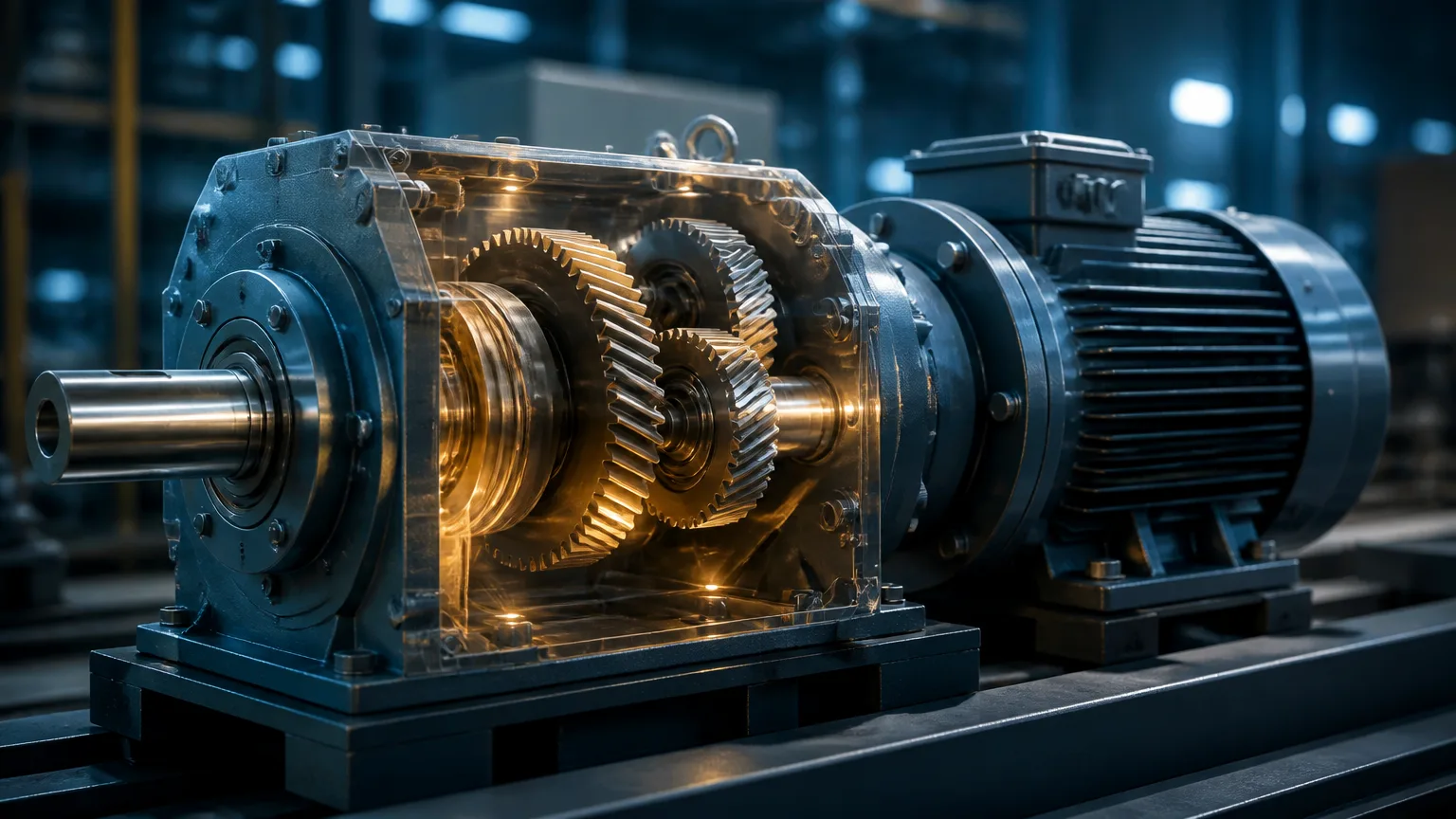
Power transmission depends on the gearbox to transfer motor power, reduce speed, and increase usable torque. This makes the gearbox central to production uptime, equipment safety, and consistent machine performance. Choosing one requires more than matching a reduction ratio or selecting the lowest purchase price.
The right decision accounts for load, duty cycle, operating environment, alignment, maintenance access, and expected service life. Lifecycle cost and repairability matter just as much as initial specifications, especially when downtime threatens production.
Recurring failures may signal incorrect sizing, poor alignment, contamination, or an unsuitable design—not normal wear alone. Manufacturers should connect replacement planning with repairing gear drives and preventing repeat failures. This article explains how to evaluate the complete application and choose a gearbox built for reliable, maintainable performance.
Start With the Application’s Load and Duty Requirements
Before comparing manufacturers or gearbox designs, define the driven machine’s actual operating conditions. Record motor horsepower, input and output speed, required ratio, and whether the gearbox will run continuously or intermittently. These fundamentals establish the starting point for selecting the right power transmission solution.
Average power alone does not describe the application. Engineers must also assess service factor, startup torque, shock loading, and reversing cycles. Conveyors, crushers, mixers, and similar equipment can create severe torque spikes during starts, jams, material changes, or sudden stops. For demanding crushing duties, review options such as gearboxes for industrial crushers that are designed for repeated impact loads.
Identify the driven load, expected operating hours, and the frequency of starts and stops. This information helps determine whether the gearbox can manage peak and transient conditions without overheating or premature fatigue.
Environmental details are equally important. Document ambient temperature, dust or other contamination, washdown exposure, and the available mounting orientation. These factors influence housing protection, lubrication, sealing, cooling, and bearing selection. Capturing them early prevents a gearbox from being specified for ideal conditions rather than the conditions it will actually face.
Choose the Gearbox Type and Configuration for the Job
Gearbox geometry directly affects efficiency, torque capacity, heat generation, footprint, and installation requirements. Helical gearboxes support efficient, continuous power transmission and suit conveyors, mixers, and other steady-duty equipment. Bevel-helical designs add a right-angle output, making them practical when space limits shaft alignment.
Planetary gearboxes deliver high torque density in a compact package. They are well suited to heavy-duty applications with high loads and limited installation space. Worm gearboxes provide compact reductions and high ratio capability, but typically generate more heat and operate less efficiently than helical designs.
Configuration details can prevent costly retrofit problems. Confirm the required output shaft style, mounting arrangement, allowable overhung loads, and backlash limits before selecting the unit. Also verify lubrication requirements, mounting orientation, and access for inspection or oil changes.
Brake and backstop compatibility requires equal attention. A backstop may be essential on inclined conveyors, while a brake can control stopping or prevent rollback. For vertical material handling, review purpose-built options such as gearboxes for bucket elevators to match torque, shaft loads, and duty cycle. These checks ensure the gearbox fits both the machine and its operating demands.
Match the Gearbox to Environmental and Production Conditions
Torque and speed are essential, but the operating environment also determines gearbox performance. Dust and abrasive particles can damage seals and contaminate lubricant. Moisture, chemicals, and corrosive atmospheres may require stainless or coated housings, enhanced sealing, and corrosion-resistant components.
Washdown areas demand more than a water-resistant enclosure. Specify protection against cleaning chemicals, suitable ventilation or cooling, and lubrication that remains stable under changing temperatures. High-temperature environments may need upgraded seals, heat-resistant lubricants, or external cooling to prevent premature wear.
Production conditions matter equally. Frequent starts, stops, reversing, shock loads, and continuous operation affect thermal capacity, bearing loads, and service factors. In food and beverage facilities, gearboxes for bottling lines should support cleanability and use suitable coatings and food-grade lubricants where required. Their design must also limit contamination risks.
A properly sized gearbox can still fail early if its seals, ventilation, corrosion protection, or lubricant do not suit the plant. During power transmission planning, document exposure levels, cleaning methods, ambient temperatures, and duty cycles before finalizing the specification. This ensures the gearbox is built for actual production conditions, not ideal ones.
Evaluate Repair, Replacement, and Total Cost of Ownership
Start with a qualified inspection and, when necessary, a teardown. Findings should document gear tooth wear, bearing damage, shaft condition, housing integrity, backlash, lubrication evidence, and alignment-related damage. These details show whether repair can restore reliable performance or merely postpone another failure.
Compare repair costs with replacement pricing and lead times. Include installation modifications, energy efficiency, spare-parts availability, warranty support, and the cost of an unplanned outage. A higher-efficiency replacement may reduce operating costs, while an equivalent unit may minimize installation time. For complex failures, Bonfiglioli gearbox repair services may provide a practical assessment and restoration path.
Before requesting a quotation, record the nameplate, dimensions, ratio, torque requirements, service history, and failure symptoms. Add clear photographs of the gearbox, mounting points, shafts, and surrounding equipment. This information helps suppliers recommend the right power transmission solution and produce accurate repair or replacement estimates.
Specify for Reliability, Not Just Initial Fit
The right gearbox must meet torque and speed demands with an appropriate service margin. It must also fit the machine, operating environment, maintenance program, and production schedule. Confirm the load, gearbox design, mounting arrangement, shaft connections, lubrication, and installation requirements before approval.
Include repairability and lifecycle support in the final decision. Involve qualified gearbox specialists before failure occurs so condition assessment, repair, replacement, and alignment planning can be coordinated with minimal downtime.
After installation, monitor temperature, vibration, noise, oil condition, and leakage. These checks validate the power transmission selection and reveal developing problems before they disrupt production.