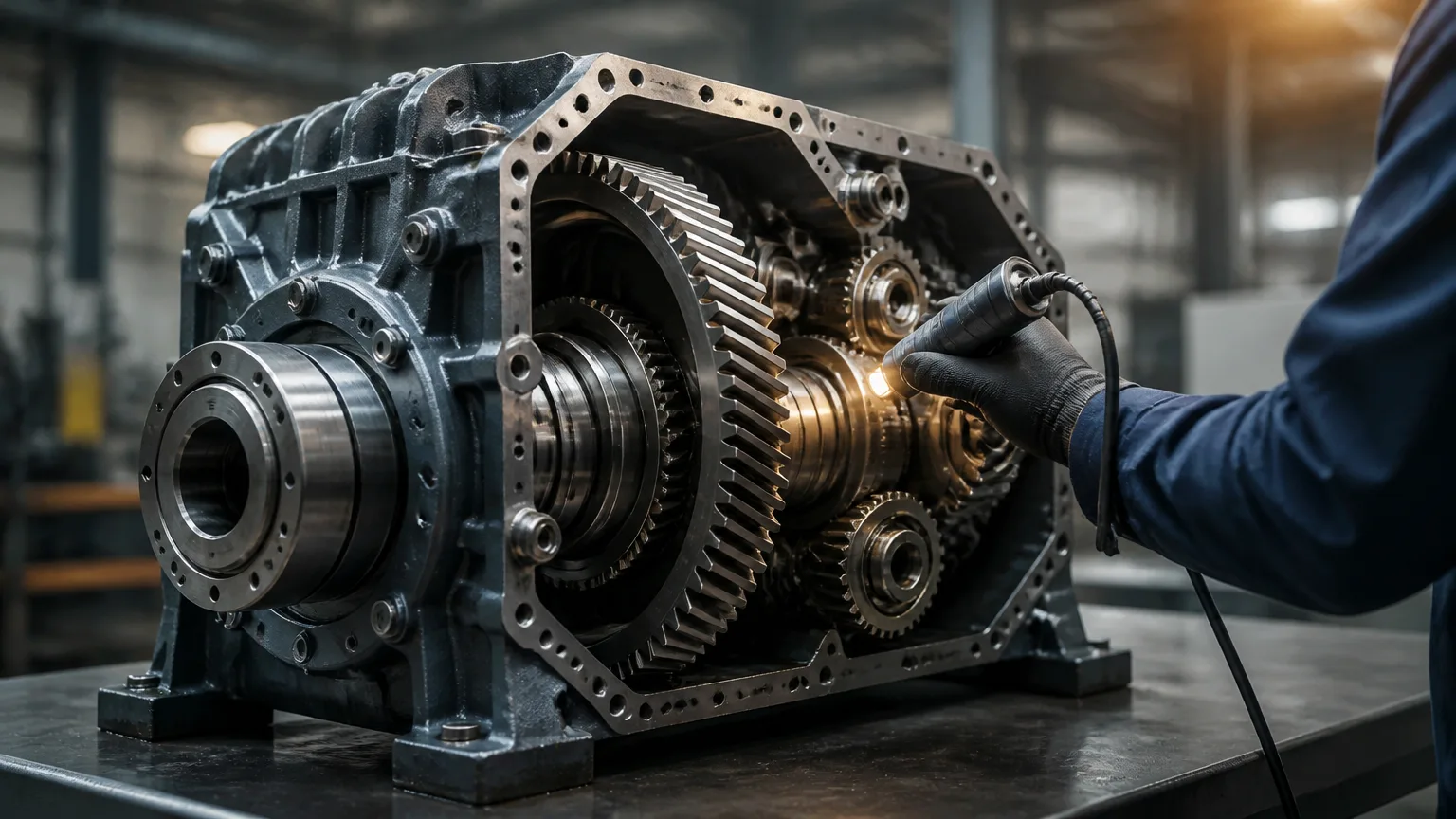
A Coperion gearbox helps power production equipment where consistent speed and torque are essential. When symptoms such as unusual noise, heat, or vibration appear, their effects can extend beyond the drive, disrupting throughput, product quality, and connected equipment. Early diagnosis can help prevent a manageable issue from becoming unplanned downtime. For replacement identification, submit the details through our gearbox nameplate identification form.
Before contacting a service provider, record the gearbox model, operating conditions, and symptoms, including when they occur. This information helps guide a timely assessment and clarify whether repair, rebuild, or replacement is the right path. This guide explains how to weigh those options and find industrial gearbox solutions for your equipment needs.
Recognizing Coperion Gearbox Problems Early
Early warning signs can help maintenance teams address a Coperion gearbox issue before it causes unplanned downtime. Listen for unusual grinding, knocking, or whining, and note new vibration, excessive heat, lubricant leaks, or a change in output speed or torque. A mixer that slows under a familiar load, for example, may need investigation even if it still runs.
These symptoms do not confirm gear damage. Lubrication problems, misalignment, worn bearings, damaged gears, failing seals, or connected equipment can produce similar signs. Check the gearbox exterior and surrounding area for leaks, loose fasteners, unusual movement, and blocked cooling paths. Review available lubricant records or sight glasses for low levels, discoloration, or visible contamination. Follow site safety procedures, and do not open or handle components while equipment is running or hot.
Before removing the gearbox or approving repairs, record operating temperatures, load patterns, maintenance history, and when each symptom occurs. Note whether noise or vibration changes with speed, load, or startup. These details help technicians distinguish gearbox faults from problems elsewhere in the drive train and plan the next inspection.
What a Professional Inspection and Repair Involve
A professional assessment begins by identifying the gearbox model, configuration, and application. Technicians confirm operating requirements, such as speed, load, and duty cycle, before ordering parts or finalizing the repair scope. This prevents mismatched components and helps ensure the repair suits the equipment.
After teardown, technicians inspect the gears, shafts, bearings, seals, housing, and lubrication system. They check for wear, damage, misalignment, contamination, and signs of inadequate lubrication. These findings show which parts remain serviceable and which need repair or replacement. For a coperion gearbox, the inspection should also account for the specific operating conditions and symptoms reported.
The repair provider should explain its recommended scope, parts availability, expected turnaround, and verification steps. Experienced industrial gearbox service and repair helps make these decisions practical: technicians can identify related faults, prioritize critical work, and clarify what testing is needed before return to service.
Corrective work may include replacing damaged components, restoring worn surfaces, correcting alignment, and cleaning or repairing the lubrication system. Once reassembled, the gearbox is tested to verify operation and check for abnormal noise, vibration, leaks, or temperature changes. Clear findings and test results help you plan the next steps with confidence.
Repair, Rebuild, or Replace: Making the Decision
Inspection findings help narrow the choice, but the best option also depends on operating needs, parts availability, and lifecycle cost. A targeted repair may suit a Coperion gearbox when damage is limited, the unit remains appropriate for the application, and critical parts can be sourced. Replacing a bearing or seal, for example, may restore service without the cost or downtime of a broader overhaul.
Consider a rebuild when wear affects multiple components but the gearbox’s design and housing remain viable. Compare the full rebuild cost—including labor, parts, testing, and expected downtime—with the cost and lead time of replacement. A lower initial price does not always mean the lower total cost if the rebuilt unit is likely to need further work soon.
Replacement may be the stronger choice when damage is severe or recurring, components are obsolete, or production demands have changed. Before selecting a new unit, confirm torque, speed, ratio, mounting, and duty requirements. The gearbox must suit the driven process and operating conditions, not simply fit the available space.
Use these questions to guide the decision:
- Can the fault be isolated and corrected with available parts?
- Will a rebuild restore reliable operation for the expected service life?
- Would replacement reduce downtime or better meet current process demands?
Review gearbox selection and power transmission considerations before specifying a replacement. Matching the gearbox to load, speed, and duty helps prevent avoidable performance problems.
Planning the Work and Returning to Service
Coordinate the production window before repair or replacement begins. Confirm whether spare equipment is available, and plan lifting, access, and removal requirements. Share the installed unit’s model, nameplate details, drawings, and service history with the provider. These steps support industrial gearbox repair planning and help limit delays.
For a replacement, verify dimensions, mounting and shaft interfaces, alignment, and lubrication requirements. Confirm the new gearbox is compatible with the motor and driven equipment, including load, speed, and duty. Careful gearbox rebuild considerations can also help teams plan scope and commissioning needs.
After a coperion gearbox is repaired or rebuilt, follow the service provider’s run-in and monitoring instructions. Check for leaks, unusual noise, vibration, and temperature changes. Record baseline readings under known operating conditions so future changes are easier to spot and investigate.
Keep the Decision Focused on Reliability
Dependable production starts with identifying the fault, then comparing repair and replacement based on lifecycle impact. Verify the chosen solution against the gearbox’s actual load, speed, duty, and operating conditions—not just its model or initial cost.
Use equipment records, maintenance history, and observed symptoms to discuss next steps with a qualified service provider. Before arranging an inspection, gather the coperion gearbox identification details and condition information, including when symptoms occur and how they change with operating conditions.