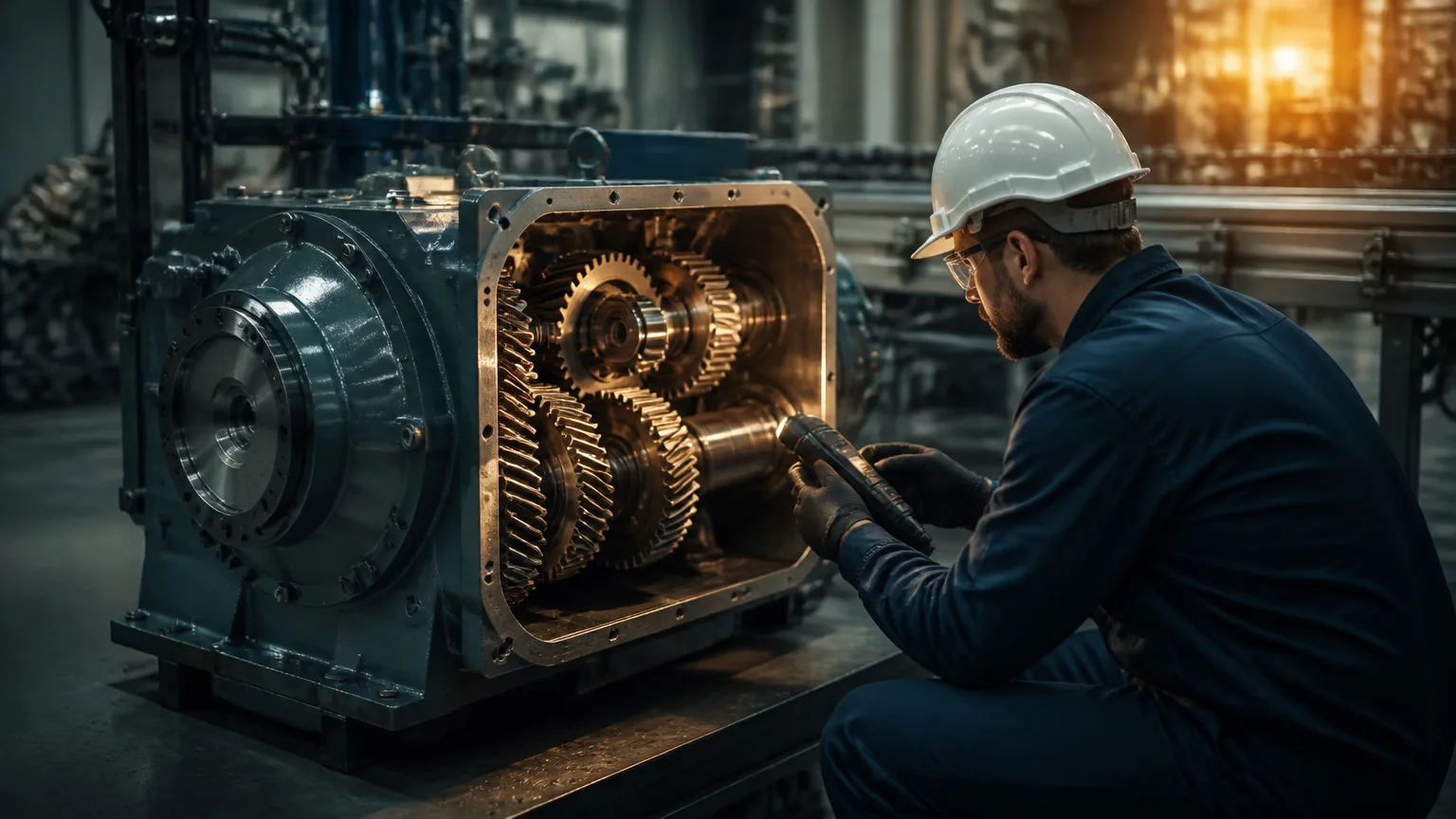
A werner pfleiderer gearbox may be central to a production line, supporting equipment that must run reliably under demanding conditions. When performance changes or a unit fails, deciding whether to repair or replace it can affect output, maintenance planning, and downtime costs. If replacing the unit, use our gearbox interchange and replacement guide to check compatibility factors.
The right choice depends on the gearbox’s condition, operating requirements, parts availability, and expected lead time. First, verify the model, configuration, and application; Werner Pfleiderer units may require different parts and repair approaches. Compare options by reliability and lifecycle cost, not just the initial quote. This guide offers practical steps for weighing those trade-offs and finding industrial gearbox solutions.
Recognize Failure Symptoms and Gather Useful Evidence
Abnormal noise, vibration, excess heat, oil leakage or contamination, changing output, and repeated trips can all signal a problem. Treat them as symptoms to document, not proof that the gearbox is at fault. Similar signs can come from the motor, coupling, driven equipment, controls, or operating conditions.
Observe the unit only when it is safe to do so. Do not keep running a damaged gearbox to see whether it fails completely. Note when symptoms occur, such as during startup, under heavy load, or after extended operation. Record load, speed, duty cycle, operating conditions, and lubrication type and service history.
Photograph visible leaks, damage, and the nameplate, including model and serial details. These records help a repair provider assess the unit and identify suitable parts. A qualified technician can inspect gearbox components, lubrication, alignment, and wear to distinguish internal damage from issues elsewhere in the drive system. For background on how gearboxes can fail and be repaired, see our related guide. The right diagnostic approach depends on the werner pfleiderer gearbox model and configuration; do not assume it is hydraulic unless its design confirms this.
What a Werner Pfleiderer Gearbox Repair Involves
A repair typically begins with an external inspection, followed by controlled teardown and cleaning. The shop records the unit’s model, configuration, and condition, then checks components such as gears, bearings, shafts, seals, housing, and lubrication pathways. Fit and alignment may also be evaluated. These are standard inspection areas, not signs that every unit has defects.
After inspection, the shop assesses what can be repaired or reused and what needs replacement. The scope depends on the findings and the gearbox’s specifications, duty, and operating conditions. A repair proposal should separate required corrective work from optional recommendations and clearly state parts, labor, testing, warranty, and expected turnaround.
Once you approve the scope, technicians complete the agreed work, reassemble the gearbox, and test it against suitable criteria. Ask how the shop documents measurements and results, and what acceptance criteria it uses. Consistent reliability practices and documented testing help facilities judge repair quality and readiness for return to service. For broader context, review these gearbox reliability standards.
The precise workflow for a werner pfleiderer gearbox varies by model and inspection results. Confirming those details early helps set realistic expectations and supports an informed repair-versus-replacement decision.
When Replacement Is the Better Option
Replacement may be more practical when inspection finds extensive damage, failures keep returning, or essential parts are unavailable or impractical to source. These conditions are warning signs, not automatic reasons to replace. A repair may still make sense if it restores reliable operation at a reasonable cost.
Compare the full cost and operational impact of both options. Repair costs can rise when work is complex or parts are scarce; replacement can add installation, alignment, control or drive changes, and commissioning. Include lead time and the cost of continued downtime. A replacement that arrives quickly may improve availability, but only if it fits the application and can be commissioned without extensive changes.
Before treating a replacement gearbox or equivalent assembly as interchangeable, check equipment documentation. Verify mounting, shaft arrangement, ratio, torque and speed requirements, service conditions, and mechanical and electrical interfaces. A different speed reducer may require changes elsewhere in the drive system. Review speed reducer selection and repair considerations when comparing options. For a werner pfleiderer gearbox, confirm the exact model and configuration before approving a substitute. These checks help prevent compatibility problems that can delay startup or create new reliability issues.
Choosing a Repair Provider and Planning the Work
Choose a provider based on relevant capability, clear communication, and a repair plan that fits your production needs. Ask whether the team can identify the unit from its nameplate and documentation, inspect the assembly, and source or assess suitable parts. They should also explain the testing process and warranty terms before work begins.
Request a written scope, schedule, assumptions, and approval points. Compare proposals by expected service life and downtime exposure as well as price. Confirm how long inspection, parts sourcing, repair, and testing are expected to take, then coordinate those milestones with planned maintenance windows or production changes.
Use how to compare gearbox rebuild providers to assess local options and service scope. Treat that comparison as a starting point: confirm each candidate can handle your specific werner pfleiderer gearbox, model, and configuration before authorizing work.
Return to Service with a Documented Decision
Before approving work, identify the werner pfleiderer gearbox, assess its symptoms, and compare a documented repair scope with replacement requirements. Plan installation and verification with qualified personnel, including checks for alignment, lubrication, and operating performance.
Retain inspection findings, repair records, parts information, and operating baselines to guide future maintenance. The best option restores dependable operation while meeting the facility’s compatibility, schedule, and lifecycle needs.