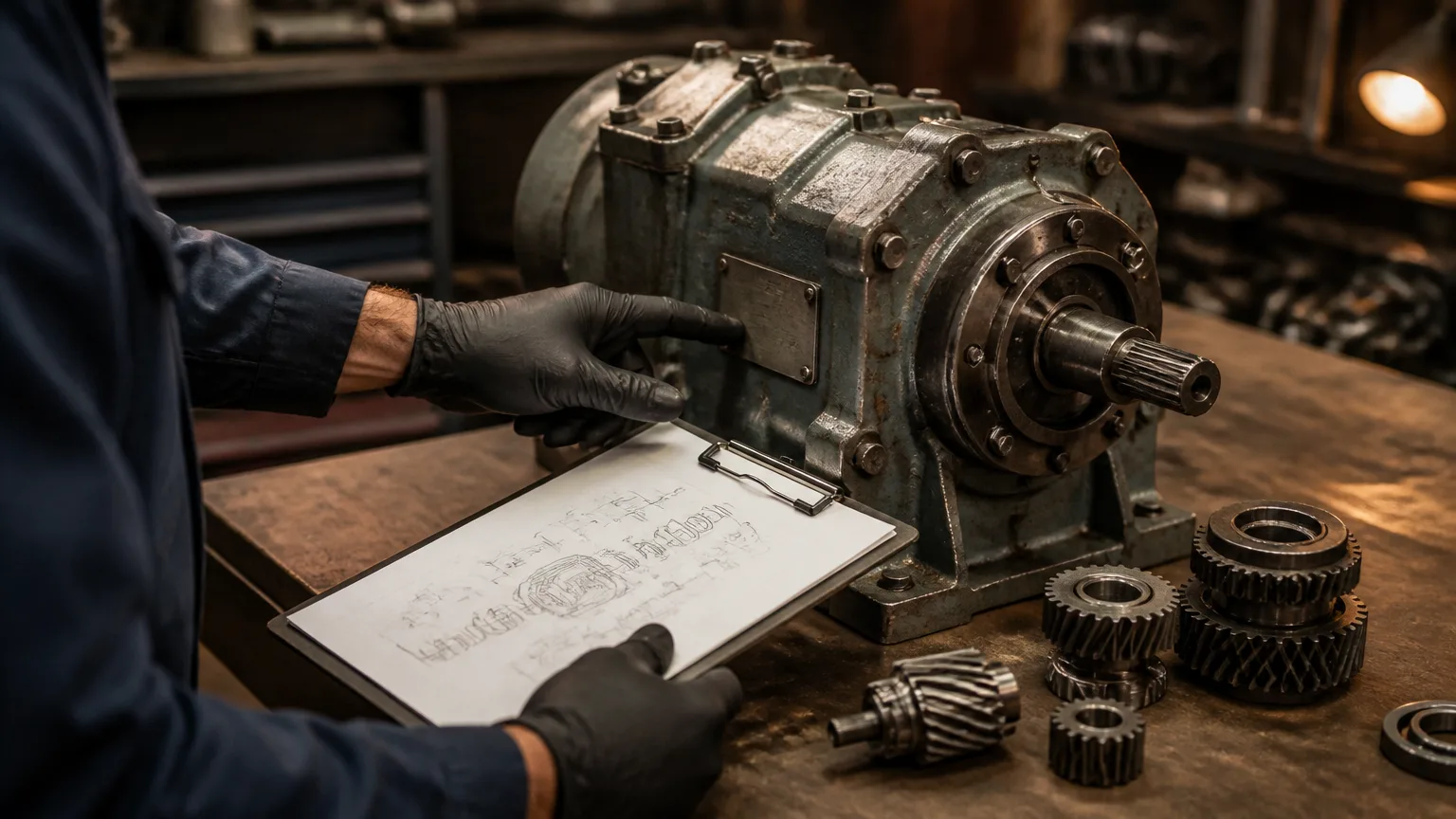
Choosing the right dodge gearbox parts starts with the exact unit, not just its product family. Gearboxes that look similar may have different ratios, mounting arrangements, shafts, or internal components. A mismatch can lead to poor fit, reduced performance, unsafe repairs, or unplanned downtime.
For maintenance teams, accurate identification supports reliable operation and better repair planning. Check the gearbox nameplate, documentation, and configuration before ordering replacements, especially when operating conditions have changed. This guide offers practical steps to verify the correct parts and make informed decisions. For further support, explore industrial gearbox solutions.
Start With the Gearbox Nameplate and Model Details
Before ordering dodge gearbox parts, locate the nameplate on the gearbox housing and photograph it clearly. Record every detail exactly as printed, including letters, numbers, punctuation, and any suffixes. Do not rely on memory or a broad product name.
Capture the gearbox model and series, serial number, gear ratio, mounting arrangement, and shaft configuration. Also note revision numbers and option codes, which may identify differences in materials, seals, lubrication, or other features. These details help distinguish parts that may look similar but are not interchangeable.
Confirm that the model belongs to the gearbox itself, not the machine or drive assembly it serves. A machine’s broad product name may cover several gearbox models or configurations. Compare the nameplate with drawings, manuals, purchase records, and maintenance history before selecting parts.
If the plate is worn, incomplete, or obscured, check original purchase or maintenance records for the missing information. A repair provider can also help interpret partial identification details and assess what information is needed. For an example of the data involved in repair and replacement decisions, review these gearbox repair and replacement considerations.
Match the Part to the Gearbox Configuration
A model label is a starting point, not a guarantee that a replacement will fit. Gearboxes can vary by revision, mounting arrangement, shaft orientation, or lubrication setup. Compare the installed unit with authoritative parts documentation before ordering Dodge gearbox parts.
Check each component’s fit-critical features. For gears, verify dimensions, tooth form, and material; for bearings, confirm size, type, and required clearances. Seals must match shaft dimensions and housing bores, while shafts require the correct diameter, length, keyway, and connection details. For housings, check mounting position, bolt patterns, interfaces, and lubrication ports.
Also confirm the gearbox’s input and output shaft orientation and diameter, mounting position, lubrication arrangement, and connection points. A part can look similar yet differ in a detail that prevents installation or affects operation. Even parts from another revision may not be interchangeable.
When specifications are unclear, use the gearbox’s serial and configuration details to check the correct parts list, or ask a qualified supplier to verify compatibility. This helps prevent ordering a part that fits loosely, obstructs lubrication, or fails under operating loads.
Check Ratio, Load, Speed, and Operating Conditions
Once you have confirmed the gearbox configuration, compare its specifications with the driven equipment’s actual requirements. Verify the required ratio, input and output speeds, torque, load direction, and duty cycle. A part or replacement assembly must suit the application—not just fit the existing housing.
Ratio affects both output speed and available torque. A mismatch can change equipment performance and increase stress on the gearbox or driven components. Review how gear ratio affects speed and torque before selecting a replacement, especially if the motor or driven equipment has changed.
Check the expected load under real operating conditions, including startup, frequent cycling, and continuous operation. For example, a conveyor that starts under load may place different demands on gears and bearings than one running steadily. Confirm that candidate dodge gearbox parts match those demands and the gearbox’s rated capacity.
Environmental conditions also affect part suitability. High temperatures, dust, moisture, and washdown exposure can influence seal and bearing selection, while contamination or inadequate lubrication can shorten service life. Confirm that lubricant-related components and materials suit the application, and check that the specified lubricant and maintenance practices are appropriate for the operating environment. When conditions have changed, verify the full specification before ordering.
Use Failure Evidence to Confirm What Needs Replacing
A symptom points to a problem; it does not identify the failed part. Noise, vibration, overheating, leakage, or abnormal backlash can come from several causes. Inspect the gearbox before selecting a replacement, and compare findings with its configuration and service history.
Document visible damage, wear patterns, lubricant condition, and any secondary damage. For example, damaged gear teeth may also indicate bearing wear or contamination that could affect replacement parts. This evidence helps confirm whether a single component has failed or the repair needs a wider scope.
For an unexpected breakdown, prompt assessment can help guide safe repair planning. Review this guidance for gearbox failure and urgent repair planning to understand practical next steps. A qualified gearbox technician should evaluate the repair scope when damage extends beyond the apparent failure, the cause is uncertain, or inspection requires specialist tools.
After repairs, check operating conditions and maintenance practices that may contribute to reducing gearbox energy losses. This can help protect replacement Dodge gearbox parts and support reliable operation.
Confirm Compatibility Before Ordering
Before ordering Dodge gearbox parts, verify the unit and match each component to the gearbox configuration, application, and operating requirements. Accurate model data and inspection findings provide a stronger basis for selection than appearance alone.
Share the nameplate information, photos, and inspection results with a qualified supplier or repair provider to reduce ordering errors and avoidable downtime. If records or part details remain uncertain, seek technical support before purchasing or installing a replacement.