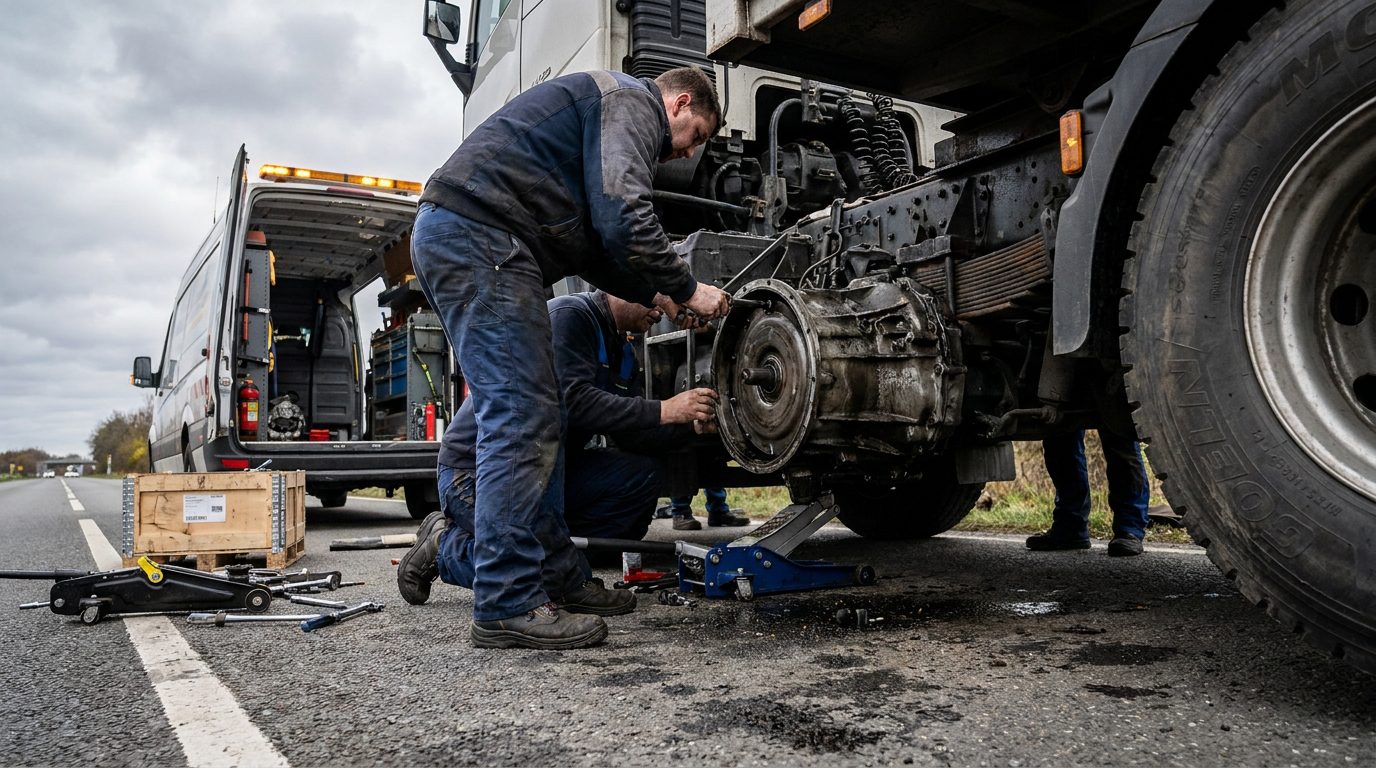
When a critical gearbox fails without warning, every minute matters. A stalled conveyor, mixer, cooling tower, extruder, pump, or crane drive can quickly turn into lost production, missed shipments, safety risks, and expensive overtime. In many plants, the gearbox is not just one component—it is the mechanical link that keeps an entire process moving.
Emergency gearbox replacement requires more than ordering a unit that “looks close.” To get operations running again safely, buyers must confirm the correct gearbox type, ratio, mounting, shaft configuration, torque rating, service factor, lubrication requirements, and lead time. The right decision can reduce downtime and prevent repeat failures. The wrong decision can create alignment problems, premature bearing damage, overheating, seal leaks, or catastrophic failure under load.
This buyer’s guide is written for maintenance professionals, engineers, plant managers, OEMs, and industrial buyers who need a practical, fast, and reliable process for emergency gearbox replacement.
If your gearbox has failed and the nameplate is damaged, missing, or difficult to read, Industrial Gearbox Solutions can help you identify the correct replacement or suitable equivalent. Having the right dimensions, photos, and operating details can dramatically speed up the quote and replacement process.
Submit your gearbox information, photos, and urgency level below, and our team can help review replacement options for your application.
If you’re considering purchasing an emergency gearbox replacement, it’s essential to understand the various options available to you. A related article that provides valuable insights on this topic is “Sew Eurodrive Gearbox Replacement,” which discusses the specifics of selecting the right gearbox for your needs. You can read more about it by visiting this link: Sew Eurodrive Gearbox Replacement. This resource will help you make informed decisions when it comes to emergency gearbox replacements.
What Counts as an Emergency Gearbox Replacement?
An emergency gearbox replacement occurs when a gearbox failure causes immediate or near-immediate operational disruption and the plant cannot wait for a normal procurement cycle. This may involve sourcing an exact replacement, modifying an available unit, rebuilding the existing gearbox, or engineering a compatible substitute.
Common Emergency Situations
Emergency replacement is often required when a gearbox experiences:
- Broken gear teeth
- Seized bearings
- Cracked housing
- Input or output shaft failure
- Severe oil leakage
- Excessive vibration
- Overheating
- Contaminated lubrication
- Coupling or keyway damage
- Irreparable internal wear
- Catastrophic failure after shock loading
In many cases, the gearbox may still rotate but no longer operate safely. Continuing to run a failing unit can damage connected equipment, including motors, couplings, driven shafts, sprockets, pulleys, pumps, and process machinery.
Why Speed and Accuracy Both Matter
During a breakdown, the pressure to “get anything installed” is high. However, gearbox selection must be accurate enough to handle the real operating conditions. A replacement gearbox that fits physically but lacks the correct torque capacity or service factor can fail shortly after installation.
For example, a conveyor gearbox in a quarry may appear similar to a standard warehouse conveyor drive. However, the quarry application may experience shock loads, abrasive dust, high starting torque, and long duty cycles. Installing an undersized replacement could lead to rapid overheating or gear tooth failure.
First Steps After a Gearbox Failure
A structured response helps reduce downtime and avoid costly mistakes. Before ordering a replacement gearbox, gather essential information and assess whether the existing unit can be safely repaired, rebuilt, or replaced.
Secure the Equipment Safely
Before inspecting the gearbox, follow all lockout/tagout procedures and site safety policies. Gearboxes are often connected to heavy rotating equipment with stored mechanical energy. Never inspect couplings, belts, chains, or shafts while equipment is energized.
Initial safety steps should include:
- Shut down the equipment.
- Isolate power and stored energy.
- Allow hot components to cool.
- Contain oil leaks or spills.
- Document visible damage before removal.
- Notify maintenance, engineering, and purchasing teams.
Document the Failure
Photos and notes can help determine whether the failure was caused by age, overload, lubrication breakdown, misalignment, contamination, or an application mismatch.
Capture images of:
- Gearbox nameplate
- Overall gearbox from multiple angles
- Input and output shafts
- Mounting feet or flange
- Oil sight glass, breather, and drain plug
- Couplings, sprockets, pulleys, or torque arms
- Damaged seals, cracked housings, or broken parts
- Connected motor and driven equipment
If the gearbox is being replaced by an outside supplier, clear photos can often reduce identification time significantly.
Determine Whether the Gearbox Is Repairable
Not every emergency requires a completely new gearbox. In some cases, a rebuild or repair may be faster than sourcing a replacement, especially for obsolete, custom, or large industrial gearboxes.
Consider repair when:
- The housing is intact
- Shafts can be repaired or replaced
- Gears are available or can be manufactured
- Bearings and seals are standard
- The gearbox is large, custom, or long lead time
- A spare housing or internal parts are available
Consider replacement when:
- The housing is cracked or severely damaged
- Gear sets are destroyed
- The unit is commercially available
- Repair lead time exceeds acceptable downtime
- The gearbox was undersized for the application
- The plant wants to improve reliability or efficiency
Check out our latest posts at https://industrialgearboxsolutions.com/blog/ for valuable industry insights.
Information You Need Before Buying a Replacement Gearbox
The most important part of emergency gearbox replacement is identifying the correct technical requirements. A gearbox is not specified by horsepower alone. Torque, speed, ratio, mounting, shaft configuration, duty cycle, and environmental conditions all matter.
Gearbox Nameplate Details
If the nameplate is readable, record all available information. The nameplate may include:
| Nameplate Field | Why It Matters |
|||
| Manufacturer | Helps identify direct replacement or equivalent |
| Model number | Defines gearbox series, size, ratio, and options |
| Serial number | May provide build history or custom configuration |
| Ratio | Determines output speed and torque multiplication |
| Input horsepower | Helps confirm power capacity |
| Input RPM | Needed to verify rating and output speed |
| Output RPM | Confirms process speed requirement |
| Service factor | Indicates overload capacity |
| Mounting position | Affects lubrication and breather placement |
| Lubricant type | Prevents overheating and premature wear |
If the nameplate is missing, the gearbox can often still be identified using dimensions and application data.
Critical Dimensional Measurements
When replacing a gearbox, dimensional accuracy is essential. A gearbox with the correct ratio but different shaft height or mounting pattern may require base modifications, coupling changes, or machine realignment.
Measure and document:
- Center distance
- Overall length, width, and height
- Mounting hole spacing
- Shaft diameter
- Shaft length
- Keyway width and depth
- Shaft orientation
- Flange size and bolt circle
- Distance from mounting base to shaft centerline
- Input and output shaft locations
- Hollow bore dimensions, if applicable
Even small dimensional differences can affect installation time. In an emergency, knowing these details upfront helps determine whether a drop-in replacement is available.
Application and Operating Conditions
A replacement gearbox must match the actual duty of the application, not just the original catalog rating.
Provide the supplier with:
- Driven equipment type
- Motor horsepower and RPM
- Operating hours per day
- Starts and stops per hour
- Load type: uniform, moderate shock, or heavy shock
- Ambient temperature
- Washdown, dust, moisture, or chemical exposure
- Indoor or outdoor installation
- Vertical or horizontal mounting
- Reversing duty requirements
- Brake motor or backstop requirements
For example, a gearbox driving a wastewater clarifier has different needs than one driving a rock crusher feeder, even if both use similar horsepower motors.
When considering how to buy an emergency gearbox replacement, it’s essential to understand the repair options available to you. For instance, if you’re located in Illinois, you might find valuable insights in a related article about industrial gearbox repair in Aurora, which discusses the benefits of timely repairs and maintenance. This information can help you make informed decisions about whether to replace or repair your gearbox. To learn more about these services, you can check out the article here.
How to Choose the Right Emergency Gearbox Replacement
Once you have the necessary information, the next step is evaluating replacement options. The best choice depends on downtime cost, availability, technical fit, and long-term reliability.
Exact Replacement
An exact replacement is usually the fastest and safest option when available. It matches the original manufacturer, model, ratio, mounting, and shaft configuration.
Advantages:
- Minimal engineering review
- Fast installation
- Existing couplings and guards may fit
- Reduced alignment and fabrication work
- Familiar maintenance procedures
Limitations:
- May be unavailable or obsolete
- Lead time may be too long
- Original unit may have been undersized
- Does not correct design-related reliability issues
If the failed gearbox has a history of repeated failures, an exact replacement may restore production quickly but not solve the underlying problem.
Equivalent or Interchange Gearbox
An equivalent gearbox is a unit from another manufacturer that matches the required performance and installation needs. This can be a strong option when the original brand is unavailable or has a long lead time.
When evaluating an equivalent, confirm:
- Ratio and output speed
- Torque rating
- Service factor
- Shaft size and orientation
- Mounting footprint
- Thermal capacity
- Lubrication requirements
- Backstop or brake compatibility
- Environmental sealing
- Load classification
A true equivalent should be verified technically—not selected only by approximate appearance.
Modified Stock Gearbox
In some emergencies, a stock gearbox can be modified to fit the application. Modifications may include changing shafts, adding flanges, adjusting mounting plates, installing different seals, or adapting couplings.
This option can reduce downtime when a direct replacement is unavailable.
Common modifications include:
- Machining output shafts to match existing couplings
- Adding adapter plates
- Changing input configurations
- Installing C-face motor adapters
- Adding torque arms
- Changing oil seals for washdown or abrasive environments
- Adjusting mounting orientation
Modified units should be reviewed carefully to ensure structural integrity and warranty considerations.
Rebuild or Remanufacture
A rebuild may be the best emergency solution for large, obsolete, or custom industrial gearboxes. Rebuilding typically involves disassembly, cleaning, inspection, bearing and seal replacement, gear repair or replacement, shaft repair, and reassembly.
A quality rebuild may include:
- Gear tooth inspection
- Bearing fit checks
- Shaft runout inspection
- Housing bore inspection
- Seal surface repair
- Gear contact pattern verification
- Backlash measurement
- Lubrication system inspection
- Test run when possible
For critical applications, ask whether the rebuild includes inspection reports or failure analysis documentation.
When considering the purchase of an emergency gearbox replacement, it is essential to understand the repair options available to you. For instance, if you find yourself in Kentucky, you might want to explore the various services offered for gearbox repair in Paducah. This can provide valuable insights into whether a replacement or repair is the best course of action for your specific situation. To learn more about these services, you can read this informative article on industrial gearbox repair in Paducah, Kentucky.
Key Technical Factors Buyers Must Verify
During emergency procurement, technical shortcuts are tempting. However, several factors must be confirmed before purchasing a replacement gearbox.
Gear Ratio and Output Speed
The gear ratio determines how much the gearbox reduces speed and increases torque. If the ratio is wrong, the driven equipment may run too fast or too slow.
For example, a conveyor designed for 60 feet per minute may overload downstream equipment if it runs at 80 feet per minute. A mixer may fail to process material correctly if output speed is too low.
Always verify:
- Motor RPM
- Gearbox ratio
- Output RPM
- Driven equipment speed requirement
- Variable frequency drive settings, if used
Torque Rating and Service Factor
Horsepower alone does not define gearbox capacity. Torque is the rotational force the gearbox must transmit, and service factor accounts for load severity and operating conditions.
A gearbox in a light-duty fan application may not need the same service factor as one in a crusher, bucket elevator, or heavy conveyor.
Typical service factor considerations include:
| Application Condition | Service Factor Consideration |
|||
| Smooth, steady load | Lower service factor may be acceptable |
| Frequent starts/stops | Higher service factor recommended |
| Shock loading | Higher mechanical rating required |
| 24/7 operation | Increased durability needed |
| High ambient temperature | Thermal rating must be checked |
| Reversing loads | Shaft and gear loading must be reviewed |
Undersizing the gearbox can cause gear pitting, bearing failure, overheating, or shaft fatigue.
Mounting Position and Lubrication
Gearboxes are designed for specific mounting positions. A unit mounted differently than intended may not lubricate bearings and gears correctly.
Verify:
- Horizontal or vertical mounting
- Floor, wall, shaft, or flange mounting
- Oil fill level
- Breather location
- Drain and sight glass position
- Grease lubrication points
- Splash or forced lubrication requirements
Incorrect oil level is one of the most common causes of premature gearbox failure after replacement.
Shaft Configuration
Shaft configuration must match both the motor side and driven side.
Common configurations include:
- Solid input shaft
- Hollow input
- C-face motor input
- Solid output shaft
- Hollow bore output
- Double output shaft
- Right-angle output
- Parallel shaft output
Keyways, splines, tapers, and shrink discs should be checked carefully. If the shaft does not match, installation can be delayed by machining, coupling replacement, or field modifications.
Environmental Protection
Industrial gearboxes often operate in demanding environments. A replacement unit must withstand the same or improved conditions.
Consider:
- Dust exposure
- Outdoor weather
- High humidity
- Salt air
- Food-grade washdown
- Chemical exposure
- High temperature
- Low temperature
- Abrasive particles
- Explosion-classified areas
For food, beverage, wastewater, mining, aggregate, and chemical plants, sealing and coating options can be just as important as torque rating.
Emergency Gearbox Replacement Buying Checklist
A clear checklist helps maintenance and purchasing teams communicate quickly with suppliers.
Essential Information to Provide
Use the following checklist when requesting a quote:
- Gearbox manufacturer
- Model number
- Serial number
- Ratio
- Motor horsepower
- Motor RPM
- Input and output shaft dimensions
- Mounting style
- Mounting hole pattern
- Shaft orientation
- Application type
- Operating hours per day
- Load severity
- Ambient environment
- Photos of gearbox and nameplate
- Required delivery date
- Shipping location
- Whether modification is acceptable
Questions to Ask Your Supplier
Before approving an emergency gearbox order, ask:
- Is this an exact replacement or an equivalent?
- What is the lead time?
- Is the gearbox in stock?
- Are modifications required?
- Does the unit match the original ratio and shaft layout?
- What is the torque rating and service factor?
- Is the gearbox suitable for the mounting position?
- What lubricant is required?
- Is expedited freight available?
- What warranty applies?
- Are installation drawings available?
- Can technical support assist during installation?
Comparing Replacement Options
When multiple options are available, compare them based on more than price.
| Factor | Why It Matters |
|||
| Availability | Fast delivery may reduce downtime cost |
| Technical fit | Prevents installation delays and repeat failure |
| Torque capacity | Ensures reliability under load |
| Dimensional match | Reduces field fabrication |
| Brand support | Helps with parts and documentation |
| Warranty | Protects against premature issues |
| Long-term availability | Supports future maintenance planning |
| Total cost of downtime | Often more important than purchase price |
A lower-cost gearbox with longer lead time or poor fit may be far more expensive than a premium unit that restores production quickly.
Avoiding Common Mistakes During Emergency Replacement
Under time pressure, even experienced teams can overlook important details. Avoiding these mistakes can prevent a second shutdown.
Mistake 1: Buying by Horsepower Only
Two gearboxes may both be rated for the same horsepower but have different torque capacities, ratios, thermal ratings, and service factors. Always evaluate the full specification.
Mistake 2: Ignoring the Cause of Failure
If the original gearbox failed because of misalignment, overload, contamination, or poor lubrication, the replacement may fail the same way. Even during an emergency, perform a basic failure review.
Look for:
- Burnt or dark oil
- Metal particles
- Water contamination
- Misaligned couplings
- Loose mounting bolts
- Excessive belt or chain tension
- Plugged breathers
- Improper oil level
- Overhung load problems
Mistake 3: Overlooking Thermal Capacity
A gearbox may handle mechanical torque but still overheat if thermal capacity is inadequate. This is especially important for continuous-duty applications, high ambient temperatures, and enclosed spaces.
Mistake 4: Installing Without Proper Alignment
Poor alignment can destroy bearings, seals, and couplings. After replacement, verify alignment using appropriate tools and procedures. Check soft foot, shaft alignment, belt tension, chain alignment, and coupling condition.
Mistake 5: Reusing Damaged Components
A failed gearbox can damage connected parts. Inspect couplings, keys, belts, sprockets, pulleys, chains, motor bearings, and driven shafts before startup. Reusing damaged components can transfer harmful loads to the new gearbox.
Installation Best Practices for a Fast and Reliable Startup
Receiving the replacement gearbox is only part of the job. Proper installation determines whether the emergency replacement becomes a reliable long-term solution.
Inspect Before Installation
Before mounting the gearbox, confirm:
- Model and ratio match the order
- No shipping damage is present
- Shafts rotate properly
- Mounting surfaces are clean
- Seals are intact
- Breather, plugs, and accessories are included
- Lubricant requirements are understood
If the gearbox shipped without oil, do not start it until the correct lubricant has been added to the proper level.
Confirm Lubrication
Lubrication is critical. Use the lubricant type and viscosity recommended for the gearbox, operating temperature, and load.
Check:
- Oil type
- Oil viscosity
- Fill quantity
- Mounting position fill level
- Food-grade or synthetic requirements
- Grease points
- Breather installation
- Oil change interval
A gearbox mounted vertically or at an angle may require a different oil level than the same unit mounted horizontally.
Align and Secure the Drive
After mounting, verify all mechanical connections.
Best practices include:
- Use proper lifting points
- Avoid hammering shafts or couplings
- Torque mounting bolts to specification
- Check base flatness
- Align shafts accurately
- Set belt or chain tension correctly
- Confirm guards are reinstalled
- Verify torque arm installation, if applicable
- Check for interference or rubbing
Test Run and Monitor
Start the gearbox under controlled conditions when possible. Monitor the unit during the first minutes and hours of operation.
Record:
- Noise level
- Vibration
- Surface temperature
- Oil leaks
- Motor current
- Output speed
- Load behavior
- Breather function
- Coupling condition
A follow-up inspection after several hours of operation can catch early issues before they become failures.
Planning Ahead After the Emergency
Emergency gearbox replacement often exposes gaps in spare parts planning, documentation, and reliability programs. Once production is restored, take steps to reduce future risk.
Build a Critical Gearbox Inventory
Identify gearboxes that would stop production if they failed. For each critical unit, document:
- Manufacturer and model
- Ratio
- Shaft dimensions
- Mounting style
- Motor details
- Application
- Lubricant type
- Spare parts availability
- Replacement lead time
- Recommended spare strategy
Some plants keep complete spare gearboxes for the most critical assets. Others stock bearings, seals, shafts, or gear sets for large custom units.
Create a Gearbox Asset Database
A centralized gearbox database helps maintenance, engineering, and purchasing teams respond faster during failures.
Include:
- Photos
- Nameplate data
- Drawings
- Lubrication records
- Maintenance history
- Failure history
- Supplier contacts
- Rebuild reports
- Spare unit locations
When an emergency occurs, accurate records can save hours or days.
Improve Preventive Maintenance
Preventive maintenance can significantly reduce emergency gearbox failures.
Recommended tasks include:
- Regular oil analysis
- Vibration monitoring
- Temperature checks
- Seal inspections
- Breather inspection
- Bolt torque checks
- Alignment verification
- Lubricant change scheduling
- Contamination control
- Visual inspections for leaks or cracks
Oil analysis is especially valuable because it can detect wear metals, water contamination, oxidation, and lubricant breakdown before catastrophic failure occurs.
Consider Upgrades
If a gearbox repeatedly fails, replacement with the same design may not be the best long-term choice. Engineering upgrades may include:
- Higher service factor gearbox
- Improved sealing
- Synthetic lubricant
- Cooling system
- Larger bearings
- Hardened gearing
- Improved housing design
- Better coupling selection
- Torque limiter
- Condition monitoring sensors
Upgrades can reduce downtime, improve efficiency, and extend service life.
Cost Considerations for Emergency Gearbox Replacement
The purchase price of the gearbox is only one part of the total cost. In emergency situations, downtime cost often dominates the decision.
Direct Costs
Direct costs may include:
- Replacement gearbox
- Freight or expedited shipping
- Machining or modifications
- Installation labor
- Crane or rigging services
- Lubricant
- Couplings, belts, chains, or guards
- Alignment services
- Disposal or repair of failed unit
Downtime Costs
Downtime costs can include:
- Lost production
- Missed delivery commitments
- Overtime labor
- Idle crews
- Scrap material
- Process restart costs
- Customer penalties
- Safety or environmental response
A gearbox that costs more but ships immediately may be the lowest-cost option when downtime is expensive.
Long-Term Value
The best emergency gearbox replacement balances speed, technical suitability, and lifecycle cost. Buyers should consider whether the replacement will serve as a permanent solution or temporary bridge until a preferred unit is installed.
In some cases, a temporary replacement can restore production while the original gearbox is rebuilt. In other cases, an upgraded replacement can become the long-term solution.
Working With an Industrial Gearbox Supplier
A knowledgeable gearbox supplier can help reduce risk during an emergency by identifying the unit, confirming interchange options, reviewing application requirements, and coordinating fast shipment.
What a Strong Supplier Should Provide
Look for a supplier that can assist with:
- Gearbox identification
- Replacement and interchange selection
- Emergency sourcing
- Technical review
- Dimensional verification
- Rebuild evaluation
- Modification options
- Lubrication guidance
- Installation support
- Failure analysis recommendations
For industrial buyers and maintenance teams, supplier responsiveness is critical. Fast communication, accurate technical review, and realistic lead times are essential during an emergency.
When to Involve Engineering
Engineering support should be involved when:
- The gearbox is obsolete
- The application has repeated failures
- The replacement is not exact
- Loads are uncertain
- The gearbox is custom
- The environment is severe
- A higher service factor is needed
- Mounting modifications are required
- Safety-critical equipment is involved
A short engineering review can prevent costly compatibility issues.
Conclusion: Make Emergency Gearbox Replacement Faster, Safer, and More Reliable
Emergency gearbox replacement is a high-pressure situation, but a structured buying process can reduce downtime and prevent repeat failures. Start by securing the equipment, documenting the failed gearbox, gathering nameplate and dimensional data, and identifying the real operating conditions. Then compare exact replacements, equivalent units, modified stock gearboxes, and rebuild options based on availability, technical fit, torque capacity, service factor, and total downtime cost.
For maintenance professionals, engineers, plant managers, OEMs, and industrial buyers, the goal is not just to replace the failed gearbox—it is to restore production safely and keep it running.
If you need help identifying a failed gearbox, sourcing an emergency replacement, or evaluating interchange options, contact Industrial Gearbox Solutions today. Our team can help you move quickly from breakdown to reliable operation.
FAQs
What is an emergency gearbox replacement?
An emergency gearbox replacement refers to the urgent need to replace a gearbox in a machine or equipment due to unexpected failure or damage. This replacement is necessary to ensure the continued operation of the machinery and prevent costly downtime.
When is it necessary to buy an emergency gearbox replacement?
It is necessary to buy an emergency gearbox replacement when a gearbox in a machine or equipment fails unexpectedly, leading to a halt in operations. This can occur due to wear and tear, mechanical failure, or other unforeseen circumstances.
What factors should be considered when buying an emergency gearbox replacement?
When buying an emergency gearbox replacement, factors such as the type and specifications of the gearbox needed, the compatibility with the existing machinery, the availability of the replacement, and the delivery time should be carefully considered. Additionally, the reputation and reliability of the supplier should also be taken into account.
Where can one purchase an emergency gearbox replacement?
Emergency gearbox replacements can be purchased from specialized gearbox suppliers, industrial equipment suppliers, or manufacturers. It is important to choose a reputable and reliable supplier who can provide the necessary replacement quickly and efficiently.
How can one ensure the successful installation of an emergency gearbox replacement?
To ensure the successful installation of an emergency gearbox replacement, it is important to follow the manufacturer’s guidelines and recommendations for installation. Additionally, seeking the assistance of qualified technicians or engineers can help ensure that the replacement is installed correctly and functions properly.