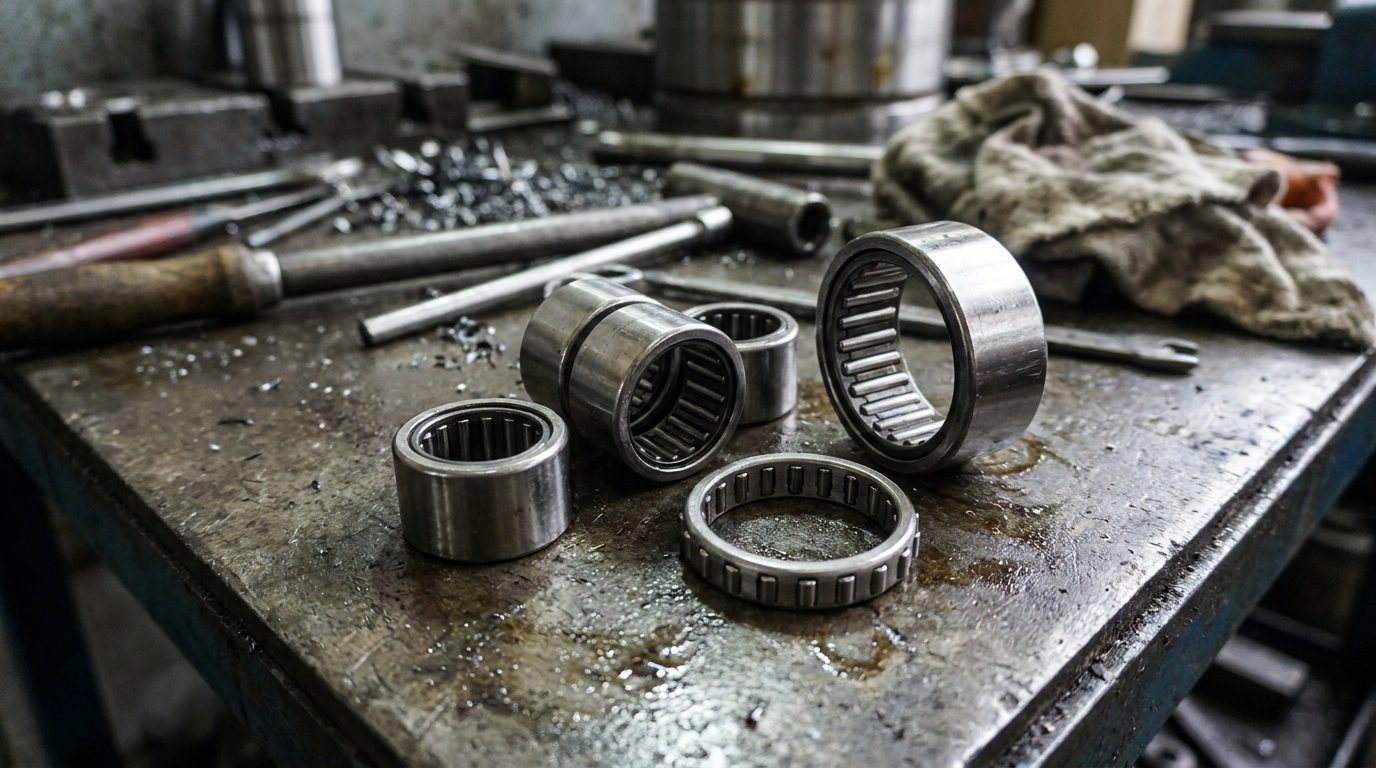
Needle bearings in industrial equipment improve efficiency by reducing friction, supporting high radial loads in compact spaces, and helping rotating components run cooler, smoother, and longer. For maintenance managers, plant engineers, reliability teams, mechanics, and purchasing professionals, the right needle bearing can reduce power loss, extend gearbox and machine life, and lower total maintenance cost. These bearings are especially valuable in industrial gearboxes, conveyors, pumps, packaging machines, presses, agricultural equipment, and material handling systems where space is limited but load demands are high. When properly selected, lubricated, aligned, and inspected, needle bearings can deliver measurable reliability gains across critical production assets.
Needle bearings improve industrial equipment efficiency by using long, thin cylindrical rollers to increase load-carrying capacity while minimizing bearing size and friction. They are ideal for compact, high-load applications such as gearboxes, shafts, cam followers, conveyors, and drive assemblies. To get the best performance, plants must select the correct bearing type, maintain proper lubrication, prevent contamination, monitor temperature and vibration, and replace damaged bearings before they cause shaft, housing, or gearbox failure.
Needle bearings play a crucial role in enhancing the efficiency and performance of various industrial equipment, particularly in applications where space is limited. For a deeper understanding of how these components contribute to the functionality of gearboxes, you can explore the article on industrial gearbox repair in Taylor, Michigan. This resource provides insights into the maintenance and repair of gearboxes, highlighting the importance of needle bearings in ensuring optimal operation. For more information, visit this link.
Why Needle Bearings Matter for Industrial Efficiency
Needle bearings, also called needle roller bearings, use small-diameter cylindrical rollers with a high length-to-diameter ratio. This design creates a larger contact area than many ball bearings while maintaining a compact radial profile. In industrial equipment, that combination is valuable because many machines must carry heavy radial loads without adding size, weight, or unnecessary friction.
For plant maintenance and reliability teams, bearing efficiency affects more than one component. A poorly performing bearing can increase motor amperage, raise gearbox temperatures, accelerate lubricant degradation, damage shafts, and create vibration that spreads through the machine. A properly selected needle bearing helps reduce these losses and supports smoother power transmission.
Common industrial uses include:
- Gearbox countershafts and idler shafts
- Conveyor rollers and drive assemblies
- Cam followers and indexing equipment
- Pumps, compressors, and auxiliary drive systems
- Packaging and printing machinery
- Textile, paper, and converting equipment
- Construction, mining, and agricultural machinery
- Lift trucks, cranes, and material handling systems
For related support on gearbox-bearing applications, see Industrial Gearbox Solutions resources on gearbox repair, bearing failure analysis, industrial gearbox rebuilding, and gearbox maintenance services.
How Needle Bearings Improve Equipment Efficiency
Lower Friction in Compact Assemblies
Needle bearings reduce friction by allowing rolling motion between the shaft and housing rather than sliding contact. Compared with plain bushings, needle bearings can significantly reduce energy loss, especially in applications with continuous rotation or oscillation.
In industrial gearboxes and drive systems, reduced friction can contribute to:
- Lower operating temperatures
- Lower motor current draw
- Reduced lubricant oxidation
- Less wear on shafts and housings
- Improved mechanical efficiency
- Longer component service life
Although needle bearings do not eliminate friction entirely, they are an effective solution where space is limited and high radial load capacity is required.
High Load Capacity in Limited Space
One of the main reasons engineers choose needle bearings is their ability to carry high radial loads in a small envelope. Their long rollers distribute load across a greater surface area, making them useful where a standard ball bearing may be too large or have insufficient radial load capacity.
This is especially important in:
- Compact gearboxes
- Planetary gear sets
- Idler gears
- Oscillating arms
- Clutch assemblies
- Heavy-duty conveyor drives
When a machine design cannot accommodate a larger bearing, a needle bearing may provide the necessary load rating without increasing the size of the equipment.
Reduced Weight and Design Flexibility
Because needle bearings are compact, they can reduce assembly weight and provide more flexibility in machine design. In mobile industrial equipment, lighter components can improve fuel efficiency and reduce stress on supporting structures. In stationary equipment, smaller bearing packages can simplify retrofits and allow more efficient use of space.
Better Performance in Oscillating Motion
Needle bearings are often used in oscillating or limited-rotation applications where other bearing types may experience uneven wear. Examples include linkage systems, cam mechanisms, presses, and indexing drives. However, oscillating applications require careful lubrication and bearing selection because the rolling elements may not complete full rotations, which can affect lubricant film formation.
Industrial gearbox bearing failure can lead to costly downtime and production losses, so it’s important to address the issue promptly. Industrial gearbox bearing failure
Types of Needle Bearings Used in Industrial Equipment
Drawn Cup Needle Roller Bearings
Drawn cup needle roller bearings have a thin outer shell and are commonly used where housing space is limited. They are lightweight, economical, and suitable for high-volume industrial applications.
Typical uses include:
- Conveyor rollers
- Gearbox housings
- Small electric motor accessories
- Pump and compressor components
- General machinery shafts
Drawn cup designs are often available with open ends, closed ends, seals, and full complement or caged roller configurations.
Machined Ring Needle Roller Bearings
Machined ring needle roller bearings have a heavier outer ring and are suitable for applications requiring greater rigidity, precision, or durability. They are commonly used in industrial gearboxes and heavy machinery where load and alignment demands are more severe.
Benefits include:
- Higher rigidity than drawn cup designs
- Improved dimensional stability
- Better suitability for demanding operating conditions
- Compatibility with inner rings when shafts are not suitable raceways
Needle Roller and Cage Assemblies
Needle roller and cage assemblies do not include an inner or outer ring. Instead, they operate directly between a hardened shaft and housing bore. This makes them extremely compact and efficient, but the shaft and housing surfaces must be properly hardened, ground, and finished.
They are often used in:
- Planetary gears
- Transmission shafts
- Gearbox idlers
- Compact drive mechanisms
Full Complement Needle Bearings
Full complement needle bearings contain the maximum number of rollers and offer very high radial load capacity. However, because they have more roller-to-roller contact, they may have higher friction and lower speed capability than caged designs.
They are useful where:
- Radial loads are high
- Speeds are moderate or low
- Space is extremely limited
- Shock loading is present
Thrust Needle Roller Bearings
Thrust needle roller bearings support axial loads in compact spaces. They are commonly used with thrust washers in gearboxes, transmissions, and rotating assemblies where axial positioning is required.
Applications include:
- Gear thrust control
- Clutch mechanisms
- Pump assemblies
- Rotating tables
- Compact axial load arrangements
Needle bearings play a crucial role in enhancing the efficiency of industrial equipment by reducing friction and allowing for smooth rotational motion. For those interested in understanding how various components work together in machinery, a related article on industrial gearbox repair can provide valuable insights. You can explore more about this topic in the context of maintenance and performance by visiting industrial gearbox repair. This resource highlights the importance of keeping gearboxes in optimal condition, which is essential for the longevity and reliability of equipment that utilizes needle bearings.
Causes of Needle Bearing Failure
| Industrial Equipment | Needle Bearings |
|---|---|
| Usage | High-speed machinery |
| Benefits | Reduced friction, increased load capacity |
| Common Types | Drawn cup, radial, thrust |
| Materials | Chrome steel, stainless steel, ceramic |
| Applications | Automotive, aerospace, industrial machinery |
Needle bearing failures rarely happen without warning. Most are caused by lubrication problems, contamination, overload, misalignment, improper installation, or poor surface finish.
Inadequate Lubrication
Lubrication is one of the most important factors in needle bearing performance. Because needle rollers have line contact with raceways, they require a reliable lubricant film to prevent metal-to-metal contact.
Lubrication-related failure may be caused by:
- Wrong lubricant viscosity
- Insufficient oil or grease
- Excessive grease causing heat buildup
- Lubricant starvation
- Oxidized or degraded lubricant
- Incompatible grease mixing
- Blocked lubrication passages
Noria’s lubrication best practices emphasize the importance of correct viscosity, contamination control, and condition monitoring for bearing reliability. Maintenance teams should verify that lubricant selection matches speed, load, temperature, and environmental conditions.
Contamination
Dust, metal particles, moisture, process chemicals, and degraded lubricant can damage bearing raceways and rollers. Even small particles can create indentations that lead to spalling, vibration, and premature failure.
Common contamination sources include:
- Failed seals
- Dirty grease guns
- Open lubricant containers
- Improper storage
- Washdown water
- Gearbox breather issues
- Wear debris from gears or shafts
Overload and Shock Loading
Needle bearings are designed for high radial loads, but excessive load or impact can exceed their fatigue limits. Shock loading may occur in crushers, presses, conveyors, mixers, and heavy-duty gear drives.
Signs of overload include:
- Brinelling or permanent indentations
- Cracked rollers
- Spalling along raceways
- Rapid temperature increase
- Excessive vibration under load
Misalignment
Needle bearings are sensitive to misalignment because load must be distributed evenly across the roller length. Misalignment can cause edge loading, where stress concentrates at the ends of rollers, leading to rapid wear and fatigue.
Common causes include:
- Bent shafts
- Worn housings
- Improper machining
- Soft foot in connected equipment
- Incorrect gearbox mounting
- Thermal growth
- Poor installation practices
Improper Installation
Needle bearings can be damaged during installation if force is applied incorrectly, if the bearing is cocked in the bore, or if installation tools contact rolling elements.
Installation errors include:
- Hammering directly on the bearing
- Pressing through rollers instead of rings
- Installing into damaged or dirty housings
- Reusing distorted drawn cup bearings
- Failing to inspect shaft hardness and finish
- Incorrect bearing orientation
Shaft or Housing Wear
Some needle bearings use the shaft or housing as the bearing raceway. If these surfaces are too soft, rough, out of round, or worn, the bearing will fail prematurely.
Important surface factors include:
- Shaft hardness
- Surface finish
- Roundness
- Taper
- Proper shoulder support
- Housing bore tolerance
- Race depth and case hardening
Needle bearings play a crucial role in enhancing the efficiency and performance of industrial equipment, particularly in applications where space is limited. For those interested in exploring the impact of high-quality components on machinery, a related article discusses the offerings of ABM Drives, a prominent manufacturer known for their innovative gearbox solutions. You can read more about their products and how they integrate with various industrial systems by visiting this link. Understanding the synergy between needle bearings and advanced gearboxes can significantly improve operational reliability and longevity in industrial applications.
Symptoms of Needle Bearing Problems
Early detection helps prevent major equipment failure. Needle bearing problems often appear as changes in sound, temperature, vibration, lubrication condition, or machine performance.
Common Warning Signs
| Symptom | Possible Cause | Recommended Action |
||||
| Rising bearing temperature | Lubrication failure, overload, misalignment | Check lubricant, load, alignment, and seals |
| Grinding or clicking noise | Spalling, contamination, roller damage | Stop and inspect bearing and raceways |
| Increased vibration | Race damage, looseness, misalignment | Perform vibration analysis and inspect fits |
| Metal particles in lubricant | Bearing or gear wear | Conduct oil analysis and internal inspection |
| Grease leakage | Seal failure, overgreasing, heat | Inspect seals and relubrication practices |
| Shaft scoring | Lubrication failure or contamination | Inspect shaft hardness, finish, and lubricant |
| Reduced equipment efficiency | Friction, wear, misalignment | Check power draw, temperature, and bearing condition |
Operational Symptoms
Plant teams may also notice:
- Increased motor amperage
- Gearbox running hotter than normal
- Unstable conveyor motion
- Repeated seal failures
- Unusual load noise during startup
- Shortened lubricant life
- Production speed variation
- Frequent bearing replacements in the same location
These symptoms should be investigated promptly because a failed needle bearing can damage shafts, gears, housings, and adjacent components.
Troubleshooting Needle Bearing Issues
Step-by-Step Troubleshooting Process
A structured troubleshooting process helps separate bearing problems from gearbox, motor, coupling, or lubrication issues.
- Review operating history
Check recent load changes, speed changes, washdowns, repairs, lubricant changes, or installation work.
- Inspect the lubricant
Look for discoloration, metal flakes, water, sludge, low viscosity, burned smell, or grease hardening.
- Check temperature trends
Compare current bearing or gearbox temperatures with baseline readings.
- Listen for abnormal noise
Use an ultrasonic instrument or mechanic’s stethoscope to identify localized bearing noise.
- Perform vibration analysis
Look for bearing defect frequencies, looseness, misalignment, imbalance, and gear mesh issues.
- Inspect seals and breathers
Failed seals and clogged breathers often lead to contamination and lubrication problems.
- Verify alignment and mounting
Check couplings, shafts, housings, gearbox mounts, and connected equipment.
- Disassemble and inspect
If symptoms persist, remove the bearing and inspect rollers, cages, raceways, shaft surfaces, and housing bores.
Troubleshooting by Failure Pattern
| Failure Pattern | Likely Cause | Corrective Action |
||||
| Roller end wear | Misalignment or edge loading | Correct shaft/housing alignment and inspect fits |
| Uniform discoloration | Excessive heat or lubricant failure | Verify lubricant type, quantity, and cooling |
| Surface pitting | Fatigue, contamination, overload | Improve filtration/sealing and verify load rating |
| Rust or staining | Moisture contamination | Improve seals, breathers, storage, and oil handling |
| Cage damage | High speed, poor lubrication, improper installation | Review bearing design and installation procedure |
| False brinelling | Vibration while stationary | Rotate standby equipment and isolate vibration |
| Smearing | Sliding, insufficient film, rapid acceleration | Review lubrication and operating conditions |
Authoritative references from SKF and Timken provide detailed bearing damage classification guides that can help teams identify root causes based on visual evidence.
Inspection Methods for Needle Bearings
Visual Inspection
Visual inspection remains one of the most practical methods for diagnosing needle bearing problems. During planned shutdowns or repair work, inspect:
- Rollers for scoring, cracking, pitting, or discoloration
- Cage condition and roller retention
- Inner and outer raceways for spalling or brinelling
- Shaft raceways for scoring or wear steps
- Housing bores for fretting or looseness
- Seals for hardening, cuts, or wear
- Lubricant for metal particles or contamination
Document findings with photos and compare them with bearing damage references from SKF, Timken, and AGMA-related gearbox standards.
Dimensional Inspection
Needle bearings depend on proper fits and geometry. Use calibrated tools to measure:
- Shaft diameter
- Housing bore diameter
- Roundness and taper
- Shaft runout
- Bearing radial clearance
- Surface finish
- Shoulder squareness
- Gearbox housing distortion
When the shaft serves as the inner raceway, hardness and surface finish are especially important. A soft or rough shaft can destroy a new needle bearing quickly.
Vibration Analysis
Vibration analysis can detect bearing defects before catastrophic failure. Reliability engineers should monitor:
- Overall vibration velocity
- High-frequency acceleration
- Bearing defect frequencies
- Gear mesh frequencies
- Sidebands indicating looseness or modulation
- Changes from baseline trends
Needle bearing vibration signatures can be challenging in complex gearboxes, so trend-based monitoring is often more useful than a single reading.
Oil and Grease Analysis
Lubricant analysis helps identify contamination, wear debris, viscosity loss, oxidation, and additive depletion.
Useful tests include:
- Particle count
- Ferrography
- Karl Fischer water analysis
- Viscosity at 40°C and 100°C
- Acid number
- Spectrometric wear metals
- Grease consistency and contamination testing
For gearboxes, oil analysis is particularly important because bearing wear debris may mix with gear wear particles. Noria offers extensive guidance on lubricant sampling and contamination control.
Infrared Thermography and Ultrasound
Infrared thermography helps detect abnormal heat patterns, while ultrasound can identify early-stage friction and lubrication problems.
These tools are useful for:
- Hard-to-access bearings
- Conveyor systems
- Gearbox housings
- Motors and auxiliary drives
- Slow-speed rotating equipment
- Comparing identical assets in a production line
Prevention Strategies for Longer Needle Bearing Life
Select the Right Bearing for the Application
Bearing selection should consider more than size. Engineers and purchasing teams should evaluate:
- Radial load
- Axial load, if any
- Speed
- Duty cycle
- Shock loading
- Temperature
- Lubrication method
- Contamination exposure
- Shaft and housing material
- Required life rating
- Installation constraints
- Availability and lead time
When in doubt, consult bearing manufacturers such as SKF or Timken, or work with an industrial gearbox specialist to confirm the bearing is suitable for the application.
Maintain Clean Lubrication
Contamination control is one of the most cost-effective ways to improve needle bearing life.
Best practices include:
- Store lubricants indoors in sealed containers
- Use dedicated transfer containers
- Filter oil before filling gearboxes
- Keep grease guns clean and labeled
- Use desiccant breathers where appropriate
- Maintain seal integrity
- Sample oil from proper live-zone locations
- Avoid mixing incompatible greases
- Follow OEM relubrication intervals
Control Alignment and Fits
Proper alignment reduces edge loading and heat generation. During installation or rebuilds:
- Check shaft straightness
- Inspect housing bores
- Verify bearing fits
- Correct soft foot
- Align couplings accurately
- Confirm gearbox mounting surfaces are flat
- Consider thermal growth in high-temperature applications
Protect Bearings During Storage and Handling
Needle bearings can be damaged before installation if stored improperly. Purchasing and maintenance teams should:
- Keep bearings in original packaging until use
- Store in clean, dry, temperature-controlled areas
- Avoid vibration exposure in storage
- Do not open packaging on dirty workbenches
- Use clean gloves or tools when handling
- Rotate inventory to avoid long storage periods
Use Proper Installation Tools
Proper installation reduces the risk of immediate or premature failure. Use:
- Bearing drivers
- Arbor presses
- Hydraulic presses
- Induction heaters where appropriate
- Correct mandrels for drawn cup bearings
- Clean assembly lubricants
- Manufacturer-recommended procedures
Never strike needle bearings directly with a hammer, and never apply installation force through the rolling elements.
Repair vs. Replacement: Making the Right Decision
When Replacement Is Usually Best
Needle bearings are often replaced rather than repaired because they are precision components and are usually not economical to rebuild individually.
Replacement is recommended when:
- Rollers are pitted, cracked, or discolored
- Cages are damaged
- Raceways show spalling or brinelling
- Bearing clearance is excessive
- The bearing has been overheated
- Contamination damage is visible
- The bearing was removed from a press-fit application
- The failure cause is unknown and risk is high
When Additional Repairs Are Needed
Replacing the bearing alone may not solve the problem if the shaft, housing, or gearbox is damaged. Additional repairs may be required when:
- Shaft raceways are scored or undersized
- Housing bores are worn or out of round
- Gear teeth are damaged
- Lubrication passages are blocked
- Seals have failed
- Misalignment is present
- Gearbox housing distortion exists
Industrial Gearbox Solutions can support gearbox repair, bearing replacement, shaft repair, housing bore restoration, gear inspection, and complete gearbox rebuilds for critical industrial assets.
Cost Factors to Consider
| Factor | Repair Impact | Replacement Impact |
||||
| Bearing cost | Usually low to moderate | Depends on size and availability |
| Downtime | May be high if root cause is missed | Lower if planned and parts are ready |
| Shaft condition | May require machining or replacement | New bearing may fail if shaft is ignored |
| Housing condition | Bore repair may be required | Replacement gearbox may be faster |
| Lead time | Repair may depend on machining capacity | OEM parts may have long lead times |
| Criticality | High-risk assets need stronger corrective action | Spare gearbox may be justified |
Repair vs. Replacement Decision Checklist
Use this checklist before returning equipment to service:
- Has the root cause been identified?
- Is the shaft within tolerance?
- Is the housing bore within tolerance?
- Is the lubricant correct and clean?
- Are seals and breathers functioning?
- Has alignment been verified?
- Are loads within design limits?
- Is the bearing from a reputable manufacturer?
- Are installation tools and procedures correct?
- Has the equipment been test-run and monitored?
Maintenance Best Practices for Needle Bearings
Build a Preventive Maintenance Plan
A strong preventive maintenance program should include:
- Scheduled lubrication
- Temperature checks
- Vibration monitoring
- Seal inspections
- Oil analysis
- Grease analysis where applicable
- Alignment checks
- Torque checks on mounted equipment
- Visual inspection during shutdowns
- Documentation of bearing replacements
Use Condition-Based Maintenance
Condition-based maintenance is especially valuable for critical gearboxes and rotating equipment. Instead of relying only on time-based replacement, teams use data to identify early warning signs.
Key condition-monitoring tools include:
- Vibration analysis
- Oil analysis
- Ultrasound
- Thermography
- Motor current analysis
- Operator inspections
- Maintenance history review
Standardize Bearing and Lubricant Specifications
Purchasing professionals can support reliability by standardizing approved bearing brands, part numbers, and lubricants. This reduces the risk of incorrect substitutions and helps maintain consistent performance.
Standardization should include:
- Approved bearing manufacturers
- Equivalent part number cross-references
- Lubricant type and viscosity
- Seal material requirements
- Storage requirements
- Inspection criteria
- Critical spare part levels
Train Mechanics and Operators
Even high-quality bearings fail early if installation and lubrication practices are poor. Training should cover:
- Bearing handling
- Proper mounting methods
- Lubricant cleanliness
- Contamination control
- Failure symptom recognition
- Safe disassembly
- Measurement techniques
- Documentation and reporting
Operators should also be encouraged to report unusual noise, heat, vibration, or performance changes before failures escalate.
Application Considerations for Gearboxes and Heavy Equipment
Needle Bearings in Industrial Gearboxes
Needle bearings are frequently used in compact gearbox designs, especially where gears rotate on stationary shafts or where radial space is limited. They may support idler gears, planet gears, countershafts, and auxiliary components.
In gearbox applications, reliability depends on:
- Correct oil viscosity
- Proper oil level
- Clean lubricant
- Adequate splash or forced lubrication
- Gear alignment
- Shaft hardness
- Load distribution
- Temperature control
- Seal integrity
AGMA standards and technical publications provide guidance for enclosed gear drives, lubrication, rating practices, and gear failure analysis. For complex gearbox issues, a detailed inspection by a gearbox repair specialist is often the best path to root cause identification.
Needle Bearings in Conveyors
Conveyors often expose bearings to dust, moisture, misalignment, and shock loads. Needle bearings may be used in rollers, drive assemblies, or compact mechanisms.
Maintenance priorities include:
- Seal inspection
- Relubrication discipline
- Pulley and roller alignment
- Load control
- Washdown protection
- Monitoring for seized rollers
Needle Bearings in Pumps and Compressors
In pumps and compressors, bearing reliability is closely tied to lubrication, alignment, and vibration. Needle bearings may be used in auxiliary drives, gear couplings, or compact rotating assemblies.
Watch for:
- Cavitation-related vibration
- Lubricant aeration
- Seal leakage
- Misalignment from piping strain
- Temperature rise
- Contaminated oil
Tables for Maintenance and Purchasing Teams
Needle Bearing Selection Factors
| Selection Factor | Why It Matters | Practical Tip |
||||
| Load rating | Prevents fatigue failure | Confirm dynamic and static load requirements |
| Speed rating | Controls heat and cage stress | Do not exceed manufacturer limits |
| Lubrication type | Affects friction and wear | Match viscosity to speed, load, and temperature |
| Shaft hardness | Critical if shaft acts as raceway | Verify hardness and case depth |
| Housing tolerance | Prevents looseness or distortion | Measure bore before installation |
| Seal design | Keeps contaminants out | Upgrade seals in dirty environments |
| Temperature range | Prevents lubricant and material failure | Consider heat from nearby processes |
| Availability | Reduces downtime | Stock critical sizes and approved equivalents |
Preventive Maintenance Frequency Guide
| Task | Suggested Frequency | Notes |
||||
| Operator visual/noise check | Daily or per shift | Best for early abnormal condition detection |
| Temperature measurement | Weekly or monthly | Trend against baseline |
| Lubrication inspection | Monthly or per OEM | Adjust based on duty and environment |
| Vibration monitoring | Monthly to quarterly | Increase frequency for critical assets |
| Oil analysis | Monthly to quarterly | Use consistent sampling methods |
| Seal inspection | Monthly | More often in washdown or dusty areas |
| Alignment verification | During shutdowns or repairs | Required after equipment movement |
| Internal inspection | Planned outage | Inspect raceways, shafts, and housings |
Authoritative Resources
For deeper technical guidance, maintenance teams can consult:
- SKF bearing damage and failure analysis resources: https://www.skf.com
- Timken bearing maintenance and troubleshooting guides: https://www.timken.com
- AGMA gear drive standards and technical information: https://www.agma.org
- Noria lubrication and oil analysis best practices: https://www.noria.com
These sources are useful for validating bearing damage modes, lubricant selection, gearbox practices, and condition-monitoring strategies.
Frequently Asked Questions
What are needle bearings best used for?
Needle bearings are best used in compact industrial applications with high radial loads. They are common in gearboxes, conveyors, cam followers, planetary gears, pumps, compressors, agricultural equipment, and material handling machinery.
Do needle bearings reduce energy consumption?
Yes, needle bearings can reduce energy consumption by lowering friction compared with sliding contact designs. The actual energy savings depend on load, speed, lubrication, alignment, and machine condition.
What is the most common cause of needle bearing failure?
Lubrication failure is one of the most common causes. This includes insufficient lubricant, wrong viscosity, contamination, degraded oil or grease, and blocked lubrication paths.
Can a needle bearing run directly on a shaft?
Yes, some needle bearing designs can run directly on a shaft, but the shaft must have the correct hardness, surface finish, geometry, and case depth. If the shaft is not suitable, an inner ring should be used.
How do I know if a needle bearing is failing?
Common signs include abnormal noise, increased vibration, rising temperature, metal particles in lubricant, grease leakage, shaft scoring, and reduced equipment efficiency.
Should needle bearings be greased or oiled?
It depends on the application. Grease is common in sealed or slower-speed applications, while oil is often used in gearboxes and higher-speed systems. Always follow manufacturer and equipment specifications.
Can needle bearings handle axial loads?
Standard radial needle bearings are designed mainly for radial loads. If axial load is present, a thrust needle roller bearing or another axial bearing arrangement may be required.
Is it safe to reuse a needle bearing?
Reusing a needle bearing is usually not recommended if it was removed from a press fit, exposed to contamination, overheated, or used in a failed assembly. Critical equipment should receive new bearings during repair.
Why do new needle bearings fail quickly?
Early failure often results from improper installation, incorrect fits, contaminated lubricant, shaft damage, misalignment, wrong bearing selection, or failure to correct the original root cause.
How can Industrial Gearbox Solutions help?
Industrial Gearbox Solutions can help inspect, repair, rebuild, and troubleshoot gearboxes and rotating equipment that use needle bearings. Services may include bearing replacement, shaft repair, housing bore repair, oil analysis support, and root cause failure analysis.
Key Takeaways
- Needle bearings improve efficiency by reducing friction while supporting high radial loads in compact spaces.
- Proper lubrication, contamination control, alignment, and installation are essential for long bearing life.
- Symptoms of needle bearing problems include heat, noise, vibration, metal particles, lubricant leakage, and reduced machine performance.
- Troubleshooting should include lubricant inspection, vibration analysis, temperature trending, dimensional checks, and visual inspection.
- Replacing a failed bearing without correcting shaft, housing, lubrication, or alignment issues can lead to repeat failure.
- Maintenance teams should use condition monitoring and preventive maintenance to extend bearing and gearbox life.
- Purchasing teams should standardize bearing brands, part numbers, lubricants, and critical spares to reduce downtime risk.
Suggested Branded Images
Image 1: Needle Bearing Close-Up
Alt text: Needle bearings in industrial equipment showing compact roller design for high radial load capacity
Caption: Needle bearings use long, small-diameter rollers to support heavy radial loads in compact industrial assemblies.
Image 2: Gearbox Bearing Inspection
Alt text: Industrial gearbox technician inspecting needle bearing raceways during gearbox repair
Caption: Proper inspection of raceways, shafts, housings, and lubrication helps prevent repeat bearing failures.
Image 3: Lubrication and Contamination Control
Alt text: Maintenance mechanic applying clean lubricant to industrial needle bearing assembly
Caption: Clean lubrication is critical to improving needle bearing efficiency and service life.
Image 4: Vibration Analysis on Gearbox
Alt text: Reliability engineer performing vibration analysis on industrial gearbox with needle bearings
Caption: Vibration monitoring can detect bearing defects before they cause catastrophic gearbox damage.
Image 5: Repair Versus Replacement Decision
Alt text: Industrial gearbox rebuild with replacement needle bearings, shafts, and seals
Caption: A complete gearbox rebuild may be required when bearing failure damages shafts, housings, or gears.
SEO Metadata
Meta Title
Improving Efficiency with Needle Bearings in Industrial Equipment
Meta Description
Learn how needle bearings improve industrial equipment efficiency, reduce friction, prevent failures, and extend gearbox life with expert maintenance and troubleshooting tips.
Primary Keyword
Needle bearings in industrial equipment
Secondary Keywords
- Industrial needle bearings
- Needle roller bearings
- Gearbox needle bearings
- Bearing failure troubleshooting
- Industrial gearbox bearing repair
- Bearing lubrication best practices
- Needle bearing maintenance
- High radial load bearings
- Industrial equipment efficiency
Suggested URL Slug
improving-efficiency-needle-bearings-industrial-equipment
Suggested Internal Links
- Industrial gearbox repair services
- Gearbox rebuilding and reconditioning
- Gearbox failure analysis
- Industrial gearbox maintenance
- Bearing replacement services
- Emergency gearbox repair
- Gearbox inspection and troubleshooting
Conclusion
Needle bearings play a major role in improving the efficiency, reliability, and compactness of industrial equipment. Their high radial load capacity and low-friction design make them valuable in gearboxes, conveyors, pumps, compressors, and heavy machinery. However, their performance depends on correct selection, clean lubrication, accurate alignment, proper installation, and disciplined inspection practices.
For maintenance managers, plant engineers, reliability professionals, mechanics, and purchasing teams, the best results come from treating needle bearings as part of a complete rotating equipment system. If a bearing fails, inspect the shaft, housing, seals, lubricant, alignment, and operating conditions before returning the machine to service. A root-cause approach helps prevent repeat failures and protects critical production assets.
If your gearbox or industrial equipment is showing signs of bearing wear, overheating, vibration, or repeated failures, Industrial Gearbox Solutions can help evaluate the problem and recommend the right repair or replacement path.
FAQs
What are needle bearings?
Needle bearings are a type of roller bearings that use long, thin cylindrical rollers instead of balls. They have a high length-to-diameter ratio and are designed to handle high radial loads.
Where are needle bearings used in industrial equipment?
Needle bearings are commonly used in industrial equipment such as automotive transmissions, agricultural machinery, construction equipment, and machine tools. They are also used in applications where space is limited and high radial loads need to be supported.
What are the advantages of using needle bearings in industrial equipment?
Needle bearings offer several advantages, including high load-carrying capacity, compact design, and the ability to handle high speeds. They are also suitable for applications with oscillating motion and are more resistant to shock and impact loads compared to ball bearings.
How do needle bearings differ from other types of bearings?
Needle bearings differ from other types of bearings, such as ball bearings, in that they have a larger surface area in contact with the bearing raceway, allowing them to support higher radial loads. They also have a smaller cross-section, making them ideal for applications with limited space.
What maintenance is required for needle bearings in industrial equipment?
Proper lubrication is essential for the performance and longevity of needle bearings in industrial equipment. Regular inspection and re-greasing are necessary to prevent premature wear and failure. Additionally, ensuring proper alignment and mounting of the bearings is important for optimal performance.