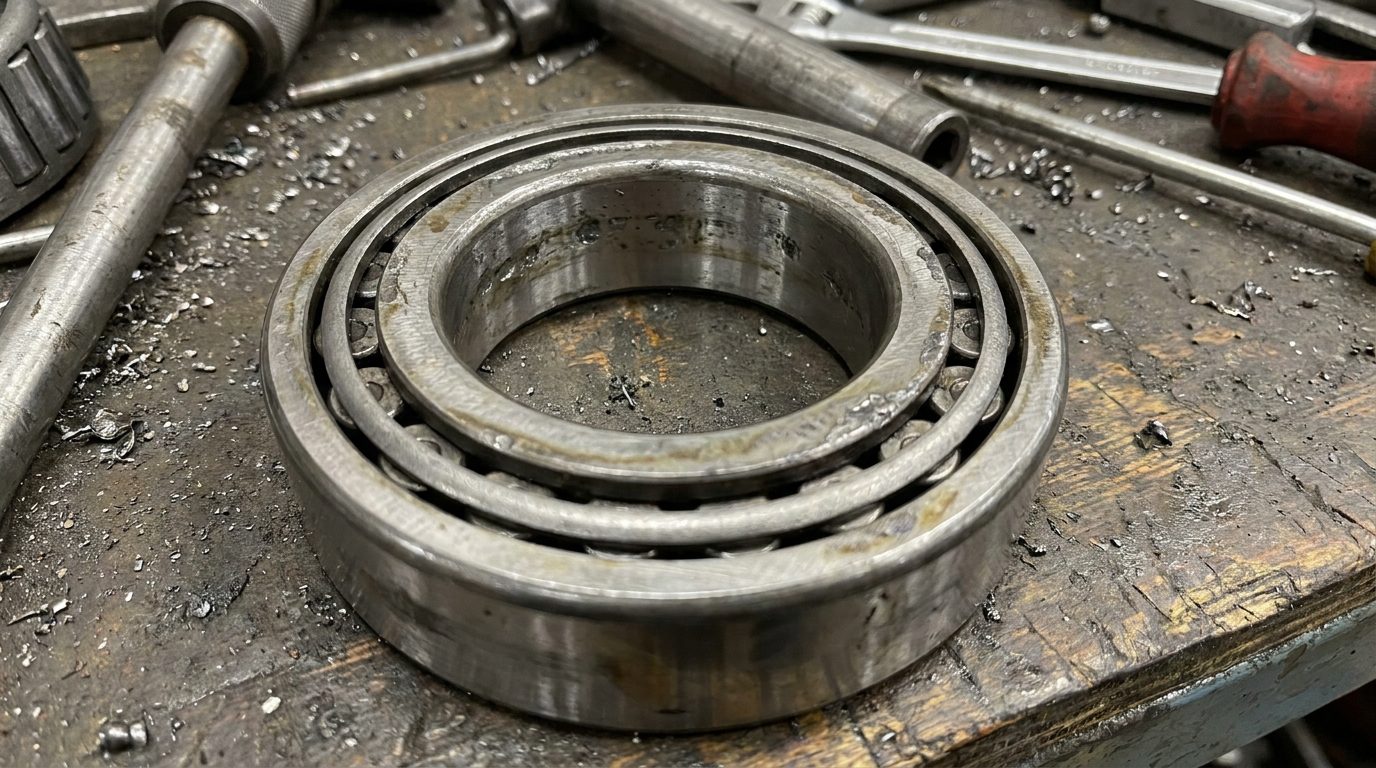
L10 life is the industry-standard calculation used to estimate the rating life at which 90% of a sufficiently large group of identical bearings will survive under defined load and speed conditions. For maintenance managers, plant engineers, reliability engineers, mechanics, and purchasing teams, understanding L10 life is essential for selecting the right bearing, predicting failure risk, improving gearbox reliability, and reducing unplanned downtime. While L10 life is not a guarantee of service life, it provides a practical engineering baseline for comparing bearings and making better maintenance decisions. In industrial gearboxes, where contamination, misalignment, lubrication errors, shock loads, and heat are common, maximizing bearing performance requires more than just choosing a bearing from a catalog.
L10 life, also called basic rating life, is the calculated life that 90% of a group of identical bearings are expected to reach or exceed under controlled operating conditions. It is commonly expressed in millions of revolutions or operating hours. L10 life depends primarily on bearing dynamic load rating, applied load, speed, lubrication quality, contamination control, alignment, temperature, and installation practices.
To maximize bearing performance:
- Select the correct bearing type and load rating.
- Maintain proper lubrication viscosity and cleanliness.
- Control contamination and moisture.
- Verify shaft and housing fits.
- Prevent misalignment and excessive vibration.
- Use condition monitoring to detect early bearing damage.
- Repair or replace gearbox components before bearing failure becomes catastrophic.
For those looking to deepen their understanding of bearing life and its implications in industrial applications, a related article can be found at Industrial Gearbox Repair in Silver Spring, Maryland. This resource provides insights into the maintenance and repair of gearboxes, which are crucial for ensuring optimal bearing performance and longevity in various machinery.
Why L10 Life Matters in Industrial Gearboxes
Bearing failures are one of the most common causes of gearbox downtime. A failed bearing can damage shafts, gears, seals, housings, and lubrication systems. In severe cases, one bearing failure can lead to full gearbox replacement, emergency crane service, lost production, and expedited freight costs.
L10 life gives engineering and maintenance teams a consistent way to evaluate bearing performance before installation. It helps answer questions such as:
- Is the bearing properly sized for the gearbox load?
- Will the bearing meet the expected service interval?
- Is a bearing upgrade justified?
- Is premature failure caused by design, lubrication, contamination, installation, or operating conditions?
- Should the gearbox be repaired, rebuilt, or replaced?
At Industrial Gearbox Solutions, bearing life analysis is often part of broader industrial gearbox repair and gearbox inspection services because bearing condition directly affects gear mesh, shaft alignment, vibration, oil quality, and overall reliability.
What Is L10 Life?
L10 life is a statistical bearing life calculation. It represents the life that 90% of a population of identical bearings operating under identical conditions are expected to achieve or exceed. In other words, 10% of bearings may fail before reaching the calculated L10 life due to normal material fatigue, even when operating conditions are ideal.
L10 Life vs. Actual Service Life
L10 life is a theoretical rating life, not a guaranteed operating life. Actual service life can be shorter or longer depending on real-world factors.
Common reasons actual bearing life differs from calculated L10 life include:
- Lubrication breakdown
- Oil contamination
- Water ingress
- Shaft misalignment
- Improper mounting
- Incorrect bearing fits
- Excessive operating temperature
- Overloading
- Shock loading
- Electrical fluting
- Poor storage or handling
- Gearbox housing distortion
A bearing with a calculated L10 life of 50,000 hours may fail in 5,000 hours if lubrication is poor or contamination is severe. Conversely, a properly installed and lubricated bearing operating in a clean, stable environment may exceed its calculated L10 life.
Basic L10 Life Formula
For rolling element bearings, the basic rating life is commonly calculated as:
L10 = (C / P)^p
Where:
- L10 = basic rating life in millions of revolutions
- C = basic dynamic load rating
- P = equivalent dynamic bearing load
- p = exponent based on bearing type
The exponent is typically:
| Bearing Type | Life Exponent |
||:|
| Ball bearings | 3 |
| Roller bearings | 10/3 |
This means bearing life is highly sensitive to load. A small increase in load can significantly reduce L10 life.
Converting L10 Life to Hours
L10 life in hours can be estimated with:
L10h = (1,000,000 / 60n) × (C / P)^p
Where:
- L10h = rating life in operating hours
- n = rotational speed in RPM
- C = dynamic load rating
- P = equivalent dynamic load
- p = bearing exponent
For example, if two bearings have the same load ratio but one operates at twice the speed, the faster bearing will accumulate fatigue cycles more quickly and have fewer operating hours of L10 life.
Industrial gearbox bearing failure can lead to costly downtime and production losses, so it’s important to address the issue promptly. Industrial gearbox bearing failure
Key Factors That Affect Bearing L10 Life
L10 life starts with load and speed, but real gearbox reliability depends on the full operating environment. Maintenance and engineering teams should look beyond catalog ratings when evaluating bearing performance.
Load and Dynamic Load Rating
The dynamic load rating, often shown as C in bearing catalogs, is a standardized value used to compare bearing capacity. The equivalent dynamic load, P, represents the actual load imposed on the bearing during operation.
In industrial gearboxes, bearing loads come from:
- Gear mesh forces
- Shaft weight
- Coupling forces
- Belt or chain tension
- Thrust loads from helical gearing
- Process loads
- Shock or impact loading
- Misalignment-induced forces
Because the L10 formula raises the load ratio to an exponent, even moderate overloads can cause dramatic life reductions.
| Condition | Effect on Bearing Life |
|||
| Proper load within design limits | Supports expected L10 life |
| 10–20% overload | Can significantly reduce life |
| Repeated shock loading | Causes surface fatigue and spalling |
| High thrust not accounted for | May overload one bearing position |
| Misalignment loads | Reduces fatigue life and increases heat |
Speed and Duty Cycle
Bearings operating at high speed accumulate fatigue cycles faster. However, slow-speed bearings are not automatically safe. Low-speed, heavily loaded gearbox bearings can experience lubricant film breakdown, brinelling, false brinelling, and contamination-related wear.
Duty cycle matters as much as nameplate speed. Consider:
- Continuous vs. intermittent operation
- Frequent starts and stops
- Reversing loads
- Peak torque events
- Seasonal production changes
- Emergency overload operation
- Variable frequency drive effects
For help evaluating gearbox duty, see gearbox failure analysis.
Lubrication Quality
Lubrication is one of the most important controllable factors in bearing life. Proper lubricant separates rolling elements from raceways, reduces friction, removes heat, protects against corrosion, and helps flush contaminants.
Common lubrication issues include:
- Incorrect oil viscosity
- Wrong lubricant type
- Over-greasing or under-greasing
- Oil oxidation
- Additive depletion
- Water contamination
- Dirt and particulate contamination
- Incompatible greases
- Foaming or aeration
- Clogged breathers or filters
Noria Corporation provides excellent lubrication education and oil analysis guidance for industrial reliability teams. Their resources on lubrication best practices can help maintenance teams develop stronger bearing reliability programs.
Contamination and Cleanliness
Contamination is one of the fastest ways to reduce bearing life. Dirt, metal particles, dust, process material, and water can damage bearing surfaces and accelerate fatigue.
Contaminants may enter through:
- Failed seals
- Open breathers
- Poor oil handling practices
- Dirty funnels or transfer containers
- Washdown areas
- Damaged inspection covers
- Improper assembly procedures
- Inadequate filtration
Even small particles can create dents in rolling contact surfaces. These dents become stress risers that lead to pitting, spalling, noise, vibration, and eventual failure.
Temperature
High temperature reduces lubricant viscosity, accelerates oxidation, damages seals, and can alter bearing internal clearances. Excessive heat may be caused by overload, too much lubricant, too little lubricant, misalignment, poor ventilation, or internal gearbox damage.
Warning signs of temperature-related bearing problems include:
- Gearbox housing hot to the touch
- Burnt oil smell
- Darkened lubricant
- Smoke or vapor from breathers
- Seal hardening
- Frequent oil changes due to oxidation
- Bearing discoloration during teardown
Alignment and Mounting
A bearing with excellent theoretical L10 life can fail quickly if installed incorrectly. Proper mounting and alignment are critical.
Common installation problems include:
- Hammering bearings directly onto shafts
- Pressing through rolling elements
- Incorrect heating methods
- Using damaged locknuts or washers
- Improper shaft shoulder contact
- Incorrect housing fits
- Excessive preload
- Insufficient internal clearance
- Angular misalignment
- Shaft runout
SKF and Timken both publish authoritative bearing mounting and maintenance guidance that emphasizes correct tools, fits, temperature control, and handling procedures.
For those looking to deepen their knowledge of bearing life and its implications in industrial applications, a related article on gearbox repair can provide valuable insights. Understanding how to maintain and repair gearboxes is crucial for ensuring optimal performance and longevity, which directly correlates with the concepts discussed in Understanding Bearing L10 Life. You can explore this further in the article on industrial gearbox repair.
Common Causes of Reduced Bearing Life
| Parameter | Definition |
|---|---|
| L10 Life | The calculated life at which 90% of a group of identical bearings are expected to survive under specific operating conditions |
| Basic Dynamic Load Rating (C) | The load at which the bearing will have a basic rating life of 1 million revolutions |
| Equivalent Radial Load (P) | The load that would produce the same maximum stress in the bearing as the actual combination of radial and axial loads |
| Speed Factor (n) | A factor that considers the influence of operating conditions on bearing life |
When bearings fail before expected L10 life, the root cause is usually not “bad bearing” alone. Most premature failures trace back to lubrication, contamination, installation, or operating conditions.
Lubrication Failure
Lubrication failure can appear as metal-to-metal contact, discoloration, scoring, cage wear, and rapid temperature rise.
Typical causes include:
- Oil level too low
- Oil level too high
- Wrong ISO viscosity grade
- Oil degradation
- Poor grease application
- Oil starvation at high speeds
- Incompatible lubricant changeover
- Failure to account for ambient temperature
Contamination Damage
Contamination produces dents, scratches, abrasive wear, corrosion, and premature fatigue. In gearboxes, contamination may come from external sources or internal wear debris.
Common indicators include:
- Dirty oil samples
- High ISO particle counts
- Moisture in oil
- Rust on raceways
- Abrasive polishing
- Pitting around dented surfaces
- Plugged filters
- Magnetic drain plug debris
Misalignment and Shaft Deflection
Misalignment creates uneven load distribution across rolling elements. Instead of sharing load evenly, one area of the bearing carries excessive stress.
Causes include:
- Soft foot
- Poor baseplate condition
- Coupling misalignment
- Bent shafts
- Housing bore wear
- Improper shimming
- Thermal growth not considered
- Gear mesh issues
Overload and Shock Loading
Shock loads can cause brinelling, cracking, cage damage, and spalling. Applications with crushers, conveyors, mixers, mills, hoists, and reversing drives are especially vulnerable.
Review actual operating loads, not just motor horsepower. A gearbox may be overloaded by process jams, frequent starts, torque spikes, VFD settings, or changes in production demand.
Electrical Damage
Electrical fluting occurs when stray current passes through bearing surfaces. This is common in motor-driven equipment, especially with variable frequency drives.
Symptoms include:
- Washboard-like raceway patterns
- Frosted bearing surfaces
- High-frequency vibration
- Unusual noise
- Repeated motor-side bearing failures
Solutions may include shaft grounding rings, insulated bearings, proper VFD cabling, grounding improvements, or ceramic rolling element bearings.
For those looking to deepen their knowledge about bearing life and its implications in industrial applications, a related article on industrial gearbox repair can provide valuable insights. Understanding the nuances of how bearings function within gearboxes is crucial for maintenance and longevity. You can explore this further in the article on industrial gearbox repair in Gainesville, Florida, which discusses the importance of proper bearing maintenance and its impact on overall gearbox performance.
Symptoms of Bearing Problems in Gearboxes
Maintenance teams should recognize early warning signs before failure escalates.
Audible Symptoms
Listen for:
- Growling
- Rumbling
- Clicking
- Squealing
- Grinding
- Intermittent knocking
- High-pitched whine
A mechanic’s stethoscope, ultrasonic tool, or vibration sensor can help pinpoint whether noise is coming from bearings, gears, couplings, or motors.
Vibration Symptoms
Bearing defects often produce characteristic vibration frequencies. Reliability engineers may monitor:
- Ball pass frequency outer race
- Ball pass frequency inner race
- Fundamental train frequency
- Ball spin frequency
- Gear mesh frequency sidebands
- Overall velocity
- Acceleration enveloping
A rising trend is often more important than a single reading. Compare against baseline data for the specific gearbox.
Temperature Symptoms
Temperature increases may indicate lubrication problems, excessive preload, misalignment, or internal friction.
Useful tools include:
- Infrared thermometers
- Thermal imaging cameras
- Permanently installed RTDs
- Oil temperature sensors
- Bearing housing temperature probes
Lubricant Symptoms
Oil analysis often reveals bearing distress before vibration becomes severe.
Look for:
- Elevated iron
- Chromium
- Tin or lead, depending on cage or bearing material
- Increased particle count
- Moisture
- Oxidation
- Nitration
- Viscosity change
- Ferrous density increase
For severe applications, consider routine oil analysis as part of your gearbox preventive maintenance program.
Troubleshooting Premature Bearing Failure
A structured troubleshooting process prevents repeat failures. Replacing a bearing without correcting the root cause often leads to another failure.
Step-by-Step Troubleshooting Checklist
| Step | Action | Why It Matters |
||||
| 1 | Document operating conditions | Confirms load, speed, temperature, duty cycle |
| 2 | Review lubrication history | Identifies viscosity, contamination, or interval problems |
| 3 | Inspect seals and breathers | Finds contamination entry points |
| 4 | Analyze vibration data | Detects defect frequency and severity |
| 5 | Pull oil sample | Reveals wear metals, water, and particle contamination |
| 6 | Check alignment | Finds coupling or shaft loading issues |
| 7 | Inspect shaft and housing fits | Prevents creep, looseness, and distortion |
| 8 | Review installation records | Identifies mounting damage or preload errors |
| 9 | Examine failed bearing | Confirms damage pattern |
| 10 | Correct root cause before restart | Prevents repeat failure |
Questions to Ask During Failure Analysis
- Did the bearing reach or fall short of expected L10 life?
- Was the correct bearing installed?
- Was the bearing from a reputable manufacturer?
- Was the load condition changed after installation?
- Was the lubricant changed recently?
- Was oil filtered before filling?
- Were seals replaced during the last repair?
- Is the gearbox exposed to washdown, dust, heat, or chemicals?
- Was the shaft repaired, sleeved, or replaced?
- Were housing bores measured?
- Was the gearbox aligned after installation?
Bearing Failure Pattern Clues
| Failure Pattern | Possible Cause |
|||
| Spalling on one raceway zone | Misalignment or localized overload |
| Rust or corrosion | Water ingress or poor storage |
| Polished raceways | Fine abrasive contamination |
| Blue/brown discoloration | Excessive heat |
| Cage damage | Poor lubrication, vibration, or overload |
| Denting | Improper installation or particle contamination |
| Fluting | Electrical current passage |
| Smearing | Sliding contact or lubricant film failure |
| Cracked inner ring | Excessive interference fit or overload |
Inspection Methods for Bearing Performance
A strong inspection program combines visual checks, measurements, oil analysis, and predictive technologies.
Visual Inspection
During routine rounds, inspect:
- Oil level
- Leaks around seals
- Breather condition
- Housing temperature
- Mounting bolts
- Unusual noise
- Contamination around covers
- Condition of coupling guards
- Foundation and baseplate condition
During teardown, document:
- Bearing orientation
- Raceway patterns
- Cage condition
- Rolling element condition
- Shaft fit marks
- Housing bore condition
- Seal wear
- Lubricant condition
- Gear tooth contact patterns
Photograph components before cleaning. Evidence can be lost once parts are washed.
Dimensional Inspection
Dimensional checks are essential during gearbox repair.
Measure:
- Shaft journals
- Housing bores
- Shoulders
- Endplay
- Bearing seats
- Gear backlash
- Shaft runout
- Bore alignment
- Seal surfaces
Incorrect fits can cause bearing creep, fretting, excessive preload, or looseness. These problems often repeat unless corrected during rebuild.
Vibration Analysis
Vibration analysis is one of the best predictive tools for bearing condition. It can detect early defects long before catastrophic failure.
Use vibration monitoring to identify:
- Bearing fault frequencies
- Gear mesh issues
- Looseness
- Imbalance
- Misalignment
- Resonance
- Structural weakness
For critical gearboxes, online vibration monitoring may be justified.
Oil Analysis
Oil analysis provides insight into both lubricant health and machine condition.
Recommended tests include:
- Viscosity at 40°C
- Particle count
- Karl Fischer water test
- Acid number
- Elemental spectroscopy
- Ferrous debris analysis
- Analytical ferrography
- Oxidation
- Additive levels
Noria’s lubrication and oil analysis resources are useful references for developing sampling procedures, target cleanliness levels, and lubricant storage programs.
Thermography and Ultrasound
Infrared thermography can identify hot bearings, overloaded gearboxes, cooling problems, and lubrication issues. Ultrasound is useful for detecting high-frequency bearing distress and lubrication starvation, especially in slower-speed applications.
Prevention: How to Maximize Bearing Performance
The best bearing failure is the one that never happens. Prevention starts with proper selection, continues through installation, and depends on disciplined maintenance.
Select the Right Bearing
Bearing selection should account for:
- Radial load
- Axial load
- Speed
- Shock loading
- Misalignment tolerance
- Lubrication method
- Temperature
- Contamination exposure
- Shaft and housing design
- Required reliability
- Maintenance accessibility
Common gearbox bearing types include:
| Bearing Type | Common Use | Strengths |
||||
| Deep groove ball bearing | Light to moderate radial loads | High speed, low friction |
| Cylindrical roller bearing | High radial loads | Strong radial capacity |
| Tapered roller bearing | Combined radial and axial loads | Adjustable endplay/preload |
| Spherical roller bearing | Heavy loads and misalignment | Rugged in severe service |
| Angular contact bearing | Axial and radial loads | Precise load control |
SKF, Timken, and other major bearing manufacturers provide engineering catalogs and calculation tools that can support selection and life estimation.
Improve Lubrication Practices
Best practices include:
- Use the correct lubricant viscosity and specification.
- Filter oil before filling gearboxes.
- Use sealed, clean transfer containers.
- Store lubricants indoors in labeled containers.
- Avoid mixing lubricants unless compatibility is verified.
- Establish oil sampling routes.
- Use desiccant breathers where moisture is a risk.
- Maintain proper oil level.
- Use sight glasses or level gauges where practical.
- Follow condition-based oil change intervals when possible.
Control Contamination
Contamination control often delivers a major improvement in bearing life.
Practical actions include:
- Upgrade breathers.
- Replace worn seals.
- Install better filtration.
- Use quick-connect filtration carts.
- Clean fill ports before opening.
- Keep inspection covers sealed.
- Avoid open buckets and dirty funnels.
- Improve housekeeping around gearboxes.
- Use labyrinth or upgraded seals in dusty areas.
- Protect stored bearings from moisture and vibration.
Install Bearings Correctly
Installation best practices include:
- Keep bearings in original packaging until use.
- Work in a clean area.
- Use induction heaters where appropriate.
- Never heat bearings with an open flame.
- Apply force only to the ring being fitted.
- Use proper sleeves, presses, and mounting tools.
- Verify shaft and housing dimensions.
- Confirm internal clearance or endplay.
- Use correct locknut torque.
- Document installation measurements.
Align the Complete Drive System
A gearbox bearing can be overloaded by poor system alignment even if the gearbox itself was rebuilt correctly.
Check:
- Motor-to-gearbox coupling alignment
- Gearbox-to-driven equipment alignment
- Soft foot
- Baseplate flatness
- Thermal growth
- Pipe strain or external forces
- Coupling condition
- Foundation looseness
Precision alignment should be performed after gearbox installation and rechecked after thermal stabilization in critical applications.
Repair vs. Replacement: Making the Right Decision
When bearing failure occurs, purchasing and maintenance teams must decide whether to repair the gearbox, replace bearings only, rebuild the unit, or purchase a replacement gearbox.
When Bearing Replacement May Be Enough
Bearing replacement may be sufficient when:
- Failure is detected early.
- Gears are undamaged.
- Shafts are within tolerance.
- Housing bores are not worn.
- Lubrication system is clean.
- Root cause is identified and corrected.
- No major contamination circulated through the unit.
This approach is usually faster and less expensive, but only if the rest of the gearbox is healthy.
When Gearbox Repair or Rebuild Is Better
A full repair or rebuild may be needed when:
- Bearing failure caused shaft damage.
- Housing bores are worn or oversized.
- Gear teeth show pitting or scoring.
- Metal debris circulated through the gearbox.
- Seals and lubrication passages are contaminated.
- Multiple bearings show distress.
- Gear contact pattern is poor.
- Backlash or endplay is out of tolerance.
- The gearbox has a history of repeat failures.
Industrial Gearbox Solutions can evaluate bearings, shafts, gears, seals, and housings as part of a complete gearbox rebuild process.
When Replacement Is the Best Option
Replacement may be the best option when:
- The housing is cracked or severely distorted.
- Critical parts are obsolete and not economical to reproduce.
- Repair cost approaches replacement cost.
- Lead time for repair exceeds production needs.
- The gearbox is undersized for the current application.
- The plant wants to upgrade reliability or capacity.
In some cases, reverse engineering or custom manufacturing may extend the life of obsolete equipment. See custom gearbox solutions for options.
Maintenance Best Practices for Extending Bearing Life
A practical bearing reliability program does not have to be complicated. It must be consistent, measurable, and supported by both maintenance and operations.
Recommended Maintenance Schedule
| Frequency | Maintenance Task |
|||
| Daily/Weekly | Listen for abnormal noise, check leaks, verify oil level, inspect temperature |
| Monthly | Inspect breathers, seals, mounting bolts, and vibration trends |
| Quarterly | Pull oil samples, inspect coupling condition, review operating changes |
| Semiannual | Check alignment on critical assets, verify lubricant condition, inspect filters |
| Annual | Review L10 assumptions, inspect foundation, audit lubrication practices |
| Shutdown | Perform detailed internal inspection, measure bearing fits, replace seals as needed |
Bearing Storage Best Practices
Bearings can be damaged before they are ever installed.
Store bearings:
- In original packaging
- In a clean, dry room
- Away from vibration
- Away from corrosive chemicals
- At stable temperature
- Off the floor
- With proper inventory rotation
Large bearings stored for long periods may require periodic rotation depending on manufacturer recommendations.
Purchasing Considerations
Purchasing professionals play an important role in bearing reliability. Lowest initial cost is not always lowest total cost.
Consider:
- Manufacturer reputation
- Traceability
- Correct part number and suffix
- Internal clearance
- Cage type
- Seals or shields
- Heat stabilization
- Precision class
- Country of origin requirements
- Availability
- Life-cycle cost
- Critical spare strategy
Avoid counterfeit or untraceable bearings. Use authorized distributors or qualified repair partners.
L10 Life and Reliability: Important Limitations
L10 life is valuable, but it has limitations. It focuses primarily on fatigue life under specified conditions. It does not fully account for every real-world failure mode.
What L10 Life Does Not Guarantee
L10 life does not guarantee:
- Lubricant cleanliness
- Correct installation
- Proper alignment
- Absence of shock loads
- Seal integrity
- Electrical protection
- Operator practices
- Storage condition
- Manufacturing quality of all suppliers
- Gearbox housing condition
This is why bearing life calculations should be combined with field data, inspection findings, and reliability engineering judgment.
Modified Bearing Life
Modern bearing standards and manufacturers may use adjusted or modified rating life methods that account for lubrication, contamination, fatigue load limit, and reliability factors. Organizations such as ISO, SKF, Timken, and AGMA provide guidance on bearing life, gear drive design, and reliability considerations.
Useful authoritative references include:
- SKF bearing rating life and lubrication guidance: https://www.skf.com
- Timken bearing engineering resources: https://www.timken.com
- AGMA gear standards and technical publications: https://www.agma.org
- Noria lubrication and oil analysis resources: https://www.noria.com
Example: How Load Changes Affect L10 Life
Because L10 life is load-sensitive, reducing load can dramatically improve bearing life.
Assume a roller bearing where p = 10/3.
| Change in Load | Approximate Effect on L10 Life |
|||
| Load increases 10% | Life decreases significantly |
| Load increases 25% | Life may drop by more than half |
| Load decreases 10% | Life increases meaningfully |
| Load decreases 25% | Life can increase dramatically |
This is why correcting misalignment, reducing belt tension, improving gear mesh, and preventing overloads can have a major impact on bearing life.
Suggested Branded Images
Image 1: Bearing L10 Life Diagram
Alt text: Diagram explaining L10 life calculation for industrial gearbox bearings
Caption: L10 life provides a statistical estimate of bearing fatigue life under defined load and speed conditions.
Image 2: Gearbox Bearing Inspection
Alt text: Technician inspecting industrial gearbox bearing during rebuild
Caption: Bearing inspection helps identify lubrication, contamination, alignment, and overload problems before they cause repeat failures.
Image 3: Oil Analysis and Contamination Control
Alt text: Oil sample from industrial gearbox used to monitor bearing wear and lubricant cleanliness
Caption: Oil analysis is one of the most effective tools for detecting bearing wear and contamination early.
Image 4: Bearing Failure Modes
Alt text: Examples of industrial bearing spalling, corrosion, fluting, and overheating damage
Caption: Bearing damage patterns provide valuable clues about the root cause of premature failure.
Image 5: Precision Gearbox Rebuild
Alt text: Industrial gearbox rebuild with new bearings, seals, and inspected gears
Caption: A complete gearbox rebuild should verify bearing fits, shaft condition, gear contact, seals, and lubrication paths.
SEO Metadata
SEO Title
Maximizing Bearing Performance: Understanding L10 Life
Meta Description
Learn what L10 life means, how it affects industrial gearbox bearing performance, and how to prevent premature bearing failure through lubrication, inspection, and maintenance best practices.
Primary Keyword
L10 life
Secondary Keywords
- bearing L10 life
- bearing rating life
- industrial gearbox bearings
- gearbox bearing failure
- bearing life calculation
- bearing maintenance
- gearbox reliability
- bearing inspection
- bearing troubleshooting
- bearing replacement
Suggested URL Slug
maximizing-bearing-performance-understanding-l10-life
Key Takeaways
- L10 life estimates the bearing life that 90% of identical bearings should meet or exceed under defined conditions.
- L10 life is not a guarantee of actual service life.
- Load has a major effect on bearing life because the L10 formula uses an exponent.
- Lubrication, contamination control, alignment, temperature, and installation quality often determine real-world bearing performance.
- Premature bearing failure should always trigger root cause analysis.
- Oil analysis, vibration monitoring, thermography, ultrasound, and dimensional inspection improve early detection.
- Repair may be sufficient for minor bearing failures, but full gearbox rebuild is often needed when shafts, gears, housings, or lubrication systems are affected.
- Purchasing decisions should consider total life-cycle cost, not just bearing price.
- Authoritative resources from SKF, Timken, AGMA, and Noria can support engineering and maintenance decisions.
FAQs
What does L10 life mean for bearings?
L10 life is the calculated life that 90% of a group of identical bearings are expected to reach or exceed under the same operating conditions. It is usually expressed in millions of revolutions or operating hours.
Is L10 life the same as guaranteed bearing life?
No. L10 life is a statistical estimate, not a guarantee. Actual bearing life depends on lubrication, contamination, load, speed, installation, alignment, temperature, and operating conditions.
Why do bearings fail before their calculated L10 life?
Bearings often fail early due to poor lubrication, contamination, misalignment, overload, improper installation, excessive heat, electrical fluting, or incorrect bearing selection.
How can I increase bearing L10 life?
You can increase bearing life by reducing load, selecting the correct bearing, improving lubrication, controlling contamination, maintaining alignment, preventing overheating, and using proper installation tools and procedures.
What is the difference between L10 life and L50 life?
L10 life is the life that 90% of bearings are expected to exceed. L50 life, sometimes called median life, is the life that 50% of bearings are expected to exceed. L50 is typically much longer than L10, but L10 is more commonly used for conservative engineering comparisons.
How does lubrication affect bearing life?
Lubrication affects film thickness, friction, heat removal, corrosion protection, and contamination flushing. Incorrect viscosity, dirty oil, water contamination, or degraded lubricant can drastically reduce bearing life.
Can oil analysis detect bearing failure?
Yes. Oil analysis can detect wear metals, contamination, water, viscosity changes, oxidation, and ferrous debris. It is especially useful for detecting early bearing and gear wear in industrial gearboxes.
Should I replace a gearbox after bearing failure?
Not always. If damage is limited and root cause is corrected, bearing replacement or gearbox repair may be enough. If shafts, gears, housings, or lubrication systems are damaged, a full rebuild or replacement may be more reliable.
Which bearing manufacturers provide L10 life data?
Major manufacturers such as SKF, Timken, NSK, NTN, and Schaeffler provide bearing ratings, calculation methods, and engineering data. Always verify the correct bearing suffix, clearance, cage, and material specifications.
How often should gearbox bearings be inspected?
External inspections should be performed routinely during maintenance rounds. Oil analysis may be monthly, quarterly, or semiannual depending on criticality. Internal bearing inspection is typically performed during planned outages, rebuilds, or when vibration and oil data indicate a problem.
Conclusion
Understanding L10 life helps maintenance managers, plant engineers, reliability engineers, mechanics, and purchasing professionals make better decisions about bearing selection, gearbox maintenance, repair planning, and reliability improvement. However, L10 life is only the starting point. Real-world bearing performance depends on clean lubrication, correct installation, proper alignment, contamination control, temperature management, and disciplined inspection practices.
If your gearbox bearings are failing early, running hot, making noise, producing abnormal vibration, or contaminating oil with metal debris, do not simply replace the bearing and restart the unit. Identify the root cause, inspect the gearbox as a system, and correct the conditions that reduced bearing life in the first place.
Industrial Gearbox Solutions can help evaluate bearing failures, inspect gearbox components, recommend repair options, and support long-term reliability improvements for critical industrial drives.
FAQs
What is Bearing L10 Life?
Bearing L10 life is a calculation used to determine the life expectancy of a bearing under specific operating conditions. It is the number of revolutions at which 90% of a group of identical bearings are expected to survive before the first evidence of metal fatigue.
How is Bearing L10 Life Calculated?
The bearing L10 life is calculated using the formula: L10 = (C/P)^3 x 10^6, where L10 is the bearing life in millions of revolutions, C is the dynamic load rating of the bearing, and P is the equivalent dynamic bearing load.
What Factors Affect Bearing L10 Life?
Several factors can affect the bearing L10 life, including the type of bearing, operating conditions, lubrication, contamination, and maintenance practices. Proper installation and alignment also play a significant role in determining the bearing life.
Why is Understanding Bearing L10 Life Important?
Understanding bearing L10 life is important for predicting the reliability and longevity of bearings in various applications. It helps in selecting the right bearing for specific operating conditions and in planning maintenance schedules to prevent unexpected failures.
How Can Bearing L10 Life be Improved?
Bearing L10 life can be improved by selecting the right bearing type and size for the application, ensuring proper installation and alignment, using appropriate lubrication, minimizing contamination, and implementing regular maintenance practices.