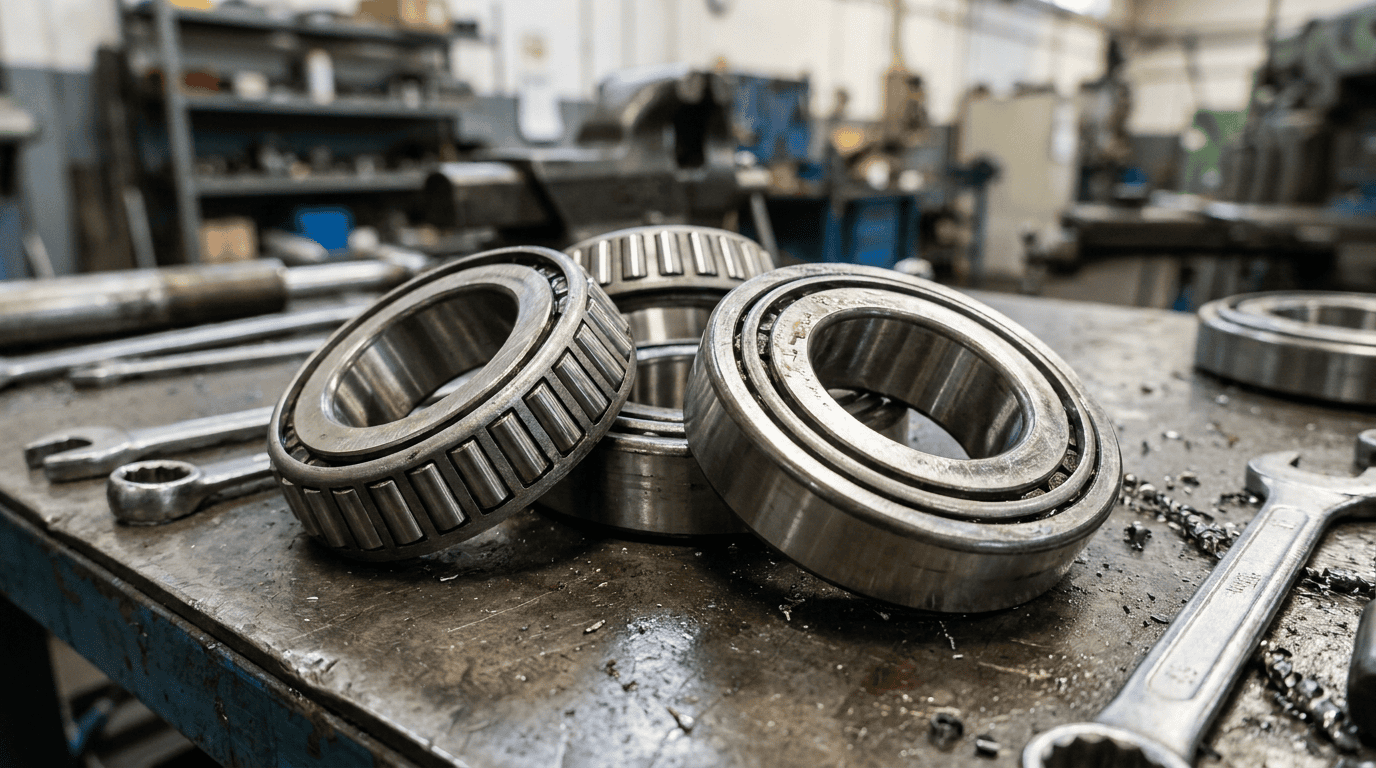
Tapered roller bearings in gearboxes play a critical role in maximizing efficiency, controlling shaft alignment, supporting combined radial and axial loads, and reducing unplanned downtime in industrial power transmission systems. For maintenance managers, plant engineers, reliability teams, mechanics, and purchasing professionals, the right bearing selection, installation, lubrication, and inspection practices can directly affect gearbox life, energy consumption, vibration levels, and total cost of ownership. Whether your plant operates conveyors, mixers, crushers, extruders, mills, cooling towers, or heavy-duty process equipment, understanding how tapered roller bearings perform inside gearboxes is essential to improving reliability and protecting production uptime.
Tapered roller bearings improve gearbox efficiency by supporting high radial and thrust loads while maintaining precise shaft positioning and gear mesh alignment. When correctly selected, installed, lubricated, and maintained, they reduce friction, limit heat generation, improve load distribution, and extend gearbox service life. Common efficiency problems come from poor lubrication, incorrect preload or endplay, contamination, misalignment, overloading, and bearing wear. Regular vibration analysis, oil analysis, temperature monitoring, backlash checks, and visual inspections help identify problems early. For critical industrial gearboxes, partnering with an experienced gearbox repair and bearing specialist can reduce downtime and prevent repeat failures.
Tapered roller bearings play a crucial role in the performance and longevity of industrial gearboxes, as they are designed to handle both radial and axial loads effectively. For those interested in understanding the importance of proper maintenance and repair of gearboxes that utilize these bearings, a related article can be found at Industrial Gearbox Repair in South Dakota. This resource provides insights into the repair processes and best practices to ensure optimal functioning of gearboxes, ultimately enhancing the reliability of tapered roller bearings within these systems.
Why Tapered Roller Bearings Matter in Industrial Gearboxes
Tapered roller bearings are widely used in industrial gearboxes because they are designed to handle both radial loads and axial thrust loads. Unlike some bearing types that primarily support one load direction, tapered roller bearings use cone-shaped rolling elements arranged between an inner race and outer race. This geometry allows the bearing to distribute forces efficiently across the rolling surfaces.
In gearboxes, these bearings are commonly used on input shafts, intermediate shafts, output shafts, pinion shafts, and high-load gear stages where thrust forces are generated by helical, bevel, spiral bevel, or worm gearing.
For more information on gearbox service and failure support, see Industrial Gearbox Solutions’ resources on industrial gearbox repair and gearbox rebuilding services.
How Tapered Roller Bearings Support Gearbox Efficiency
A gearbox is only as efficient as its internal load path. Gears, shafts, bearings, seals, and lubrication all work together. If a bearing is incorrectly loaded, misaligned, or poorly lubricated, the gear mesh suffers. That can increase vibration, heat, power losses, and mechanical wear.
Tapered roller bearings help gearbox efficiency by:
- Supporting combined radial and axial loads
- Maintaining shaft position under changing torque conditions
- Improving gear tooth contact patterns
- Reducing shaft deflection
- Allowing controlled preload or endplay
- Improving rigidity in heavy-duty applications
- Helping prevent gear misalignment and uneven tooth wear
According to bearing engineering principles published by manufacturers such as SKF and Timken, correct bearing selection and mounting practices are essential for achieving rated bearing life and avoiding premature failure.
Common Gearbox Applications
Tapered roller bearings are especially valuable in demanding industrial applications, including:
| Application | Why Tapered Roller Bearings Are Used |
|||
| Mining crushers | High shock loads and radial loading |
| Conveyor drives | Continuous duty and shaft stability |
| Steel mills | Heavy torque and thermal cycling |
| Cement kilns | Slow speed, high load operation |
| Mixers and agitators | Radial loads with thrust forces |
| Cooling tower gearboxes | Vertical shaft loads and moisture exposure |
| Paper mill drives | Continuous operation and contamination risk |
| Marine and port equipment | High load reversals and harsh environments |
Causes of Efficiency Loss in Gearbox Bearing Systems
Even high-quality tapered roller bearings can lose efficiency if operating conditions are not controlled. Many gearbox failures begin with small changes in temperature, vibration, lubricant condition, or shaft alignment. Over time, these small changes can develop into severe bearing damage, gear tooth distress, or catastrophic gearbox failure.
Incorrect Bearing Preload or Endplay
Tapered roller bearings often require a specific preload or endplay setting. Preload removes internal clearance and increases rigidity, while endplay allows a controlled amount of shaft movement. If either condition is incorrect, efficiency and reliability suffer.
Excessive preload can cause:
- High operating temperature
- Lubricant film breakdown
- Increased friction
- Roller end wear
- Premature spalling
- Seizure risk
Excessive endplay can cause:
- Gear mesh misalignment
- Impact loading
- Shaft movement
- Increased vibration
- Uneven gear tooth contact
- Seal wear and leakage
A common field issue is assuming that “tighter is better.” In reality, tapered roller bearings need the correct setting based on gearbox design, thermal expansion, shaft arrangement, and operating load.
Lubrication Problems
Lubrication is one of the most important factors in bearing and gearbox efficiency. Poor lubrication increases friction, heat, surface wear, and energy losses. In many gearbox failure investigations, lubrication problems are a root cause or major contributing factor.
Common lubrication-related causes include:
- Low oil level
- Wrong oil viscosity
- Oil oxidation
- Water contamination
- Dirt or process contamination
- Foaming
- Overgreasing in grease-lubricated bearing housings
- Incompatible lubricants
- Plugged oil passages
- Failed oil pumps or spray systems
Noria provides extensive guidance on lubrication reliability, oil analysis, contamination control, and lubricant selection. For gearboxes using tapered roller bearings, the lubricant must protect both gear teeth and bearing rolling contacts.
Misalignment and Shaft Deflection
Misalignment can occur during installation, from foundation movement, from thermal growth, or from overloaded shafts. In a gearbox, misalignment affects both gear tooth contact and bearing load distribution.
Bearing misalignment may cause:
- Edge loading on rollers
- Cage wear
- Uneven raceway patterns
- Increased vibration
- Gear tooth pitting
- Coupling wear
- Seal leakage
If shaft deflection is excessive, the bearing may appear to be the problem when the true root cause is an overloaded gearbox, improper gear mesh, weak foundation, or incorrect coupling alignment.
Contamination
Contaminants are destructive to tapered roller bearings because the rolling elements operate under high contact stress. Even small hard particles can dent raceways, creating stress risers that lead to spalling.
Common contaminants include:
- Dust
- Sand
- Metal particles
- Water
- Process chemicals
- Degraded lubricant byproducts
- Seal debris
- Wear particles from gears or bearings
Water contamination is especially harmful because it reduces lubricant film strength, promotes corrosion, and accelerates fatigue damage.
Overloading and Shock Loading
Many gearboxes operate beyond their original design conditions due to production increases, process changes, or equipment modifications. Overloading increases bearing contact stress and can significantly reduce bearing life.
Shock loading can come from:
- Crusher jams
- Conveyor starts under load
- Reversing drives
- Sudden process blockages
- Torque spikes
- Improper soft-start or VFD programming
- Loose foundations or couplings
For severe-duty applications, consult the bearing manufacturer, gearbox OEM, or a qualified repair provider before upgrading bearing arrangements or changing preload settings.
Industrial gearbox bearing failure can lead to costly downtime and repairs, so it’s important to address the issue promptly. Industrial gearbox bearing failure
Symptoms of Tapered Roller Bearing Problems in Gearboxes
Early detection is the key to preventing major gearbox damage. Maintenance teams should look for mechanical, thermal, acoustic, and lubricant-related symptoms.
Temperature Increase
A sudden or gradual rise in gearbox temperature often indicates increased friction or poor lubrication. Tapered roller bearings running with excessive preload, insufficient oil, contamination, or misalignment may generate abnormal heat.
Warning signs include:
- Gearbox housing hotter than normal
- Bearing cap temperature increase
- Oil temperature trending upward
- Burnt oil smell
- Darkened lubricant
- Paint discoloration near bearing areas
Temperature alone does not always confirm bearing failure, but it should trigger further inspection.
Increased Vibration
Vibration analysis is one of the most valuable tools for identifying bearing defects. As tapered roller bearings degrade, vibration signatures can reveal raceway damage, roller defects, cage issues, looseness, or misalignment.
Common vibration indicators include:
- Increased broadband vibration
- Bearing defect frequencies
- Sidebands around gear mesh frequency
- High-frequency acceleration peaks
- Looseness signatures
- Axial vibration increases
Reliability engineers should trend vibration readings over time rather than relying only on one-time measurements.
Abnormal Noise
Operators and mechanics often detect gearbox bearing problems by sound before a failure becomes severe.
Problem noises may include:
- Rumbling
- Growling
- Clicking
- Grinding
- Whining
- Intermittent knocking
- Metallic scraping
A high-pitched whine may indicate preload, lubrication, or gear mesh issues. A low rumble may indicate bearing wear or raceway damage.
Oil Condition Changes
Oil inspection can reveal bearing distress before a gearbox fails. Watch for:
- Metallic particles
- Bronze or brass particles from cages
- Milky oil from water contamination
- Dark, oxidized oil
- Burnt odor
- Sludge
- Foam
- Abnormal viscosity change
Oil analysis can identify wear metals and contamination trends. It can also help distinguish bearing wear from gear wear.
Seal Leakage
Seal leakage may seem like a minor nuisance, but it can signal shaft movement, bearing looseness, high internal pressure, or misalignment. If lubricant escapes and contaminants enter, bearing life can decline quickly.
Tapered roller bearings play a crucial role in enhancing the performance and longevity of industrial gearboxes, ensuring smooth operation under heavy loads. For those interested in understanding the intricacies of gearbox maintenance and repair, a related article discusses essential services available in Biddeford, Maine. This resource provides valuable insights into how proper care can extend the lifespan of gearboxes and improve overall efficiency. To learn more about these services, you can visit this link.
Troubleshooting Tapered Roller Bearings in Gearboxes
| Parameter | Value |
|---|---|
| Load capacity | High |
| Speed capability | High |
| Efficiency | High |
| Reliability | High |
| Temperature range | Wide |
Troubleshooting should follow a structured process. Replacing a bearing without identifying the root cause often leads to repeat failure.
Step-by-Step Troubleshooting Checklist
| Step | Inspection Point | What to Look For |
||||
| 1 | Operating temperature | Compare to baseline and alarm limits |
| 2 | Vibration readings | Check bearing frequencies, gear mesh, looseness |
| 3 | Oil level and condition | Verify level, color, odor, contamination |
| 4 | Breather and seals | Check blocked breathers and damaged seals |
| 5 | Alignment | Inspect coupling, foundation, soft foot |
| 6 | Bearing setting | Verify preload or endplay against specifications |
| 7 | Gear contact pattern | Look for uneven tooth loading |
| 8 | Shaft condition | Check runout, wear, fretting, shoulders |
| 9 | Load history | Review overloads, jams, torque spikes |
| 10 | Failure evidence | Inspect rollers, raceways, cages, lubricant |
Bearing Failure Pattern Clues
Different failure patterns point to different root causes.
| Bearing Condition | Possible Cause |
|||
| Blue or discolored metal | Overheating, excessive preload, poor lubrication |
| Spalling on raceways | Fatigue, contamination, overloading |
| Roller end scoring | Insufficient lubrication, excessive preload |
| Cage damage | Misalignment, vibration, lubricant starvation |
| Rust or etching | Water contamination, poor storage |
| False brinelling | Vibration while stationary |
| Smearing | Sliding, low viscosity, insufficient film |
| Fretting on shaft fit | Loose fit, movement, improper mounting |
When to Shut Down Immediately
Not every bearing issue requires an emergency shutdown, but some symptoms should be treated as urgent.
Shut down or reduce load if you detect:
- Rapid temperature rise
- Loud grinding or metallic noise
- Severe vibration increase
- Oil leaking heavily from seals
- Smoke or burning smell
- Visible shaft movement
- Oil full of metal particles
- Sudden loss of lubrication pressure
If your gearbox is already showing signs of severe bearing distress, contact Industrial Gearbox Solutions for emergency gearbox repair support.
Tapered roller bearings play a crucial role in the efficiency and longevity of industrial gearboxes, as they are designed to handle both radial and axial loads effectively. For those interested in understanding the intricacies of gearbox maintenance and repair, a related article provides valuable insights into the best practices for keeping these systems in optimal condition. You can explore this informative piece on industrial gearbox repair in Metropolis, Illinois, by following this link.
Inspection Methods for Gearbox Tapered Roller Bearings
The best maintenance programs combine online monitoring, routine inspections, oil analysis, and teardown inspections when necessary.
Visual Inspection
Visual inspection is simple but valuable. During planned downtime, inspect:
- Bearing caps and housings
- Seals and breathers
- Oil sight glass
- Magnetic drain plugs
- Couplings
- Foundation bolts
- Gearbox mounting feet
- External cracks or leaks
- Signs of overheating
During rebuilds, inspect the bearing components closely. Raceways should show smooth, even contact patterns. Uneven wear, spalling, discoloration, or cage damage should be documented and analyzed.
Vibration Analysis
Vibration analysis helps identify bearing issues while the gearbox is still operating. It is especially useful for critical equipment where unexpected downtime is costly.
Useful vibration measurements include:
- Velocity for general machine health
- Acceleration for bearing defects
- Enveloped acceleration for early bearing faults
- Time waveform analysis for impacts
- Spectrum analysis for frequency identification
- Phase analysis for alignment and looseness
Reliable trending requires consistent measurement points, operating conditions, and data collection intervals.
Oil Analysis
Oil analysis is one of the most effective ways to monitor gearbox bearing health. A complete program may include:
- Viscosity testing
- Particle count
- Water content
- Acid number
- Oxidation and nitration
- Ferrous density
- Spectrometric wear metals
- Analytical ferrography
If iron, chromium, or bearing alloy metals increase, bearing wear may be developing. If silicon rises, dirt ingress may be occurring. If water rises, seals, breathers, or washdown practices should be reviewed.
Endplay and Preload Checks
For tapered roller bearing arrangements, checking endplay or preload is critical during assembly and rebuilds. Depending on gearbox design, technicians may use:
- Dial indicators
- Torque-to-rotate measurements
- Shim pack measurements
- Spacer grinding
- Bearing adjustment nuts
- OEM-specific setting procedures
Always follow gearbox OEM specifications or qualified engineering guidance. Guesswork can lead to high heat, vibration, and premature failure.
Gear Contact Pattern Inspection
Because tapered roller bearings control shaft position, bearing condition affects gear mesh. Engineers and mechanics should inspect gear contact patterns using marking compound when applicable.
Poor contact patterns may indicate:
- Bearing wear
- Incorrect endplay
- Housing distortion
- Misalignment
- Shaft bending
- Incorrect gear assembly
- Foundation problems
AGMA provides standards and technical resources related to gear design, rating, lubrication, and failure analysis. Visit the American Gear Manufacturers Association for additional gear industry guidance.
Prevention Strategies for Longer Bearing and Gearbox Life
Preventing tapered roller bearing failure is usually less expensive than repairing a damaged gearbox. The best prevention strategy combines correct specification, clean installation, proper lubrication, monitoring, and operating discipline.
Select the Right Bearing for the Application
Bearing selection should consider:
- Radial load
- Axial load
- Speed
- Shock loading
- Lubrication method
- Operating temperature
- Shaft arrangement
- Gear type
- Required bearing life
- Contamination risk
- Mounting method
- Maintenance accessibility
A purchasing decision based only on bearing price can increase long-term costs. Industrial gearboxes often require premium bearing quality, correct internal geometry, and proper fit tolerances.
Control Lubrication Quality
Lubrication best practices include:
- Use the correct viscosity grade
- Match oil type to gear and bearing requirements
- Keep lubricant clean and dry
- Install high-quality breathers
- Use filtration where appropriate
- Sample oil from consistent locations
- Avoid mixing incompatible lubricants
- Store lubricants properly
- Label transfer containers
- Maintain oil change intervals based on condition, not guesswork
For many gearboxes, upgrading to desiccant breathers, offline filtration, or improved seals can dramatically reduce contamination-related bearing failures.
Improve Installation Practices
Many bearing problems begin during installation. Mechanics should avoid practices that damage bearings before startup.
Installation best practices:
- Keep bearings clean and packaged until use
- Use proper heaters for thermal mounting
- Never heat bearings with an open flame
- Press only on the correct race
- Avoid impact damage
- Verify shaft and housing fits
- Check shoulders, radii, and spacers
- Confirm proper preload or endplay
- Document measurements
- Rotate shafts by hand after assembly when possible
Maintain Proper Alignment
Gearbox alignment should include more than coupling alignment. Reliability teams should also evaluate:
- Soft foot
- Baseplate condition
- Foundation integrity
- Thermal growth
- Pipe strain or structural strain
- Coupling condition
- Shaft runout
- Gearbox mounting bolt torque
Precision alignment reduces bearing loads and helps maintain efficient power transmission.
Manage Operating Conditions
Operations and maintenance teams should work together to reduce conditions that damage bearings.
Preventive actions include:
- Avoid repeated overloads
- Use controlled startup procedures
- Review VFD acceleration and deceleration ramps
- Monitor torque spikes
- Prevent conveyor plugging
- Correct process jams promptly
- Maintain cooling systems
- Keep guards and fans clean
- Protect gearboxes from washdown water
- Train operators to report noise, heat, and leaks
Repair vs. Replacement: Making the Right Decision
When tapered roller bearing damage is found, the decision is rarely just “replace the bearing.” The entire gearbox condition should be evaluated. Bearing failure can damage gears, shafts, housings, seals, and lubricant systems.
When Bearing Replacement May Be Enough
Bearing replacement may be appropriate when:
- Damage is caught early
- Gears are in good condition
- Shafts are within tolerance
- Housing bores are not worn
- Lubrication system is clean and functional
- Root cause is identified and corrected
- Replacement parts are available
- Downtime window is limited but controlled
Even then, replacing bearings without inspecting the gearbox can be risky. A failed bearing may leave debris throughout the housing.
When Gearbox Repair or Rebuild Is Better
A full gearbox repair or rebuild may be the better choice when:
- Bearing failure is severe
- Gear teeth show pitting, scoring, or breakage
- Shaft journals are worn or fretted
- Housing bores are out of round
- Seals have failed repeatedly
- Oil contains heavy metal contamination
- Gear mesh patterns are poor
- The unit has a history of repeat failures
- OEM parts are obsolete or delayed
- The gearbox is critical to production
Industrial Gearbox Solutions can support complete gearbox inspection and failure analysis to identify root causes and recommend the most cost-effective path.
When Replacement Is the Better Option
Complete gearbox replacement may be justified when:
- Housing damage is extensive
- Gear sets are obsolete and costly to reproduce
- Repair cost approaches replacement cost
- Efficiency gains justify a redesign
- Lead time is acceptable
- The application has changed significantly
- The gearbox is undersized for current production demands
However, replacement is not always faster. For large or obsolete industrial gearboxes, repair or reverse engineering may offer shorter lead times than sourcing a new OEM unit.
Cost Comparison Factors
| Factor | Bearing Replacement | Gearbox Rebuild | Gearbox Replacement |
||:|:|:|
| Typical downtime | Low to moderate | Moderate | Moderate to high |
| Upfront cost | Lower | Medium to high | Highest |
| Root cause correction | Limited unless inspected | Strong | Strong if redesigned |
| Best for | Early-stage bearing damage | Worn but salvageable units | Severely damaged or obsolete units |
| Risk of repeat failure | Higher if root cause missed | Lower | Lower if properly specified |
| Custom engineering | Minimal | Possible | Possible |
Maintenance Best Practices for Maximum Gearbox Efficiency
A proactive gearbox maintenance program helps tapered roller bearings operate efficiently throughout their service life.
Recommended Preventive Maintenance Schedule
| Frequency | Maintenance Task |
|||
| Daily/Shift | Check for noise, heat, vibration, and leaks |
| Weekly | Inspect oil level, breathers, seals, and mounting bolts |
| Monthly | Record temperature and vibration trends |
| Quarterly | Perform oil sampling and inspect magnetic plugs |
| Semiannual | Check alignment, coupling condition, and foundation |
| Annual | Review oil analysis trends and inspect gear contact where possible |
| Shutdown | Inspect bearings, gears, shafts, seals, and lubrication system |
Maintenance intervals should be adjusted based on criticality, speed, load, environment, and past failure history.
Best Practices for Purchasing Professionals
Purchasing teams influence reliability more than many organizations realize. The lowest-cost bearing may not deliver the lowest total cost.
When sourcing tapered roller bearings and gearbox components:
- Verify exact bearing part numbers and suffixes
- Confirm OEM or engineered equivalent specifications
- Avoid counterfeit or questionable-source bearings
- Require traceability for critical assets
- Consider premium brands for severe-duty applications
- Coordinate with maintenance and engineering before substitutions
- Stock critical spares based on downtime risk
- Store bearings in clean, dry, vibration-free areas
- Rotate inventory using FIFO practices
For gearbox-critical assets, bearing substitutions should be reviewed by engineering or a qualified gearbox repair partner.
Reliability Metrics to Track
Useful gearbox reliability metrics include:
- Mean time between failures
- Mean time to repair
- Oil cleanliness code
- Bearing temperature trend
- Vibration trend
- Number of seal failures
- Lubricant consumption
- Unplanned downtime hours
- Repair cost per asset
- Repeat failure rate
These metrics help maintenance managers justify upgrades such as improved filtration, better seals, precision alignment, or gearbox rebuilds.
Image Recommendations for Branded SEO Content
Use original, branded images whenever possible. Avoid generic stock images that do not show real industrial equipment.
Suggested Image 1
Image concept: Technician inspecting tapered roller bearings during industrial gearbox rebuild
Alt text: Technician inspecting tapered roller bearings in an industrial gearbox rebuild
Caption: Proper inspection of tapered roller bearings helps identify root causes of gearbox inefficiency and premature failure.
Suggested Image 2
Image concept: Close-up of tapered roller bearing raceway with spalling damage
Alt text: Spalling damage on tapered roller bearing raceway from gearbox failure
Caption: Raceway spalling often indicates fatigue, contamination, overloading, or lubrication breakdown.
Suggested Image 3
Image concept: Industrial gearbox with oil sampling port and vibration sensor
Alt text: Industrial gearbox condition monitoring with oil analysis and vibration sensor
Caption: Combining oil analysis and vibration monitoring improves early detection of bearing and gear wear.
Suggested Image 4
Image concept: Gear contact pattern inspection during gearbox assembly
Alt text: Gear contact pattern inspection after tapered roller bearing adjustment
Caption: Correct bearing setting helps maintain shaft alignment and proper gear tooth contact.
Suggested Image 5
Image concept: Clean bearing installation workstation with induction heater
Alt text: Clean tapered roller bearing installation using induction heater
Caption: Clean handling and correct mounting procedures prevent installation-related bearing damage.
SEO Metadata Suggestions
SEO Title
Maximizing Efficiency with Tapered Roller Bearings in Gearboxes
Meta Description
Learn how tapered roller bearings improve gearbox efficiency, common failure causes, symptoms, inspection methods, troubleshooting steps, and maintenance best practices.
Primary Keyword
tapered roller bearings in gearboxes
Secondary Keywords
- gearbox bearing efficiency
- tapered roller bearing failure
- industrial gearbox maintenance
- gearbox bearing troubleshooting
- gearbox repair services
- bearing preload in gearboxes
- gearbox vibration analysis
- gearbox oil analysis
Suggested URL Slug
maximizing-efficiency-tapered-roller-bearings-gearboxes
Search Intent
Informational and commercial investigation. The article should help users understand bearing performance, diagnose gearbox issues, and decide when to request professional gearbox repair, rebuild, or inspection services.
FAQs About Tapered Roller Bearings in Gearboxes
What do tapered roller bearings do in a gearbox?
Tapered roller bearings support radial and axial loads while maintaining shaft position. In gearboxes, they help keep gears properly aligned under load, which improves efficiency, reduces vibration, and extends component life.
Why are tapered roller bearings used instead of ball bearings?
Tapered roller bearings are often selected because they can handle higher combined radial and thrust loads than many ball bearing designs. They also provide greater rigidity, which is important for maintaining gear mesh alignment in heavy-duty gearboxes.
What causes tapered roller bearings to fail in gearboxes?
Common causes include poor lubrication, contamination, incorrect preload or endplay, misalignment, overloading, shock loading, improper installation, and housing or shaft fit problems.
How do I know if a gearbox bearing is failing?
Signs include rising temperature, abnormal noise, increased vibration, metal particles in the oil, seal leakage, oil discoloration, and changes in gear mesh sound. Vibration analysis and oil analysis are two of the best early detection methods.
Can incorrect bearing preload reduce gearbox efficiency?
Yes. Excessive preload increases friction and heat, while too much endplay allows shaft movement and poor gear contact. Both conditions can reduce efficiency and shorten gearbox life.
Should tapered roller bearings be reused during gearbox repair?
In critical industrial gearboxes, bearings are often replaced during rebuilds, especially if there is visible wear, contamination, overheating, or unknown service history. Reuse should only be considered after careful inspection and measurement.
How often should gearbox oil be analyzed?
Many industrial gearboxes benefit from quarterly oil analysis, but critical units, harsh environments, or known problem assets may require more frequent sampling. The best interval depends on operating conditions and failure risk.
What lubricant is best for gearboxes with tapered roller bearings?
The correct lubricant depends on gearbox design, speed, load, temperature, gear type, and OEM requirements. Always verify viscosity, additive package, and compatibility. When in doubt, consult the gearbox OEM, lubricant supplier, or a qualified gearbox repair specialist.
Can bearing failure damage gearbox gears?
Yes. As tapered roller bearings wear or loosen, shaft position can change and gear tooth contact can become uneven. This may lead to gear pitting, scoring, tooth breakage, and severe gearbox damage.
When should I contact a gearbox repair specialist?
Contact a specialist if you observe severe vibration, abnormal heat, repeated bearing failures, metal in the oil, gear tooth damage, seal leakage, or uncertain bearing preload settings. Early expert support can prevent catastrophic failure.
Key Takeaways
- Tapered roller bearings in gearboxes improve efficiency by supporting combined radial and axial loads while maintaining shaft and gear alignment.
- Incorrect preload, poor lubrication, contamination, misalignment, and overloading are leading causes of bearing-related gearbox efficiency loss.
- Early symptoms include heat, vibration, noise, oil contamination, and seal leakage.
- Vibration analysis, oil analysis, temperature trending, visual inspections, and gear contact checks are essential inspection methods.
- Preventive maintenance should focus on clean lubrication, correct installation, precision alignment, contamination control, and operating discipline.
- Bearing replacement may be enough for early-stage damage, but severe failures often require gearbox repair, rebuild, or replacement.
- Purchasing professionals should prioritize bearing quality, traceability, correct specifications, and total cost of ownership over lowest initial price.
- Partnering with an experienced gearbox repair provider helps identify root causes and prevent repeat failures.
Conclusion
Maximizing efficiency with tapered roller bearings in gearboxes requires more than selecting a quality bearing. It depends on proper engineering, clean installation, accurate preload or endplay, effective lubrication, contamination control, routine inspections, and disciplined operating practices. When tapered roller bearings are performing correctly, they help maintain gear alignment, reduce friction, control thrust loads, and extend gearbox service life. When they fail, the entire gearbox can suffer.
For maintenance managers, plant engineers, reliability engineers, mechanics, and purchasing professionals, the best approach is proactive: monitor trends, investigate early warning signs, correct root causes, and work with specialists when gearbox performance begins to decline. Industrial Gearbox Solutions can help evaluate bearing failures, rebuild gearboxes, improve reliability, and reduce costly downtime.
FAQs
What are tapered roller bearings?
Tapered roller bearings are a type of rolling-element bearing that is designed to handle both radial and axial loads. They have tapered inner and outer ring raceways and tapered rollers.
How are tapered roller bearings used in industrial gearboxes?
Tapered roller bearings are commonly used in industrial gearboxes to support the shafts and gears within the gearbox. They are able to handle the high radial and axial loads that are typically present in gearbox applications.
What are the advantages of using tapered roller bearings in industrial gearboxes?
Tapered roller bearings offer high load-carrying capacity, good stiffness, and are able to accommodate misalignment. They also have the ability to handle both radial and axial loads, making them suitable for gearbox applications.
What factors should be considered when selecting tapered roller bearings for industrial gearboxes?
When selecting tapered roller bearings for industrial gearboxes, factors such as load capacity, speed, operating temperature, lubrication, and mounting and dismounting methods should be taken into consideration.
How can tapered roller bearings in industrial gearboxes be maintained and serviced?
Proper lubrication, regular inspection for wear and damage, and following manufacturer’s guidelines for maintenance and servicing are important for ensuring the longevity and performance of tapered roller bearings in industrial gearboxes.