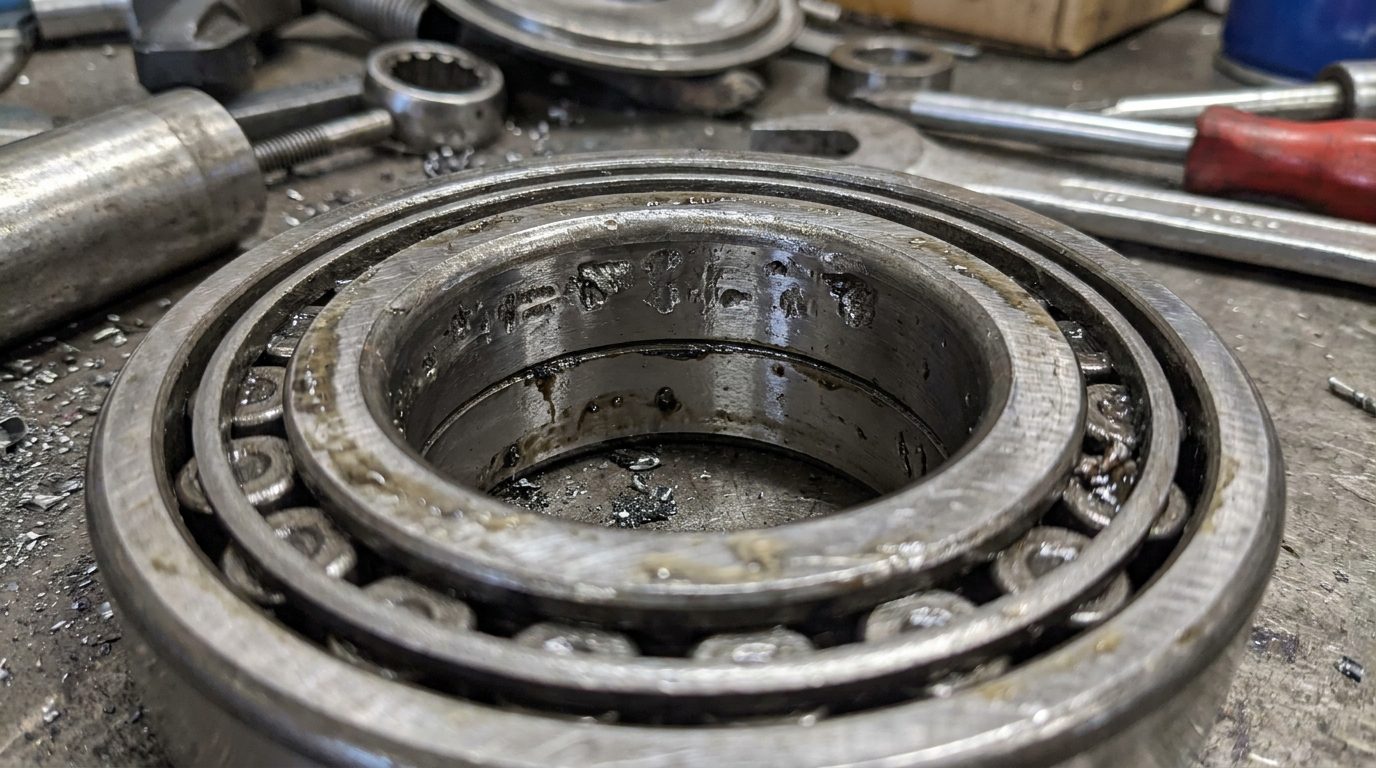
Preventing Bearing Failure in Planetary Gearboxes starts with controlling load, lubrication, contamination, alignment, temperature, and inspection quality across every stage of gearbox operation. In industrial plants, planetary gearboxes deliver high torque density in compact footprints, but their bearing systems operate under complex radial, axial, and moment loads. A small lubrication issue, preload error, seal failure, or misalignment condition can quickly become a production-stopping failure. For maintenance managers, plant engineers, reliability teams, mechanics, and purchasing professionals, the goal is not only to identify failed bearings but to prevent repeat failures through better inspection, root cause analysis, rebuild standards, and condition monitoring.
Bearing failure in planetary gearboxes is prevented by using the correct bearing design and preload, maintaining clean and properly specified lubricant, controlling operating temperature, preventing overload and shock loading, inspecting seals and breathers, monitoring vibration and oil condition, and correcting alignment or assembly issues during installation and rebuilds. The most common preventable causes are lubrication starvation, contamination, excessive heat, improper bearing fit, misalignment, overload, and poor maintenance practices.
Bearing failure in planetary gearboxes can lead to significant operational issues and costly downtime in industrial applications. For a comprehensive understanding of how to address such failures and the importance of timely maintenance, you can refer to a related article that discusses industrial gearbox repair services. This resource provides valuable insights into the repair processes and preventative measures that can be taken to extend the lifespan of gearboxes. To learn more, visit this article.
Why Bearing Failure Is Critical in Planetary Gearboxes
Planetary gearboxes are used in applications where high torque, compact size, and load sharing are essential. You will find them in:
- Mixers and agitators
- Conveyors and apron feeders
- Cranes and hoists
- Wind turbines
- Mining equipment
- Steel mill drives
- Cement kilns and mills
- Wastewater treatment equipment
- Marine and offshore systems
- Robotics and automation machinery
Unlike many parallel shaft gearboxes, planetary gearboxes distribute torque through multiple planet gears rotating around a sun gear inside a ring gear. Each planet gear typically rides on needle, cylindrical roller, tapered roller, or spherical roller bearings, depending on the design and load profile.
When one bearing fails, it can damage:
- Planet gears
- Sun gear teeth
- Ring gear teeth
- Carrier bores
- Shafts
- Seals
- Lubrication passages
- Housings
- Couplings
- Driven equipment
A bearing failure inside a planetary unit rarely remains isolated. Debris from a damaged bearing can circulate through the gearbox, damaging gear teeth and other bearing positions. That is why early detection and prevention are much less expensive than emergency gearbox repair or replacement.
For help evaluating damaged units, see Industrial Gearbox Solutions’ services for industrial gearbox repair and rebuilds at https://industrialgearboxsolutions.com/gearbox-repair/.
Common Causes of Bearing Failure in Planetary Gearboxes
Lubrication Starvation
Lubrication starvation is one of the most common causes of bearing failure in planetary gearboxes. Bearings require a consistent oil film to separate rolling elements from raceways. When lubricant supply is inadequate, metal-to-metal contact occurs, generating heat, wear, and eventual spalling.
Common reasons for lubrication starvation include:
- Incorrect oil level
- Blocked oil passages
- Wrong lubricant viscosity
- Oil pump failure in forced-lubrication systems
- Splash lubrication not reaching upper bearing positions
- Excessive foaming
- Incorrect mounting angle
- High operating speed causing oil aeration
- Extended oil change intervals
Planetary gearboxes can be especially sensitive because planet bearings may rely on splash, centrifugal flow, or directed lubrication paths. If those paths are restricted, the bearing may run dry even when the gearbox sump appears full.
Contaminated Lubricant
Contamination accelerates bearing wear by introducing hard particles or moisture into the contact zone. Dirt, metal debris, sand, process dust, water, and chemical vapors can all damage bearing surfaces.
Typical contamination sources include:
- Failed seals
- Missing or clogged breathers
- Poor oil handling practices
- Dirty fill containers
- Inadequate filtration
- Condensation during shutdowns
- Washdown water intrusion
- Wear debris from gears or bearings
According to lubrication best practices promoted by Noria, clean oil handling and contamination control are fundamental to extending gearbox and bearing life. Helpful resources are available at https://www.noria.com/.
Excessive Load or Shock Loading
Planetary gearboxes are designed for specific torque, speed, and duty cycle limits. Exceeding those limits can overload bearings, deform raceways, and accelerate fatigue.
Common overload conditions include:
- Frequent starts and stops
- Jammed conveyors
- Process surges
- Torque spikes
- Improper motor sizing
- Misapplied service factors
- Reversing loads
- Impact loading
- Emergency stops
- Coupling or brake problems
Even if the gearbox survives the overload event, microscopic fatigue damage may begin in the bearing raceways. Over time, that damage develops into pitting, spalling, noise, vibration, and heat.
Misalignment and Poor Load Distribution
Misalignment affects bearing life by creating uneven load distribution. In planetary gearboxes, misalignment may occur between the input shaft, output shaft, carrier, planet pins, or connected equipment.
Misalignment can be caused by:
- Soft foot at the motor or gearbox base
- Improper coupling alignment
- Bent shafts
- Worn mounting surfaces
- Distorted housings
- Poor machining during rebuild
- Incorrect shimming
- Thermal growth
- Foundation movement
A planetary gearbox depends on precise geometry. If a carrier bore or planet pin is out of tolerance, one planet bearing may carry more load than the others, leading to premature failure.
Improper Bearing Fit, Clearance, or Preload
Bearings must be installed with the correct fit, internal clearance, and preload. Too much clearance can cause vibration, skidding, and uneven load zones. Too much preload can cause excessive heat and rapid wear.
Common assembly errors include:
- Incorrect shaft or housing fits
- Using damaged bearing seats
- Overheating bearings during installation
- Hammering bearings into place
- Incorrect spacer dimensions
- Failure to measure endplay
- Improper torque on retaining hardware
- Mixing components from different bearing sets
- Reusing worn sleeves, carriers, or shafts
Technical guidance from bearing manufacturers such as SKF and Timken can help maintenance teams understand proper fits, mounting methods, and lubrication requirements. Useful references include https://www.skf.com/ and https://www.timken.com/.
Excessive Heat
Heat reduces lubricant viscosity, accelerates oxidation, damages seals, and changes bearing clearances. Once a bearing begins running hot, failure can accelerate quickly.
Heat sources may include:
- Low oil level
- Wrong oil viscosity
- Overloading
- Excessive preload
- Misalignment
- Contamination
- Cooling system failure
- High ambient temperature
- Churning losses from overfilling
- Restricted airflow around the gearbox
Operating temperature should be trended over time. A sudden increase in temperature is often more important than the absolute number.
Corrosion and Moisture Damage
Moisture contamination can cause rust, micropitting, lubricant degradation, and hydrogen-related damage. Gearboxes operating outdoors, in washdown areas, or in humid environments are especially vulnerable.
Moisture enters through:
- Damaged seals
- Open breathers
- Condensation
- Pressure washing
- Improper storage
- Leaking coolers
- Unsealed inspection covers
Bearings damaged by corrosion often display reddish-brown staining, etching, or pitting on raceways and rolling elements.
Industrial gearbox bearing failure can lead to costly downtime and production losses, so it’s important to address the issue promptly. Industrial gearbox bearing failure
Symptoms of Bearing Failure in Planetary Gearboxes
Early Warning Signs
Early-stage bearing distress may be subtle. Maintenance teams should investigate when they observe:
- Slight increase in vibration
- Higher operating temperature
- Oil discoloration
- Fine metallic particles in oil samples
- Intermittent noise
- Unusual whine, rumble, or growl
- Slight increase in motor current
- Small changes in gearbox efficiency
- Seal leakage
- Breather discharge or oil misting
These symptoms do not always confirm bearing failure, but they justify inspection and trending.
Advanced Failure Symptoms
As damage progresses, symptoms become more obvious:
- Loud grinding or knocking
- High vibration alarms
- Overheating
- Burnt oil smell
- Visible metal flakes in oil
- Rapid seal failure
- Shaft movement
- Gear tooth damage
- Tripping overload protection
- Complete gearbox seizure
Once a planetary gearbox reaches this stage, continued operation can destroy the carrier, gears, and housing.
Symptom-to-Cause Reference Table
| Symptom | Possible Bearing-Related Cause | Recommended Action |
||||
| Rising temperature | Lubrication starvation, overload, preload error | Check oil level, viscosity, load, and bearing settings |
| Rumble or growl | Race damage, spalling, contamination | Perform vibration analysis and oil inspection |
| Metallic debris in oil | Bearing or gear wear | Stop and inspect if debris is significant |
| High axial vibration | Misalignment, thrust bearing distress | Check coupling alignment and bearing endplay |
| Oil foaming | Wrong oil, contamination, overfilling | Test oil, correct level, inspect breather |
| Repeated seal failure | Shaft movement, pressure buildup, heat | Inspect bearings, seals, breathers, and shaft surfaces |
| Sudden vibration spike | Cage failure, cracked race, broken rolling element | Shut down and inspect immediately |
Understanding bearing failure in planetary gearboxes is crucial for maintaining optimal performance and longevity in mechanical systems. A related article discusses the differences between continuous and intermittent gearbox operation, which can significantly impact the wear and tear on bearings. For more insights on how operational modes affect gearbox reliability, you can read the article here. This knowledge can help in implementing effective maintenance strategies and improving overall gearbox efficiency.
Troubleshooting Bearing Problems in Planetary Gearboxes
| Causes of Bearing Failure | Effects of Bearing Failure | Preventive Measures |
|---|---|---|
| 1. Overloading | 1. Increased vibration and noise | 1. Regular maintenance and lubrication |
| 2. Misalignment | 2. Reduced efficiency | 2. Proper alignment during installation |
| 3. Contamination | 3. Increased heat generation | 3. Use of sealed bearings and proper sealing |
| 4. Improper lubrication | 4. Gearbox damage | 4. Regular lubrication and monitoring |
Step 1: Verify Operating Conditions
Before disassembling the gearbox, confirm how it is being used. Many bearing failures are application-driven rather than component-driven.
Review:
- Actual torque and speed
- Load cycles
- Shock loading events
- Starts per hour
- Ambient temperature
- Direction of rotation
- Duty cycle
- Motor power and drive settings
- Process changes
- Recent maintenance work
If the gearbox is operating outside its design limits, replacing the bearing alone will not solve the problem.
Step 2: Check Lubrication
Lubrication should be checked immediately when bearing distress is suspected.
Inspect:
- Oil level
- Oil type and viscosity
- Oil condition
- Oil color and odor
- Foam or aeration
- Water contamination
- Filter condition
- Pump pressure, if applicable
- Oil flow to planet bearings
- Breather condition
Take an oil sample from a live zone, not only from the drain plug. Drain samples can contain settled debris that may not represent circulating lubricant condition.
Step 3: Perform Vibration Analysis
Vibration analysis is one of the most effective ways to detect bearing defects before catastrophic failure. In planetary gearboxes, vibration signatures can be complex because of rotating carriers and multiple mesh frequencies.
A reliability engineer should look for:
- Bearing defect frequencies
- Sidebands around gear mesh frequency
- Increased broadband vibration
- Harmonics indicating looseness
- Impacts or modulation
- Changes in baseline trends
Because planetary gearboxes have unique kinematics, analysis should be performed by personnel familiar with planetary drives.
Step 4: Inspect for External Clues
External inspection can reveal many root causes.
Look for:
- Oil leaks
- Damaged seals
- Loose mounting bolts
- Soft foot
- Cracked foundation grout
- Misaligned couplings
- Damaged guards
- Overheated paint
- Clogged cooling fins
- Breather contamination
- Abnormal shaft movement
For field troubleshooting support, Industrial Gearbox Solutions can assist with gearbox inspection and failure analysis. Visit https://industrialgearboxsolutions.com/gearbox-inspection/.
Step 5: Conduct Internal Inspection
If external checks indicate serious damage, the gearbox may need to be opened.
During internal inspection, document:
- Bearing condition
- Gear tooth contact pattern
- Carrier bore condition
- Planet pin wear
- Shaft fits
- Spacer and shim condition
- Evidence of fretting
- Seal wear
- Oil passage blockage
- Debris location
- Heat discoloration
- Housing cracks
Photograph all findings before cleaning components. Evidence can be lost once parts are washed.
Inspection Methods for Preventing Bearing Failure
Visual Inspection
Visual inspection remains one of the most valuable tools when performed carefully.
Inspect bearings for:
- Spalling
- Pitting
- Scoring
- Smearing
- Brinelling
- False brinelling
- Cage damage
- Rust
- Heat discoloration
- Cracked races
- Uneven wear patterns
Also inspect surrounding components. A failed bearing may be the result, not the cause.
Oil Analysis
Oil analysis provides early warning of contamination and wear.
Recommended tests include:
- Viscosity
- Water content
- Particle count
- Ferrous density
- Acid number
- Oxidation
- Additive depletion
- Spectrometric wear metals
- Analytical ferrography
Oil analysis trends are more useful than one-time samples. Establish baseline values for each critical gearbox.
Borescope Inspection
A borescope can inspect internal components without complete disassembly. This is useful for large planetary gearboxes where downtime is expensive.
Borescope inspection can reveal:
- Gear tooth damage
- Oil flow problems
- Bearing cage damage
- Debris accumulation
- Discoloration
- Corrosion
- Seal fragments
- Cracks or scoring
Temperature Monitoring
Temperature can be monitored with:
- Infrared thermography
- Surface temperature sensors
- Embedded RTDs
- Oil temperature sensors
- Online monitoring systems
Temperature readings should be taken at consistent locations and operating conditions. A gearbox that normally runs at 150°F but rises to 175°F under the same load deserves attention.
Endplay and Backlash Measurements
Improper endplay can indicate bearing wear, preload loss, or assembly error.
Measure and trend:
- Shaft endplay
- Carrier movement
- Gear backlash
- Bearing clearance
- Coupling movement
- Axial float
Measurements should be compared to OEM specifications or qualified engineering standards.
Prevention Strategies for Planetary Gearbox Bearing Life
Use the Correct Lubricant
The lubricant must match the gearbox design, bearing type, load, speed, and temperature.
Consider:
- ISO viscosity grade
- Base oil type
- Extreme pressure additives
- Compatibility with seals and paints
- Thermal stability
- Micropitting resistance
- Water separation capability
- Foam control
- Filterability
Do not change lubricant type without confirming compatibility. Mixing incompatible oils can cause additive dropout, foaming, sludge, or seal problems.
Maintain Clean Oil
Contamination control is essential.
Best practices include:
- Use sealed oil transfer containers
- Filter new oil before adding it
- Install desiccant breathers where appropriate
- Keep fill ports clean
- Use quick-connect filtration carts
- Replace filters on condition or schedule
- Keep oil drums sealed indoors
- Avoid open buckets and funnels
- Label lubricants clearly
Clean oil is often one of the highest-return reliability improvements for industrial gearboxes.
Control Gearbox Temperature
To reduce heat-related bearing failure:
- Maintain proper oil level
- Confirm correct viscosity
- Clean cooling fins
- Check fans and heat exchangers
- Verify oil cooler performance
- Avoid overfilling
- Reduce overload conditions
- Improve ventilation
- Monitor thermal trends
- Investigate sudden temperature changes
Install Bearings Correctly
Improper installation can destroy a bearing before the gearbox is even placed in service.
Follow these practices:
- Use proper heating tools, not open flames
- Never hammer rolling elements
- Press only on the correct race
- Measure shaft and housing fits
- Use calibrated torque tools
- Confirm preload or endplay
- Replace damaged spacers and retainers
- Maintain cleanliness during assembly
- Follow OEM or engineered specifications
- Document all measurements
Protect Against Moisture and Corrosion
Preventing moisture entry is especially important for outdoor and intermittent-duty gearboxes.
Recommended practices:
- Use high-quality seals
- Install desiccant breathers
- Avoid pressure washing seals directly
- Use vapor-phase corrosion inhibitors for storage
- Rotate stored gearboxes periodically
- Maintain oil temperature above condensation risk when practical
- Inspect covers and gaskets
- Repair leaking oil coolers promptly
Apply Proper Storage Practices
Bearings can fail prematurely if gearboxes are stored poorly before installation.
For stored planetary gearboxes:
- Keep indoors when possible
- Use climate-controlled storage for critical units
- Fill or fog with preservation oil if recommended
- Seal openings
- Rotate shafts periodically
- Protect machined surfaces
- Keep units off the floor
- Inspect seals before commissioning
- Drain and refill preservation oil as required
Repair vs. Replacement: Making the Right Decision
When Repair Is Usually Practical
Repair may be the best option when:
- Gearbox housing is intact
- Carrier bores are repairable
- Gear teeth are within tolerance
- Replacement parts are available
- Downtime can accommodate rebuild time
- Root cause is understood
- Unit is large, custom, or expensive
- Lead time for new replacement is long
A proper rebuild should include bearing replacement, dimensional inspection, gear inspection, seal replacement, lubrication system cleaning, and test run where possible.
When Replacement May Be Better
Replacement may be recommended when:
- Housing is cracked or distorted
- Carrier is severely damaged
- Multiple gears are destroyed
- Repair cost approaches replacement cost
- Unit is obsolete and parts are unavailable
- Application requirements have changed
- Gearbox was undersized from the beginning
- Repeated failures indicate design mismatch
Purchasing professionals should evaluate total cost, not just purchase price. Emergency freight, lost production, installation labor, and repeat failure risk can exceed the cost difference between repair and replacement.
Repair vs. Replacement Decision Table
| Factor | Repair May Be Best | Replacement May Be Best |
||||
| Housing condition | Good or repairable | Cracked, distorted, obsolete |
| Gear condition | Minor wear, reusable | Severe tooth damage |
| Bearing damage | Isolated and explainable | Widespread debris damage |
| Lead time | New unit unavailable quickly | Replacement available fast |
| Cost | Repair significantly lower | Repair near replacement cost |
| Reliability history | First failure | Repeated failures |
| Application fit | Correctly sized | Undersized or misapplied |
For rebuild evaluation, visit Industrial Gearbox Solutions at https://industrialgearboxsolutions.com/gearbox-rebuilding/.
Maintenance Best Practices for Planetary Gearbox Bearings
Preventive Maintenance Checklist
Use a structured checklist to reduce missed warning signs.
| Frequency | Maintenance Task |
|||
| Daily/Shift | Check for abnormal noise, leaks, vibration, and temperature |
| Weekly | Inspect oil level, breather, seals, and mounting bolts |
| Monthly | Record vibration and temperature trends |
| Quarterly | Pull oil sample and inspect filter elements |
| Semiannual | Check alignment, foundation bolts, and coupling condition |
| Annual | Review load data, oil analysis trends, and inspection history |
| Shutdown | Inspect internals, gear contact, bearing condition, and lubrication paths |
Recommended Condition Monitoring Tools
High-value planetary gearbox applications should use condition monitoring.
Useful tools include:
- Vibration sensors
- Oil analysis program
- Online particle counters
- Temperature sensors
- Infrared thermography
- Ultrasonic inspection
- Motor current analysis
- Magnetic drain plugs
- Filter debris analysis
- Borescope inspections
Documentation and Reliability Tracking
Maintenance records help identify patterns and prevent repeat failures.
Document:
- Oil changes
- Oil analysis reports
- Vibration readings
- Temperature readings
- Bearing part numbers
- Installation measurements
- Preload and endplay values
- Failure photos
- Load conditions
- Repair history
- Root cause findings
Good documentation supports better purchasing decisions and helps engineers select improved components or maintenance intervals.
Bearing Failure Modes and What They Mean
Spalling
Spalling appears as flaked or pitted areas on the bearing raceway. It is often caused by rolling contact fatigue, contamination, overloading, or misalignment.
Smearing
Smearing is surface damage caused by sliding contact, poor lubrication, or rapid acceleration. It may indicate skidding, incorrect lubricant viscosity, or inadequate load.
Brinelling
True brinelling occurs when heavy static or shock loads create permanent indentations in the raceway. False brinelling is usually caused by vibration while the bearing is stationary.
Cage Failure
A damaged cage can result from vibration, poor lubrication, high speed, contamination, or misalignment. Cage failure can quickly become catastrophic as rolling elements lose spacing.
Corrosion
Rust or etching indicates water, condensation, chemical exposure, or poor storage practices. Corrosion damage often leads to accelerated fatigue.
Fretting
Fretting occurs at fits or contact surfaces where small oscillatory movement causes reddish-brown debris and wear. It can indicate loose fits, vibration, or improper assembly.
Engineering Considerations for Better Bearing Reliability
Bearing Selection
Bearing type must match the application. Planetary gearboxes may use:
- Cylindrical roller bearings for high radial loads
- Tapered roller bearings for combined radial and axial loads
- Needle roller bearings for compact planet gear designs
- Spherical roller bearings for misalignment tolerance
- Thrust bearings for axial load control
Bearing selection should consider load rating, speed, lubrication, stiffness, space limits, and duty cycle.
Gearbox Rating and Service Factor
Standards from organizations such as the American Gear Manufacturers Association provide guidance for gear rating and application factors. AGMA resources can be found at https://www.agma.org/.
A gearbox that is theoretically rated for a load may still fail if service factors do not account for shock, starts/stops, environment, or duty cycle.
Load Sharing in Planetary Gearboxes
Planetary gearboxes rely on balanced load sharing among planet gears. Uneven load sharing can overload individual bearings.
Load sharing problems may result from:
- Carrier manufacturing errors
- Uneven planet pin spacing
- Ring gear distortion
- Housing deflection
- Gear tooth errors
- Bearing clearance variation
- Shaft misalignment
Precision inspection during rebuild is essential.
FAQs About Preventing Bearing Failure in Planetary Gearboxes
What is the most common cause of bearing failure in planetary gearboxes?
Lubrication-related failure is one of the most common causes. This includes low oil level, wrong viscosity, contamination, foaming, blocked oil passages, and degraded lubricant. Controlling lubricant quality and delivery is one of the most effective prevention strategies.
How often should oil be changed in a planetary gearbox?
Oil change frequency depends on operating temperature, duty cycle, contamination level, lubricant type, and OEM recommendations. Many plants use oil analysis to determine condition-based intervals instead of relying only on calendar-based changes.
Can vibration analysis detect planetary gearbox bearing failure?
Yes. Vibration analysis can detect bearing defects, looseness, imbalance, gear mesh issues, and impacts. However, planetary gearboxes produce complex vibration patterns, so analysis should be performed by someone experienced with planetary gear drive diagnostics.
Why do new bearings fail shortly after installation?
Early bearing failure often results from improper installation, incorrect fits, contamination during assembly, excessive preload, poor lubrication, misalignment, or failure to correct the original root cause.
Should all bearings be replaced during a planetary gearbox rebuild?
In many industrial rebuilds, replacing all critical bearings is recommended, especially if debris circulated through the gearbox. Reusing bearings may reduce short-term cost but increase the risk of repeat failure.
What oil cleanliness level is best for planetary gearboxes?
The required cleanliness level depends on bearing and gear design, load, and criticality. Critical gearboxes often benefit from tighter ISO cleanliness targets and dedicated filtration. Consult the gearbox OEM, lubricant supplier, or reliability engineer.
Can overfilling a gearbox cause bearing failure?
Yes. Overfilling can cause churning, heat generation, foaming, aeration, and lubricant degradation. Too much oil can be just as harmful as too little oil.
What should be included in a gearbox failure analysis?
A good failure analysis should include operating history, lubrication review, oil analysis, vibration data, bearing inspection, gear inspection, dimensional checks, seal inspection, load review, and documentation of all damaged parts.
Key Takeaways
- Planetary gearbox bearing failure is often preventable with proper lubrication, contamination control, alignment, and inspection.
- The most common causes include lubrication starvation, contamination, overload, heat, misalignment, and improper assembly.
- Early symptoms include rising vibration, increased temperature, oil debris, abnormal noise, and seal leakage.
- Oil analysis, vibration monitoring, thermography, borescope inspection, and endplay measurements are valuable prevention tools.
- Repair vs. replacement should be based on damage severity, lead time, cost, gearbox history, and application suitability.
- Proper rebuild procedures must include dimensional inspection, correct bearing fits, preload/endplay verification, and root cause correction.
- Clean oil handling and consistent maintenance documentation significantly improve gearbox reliability.
- Authoritative resources from SKF, Timken, AGMA, and Noria can support bearing selection, installation, lubrication, and reliability programs.
Suggested Branded Images
Image 1: Planetary Gearbox Bearing Inspection
Alt text: Technician inspecting planetary gearbox bearings during industrial gearbox rebuild
Caption: A detailed bearing inspection helps identify lubrication, contamination, and alignment-related failure modes before reassembly.
Image 2: Oil Sampling on Industrial Planetary Gearbox
Alt text: Maintenance technician taking oil sample from planetary gearbox for lubricant analysis
Caption: Routine oil analysis is one of the most effective tools for preventing bearing failure in planetary gearboxes.
Image 3: Damaged Bearing Raceway Close-Up
Alt text: Close-up of spalled bearing raceway from planetary gearbox failure
Caption: Spalling and pitting often indicate fatigue, contamination, overload, or lubrication breakdown.
Image 4: Gearbox Vibration Monitoring System
Alt text: Wireless vibration sensor installed on industrial planetary gearbox housing
Caption: Vibration monitoring helps reliability teams detect bearing defects before catastrophic gearbox failure.
Image 5: Industrial Gearbox Solutions Rebuild Team
Alt text: Industrial Gearbox Solutions technicians rebuilding a planetary gearbox
Caption: Precision rebuild practices, clean assembly, and accurate bearing setup reduce the risk of repeat failures.
SEO Metadata
SEO Title
Preventing Bearing Failure in Planetary Gearboxes: Causes, Symptoms, Inspection, and Maintenance
Meta Description
Learn how to prevent bearing failure in planetary gearboxes with lubrication best practices, inspection methods, troubleshooting steps, repair guidance, and maintenance checklists.
Primary Keyword
Preventing Bearing Failure in Planetary Gearboxes
Secondary Keywords
planetary gearbox bearing failure, industrial gearbox maintenance, gearbox bearing inspection, planetary gearbox repair, gearbox lubrication, bearing failure analysis, gearbox vibration analysis, gearbox oil analysis
Suggested URL Slug
preventing-bearing-failure-planetary-gearboxes
Search Intent
Informational and commercial investigation for maintenance, engineering, reliability, and purchasing teams seeking to prevent failures, troubleshoot symptoms, and evaluate repair or replacement options.
Internal Link Suggestions
- Industrial gearbox repair: https://industrialgearboxsolutions.com/gearbox-repair/
- Gearbox rebuilding: https://industrialgearboxsolutions.com/gearbox-rebuilding/
- Gearbox inspection: https://industrialgearboxsolutions.com/gearbox-inspection/
- Gearbox failure analysis: https://industrialgearboxsolutions.com/failure-analysis/
- Emergency gearbox repair: https://industrialgearboxsolutions.com/emergency-gearbox-repair/
Authoritative External Sources
- SKF bearing knowledge and maintenance resources: https://www.skf.com/
- Timken bearing engineering resources: https://www.timken.com/
- AGMA gear standards and technical resources: https://www.agma.org/
- Noria lubrication and oil analysis resources: https://www.noria.com/
Conclusion
Preventing bearing failure in planetary gearboxes requires more than replacing worn parts. It demands a complete reliability approach that includes correct lubrication, contamination control, precision installation, load verification, alignment, temperature management, and condition monitoring. For maintenance managers and plant engineers, the best results come from combining routine inspections with oil analysis, vibration monitoring, and disciplined documentation. For purchasing professionals, the lowest-cost option is not always the best value if it increases downtime or repeat failure risk.
When a planetary gearbox shows signs of bearing distress, act early. A timely inspection can prevent gear damage, carrier damage, production loss, and emergency replacement costs. Industrial Gearbox Solutions can help evaluate, repair, rebuild, and improve planetary gearboxes for demanding industrial applications.
FAQs
What are the common causes of bearing failure in planetary gearboxes?
Common causes of bearing failure in planetary gearboxes include inadequate lubrication, overloading, misalignment, and contamination from foreign particles.
How can inadequate lubrication lead to bearing failure in planetary gearboxes?
Inadequate lubrication can lead to bearing failure in planetary gearboxes by causing increased friction, heat, and wear on the bearings, ultimately leading to premature failure.
What are the signs of bearing failure in planetary gearboxes?
Signs of bearing failure in planetary gearboxes include increased noise, vibration, and temperature, as well as decreased efficiency and performance of the gearbox.
How can bearing failure in planetary gearboxes be prevented?
Bearing failure in planetary gearboxes can be prevented by ensuring proper lubrication, avoiding overloading, maintaining proper alignment, and implementing effective contamination control measures.
What are the consequences of bearing failure in planetary gearboxes?
Consequences of bearing failure in planetary gearboxes include downtime, increased maintenance costs, reduced productivity, and potential damage to other components of the gearbox.