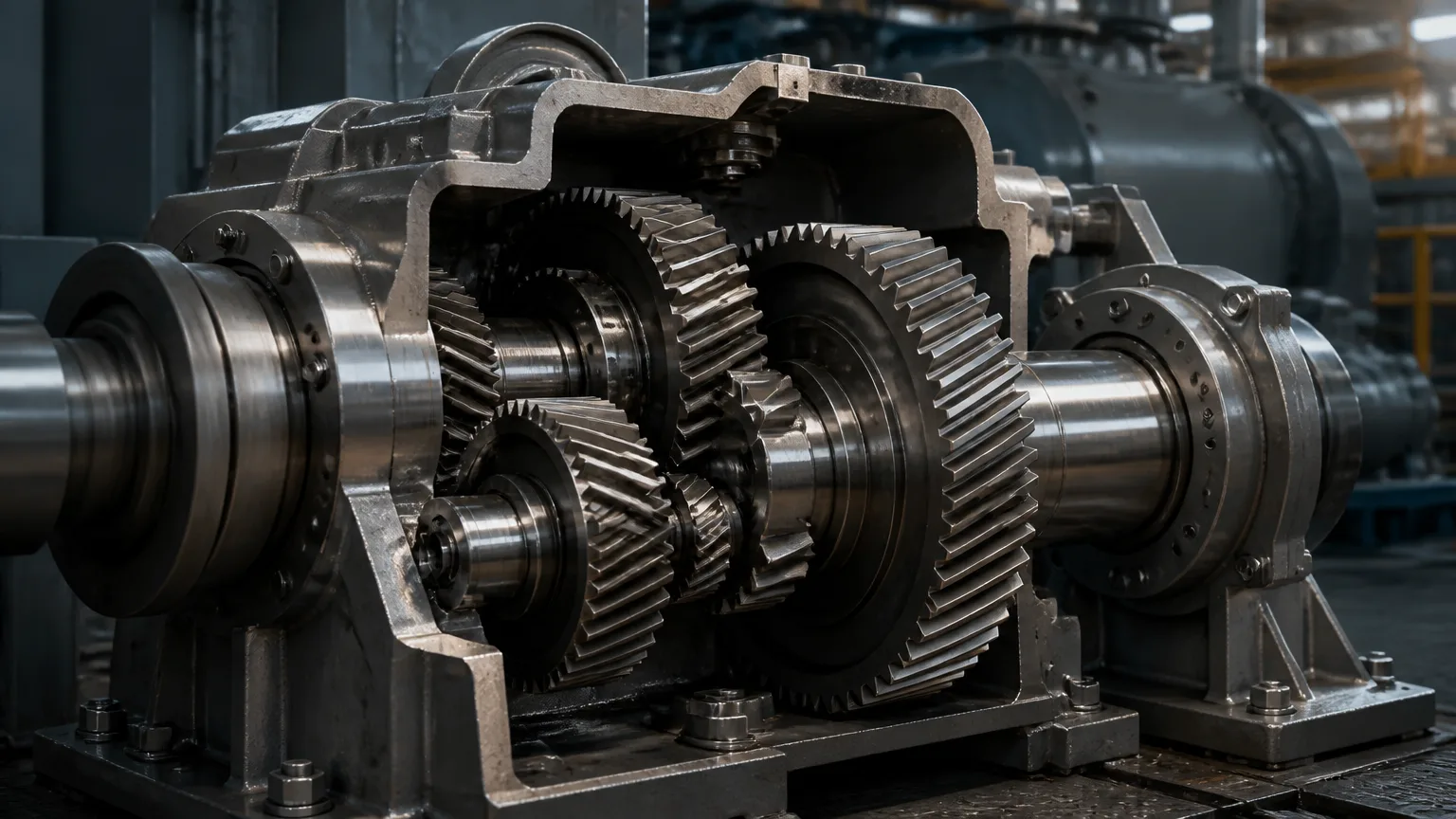
Reducing speed is one of the primary functions of an industrial gearbox. Motors often run faster than machinery can safely or effectively operate, so the gearbox converts high-speed rotation into controlled output. As speed decreases, available torque increases, helping equipment handle demanding loads with greater control.
For manufacturers and industrial facilities, the right reduction ratio supports stable output, accurate processes, and consistent production performance. It also protects connected equipment from overload, shock, and premature wear, reducing the risk of costly downtime. Learn more about industrial gearbox solutions designed for demanding applications.
When a gearbox no longer delivers the required speed reduction or operating reliability, repair, rebuilding, or replacement may be the practical answer. Understanding how each option affects efficiency, equipment protection, and long-term maintenance helps teams make confident decisions.
The Mechanics of Speed Reduction and Torque Increase
A gearbox controls output speed through the relationship between its input shaft, gear pairs, and output shaft. The input shaft receives power from the motor. Its gear drives a larger or smaller gear on the output shaft, changing how quickly the output shaft turns.
This relationship is called the reduction ratio. For example, a 4:1 reduction gearbox turns the output shaft once for every four turns of the input shaft. If a motor runs at 1,800 revolutions per minute (rpm), the gearbox produces an output speed of approximately 450 rpm, before mechanical losses.
Reducing speed generally increases the torque available at the output. In practical terms, the output shaft turns more slowly but can deliver greater turning force to move or process a load. A conveyor may use this increased torque to start a heavily loaded belt, while mixers, pumps, and extruders rely on controlled movement under sustained resistance.
The available torque is not equal to the ideal calculated value. Friction between gear teeth, heat generation, bearing resistance, and other mechanical losses reduce efficiency. Gear selection must therefore match the motor, load, duty cycle, and required output speed. Choosing the correct ratio helps protect equipment while delivering reliable performance.
How Gearbox Design Influences Industrial Output
Gearbox design directly affects how effectively a facility controls speed, load, alignment, and operating conditions. Common configurations include helical, bevel, worm, planetary, and parallel-shaft gearboxes. Each suits different load requirements, output speeds, mounting constraints, and available space.
Helical gearboxes provide efficient, smooth power transmission for many continuous-duty applications. Bevel units change the drive direction, while worm gearboxes offer high reduction ratios in compact spaces. Planetary designs handle high torque within a small footprint. Parallel-shaft models support heavy loads where the motor and driven equipment require offset alignment.
Selection must also account for the following operating conditions:
Service factor and rated torque: These provide capacity for sustained loads and demand peaks.
Duty cycle and shock loading: Frequent starts, stops, or impact loads require additional durability.
Thermal capacity and lubrication: Heat removal and the correct lubricant viscosity help prevent premature wear.
Alignment: Proper shaft positioning reduces bearing stress, vibration, and gear damage.
Pump-driven equipment shows why the gearbox must match both motor characteristics and process demands. A pump may require steady torque, frequent cycling, or resistance to pressure changes. An undersized unit can overheat or fail quickly. Reviewing pump gearbox repair issues can also reveal whether wear, lubrication, or load conditions are undermining performance.
Recognizing When a Gearbox Is Losing Control
A gearbox may be losing control when output speed varies, declines, or no longer matches process requirements. Abnormal noise, rising vibration, and repeated overload trips often signal worn gears, damaged bearings, or shaft misalignment. These conditions can reduce torque transmission and strain the motor and driven equipment.
Overheating is another warning sign, particularly when the gearbox is operating within its rated load. Inadequate lubrication increases friction and accelerates wear. Contaminated oil may contain metal particles, water, or other debris, while leaks can reduce lubricant levels and allow further damage.
Excessive backlash can cause delayed or uneven power transfer. Housing distortion may shift gear alignment, creating additional noise, vibration, and tooth wear. If these problems continue, secondary equipment such as pumps, conveyors, or couplings may also suffer damage.
Facilities should document output speed, load, temperature, noise, vibration, and oil condition during normal operation. Inspect seals, shafts, couplings, and connected equipment before assuming the gearbox is the only source of trouble. Early inspection can identify a minor defect before it causes an unplanned shutdown.
Repair, Rebuild, or Replace: Choosing the Right Response
A repair often suits a localized problem, such as a failed bearing, worn seal, damaged shaft, or lubrication issue. An inspection report should confirm the fault before authorizing work. For example, a Flender gearbox repair may restore reliable speed reduction without replacing serviceable components.
A rebuild is more appropriate when internal wear affects multiple gears, bearings, shafts, or seals. Technicians typically disassemble, clean, inspect, and replace worn parts before completing dimensional checks and testing. Review this industrial gearbox rebuild option when the housing remains sound but performance and reliability have declined.
Replacement may provide stronger value when parts are unavailable, the ratio is unsuitable, or housing damage is severe. A new or remanufactured gearbox can also reduce lifecycle costs when repeated repairs, downtime, or inefficiency outweigh the initial investment. Before selecting a unit, verify load requirements, output speed, ratio, mounting dimensions, lubrication, motor compatibility, and duty cycle. These checks help ensure the gearbox supports the application rather than creating another failure point.
Keeping Output Reliable Through Proper Gearbox Service
Accurate speed reduction supports consistent torque delivery, stable processes, and longer equipment life. Achieving those results requires correct gearbox selection, preventive maintenance, and timely professional service.
When a unit begins overheating, vibrating, or losing output speed, avoid replacing components without finding the cause. Work with a provider experienced in choosing a reliable gearbox repair partner and able to assess the complete drive system, including the motor, coupling, load, and controls.
For your next step, document operating conditions and inspection findings. Then compare repair, rebuild, and replacement options based on application requirements, expected reliability, and total operating cost.