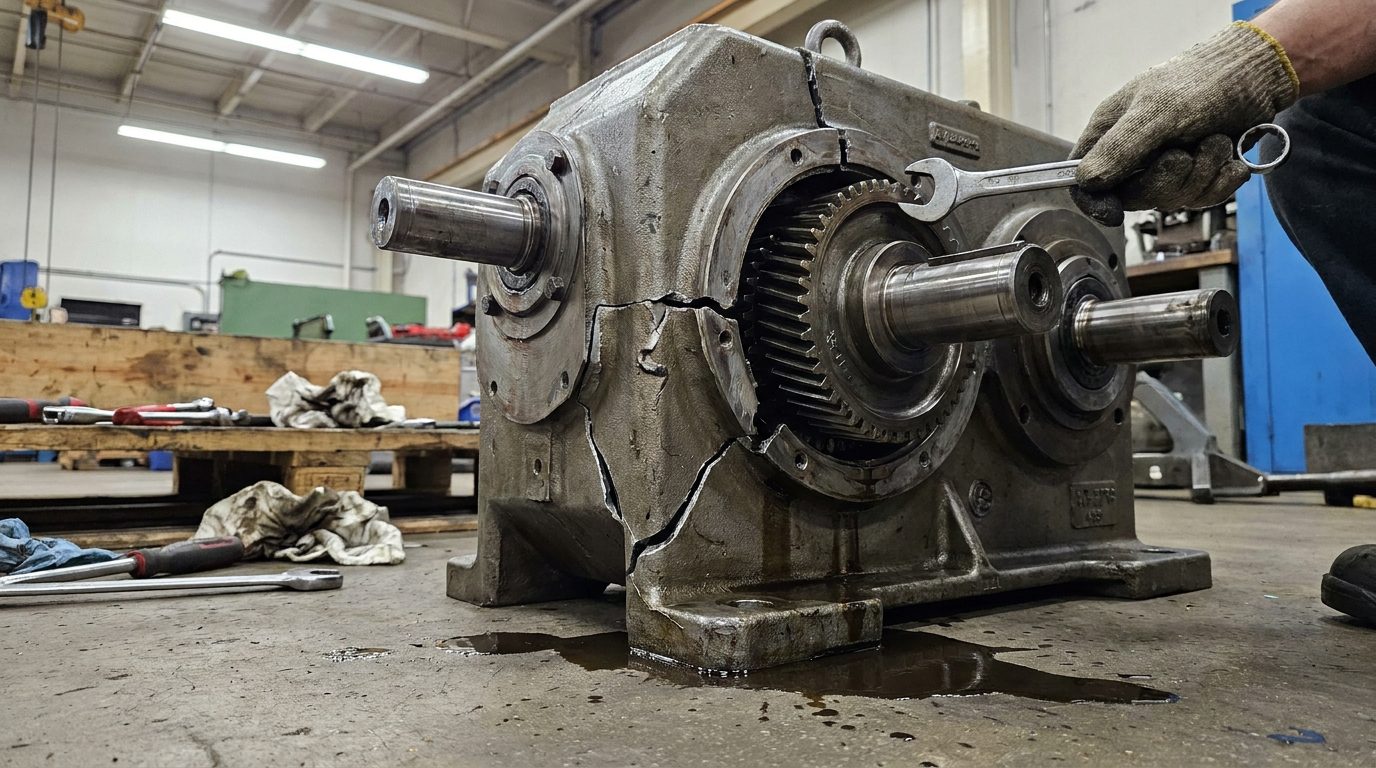
Gearbox overloading and bearing failure are closely linked problems that can turn a reliable industrial drive system into a source of costly downtime, safety risk, and repeat repairs. When a gearbox is pushed beyond its rated torque, speed, shock-load, or thermal capacity, the bearings often absorb the punishment first. For maintenance managers, plant engineers, reliability teams, mechanics, and purchasing professionals, understanding this relationship is essential for preventing catastrophic failures, production losses, and unnecessary replacement costs. This guide explains the causes, warning signs, inspection methods, troubleshooting steps, prevention strategies, and repair-versus-replacement decisions associated with overloaded gearboxes and failed bearings.
Gearbox overloading occurs when an industrial gearbox operates beyond its designed mechanical, thermal, or lubrication limits. This can lead to excessive bearing loads, lubricant film breakdown, misalignment, gear tooth damage, shaft deflection, overheating, vibration, and eventual bearing failure. Common symptoms include abnormal noise, rising temperature, vibration spikes, metal particles in oil, leaking seals, and reduced equipment performance. The best prevention methods include proper gearbox sizing, load monitoring, alignment checks, oil analysis, vibration analysis, correct lubrication, routine inspections, and timely gearbox repair or rebuild before secondary damage spreads.
Gearbox overloading can lead to significant bearing failure, which is a critical issue in industrial applications. Understanding the causes and consequences of this problem is essential for maintaining the efficiency and longevity of machinery. For more insights on how to address gearbox issues and ensure optimal performance, you can refer to a related article on industrial gearbox repair in Buffalo, NY, available at Industrial Gearbox Repair in Buffalo, NY.
Why Gearbox Overloading Is So Dangerous
An industrial gearbox is designed to transmit power within specific limits. These limits include torque rating, service factor, input speed, output speed, duty cycle, load type, operating temperature, lubrication requirements, and environmental conditions. When any of these limits are exceeded, the gearbox may continue operating temporarily, but internal components experience accelerated stress.
Overloading is especially dangerous because it rarely damages only one component. A gearbox operating above its design capacity may experience:
- Bearing fatigue
- Gear tooth pitting or cracking
- Shaft deflection
- Housing distortion
- Seal leakage
- Lubricant overheating
- Increased vibration
- Coupling and alignment problems
- Premature failure of connected equipment
In many plants, overload-related damage is misdiagnosed as a lubrication issue, bearing quality issue, or normal wear. While those factors may contribute, the root cause is often excessive load, shock loading, improper application, or a gearbox that was never correctly sized for current production demands.
For support with identifying overload-related damage, Industrial Gearbox Solutions offers services such as industrial gearbox repair, gearbox rebuilding, and emergency gearbox repair.
Mechanical Overload vs. Thermal Overload
Not all overload conditions look the same. Two common categories are mechanical overload and thermal overload.
Mechanical overload occurs when torque or shock load exceeds the gearbox rating. This may happen during startups, jams, sudden reversals, process surges, or when production rates are increased without verifying gearbox capacity.
Thermal overload occurs when the gearbox cannot dissipate heat fast enough. Even if the torque load seems acceptable, excessive heat can reduce lubricant viscosity, weaken the oil film, accelerate oxidation, and increase bearing and gear wear.
Why Bearings Are Often the First Components to Fail
Bearings support shafts, maintain gear alignment, and carry radial and axial loads. When the gearbox is overloaded, shafts may deflect and gear mesh forces increase. Bearings then operate under higher-than-designed loads, often with compromised lubrication.
This leads to:
- Reduced bearing fatigue life
- Increased contact stress
- Higher operating temperature
- Cage wear or fracture
- Rolling element damage
- Raceway spalling
- Lubricant starvation or film failure
According to SKF bearing reliability guidance, bearing damage is often caused by a combination of improper lubrication, contamination, overload, misalignment, and fatigue. Timken’s bearing damage analysis resources also highlight overload and misalignment as major contributors to premature bearing failure.
Authoritative references:
- SKF bearing failure and damage analysis: https://www.skf.com
- Timken bearing damage analysis: https://www.timken.com
- AGMA gearbox standards and technical resources: https://www.agma.org
- Noria lubrication reliability resources: https://www.noria.com
Common Causes of Gearbox Overloading
Overloading is not always the result of operator error. It can be caused by changes in production, improper design assumptions, poor installation, or deteriorating machine conditions.
Incorrect Gearbox Sizing
One of the most common causes of overloading is improper gearbox selection. A gearbox must be sized for more than average horsepower. Engineers and purchasing teams should consider:
- Peak torque
- Starting torque
- Shock loading
- Duty cycle
- Service factor
- Ambient temperature
- Input and output speed
- Load direction
- Operating hours per day
- Process variability
- Environmental contamination
- Lubrication method
A gearbox that appears acceptable on paper may fail if the real-world application includes frequent starts and stops, reversing loads, heavy impacts, or long continuous operation.
Increased Production Demands
Many facilities increase line speed, throughput, or material load over time. The original gearbox may have been selected for a lower production rate. When output increases, load demand rises, often without a corresponding review of gearbox capacity.
Common examples include:
- Conveyors carrying heavier material
- Mixers processing denser product
- Crushers handling harder feedstock
- Extruders running at higher throughput
- Agitators with changed blade geometry
- Paper, steel, or mining equipment operating at increased load
In these situations, bearings may fail repeatedly even after proper replacement because the gearbox is being asked to do more than it was designed to handle.
Shock Loading and Process Jams
Shock loads are sudden load spikes that can exceed the normal operating torque by several times. Even short-duration shock loads can damage bearings and gears.
Typical sources include:
- Conveyor jams
- Crusher tramp metal
- Sudden starts under load
- Emergency stops
- Reversing drives
- Material surges
- Improper clutch or brake settings
- Coupling lockup
- Impact loading in mills or kilns
Shock loading is particularly harmful because it creates high contact stress in gear teeth and bearings. The initial damage may be microscopic, but repeated shock events cause cracks, spalling, and eventual failure.
Misalignment and Soft Foot
Misalignment increases bearing loads and can mimic the symptoms of gearbox overloading. If a motor, coupling, gearbox, or driven machine is misaligned, shafts experience bending forces that bearings were not designed to carry.
Common alignment-related issues include:
- Angular misalignment
- Parallel misalignment
- Soft foot under the gearbox or motor
- Foundation movement
- Pipe strain or structural stress
- Coupling wear
- Thermal growth not considered during alignment
Even a properly sized gearbox can fail prematurely if misalignment creates additional radial or axial loads.
Poor Lubrication Practices
Lubrication problems can make an overloaded gearbox fail much faster. When load increases, the bearing and gear surfaces require a strong lubricant film to separate metal surfaces. If the oil is too thin, contaminated, oxidized, or insufficient, wear accelerates.
Common lubrication problems include:
- Wrong viscosity
- Incorrect lubricant type
- Low oil level
- Overfilled gearbox
- Water contamination
- Dirt or dust contamination
- Oxidized oil
- Incompatible lubricant mixing
- Infrequent oil changes
- Plugged breathers
- Lack of filtration
Noria emphasizes that lubricant selection, cleanliness, and condition monitoring are critical to equipment reliability, especially in heavily loaded gearboxes.
Industrial gearbox bearing failure can lead to costly downtime and production losses, so it’s important to address the issue promptly. Industrial gearbox bearing failure
Symptoms of Gearbox Overloading and Bearing Failure
Early detection is essential. A gearbox rarely fails without warning. The challenge is recognizing the symptoms before damage becomes catastrophic.
Noise Changes
Abnormal noise is one of the first signs of gearbox or bearing trouble. Maintenance teams should investigate:
- Growling
- Rumbling
- Whining
- Clicking
- Grinding
- Hammering
- Intermittent knocking
- High-pitched bearing noise
A gear whine may indicate tooth mesh problems, while rumbling or growling often points to bearing damage. Sudden noise changes after a process change may suggest overload.
Excessive Heat
Heat is both a symptom and a cause of failure. Overloaded gearboxes generate more friction and heat. As oil temperature rises, viscosity may drop, reducing lubricant film thickness and accelerating wear.
Warning signs include:
- Gearbox housing too hot to touch
- Rising oil temperature trend
- Discolored paint near bearing bores
- Burnt oil smell
- Darkened lubricant
- Frequent seal failure
- Thermal alarms
Infrared thermography can help identify hot spots around bearing locations, gear mesh zones, and lubrication flow restrictions.
Vibration Increases
Vibration analysis is one of the most effective methods for detecting bearing and gear damage. Overloading can produce vibration signatures related to:
- Bearing defect frequencies
- Gear mesh frequency changes
- Shaft misalignment
- Looseness
- Resonance
- Unbalance
- Gear tooth damage
A vibration trend that increases after a production rate change, material change, or equipment modification should be investigated immediately.
Oil Contamination and Metal Debris
Oil analysis can reveal early bearing and gear damage before noise or vibration becomes severe. Signs of internal wear include:
- Elevated iron
- Chromium from bearing elements
- Copper from cages or bushings
- Silicon from dirt contamination
- Water contamination
- Increased particle count
- High oxidation or acid number
- Ferrous debris on magnetic plugs
Metal particles in oil are a serious warning sign. Fine metallic paste may indicate wear, while larger flakes can point to spalling or gear tooth damage.
Seal Leakage
Overloading can cause shaft deflection, excessive heat, pressure buildup, and vibration, all of which can damage seals. Leaking seals are not just housekeeping problems. They can lead to low oil levels, contamination entry, and rapid bearing failure.
Common seal-related symptoms include:
- Oil dripping from input or output seals
- Dust buildup around leaking oil
- Repeated seal replacements
- Breather clogging
- Oil foaming
- Excessive internal pressure
If seals fail repeatedly, the root cause may be overload, misalignment, bearing looseness, or shaft wear.
Gearbox overloading can lead to significant bearing failure, which is a critical issue in industrial machinery. Understanding the causes and implications of this problem is essential for maintaining operational efficiency. For more insights on how to address gearbox issues and ensure longevity, you can explore a related article on industrial gearbox repair in Connecticut. This resource provides valuable information on preventative measures and repair strategies that can help mitigate the risks associated with overloading and bearing wear. To read more, visit this article.
Troubleshooting Gearbox Overload and Bearing Failure
| Month | Gearbox Overloading (count) | Bearing Failure (count) |
|---|---|---|
| January | 15 | 10 |
| February | 12 | 8 |
| March | 18 | 13 |
A structured troubleshooting process helps avoid replacing bearings without correcting the real cause.
Initial Field Checks
Before disassembly, collect operating data. This information helps determine whether the gearbox is overloaded or suffering from another issue.
Key field checks include:
- Verify motor amperage under load
- Compare actual load to gearbox rating
- Check gearbox nameplate data
- Review service factor
- Measure operating temperature
- Inspect oil level and lubricant type
- Listen for abnormal noise
- Check for vibration changes
- Inspect foundation and mounting bolts
- Confirm coupling alignment
- Check driven equipment for jams or drag
- Review recent process changes
If motor amperage is consistently high or near full-load rating, the gearbox may be operating under excessive load.
Troubleshooting Table
| Symptom | Possible Cause | Recommended Action |
||||
| Rising gearbox temperature | Overload, low oil, wrong viscosity, bearing damage | Check load, oil level, oil viscosity, and bearing condition |
| Repeated bearing failure | Overload, misalignment, contamination, poor installation | Review gearbox sizing, alignment, lubrication, and bearing fits |
| Gear whine | Gear tooth wear, misalignment, overload | Perform vibration analysis and inspect gear mesh pattern |
| Rumbling noise | Bearing spalling or fatigue | Inspect bearings and oil debris |
| Seal leakage | Overheating, shaft deflection, clogged breather, worn seal surface | Check breather, shaft runout, bearing looseness, and temperature |
| Metal particles in oil | Bearing or gear wear | Stop and inspect if debris is significant |
| High vibration | Bearing defect, gear damage, misalignment, looseness | Conduct vibration analysis and alignment inspection |
| Oil foaming | Overfill, contamination, wrong oil, air entrainment | Test oil and correct fill level |
Questions to Ask During Root Cause Analysis
When troubleshooting gearbox overloading and bearing failure, ask:
- Has production speed increased?
- Has the material load changed?
- Has the driven machine been modified?
- Are failures happening after startups or jams?
- Is the gearbox running hotter than before?
- Are the same bearings failing repeatedly?
- Is the gearbox properly aligned?
- Is the lubricant correct for the load and temperature?
- Are breathers, filters, and seals functioning?
- Is the gearbox mounted on a rigid foundation?
- Was the gearbox rebuilt to proper tolerances?
A root cause analysis should look beyond the failed bearing. Bearings often reveal the damage, but they may not be the original problem.
Inspection Methods for Bearings, Gears, and Gearboxes
Reliable inspection combines visual, mechanical, lubrication, and predictive maintenance methods.
Visual Inspection
Visual inspection can reveal obvious signs of overload and bearing failure.
Look for:
- Discolored bearing components
- Blueing from heat
- Spalled bearing raceways
- Cracked cages
- Flattened rolling elements
- Gear tooth pitting
- Broken gear teeth
- Worn shaft journals
- Fretting corrosion
- Cracked housings
- Loose fasteners
- Damaged seals
- Oil leakage paths
During inspection, document findings with photos and measurements. This supports repair decisions and warranty discussions.
Bearing Inspection
Bearing failure patterns can identify root causes. For example:
| Bearing Damage Pattern | Likely Cause |
|||
| Spalling on raceways | Fatigue, overload, contamination |
| Smearing | Lubrication failure or sliding |
| Cage damage | Excess vibration, poor lubrication, shock load |
| Brinelling | Impact load or improper installation |
| False brinelling | Vibration while stationary |
| Discoloration | Excessive heat |
| Wear bands | Misalignment or poor fits |
| Corrosion | Water contamination or poor storage |
Timken and SKF both provide detailed bearing damage analysis references that maintenance teams can use when evaluating failed bearings.
Gear Contact Pattern Inspection
Gear tooth contact patterns can show whether the gearbox is overloaded, misaligned, or experiencing shaft deflection.
Inspect for:
- Contact concentrated at tooth edges
- Uneven wear across the face width
- Pitting near pitch line
- Scuffing or scoring
- Cracks at tooth roots
- Broken teeth
- Excessive backlash
- Abnormal wear patterns
Edge loading often suggests misalignment or shaft deflection, both of which may be caused or worsened by overload.
Oil Analysis
Oil analysis is one of the most valuable tools for detecting overload-related damage early.
Recommended oil analysis tests include:
- Viscosity at 40°C and 100°C
- Particle count
- Ferrous density
- Spectrometric wear metals
- Water content
- Oxidation
- Acid number
- Additive depletion
- ISO cleanliness code
For critical gearboxes, oil sampling should be performed at regular intervals and after abnormal events such as overload trips, jams, or overheating incidents.
Vibration Analysis
Vibration analysis can identify bearing defects, gear mesh problems, looseness, imbalance, and misalignment.
Common vibration indicators include:
- Increased overall vibration
- Peaks at bearing defect frequencies
- Gear mesh frequency sidebands
- High axial vibration from misalignment
- Looseness harmonics
- Increasing high-frequency energy
A baseline vibration reading should be taken when the gearbox is healthy. Future readings can then be compared to detect deterioration.
Prevention Strategies for Overloading and Bearing Failure
Preventing gearbox overload is usually less expensive than repairing a failed gearbox. Prevention requires correct design, operation, lubrication, and maintenance.
Verify Gearbox Sizing and Service Factor
Gearbox sizing should be reviewed whenever operating conditions change. A service factor provides a margin for variations in load, operating hours, and shock. Applications with heavy shock or continuous duty require higher service factors.
Review these factors:
- Actual transmitted horsepower
- Peak torque
- Start-stop frequency
- Shock load level
- Operating hours per day
- Ambient temperature
- Lubrication type
- Mounting position
- Safety factor
- Driven equipment characteristics
If repeated failures occur, consult a gearbox repair specialist or engineer to determine whether the gearbox is undersized for the application.
Use Load Monitoring
Load monitoring helps detect overload events before damage becomes severe.
Useful monitoring methods include:
- Motor current monitoring
- Torque sensors
- VFD data trending
- Temperature sensors
- Vibration sensors
- Oil condition sensors
- Process load monitoring
- Alarm and trip settings
For critical assets, load data should be integrated into the plant’s reliability program.
Improve Lubrication Reliability
Lubrication is a primary defense against bearing failure. Maintenance teams should ensure the lubricant is correct for the gearbox design, load, speed, temperature, and environment.
Best practices include:
- Use OEM-recommended viscosity and lubricant type
- Maintain correct oil level
- Avoid mixing incompatible oils
- Filter oil during transfer
- Use desiccant breathers in humid or dusty areas
- Store lubricants properly
- Label containers and fill points
- Perform routine oil analysis
- Change oil based on condition and operating severity
- Keep gearboxes clean to support heat dissipation
For heavy-load gearboxes, synthetic lubricants may improve thermal stability and film strength, but compatibility and OEM requirements should be confirmed.
Maintain Alignment and Foundation Integrity
Alignment should be checked after installation, repair, process changes, foundation work, and significant thermal changes.
Best practices include:
- Laser alignment of motor, gearbox, and driven equipment
- Soft foot correction
- Proper shimming
- Coupling inspection
- Foundation bolt torque checks
- Grout and baseplate inspection
- Thermal growth compensation
- Shaft runout checks
Poor alignment can overload bearings even when the process load is normal.
Control Contamination
Contamination accelerates bearing and gear wear. Dirt, water, and process chemicals can destroy lubricant film and create abrasive wear.
Contamination control methods include:
- High-quality breathers
- Proper seals
- Routine oil sampling
- Filter carts
- Clean lubricant transfer containers
- Sealed storage drums
- Inspection ports and covers kept tight
- Washdown protection
- Positive pressure systems where appropriate
In industries such as mining, cement, food processing, wastewater, paper, and aggregate, contamination control is especially important.
Repair vs. Replacement: Making the Right Decision
When a gearbox has suffered overload and bearing failure, the next decision is whether to repair, rebuild, or replace it. The right choice depends on damage severity, lead time, cost, criticality, and long-term reliability.
When Repair May Be the Best Option
Repair may be appropriate when:
- Damage is limited to bearings and seals
- Gears are reusable after inspection
- Shafts are within tolerance
- Housing bores are not damaged
- Lead time for replacement is too long
- The gearbox is obsolete or custom-built
- The repair shop can restore OEM tolerances
- Root cause can be corrected
A professional repair should include inspection, cleaning, dimensional checks, bearing replacement, seal replacement, gear inspection, shaft inspection, backlash measurement, contact pattern verification, and test run when possible.
Learn more about gearbox inspection and failure analysis for identifying the true cause before repair.
When Rebuild Is Recommended
A rebuild is more comprehensive than a basic repair. It may include:
- New bearings and seals
- Gear reconditioning or replacement
- Shaft repair or manufacture
- Housing bore repair
- New lubrication components
- Reverse engineering obsolete parts
- Gear tooth profile inspection
- Reassembly to correct tolerances
- No-load or load testing
A rebuild is often the best option for large, expensive, long-lead-time industrial gearboxes.
When Replacement Is the Better Choice
Replacement may be better when:
- Gearbox is undersized for the application
- Housing is cracked or severely distorted
- Multiple major components are damaged
- Repair cost approaches replacement cost
- Efficiency upgrade is justified
- Spare unit is available
- A redesigned gearbox will eliminate repeat failures
- Safety risk is high
Purchasing professionals should not compare only repair cost versus replacement cost. They should also evaluate downtime, delivery time, installation cost, reliability, warranty, production risk, and lifecycle cost.
Repair vs. Replacement Decision Table
| Factor | Repair/Rebuild Advantage | Replacement Advantage |
||||
| Lead time | Often faster for large or obsolete units | Faster if stock unit is available |
| Cost | Lower if gears and housing are reusable | Better if damage is extensive |
| Reliability | Strong if root cause is corrected | Strong if old gearbox is undersized |
| Custom fit | Preserves existing footprint | May require modifications |
| Obsolescence | Can reverse engineer parts | New design may improve performance |
| Downtime risk | Good for emergency recovery | Good when spare is available |
| Long-term solution | Good with upgrades | Best if application demands changed |
For help evaluating options, contact Industrial Gearbox Solutions for gearbox repair services or reverse engineering gearbox components.
Maintenance Best Practices for Industrial Gearboxes
An effective gearbox maintenance program reduces overload risk and detects bearing failure early.
Daily and Weekly Checks
Operators and mechanics should perform basic inspections during normal rounds.
Daily or weekly checks include:
- Listen for abnormal noise
- Check for oil leaks
- Monitor temperature
- Inspect breather condition
- Verify oil level
- Check for unusual vibration
- Look for loose bolts
- Watch for process overloads
- Record abnormal conditions
Simple observations can prevent major failures when acted on quickly.
Monthly and Quarterly Checks
More detailed inspections should be scheduled monthly or quarterly depending on asset criticality.
Recommended tasks include:
- Check coupling condition
- Verify alignment if symptoms exist
- Inspect foundation bolts
- Sample oil
- Review vibration trends
- Clean gearbox exterior
- Inspect seals and breathers
- Check motor amperage trend
- Inspect guards and cooling systems
- Review operating conditions
Annual Maintenance Tasks
Annual maintenance may include:
- Full oil change if condition requires
- Borescope inspection
- Gear tooth contact pattern check
- Bearing clearance checks where applicable
- Alignment verification
- Torque check on mounting bolts
- Review of gearbox sizing against production demands
- Update asset history and failure records
Critical gearboxes may require more frequent predictive maintenance.
Recommended Maintenance Schedule
| Frequency | Maintenance Task |
|||
| Daily | Listen, check leaks, observe temperature and vibration |
| Weekly | Verify oil level, inspect breather, check mounting condition |
| Monthly | Review motor load, inspect coupling, check seals |
| Quarterly | Oil analysis, vibration analysis, temperature trend review |
| Semiannual | Alignment verification on critical equipment |
| Annual | Borescope inspection, maintenance review, service factor review |
| After overload event | Inspect oil, vibration, temperature, alignment, and bearings |
Industries Most at Risk
Gearbox overloading and bearing failure can occur in any industrial setting, but some applications are especially vulnerable.
Heavy-Duty Applications
High-risk industries include:
- Mining
- Aggregate
- Cement
- Steel
- Pulp and paper
- Wastewater
- Power generation
- Food processing
- Chemical processing
- Marine
- Material handling
- Plastics and extrusion
Common Equipment Affected
Overload-related gearbox and bearing failures often occur in:
- Conveyors
- Crushers
- Mixers
- Agitators
- Cooling towers
- Kilns
- Ball mills
- Extruders
- Pumps
- Fans
- Hoists
- Bucket elevators
- Rotary dryers
- Roll drives
Any drive system with variable load, shock load, or continuous operation should be reviewed for overload risk.
Safety Risks of Ignoring Gearbox Overload
Ignoring overload symptoms can create serious safety hazards. A failing gearbox may seize, break shafts, release hot oil, damage guards, or cause driven equipment to stop suddenly.
Potential safety risks include:
- Unexpected equipment shutdown
- Fire from overheated oil
- Rotating component failure
- Oil leaks causing slip hazards
- Broken couplings or shafts
- Stored energy release
- Unplanned maintenance exposure
- Damage to nearby equipment or personnel
Maintenance managers should treat rising vibration, excessive heat, and metal debris in oil as urgent warning signs.
Cost Impact of Bearing Failure in an Overloaded Gearbox
Bearing failure may seem like a component-level problem, but the financial impact can be much larger than the cost of bearings.
Costs may include:
- Emergency labor
- Rush freight
- Crane or rigging
- Production downtime
- Lost product
- Collateral gear damage
- Shaft repair
- Housing machining
- Replacement seals and lubrication
- Failure analysis
- Expedited replacement gearbox
- Safety and environmental cleanup
In many cases, early intervention costs a fraction of a catastrophic rebuild or replacement.
Branded Image Suggestions
Image 1: Overloaded Industrial Gearbox in Service
Alt text: Industrial gearbox showing signs of overheating and oil leakage from overload conditions
Caption: Overloaded gearboxes often show early warning signs such as heat, leakage, vibration, and abnormal noise.
Image 2: Failed Bearing from Gearbox Overload
Alt text: Close-up of spalled bearing raceway removed from an overloaded industrial gearbox
Caption: Bearing spalling can indicate overload, contamination, poor lubrication, or misalignment.
Image 3: Gearbox Technician Performing Inspection
Alt text: Industrial Gearbox Solutions technician inspecting gears and bearings during gearbox failure analysis
Caption: A detailed inspection helps identify whether bearing failure was caused by overload, lubrication failure, or misalignment.
Image 4: Oil Analysis and Magnetic Plug Debris
Alt text: Metal particles collected from gearbox oil during bearing failure inspection
Caption: Metal debris in gearbox oil is a critical warning sign of internal bearing or gear damage.
Image 5: Laser Alignment of Motor and Gearbox
Alt text: Technician performing laser alignment on an industrial motor and gearbox assembly
Caption: Proper alignment reduces bearing stress and helps prevent premature gearbox failure.
SEO Metadata
SEO title: The Dangers of Gearbox Overloading and Bearing Failure
Meta description: Learn how gearbox overloading causes bearing failure, overheating, vibration, gear damage, and downtime. Explore symptoms, troubleshooting, inspection, prevention, repair, and replacement options.
Primary keyword: gearbox overloading and bearing failure
Secondary keywords:
- industrial gearbox overload
- gearbox bearing failure
- gearbox overheating
- gearbox vibration troubleshooting
- gearbox repair
- industrial gearbox maintenance
- gearbox failure analysis
- gearbox lubrication problems
- overloaded gearbox symptoms
- bearing failure causes
Suggested URL slug: gearbox-overloading-bearing-failure
Search intent: Informational and commercial investigation for maintenance, reliability, engineering, and purchasing teams evaluating gearbox failures, repair options, and preventive maintenance.
FAQs
What causes gearbox overloading?
Gearbox overloading is caused by excessive torque, shock loading, incorrect gearbox sizing, increased production demands, process jams, misalignment, poor lubrication, or operating conditions that exceed the gearbox service factor.
How does overloading cause bearing failure?
Overloading increases radial and axial forces on gearbox bearings. This raises contact stress, generates heat, reduces lubricant film thickness, and accelerates fatigue. Over time, bearings may develop spalling, cage damage, overheating, or complete failure.
What are the first signs of bearing failure in a gearbox?
Early signs include abnormal noise, vibration increases, rising temperature, oil contamination, metallic debris, seal leakage, and changes in gearbox performance. Vibration analysis and oil analysis can detect bearing problems before catastrophic failure.
Can a gearbox continue running with a failing bearing?
A gearbox may continue running temporarily, but it is risky. A failing bearing can damage gears, shafts, seals, and housing bores. Continued operation may turn a minor repair into a major rebuild or replacement.
Is overheating always a sign of gearbox overload?
Not always. Overheating can also result from low oil level, wrong lubricant viscosity, contamination, bearing damage, misalignment, overfilled oil, poor ventilation, or cooling system failure. However, overload is a common cause and should be investigated.
How can oil analysis help detect bearing failure?
Oil analysis identifies wear metals, contamination, viscosity changes, oxidation, water content, and particle levels. Rising iron, chromium, or ferrous debris may indicate bearing or gear wear inside the gearbox.
Should bearings be replaced every time a gearbox is opened?
In most industrial gearbox repair situations, bearings and seals are replaced if the gearbox is opened for significant repair. However, the final decision depends on bearing condition, age, criticality, and inspection results.
What is the difference between gearbox repair and gearbox rebuild?
Gearbox repair typically addresses specific failed components, such as bearings or seals. A rebuild is more comprehensive and may include gear repair, shaft restoration, housing bore repair, replacement bearings and seals, tolerance checks, and testing.
When should an overloaded gearbox be replaced instead of repaired?
Replacement may be best when the gearbox is undersized, severely damaged, cracked, obsolete beyond practical repair, or when a redesigned unit would prevent repeat failures. Replacement is also attractive when a stock unit is available and downtime is critical.
How can repeat bearing failures be prevented?
Repeat bearing failures can be prevented by correcting root causes such as overload, misalignment, contamination, incorrect lubrication, improper installation, poor bearing fits, shaft deflection, and inadequate gearbox sizing.
Key Takeaways
- Gearbox overloading and bearing failure are often connected.
- Bearings frequently fail first because overload increases shaft forces, heat, vibration, and contact stress.
- Common overload causes include incorrect sizing, increased production demand, shock loading, misalignment, and lubrication problems.
- Warning signs include noise, heat, vibration, oil debris, seal leakage, and performance changes.
- Oil analysis, vibration analysis, thermography, and visual inspection are essential diagnostic tools.
- Replacing bearings without correcting overload or misalignment often leads to repeat failure.
- Prevention requires correct gearbox sizing, load monitoring, lubrication control, alignment, contamination control, and routine inspections.
- Repair, rebuild, or replacement decisions should consider cost, downtime, damage severity, application changes, and long-term reliability.
Conclusion
Gearbox overloading is more than a performance issue. It is a direct threat to bearing life, gear integrity, production uptime, maintenance budgets, and plant safety. When a gearbox operates beyond its design limits, bearings experience excessive stress, lubricant films break down, temperatures rise, and internal damage accelerates. The best results come from early detection, accurate troubleshooting, and root cause correction rather than repeated component replacement.
For maintenance managers, plant engineers, reliability teams, mechanics, and purchasing professionals, the goal should be to identify overload conditions before they create catastrophic gearbox failure. By combining proper sizing, alignment, lubrication, oil analysis, vibration monitoring, and expert repair support, facilities can extend gearbox life and reduce unplanned downtime.
If your facility is experiencing gearbox overheating, vibration, repeated bearing failure, oil contamination, or emergency downtime, Industrial Gearbox Solutions can help inspect, repair, rebuild, or reverse engineer the components needed to restore reliable operation.
FAQs
What is gearbox overloading?
Gearbox overloading occurs when the gearbox is subjected to a load that exceeds its designed capacity. This can lead to excessive stress on the gearbox components, including the bearings, and can result in premature failure.
What are the common causes of gearbox overloading?
Common causes of gearbox overloading include improper gear selection, sudden changes in load, misalignment, lack of lubrication, and operating the gearbox beyond its rated capacity. These factors can lead to increased stress on the gearbox and its components, ultimately leading to bearing failure.
What are the signs of bearing failure in a gearbox?
Signs of bearing failure in a gearbox may include increased noise, vibration, and temperature, as well as decreased efficiency and performance. Visual inspection may also reveal signs of wear, pitting, or spalling on the bearing surfaces.
How can gearbox overloading be prevented?
Gearbox overloading can be prevented by ensuring proper gear selection, regular maintenance, proper lubrication, and avoiding sudden changes in load. It is also important to operate the gearbox within its rated capacity and to address any misalignment issues.
What are the consequences of bearing failure in a gearbox?
Bearing failure in a gearbox can lead to costly downtime, increased maintenance and repair costs, and potential damage to other gearbox components. It can also result in safety hazards and reduced productivity. Regular monitoring and maintenance can help prevent bearing failure and its associated consequences.