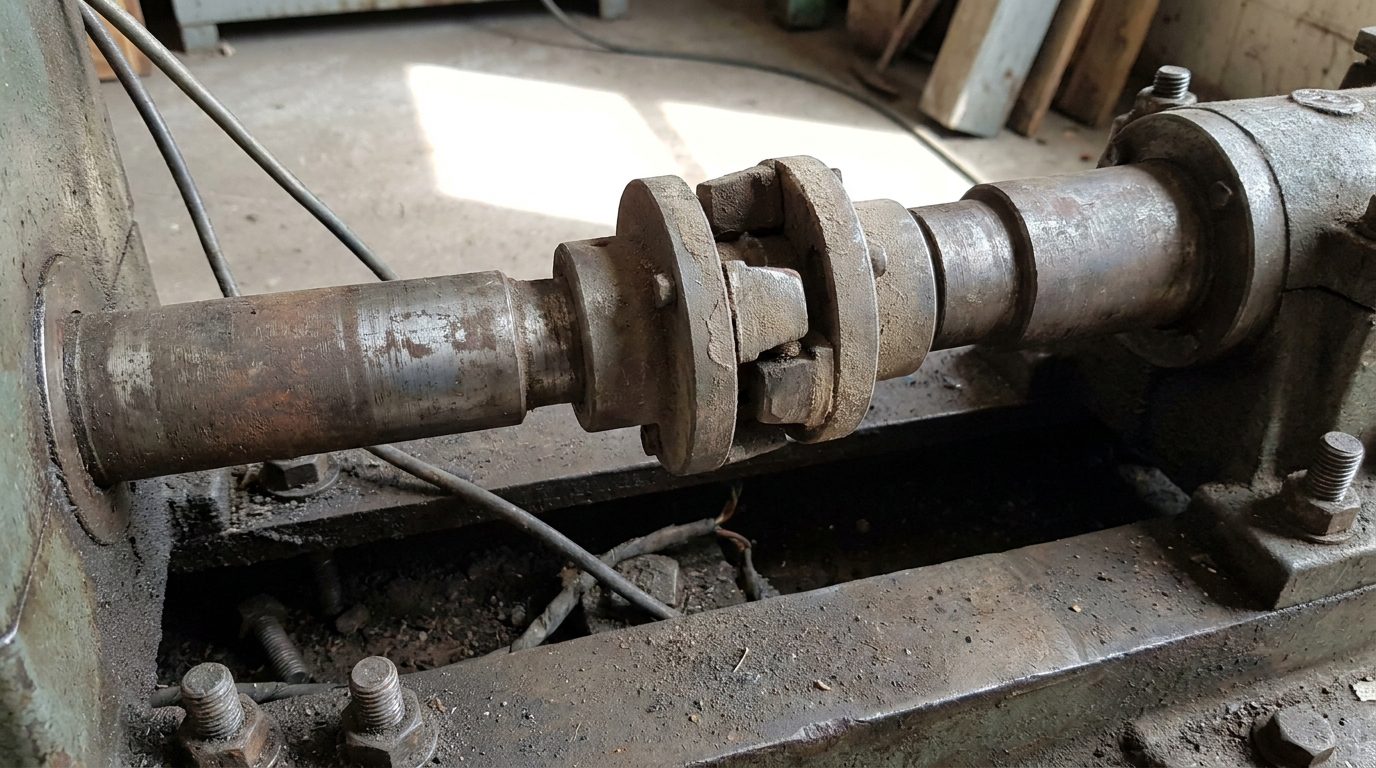
shaft misalignment and bearing failure are closely connected problems that can reduce gearbox reliability, increase vibration, damage seals, overload couplings, and lead to costly unplanned downtime. In industrial gearboxes, even minor angular or parallel misalignment can create abnormal bearing loads that accelerate fatigue, heat generation, lubricant breakdown, and shaft or housing wear. For maintenance managers, plant engineers, reliability engineers, mechanics, and purchasing professionals, understanding how misalignment develops—and how it leads to bearing failure—is essential for improving uptime, controlling repair costs, and extending equipment life. This guide explains causes, symptoms, inspection methods, troubleshooting steps, prevention strategies, and when to repair or replace affected components.
Shaft misalignment causes bearing failure by forcing bearings to operate under loads they were not designed to handle. Angular, parallel, or combined misalignment creates excessive radial and axial forces, increasing vibration, heat, lubricant stress, cage wear, rolling-element fatigue, and raceway damage. Common symptoms include rising vibration, high bearing temperature, abnormal noise, seal leakage, coupling wear, and repeated bearing replacements. The best corrective actions include precision laser alignment, soft-foot correction, proper baseplate leveling, coupling inspection, lubrication control, condition monitoring, and root cause analysis before replacing bearings or rebuilding the gearbox.
Understanding shaft misalignment and its impact on bearing failure is crucial for maintaining the efficiency of industrial machinery. For those interested in exploring related topics, the article on gearboxes for food processing plants provides valuable insights into how proper alignment and maintenance can enhance the performance and longevity of gear systems. You can read more about it here: gearboxes for food processing plants.
Why Shaft Misalignment Matters in Industrial Gearboxes
Shaft alignment is one of the most important reliability factors in rotating equipment. In a gearbox-driven system, the motor shaft, coupling, gearbox input shaft, gearbox output shaft, and driven equipment shaft must operate on correct centerlines. When these centerlines are not properly aligned, the system experiences additional forces that are transmitted through bearings, seals, gears, shafts, and housings.
For a maintenance team, misalignment is not just an installation issue. It can develop over time due to foundation movement, thermal growth, pipe strain, loose hold-down bolts, worn couplings, distorted baseplates, improper shimming, or previous repair errors. When ignored, misalignment often becomes a recurring source of gearbox failure.
Industrial Gearbox Solutions regularly sees misalignment-related damage during industrial gearbox inspection and gearbox repair projects. In many cases, the bearing is replaced, but the true cause is not corrected. The result is repeated failure, production losses, and unnecessary maintenance expense.
The Reliability Cost of Misalignment
Shaft misalignment can cause:
- Premature bearing fatigue
- Excessive vibration and noise
- Elevated operating temperature
- Coupling insert or grid failure
- Seal leakage and contamination ingress
- Gear mesh pattern problems
- Shaft fretting or cracking
- Loose mounting bolts
- Increased power consumption
- Unplanned shutdowns
According to widely accepted rotating equipment reliability practices, precision alignment is one of the most cost-effective ways to extend bearing and coupling life. Authoritative organizations such as the American Gear Manufacturers Association (AGMA) provide standards and guidance related to gear drive design, rating, and application considerations. Learn more at AGMA.
Types of Shaft Misalignment
Shaft misalignment is typically classified into three primary types: angular, parallel, and combined. Understanding the difference helps maintenance teams diagnose symptoms and select the right correction method.
Angular Misalignment
Angular misalignment occurs when two shaft centerlines intersect at an angle instead of being collinear. In this condition, the faces of the coupling hubs are not parallel.
Common causes include:
- Uneven shimming
- Improper motor positioning
- Baseplate distortion
- Thermal growth not accounted for
- Incorrect coupling installation
- Worn equipment feet or mounting pads
Angular misalignment often creates axial forces that load bearings improperly. In gearbox applications, this can stress thrust bearings, tapered roller bearings, spherical roller bearings, and angular contact bearings, depending on the design.
Parallel Misalignment
Parallel misalignment, also called offset misalignment, occurs when two shaft centerlines are parallel but not on the same axis. The shafts may be vertically or horizontally offset.
Parallel misalignment can result from:
- Incorrect initial installation
- Poor dial indicator setup
- Inaccurate straightedge alignment
- Foundation settling
- Pipe strain on connected equipment
- Loose or damaged mounting hardware
This type of misalignment commonly increases radial bearing load and may cause vibration at 1x or 2x running speed.
Combined Misalignment
Most real-world misalignment is a combination of angular and parallel offset. Combined misalignment is especially harmful because it creates complex force patterns through the coupling and bearings.
Symptoms may include:
- High vibration in multiple directions
- Bearing temperature increase
- Coupling wear
- Seal leaks
- Gear tooth contact pattern changes
- Repeated bearing failures after replacement
Because combined misalignment can be difficult to identify visually, precision instruments such as laser alignment systems are strongly recommended.
Industrial gearbox bearing failure can lead to costly downtime and repairs, so it’s important to address the issue promptly. Industrial gearbox bearing failure
How Shaft Misalignment Causes Bearing Failure
Bearings are designed to carry specific radial and axial loads under controlled lubrication, speed, temperature, and mounting conditions. Misalignment disrupts these conditions by introducing abnormal forces and uneven load distribution.
Excessive Radial and Axial Loading
When shafts are misaligned, bearings often carry forces beyond their intended design loads. A bearing that should primarily carry radial load may experience unexpected axial thrust. A bearing designed for moderate axial load may experience uneven loading across the rolling elements.
This leads to:
- Shortened L10 bearing life
- Raceway spalling
- Rolling element fatigue
- Cage stress
- Heat buildup
- Lubricant film breakdown
SKF explains that bearing life is strongly influenced by load, lubrication, contamination, and operating conditions. Their bearing knowledge resources are useful for understanding failure mechanisms: SKF Bearing Failure and Damage Analysis.
Uneven Load Distribution Across the Bearing
In a properly aligned system, rolling elements share load in a predictable pattern. Misalignment can concentrate load on a smaller area of the raceway. This creates edge loading, localized stress, and early fatigue.
Signs of uneven load distribution may appear as:
- One-sided raceway wear
- Uneven contact patterns
- Polishing or smearing on one side of the bearing
- Cage deformation
- Abnormal heat discoloration
- Premature spalling
During a gearbox rebuild, bearing contact patterns, shaft fits, and housing bores should be evaluated to determine whether misalignment contributed to the failure.
Lubrication Film Breakdown
Misalignment increases friction and heat. As temperature rises, lubricant viscosity can drop, reducing film thickness between rolling elements and raceways. When the lubricant film becomes too thin, metal-to-metal contact may occur.
Lubrication-related consequences include:
- Scuffing
- Smearing
- Micropitting
- Oxidation of oil
- Grease hardening or bleeding
- Additive depletion
- Varnish formation
Noria provides extensive lubrication reliability guidance, including oil analysis, contamination control, and lubricant selection best practices: Noria Lubrication Resources.
Increased Vibration and Dynamic Loading
Misalignment often produces vibration that accelerates bearing damage. Dynamic forces can create repeated impact loading, loosening fits and increasing internal bearing stress.
Common vibration characteristics include:
- Elevated 1x running speed vibration
- High axial vibration
- Increased 2x running speed vibration in some cases
- Phase differences between measurement points
- Rising overall vibration trend
- Sidebands related to looseness or coupling defects
A vibration route may detect misalignment early, but it should be confirmed with alignment checks, coupling inspection, and operating data.
Seal Damage and Contamination Ingress
Misalignment can cause shaft deflection or movement that damages oil seals. Once seals leak or allow contaminants to enter, bearings become vulnerable to abrasive wear and lubricant degradation.
Common contamination problems include:
- Dirt and dust ingress
- Water contamination
- Process chemical intrusion
- Metal wear debris
- Failed breathers
- Improper washdown practices
Contamination can quickly turn a minor alignment issue into a major gearbox repair.
Understanding the intricacies of shaft misalignment and its impact on bearing failure is crucial for maintaining machinery efficiency. For those looking to delve deeper into related topics, the article on Cincinnati Milacron repair offers valuable insights into gearbox solutions that can help mitigate these issues. You can read more about it in this informative piece here. This connection between proper alignment and effective repair strategies is essential for prolonging the lifespan of industrial equipment.
Common Causes of Shaft Misalignment
| Shaft Misalignment | Bearing Failure |
|---|---|
| Causes: improper installation, thermal expansion, foundation settling | Causes: overloading, lubrication issues, contamination |
| Effects: increased vibration, premature wear, reduced efficiency | Effects: increased temperature, noise, catastrophic failure |
| Detection: laser alignment, dial indicators, vibration analysis | Detection: temperature monitoring, oil analysis, vibration analysis |
| Prevention: proper installation, regular maintenance, alignment checks | Prevention: proper lubrication, contamination control, load monitoring |
Misalignment can originate during installation, operation, or maintenance. Identifying the root cause is critical before replacing bearings.
Installation and Commissioning Errors
Initial installation mistakes are among the most common causes of misalignment.
Examples include:
- Using only a straightedge instead of precision alignment tools
- Not correcting soft foot before alignment
- Improper shimming under motor or gearbox feet
- Failing to torque mounting bolts correctly
- Ignoring coupling manufacturer tolerances
- Not checking alignment after final bolt tightening
- Aligning cold without accounting for thermal growth
A machine may appear aligned at installation but move out of tolerance once it reaches operating temperature.
Soft Foot
Soft foot occurs when one or more equipment feet do not sit flat on the base. When bolts are tightened, the machine frame distorts. This distortion can shift shaft centerlines and preload bearings.
Soft foot may be caused by:
- Uneven baseplate surfaces
- Bent equipment feet
- Dirt, paint, or burrs under feet
- Excessive shims
- Improper shim packs
- Corroded mounting pads
Soft foot should be corrected before performing final shaft alignment.
Thermal Growth
Industrial gearboxes, motors, pumps, fans, conveyors, and compressors often expand as they heat up. If thermal growth is not considered, equipment that is aligned cold may become misaligned during operation.
Thermal growth is affected by:
- Operating temperature
- Machine material
- Distance from shaft centerline to mounting surface
- Ambient temperature
- Load conditions
- Heat transfer through foundations or connected equipment
For critical equipment, hot alignment checks or thermal growth calculations should be part of the alignment procedure.
Foundation and Baseplate Problems
A weak or distorted foundation can cause recurring misalignment even after careful alignment work.
Potential issues include:
- Cracked concrete
- Loose anchor bolts
- Grout failure
- Baseplate flexing
- Corrosion under mounting surfaces
- Uneven settlement
- Structural vibration
If alignment changes repeatedly after correction, inspect the baseplate and foundation before blaming the bearing or coupling.
Coupling Wear or Incorrect Coupling Selection
Couplings can tolerate limited misalignment, but they are not a substitute for precision alignment. Excessive misalignment overloads coupling components and transfers forces into bearings.
Coupling-related causes include:
- Worn elastomeric elements
- Damaged grids or gear teeth
- Incorrect hub spacing
- Poor key fit
- Loose set screws
- Improper lubrication of gear couplings
- Coupling type not suitable for application loads
A coupling that repeatedly fails is often a symptom of misalignment, not the root cause.
Symptoms of Misalignment-Related Bearing Failure
Recognizing symptoms early allows maintenance teams to intervene before catastrophic gearbox damage occurs.
Operational Symptoms
Operators and mechanics may notice:
- New or increasing vibration
- Rumbling, whining, or growling noise
- Hot bearing housings
- Increased motor amperage
- Oil leaks near shaft seals
- Coupling dust, debris, or heat
- Repeated need for coupling insert replacement
- Gearbox temperature trending upward
- Shortened bearing service life
A single symptom may not confirm misalignment, but multiple symptoms should trigger inspection.
Physical Damage Indicators
During disassembly, look for:
- Spalling on one side of the raceway
- Uneven wear patterns
- Discolored rolling elements
- Cage cracking or wear
- Fretting on shaft seats
- Seal lip wear
- Uneven gear tooth contact
- Coupling hub fretting
- Loose bearing fits
- Housing bore wear
Timken offers helpful technical material on bearing damage modes and root cause analysis: Timken Bearing Damage Analysis.
Vibration Analysis Indicators
Vibration analysis is one of the most effective ways to detect misalignment in operating equipment.
Possible indicators include:
| Vibration Finding | Possible Meaning | Recommended Action |
||||
| High axial vibration | Angular misalignment or thrust loading | Check coupling alignment and bearing preload |
| Elevated 1x running speed | Imbalance, misalignment, looseness | Compare horizontal, vertical, and axial readings |
| Elevated 2x running speed | Possible misalignment | Verify with phase and alignment checks |
| Changing phase readings | Structural looseness or alignment shift | Inspect base, bolts, and soft foot |
| Bearing defect frequencies | Bearing damage already developing | Plan inspection or controlled shutdown |
| Rising trend over time | Progressive condition worsening | Schedule corrective maintenance |
Vibration analysis should be used with oil analysis, thermography, and physical inspection for the most reliable diagnosis.
Troubleshooting Shaft Misalignment and Bearing Failure
A disciplined troubleshooting process helps separate symptoms from root causes. Replacing bearings without diagnosing misalignment can lead to repeated failures.
Step-by-Step Troubleshooting Checklist
Use the following checklist when bearing failure and misalignment are suspected:
| Step | Inspection Point | What to Look For |
||||
| 1 | Review failure history | Repeated bearing or coupling failures |
| 2 | Check operating temperature | Hot bearings, gearbox overheating |
| 3 | Review vibration trends | Rising axial or radial vibration |
| 4 | Inspect coupling | Wear, dust, heat, cracked elements |
| 5 | Check lubricant condition | Contamination, low viscosity, metal debris |
| 6 | Inspect seals | Leakage, shaft wear, contamination paths |
| 7 | Verify soft foot | Frame distortion before alignment |
| 8 | Perform precision alignment | Angular and offset correction |
| 9 | Inspect base/foundation | Cracks, looseness, grout failure |
| 10 | Review thermal growth | Cold vs. hot alignment difference |
Questions Maintenance Teams Should Ask
Before authorizing a repair or bearing replacement, ask:
- Did the bearing fail prematurely compared to expected service life?
- Was the same bearing location affected before?
- Was shaft alignment verified after the last installation?
- Was soft foot corrected before alignment?
- Are vibration levels higher in the axial direction?
- Is there evidence of coupling distress?
- Are seals leaking near the failed bearing?
- Was the gearbox operating above normal temperature?
- Has the baseplate or foundation moved?
- Were proper bearing fits, clearances, and preload verified?
These questions help determine whether the problem is a bearing issue, alignment issue, lubrication issue, installation issue, or combined failure mode.
Inspection Methods for Misalignment and Bearing Damage
Different inspection tools reveal different parts of the failure story. The most reliable approach combines multiple technologies.
Laser Shaft Alignment
Laser alignment is the preferred method for precision shaft alignment in most industrial applications. It provides accurate angular and offset measurements and can guide mechanics through corrections.
Benefits include:
- High accuracy
- Faster setup than traditional methods
- Live movement readings
- Documentation for reliability records
- Reduced human measurement error
- Ability to account for thermal growth targets
Laser alignment should be performed after soft-foot correction and before final commissioning.
Dial Indicator Alignment
Dial indicators remain useful when laser systems are unavailable or when verifying certain mechanical conditions. Skilled mechanics can achieve excellent results with rim-and-face or reverse dial methods.
However, dial methods require:
- Proper bracket setup
- Compensation for indicator sag
- Accurate readings
- Skilled interpretation
- Careful shaft rotation
- Stable mounting surfaces
Dial indicators are reliable when used correctly but can be more time-consuming than laser tools.
Vibration Analysis
Vibration analysis helps detect misalignment while equipment is running. It can also identify whether bearing damage has already developed.
Recommended measurements include:
- Horizontal, vertical, and axial readings
- Velocity and acceleration
- Spectrum analysis
- Phase analysis
- Time waveform review
- Bearing defect frequency monitoring
- Trend comparison over time
Vibration is especially valuable for critical gearboxes where downtime is expensive.
Oil Analysis
Oil analysis can reveal whether misalignment has caused secondary damage inside the gearbox.
Important oil analysis tests include:
- Particle count
- Ferrous wear debris analysis
- Viscosity
- Water content
- Acid number
- Oxidation
- Additive depletion
- Analytical ferrography
If misalignment causes bearing wear, oil analysis may detect elevated iron, chromium, or other alloy metals depending on bearing and gear metallurgy.
Thermography
Infrared thermography can detect abnormal heat at bearing housings, couplings, seals, and gearboxes. While heat alone does not prove misalignment, temperature differences between similar machines can identify developing problems.
Thermography is useful for:
- Screening large equipment populations
- Identifying hot bearings
- Detecting coupling heat
- Finding lubrication-related overheating
- Verifying repairs after alignment
Visual and Dimensional Inspection During Teardown
When a gearbox is removed from service, a thorough teardown inspection should document:
- Bearing condition
- Gear tooth contact patterns
- Shaft runout
- Shaft fits
- Housing bore condition
- Seal wear
- Coupling hub condition
- Fastener condition
- Evidence of fretting or movement
- Lubricant condition
For critical units, consider professional industrial gearbox repair services to evaluate all related components, not just the failed bearing.
Prevention Strategies for Shaft Misalignment and Bearing Failure
Preventing misalignment-related bearing failure requires consistent installation standards, monitoring, and maintenance discipline.
Precision Alignment Standards
Every plant should define acceptable alignment tolerances based on machine speed, coupling type, manufacturer recommendations, and criticality.
Best practices include:
- Use laser alignment for critical equipment
- Correct soft foot before alignment
- Use clean, stainless steel shims
- Avoid excessive shim stacks
- Torque bolts in the correct sequence
- Recheck alignment after tightening bolts
- Document final alignment readings
- Consider thermal growth targets
- Verify alignment after major repairs
Proper Lubrication Management
Misalignment and poor lubrication often work together to accelerate bearing failure. Even a well-aligned machine can fail early if lubrication is wrong.
Lubrication best practices include:
- Use the OEM-recommended oil or grease
- Maintain correct oil level
- Avoid overgreasing bearings
- Use clean transfer containers
- Filter new oil before use when appropriate
- Install desiccant breathers where contamination risk exists
- Schedule oil analysis for critical gearboxes
- Store lubricants properly
- Label lubricants to prevent cross-contamination
For deeper lubrication reliability guidance, Noria’s educational resources are excellent: Noria Machinery Lubrication.
Coupling Maintenance
Couplings should be inspected during alignment checks and planned maintenance.
Inspect for:
- Cracked elastomeric inserts
- Worn grids
- Gear coupling tooth wear
- Missing lubrication
- Corrosion
- Loose hubs
- Fretting at keys
- Improper hub spacing
- Guard interference
- Excessive heat
A properly selected and maintained coupling helps protect bearings, but it cannot compensate for poor alignment indefinitely.
Baseplate and Foundation Reliability
Alignment will not remain stable if the foundation is unstable.
Prevention steps include:
- Inspect grout condition
- Verify anchor bolt tightness
- Repair cracked foundations
- Check for baseplate corrosion
- Confirm mounting pads are flat
- Eliminate pipe strain
- Monitor structural vibration
- Recheck alignment after foundation repairs
Operator and Mechanic Training
Human error is a major contributor to misalignment. Training should cover:
- Alignment fundamentals
- Soft-foot correction
- Coupling installation
- Proper shimming
- Torque practices
- Lubrication procedures
- Vibration awareness
- Failure documentation
A trained mechanic who recognizes early misalignment symptoms can prevent a major gearbox failure.
Repair vs. Replacement: Making the Right Decision
When bearing failure occurs, purchasing and maintenance teams must decide whether to repair the gearbox, replace bearings, rebuild the unit, or purchase a replacement gearbox.
When Bearing Replacement May Be Enough
Bearing replacement may be appropriate when:
- Damage is localized to one bearing
- Shaft journals are within tolerance
- Housing bores are not worn
- Gear teeth are undamaged
- Lubrication system is clean
- Misalignment root cause is corrected
- No significant contamination entered the gearbox
- Failure was caught early
Even in these cases, alignment and root cause analysis should be completed before startup.
When Gearbox Repair or Rebuild Is Needed
A more extensive gearbox rebuild may be required when:
- Multiple bearings are damaged
- Gears show pitting, scoring, or abnormal contact
- Shafts are worn, bent, or fretted
- Housing bores are oversized or damaged
- Seals have failed and contamination entered the unit
- Bearing fits are loose
- The gearbox has a history of recurring failure
- Excessive vibration caused internal damage
A professional rebuild can restore critical dimensions and improve long-term reliability.
When Replacement May Be the Better Option
Replacement may be justified when:
- Repair cost approaches replacement cost
- The gearbox is obsolete and parts are unavailable
- Lead time for repair is too long for production needs
- Housing damage is severe
- Load requirements have changed
- The original gearbox was incorrectly specified
- Upgrading improves efficiency or reliability
Purchasing professionals should evaluate total cost of ownership, not just the initial price. A cheaper replacement that is poorly matched to the application may fail prematurely.
Repair vs. Replacement Comparison Table
| Decision Factor | Repair Bearings Only | Rebuild Gearbox | Replace Gearbox |
||:|:|:|
| Initial cost | Low | Medium to high | High |
| Downtime | Low to medium | Medium | Medium to high |
| Best for minor damage | Yes | Sometimes | No |
| Best for recurring failures | No | Yes | Sometimes |
| Corrects housing/shaft issues | No | Yes | Yes |
| Requires root cause analysis | Yes | Yes | Yes |
| Long-term reliability | Depends on cause correction | High if properly rebuilt | High if correctly specified |
| Parts availability concern | Moderate | Moderate | Low if modernized |
Maintenance Best Practices for Long-Term Reliability
A strong maintenance program reduces bearing failures and keeps gearbox assets operating efficiently.
Recommended Maintenance Schedule
| Frequency | Maintenance Task | Purpose |
||||
| Daily/Shiftly | Listen for abnormal noise and check visible leaks | Early symptom detection |
| Weekly | Check bearing and gearbox surface temperatures | Identify heat trends |
| Monthly | Inspect coupling and guards where accessible | Detect wear or movement |
| Monthly/Quarterly | Collect vibration readings | Trend misalignment and bearing condition |
| Quarterly | Inspect oil level and breather condition | Prevent lubrication and contamination issues |
| Semiannually | Perform oil analysis on critical gearboxes | Detect wear, water, and degradation |
| Annually | Verify alignment on critical assets | Prevent gradual alignment drift |
| After any repair | Perform precision alignment and document results | Confirm correct installation |
| After foundation work | Recheck soft foot and alignment | Prevent structural movement issues |
Documentation Matters
Good maintenance records help reliability teams identify patterns.
Document:
- Alignment readings
- Soft-foot measurements
- Shim changes
- Vibration data
- Oil analysis results
- Bearing part numbers
- Failure locations
- Coupling condition
- Temperature trends
- Repair dates and technician notes
Over time, these records can reveal whether failures are random, process-related, installation-related, or design-related.
Root Cause Analysis for Repeated Bearing Failures
If the same bearing fails repeatedly, do not keep replacing it without investigation.
Possible root causes include:
- Misalignment
- Improper bearing installation
- Wrong bearing clearance
- Overhung load beyond design
- Contaminated lubricant
- Incorrect lubricant viscosity
- Electrical fluting
- Shaft current
- Housing distortion
- Improper preload
- Excessive belt or chain tension
- Gear mesh problems
- Process overloads
A root cause analysis may include teardown inspection, vibration review, lubrication review, alignment verification, and operational data analysis.
Practical Troubleshooting Example
Consider a conveyor drive gearbox with repeated input bearing failures every six months. The maintenance team replaces the bearing each time, but the problem returns. Vibration readings show elevated axial vibration and increasing temperature at the input shaft bearing. The coupling insert also shows dusting and cracking.
A proper investigation finds:
- Motor soft foot at one mounting location
- Angular misalignment after bolt tightening
- Coupling hub fretting
- Oil oxidation from elevated operating temperature
- Uneven bearing raceway wear
Corrective actions include:
- Cleaning and resurfacing motor mounting pads
- Correcting soft foot
- Installing new shims
- Replacing the damaged coupling insert
- Replacing the bearing and seals
- Flushing the gearbox
- Refilling with correct lubricant
- Performing laser alignment with final documented readings
- Adding the gearbox to vibration and oil analysis routes
The result is longer bearing life, reduced vibration, and fewer emergency work orders.
Key Takeaways
- Shaft misalignment is a major cause of premature bearing failure in industrial gearboxes.
- Angular, parallel, and combined misalignment create abnormal radial and axial loads.
- Common symptoms include vibration, heat, noise, seal leakage, coupling wear, and repeated bearing failures.
- Bearing replacement alone is not enough if the root cause is misalignment.
- Laser alignment, soft-foot correction, vibration analysis, oil analysis, and thermography are essential reliability tools.
- Lubrication and contamination control are critical because misalignment often increases heat and lubricant stress.
- Foundation, baseplate, coupling, and thermal growth issues must be evaluated during troubleshooting.
- Repair vs. replacement decisions should consider total cost of ownership, downtime, component damage, and long-term reliability.
- Documented alignment and condition monitoring practices help prevent recurring gearbox failures.
Suggested Branded Images for IndustrialGearboxSolutions.com
Image 1: Technician Performing Laser Shaft Alignment
Alt text: Technician performing laser shaft alignment on an industrial gearbox and motor
Caption: Precision laser alignment helps prevent shaft misalignment and bearing failure in critical gearbox applications.
Image 2: Failed Bearing With Raceway Spalling
Alt text: Close-up of industrial gearbox bearing failure with raceway spalling and wear
Caption: Uneven raceway wear and spalling can indicate abnormal loading caused by shaft misalignment.
Image 3: Gearbox Coupling Inspection
Alt text: Mechanic inspecting a flexible coupling between a motor and industrial gearbox
Caption: Coupling wear, fretting, and heat are common warning signs of shaft alignment problems.
Image 4: Gearbox Teardown and Bearing Inspection
Alt text: Industrial gearbox disassembled for bearing inspection and failure analysis
Caption: A complete teardown inspection can reveal whether bearing failure was caused by misalignment, lubrication, contamination, or housing damage.
Image 5: Vibration Analysis on Gearbox Bearing Housing
Alt text: Reliability technician collecting vibration data from an industrial gearbox bearing housing
Caption: Vibration analysis helps detect misalignment and bearing defects before catastrophic failure occurs.
SEO Metadata
SEO title: Understanding Shaft Misalignment and Bearing Failure in Industrial Gearboxes
Meta description: Learn how shaft misalignment causes bearing failure in industrial gearboxes. Explore causes, symptoms, inspection methods, troubleshooting, prevention, and repair vs. replacement guidance.
Primary keyword: shaft misalignment and bearing failure
Secondary keywords: industrial gearbox bearing failure, shaft alignment, gearbox vibration, bearing inspection, gearbox repair, laser alignment, coupling misalignment, gearbox maintenance
Suggested URL slug: understanding-shaft-misalignment-bearing-failure
Search intent: Informational and commercial investigation for maintenance, reliability, engineering, and purchasing teams evaluating gearbox bearing failures and alignment-related repair needs.
Recommended internal links:
- Industrial Gearbox Repair
- Gearbox Rebuilds
- Gearbox Inspection
- Industrial Gearbox Maintenance
- Bearing Replacement Services
Recommended authoritative external sources:
- SKF Bearing Failure and How to Prevent It
- Timken Engineering and Bearing Resources
- AGMA Gear Industry Standards and Resources
- Noria Machinery Lubrication
FAQs
What is the most common type of shaft misalignment?
Most industrial equipment experiences combined misalignment, meaning both angular and parallel offset are present. While textbooks often separate the two types, real-world machines usually have some degree of both. Precision laser alignment is the best way to measure and correct combined misalignment.
Can a flexible coupling compensate for shaft misalignment?
A flexible coupling can tolerate limited misalignment, but it should not be used as a substitute for proper alignment. Excessive misalignment still transfers abnormal loads into bearings, seals, shafts, and gearbox components. Couplings also wear faster when misalignment exceeds recommended limits.
How does misalignment show up in vibration analysis?
Misalignment often appears as elevated axial vibration, high 1x running speed vibration, and sometimes increased 2x running speed vibration. Phase analysis can help confirm the issue. However, vibration data should be supported by alignment checks, coupling inspection, and operating condition review.
Why do bearings keep failing after replacement?
Repeated bearing failure usually means the root cause has not been corrected. Possible causes include shaft misalignment, soft foot, improper installation, incorrect bearing clearance, poor lubrication, contamination, housing wear, shaft fit problems, or excessive operating loads.
Is bearing temperature a reliable sign of misalignment?
High bearing temperature can be a warning sign, but it does not prove misalignment by itself. Heat can also result from over-lubrication, under-lubrication, incorrect viscosity, contamination, excessive preload, or bearing damage. Temperature should be evaluated with vibration, alignment, and lubrication data.
Should alignment be checked after replacing gearbox bearings?
Yes. Alignment should always be checked after bearing replacement, gearbox repair, motor replacement, coupling work, baseplate repairs, or any maintenance activity that affects machine position. Final alignment readings should be documented before startup.
What is soft foot, and why does it matter?
Soft foot occurs when a machine foot does not sit flat on the base. Tightening the mounting bolt distorts the machine frame, changing shaft alignment and potentially loading bearings incorrectly. Soft foot must be corrected before final alignment.
When should a gearbox be rebuilt instead of just replacing bearings?
A gearbox should be rebuilt when bearing failure is accompanied by shaft wear, housing bore damage, gear tooth damage, contamination, seal failure, loose fits, or recurring failures. A rebuild allows the gearbox to be restored to proper mechanical condition rather than simply replacing one failed component.
Conclusion
Shaft misalignment and bearing failure are not isolated problems—they are part of a connected reliability chain involving alignment, lubrication, coupling condition, installation quality, foundation stability, and operating loads. When shafts are misaligned, bearings experience abnormal forces that lead to heat, vibration, lubrication breakdown, raceway fatigue, seal damage, and premature failure. The most effective solution is not simply replacing the bearing, but identifying and correcting the root cause.
For maintenance managers, plant engineers, reliability engineers, mechanics, and purchasing teams, the path to longer gearbox life starts with precision alignment, soft-foot correction, proper lubrication, condition monitoring, and thorough inspection. If your facility is dealing with recurring gearbox bearing failures, unusual vibration, coupling damage, or unexplained overheating, Industrial Gearbox Solutions can help inspect, repair, rebuild, and restore your equipment for dependable operation.
FAQs
What is shaft misalignment?
Shaft misalignment refers to the condition where the axes of the connected shafts are not in line with each other. This can occur in angular, parallel, or axial misalignment, and can lead to bearing failure and other issues in rotating machinery.
What are the common causes of shaft misalignment?
Common causes of shaft misalignment include improper installation, thermal expansion, foundation settling, worn or damaged components, and excessive vibration. These factors can lead to misalignment over time and contribute to bearing failure.
How does shaft misalignment contribute to bearing failure?
Shaft misalignment can cause uneven loading on the bearings, leading to increased friction, heat, and wear. This can result in premature bearing failure, reduced equipment lifespan, and increased maintenance costs.
What are the signs of bearing failure due to shaft misalignment?
Signs of bearing failure due to shaft misalignment include increased vibration, unusual noise, elevated operating temperatures, and visible wear patterns on the bearings. Regular monitoring and maintenance can help identify and address these issues before they lead to more serious problems.
How can shaft misalignment and bearing failure be prevented?
Preventative measures for shaft misalignment and bearing failure include proper equipment installation, regular alignment checks, use of flexible couplings, vibration analysis, and routine maintenance. Addressing misalignment issues early can help prevent costly downtime and repairs.