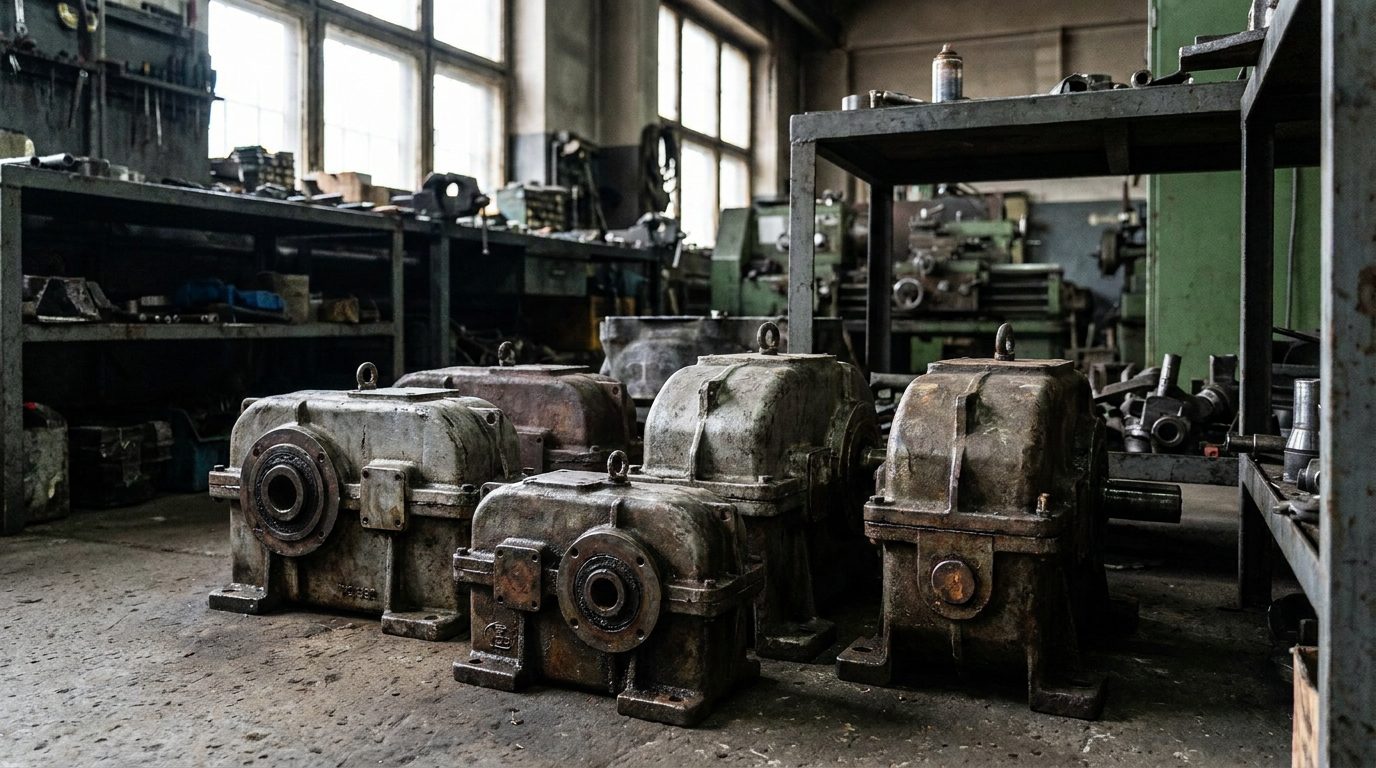
Continuous duty operations place some of the toughest demands on power transmission equipment. In industries such as mining, cement, food processing, wastewater treatment, pulp and paper, chemicals, steel, packaging, and material handling, a gearbox may run 24 hours a day, seven days a week, often under heavy load, shock loading, high temperatures, or contaminated environments.
Choosing the right industrial gearbox for continuous duty operations is not just a purchasing decision—it directly affects uptime, maintenance cost, energy efficiency, safety, and production output. A gearbox that performs well in intermittent service may fail prematurely when exposed to nonstop operation, inadequate lubrication, thermal stress, or misalignment.
This guide reviews the top industrial gearbox types for continuous duty applications, what makes them reliable, how to compare options, and what maintenance teams, engineers, OEMs, and plant managers should consider before replacing or upgrading a gearbox.
If your gearbox nameplate is missing, obsolete, damaged, or difficult to cross-reference, Industrial Gearbox Solutions can help identify the correct replacement or rebuild option. Our team works with maintenance departments, engineers, OEMs, and buyers to match gearboxes by ratio, torque, shaft configuration, mounting style, service factor, and application requirements.
Whether you need a direct replacement, an upgraded gearbox for continuous duty operations, or support troubleshooting premature failures, submit your information below and our team will help you determine the best path forward.
For those interested in the best industrial gearboxes for continuous duty applications, it’s essential to consider not only the selection of gearboxes but also their maintenance and repair. A related article that provides valuable insights into gearbox repair services can be found at Industrial Gearbox Repair in Coldwater, Michigan. This resource highlights the importance of timely repairs to ensure optimal performance and longevity of industrial gearboxes, making it a crucial read for anyone in the industry.
What Makes a Gearbox Suitable for Continuous Duty Operations?
Not every industrial gearbox is engineered for nonstop service. Continuous duty gearboxes must manage mechanical load, heat generation, lubrication demands, vibration, and environmental exposure over long operating periods.
High Service Factor
Service factor is one of the most important selection criteria for continuous duty applications. It accounts for operating hours, load characteristics, starts and stops, shock loads, and driven equipment type.
For example, a gearbox driving a lightly loaded conveyor may require a lower service factor than one driving a rock crusher, mixer, or heavy-duty bucket elevator. In continuous duty operations, selecting a gearbox with an inadequate service factor can lead to bearing failure, gear tooth wear, overheating, and shaft damage.
Typical considerations include:
| Operating Condition | Recommended Focus |
|||
| 8 hours/day, uniform load | Standard-duty gearbox may be acceptable |
| 16–24 hours/day, uniform load | Higher service factor required |
| Continuous duty with shock loads | Heavy-duty or severe-duty gearbox required |
| High ambient temperature | Thermal capacity must be verified |
| Frequent starts/stops | Bearing, shaft, and gear fatigue must be considered |
Thermal Capacity
Gearboxes running continuously generate heat from gear mesh friction, bearing friction, oil churning, and seal contact. If heat is not dissipated properly, lubricant viscosity drops, oxidation accelerates, seals harden, and gear wear increases.
For continuous duty operations, thermal capacity should be reviewed carefully—not just mechanical horsepower rating. A gearbox may be mechanically strong enough but thermally inadequate for 24/7 operation.
Thermal capacity may be improved through:
- Larger gearbox housing surface area
- Cooling fans
- Oil coolers
- Forced lubrication systems
- Synthetic lubricants
- Proper ventilation around the gearbox
- Correct oil level and viscosity
Robust Bearing and Shaft Design
Continuous operation increases fatigue cycles on bearings and shafts. Heavy-duty industrial gearboxes typically use oversized bearings, precision-ground gears, and rigid housings to maintain alignment under load.
Key design features include:
- Tapered roller or spherical roller bearings for high radial and axial loads
- Heat-treated alloy steel gears
- Case-hardened and ground gear teeth
- High-strength output shafts
- Rigid cast iron or fabricated steel housings
- Precision machining to maintain gear alignment
Lubrication Reliability
Lubrication is critical in continuous duty operations. A gearbox that runs nonstop needs oil that can maintain film strength, resist oxidation, prevent foaming, and protect against wear.
Common lubrication methods include:
- Splash lubrication
- Oil bath lubrication
- Forced lubrication
- Circulating oil systems
- Grease lubrication for select low-speed applications
For high-load, high-temperature, or high-speed gearboxes, forced lubrication or an oil cooling system may be necessary.
Helical Gearboxes for Continuous Duty Applications
Helical gearboxes are among the most widely used industrial gearboxes for continuous duty operations. Their angled gear teeth provide smooth, quiet, and efficient power transmission, making them ideal for applications requiring reliability and long service life.
Why Helical Gearboxes Perform Well in Continuous Service
Helical gears engage gradually, allowing multiple teeth to share the load at any given time. This reduces vibration and shock compared to spur gears. The result is smoother operation, lower noise, and improved durability.
Benefits include:
- High efficiency
- Smooth torque transmission
- Excellent load-sharing characteristics
- Suitable for high-speed input applications
- Available in inline, parallel shaft, and right-angle designs
- Strong performance in continuous duty cycles
Common Applications
Helical gearboxes are frequently used in:
- Conveyors
- Pumps
- Blowers
- Agitators
- Packaging machinery
- Food processing equipment
- Cooling towers
- Textile machinery
- General manufacturing lines
For example, a 24/7 packaging facility may use helical gear reducers on conveyor lines where reliability, low vibration, and energy efficiency are critical. Since conveyors often run continuously, a properly sized helical gearbox can reduce downtime and lower total operating cost.
Key Selection Tips
When choosing a helical gearbox for continuous duty operations, evaluate:
- Required output torque
- Gear ratio
- Input speed
- Duty cycle
- Ambient temperature
- Mounting orientation
- Shaft arrangement
- Lubrication method
- Service factor
Helical gearboxes are a strong choice when efficiency, long operating life, and smooth power transmission are top priorities.
Check out our latest posts at https://industrialgearboxsolutions.com/blog/ for valuable industry insights.
Bevel Helical Gearboxes for Heavy-Duty Right-Angle Drives
Bevel helical gearboxes combine bevel gears and helical gears to transmit power at a right angle while maintaining high efficiency and durability. They are commonly used where space limitations or machine layout require a 90-degree change in shaft direction.
Advantages in Continuous Duty Operations
Bevel helical gearboxes are well-suited for continuous duty because they offer high torque capacity, efficient power transfer, and strong load handling. Compared with worm gearboxes, bevel helical units typically provide higher efficiency, especially in high-horsepower applications.
Major advantages include:
- High mechanical efficiency
- Compact right-angle configuration
- High torque density
- Durable gear design
- Good thermal performance
- Suitable for continuous and heavy-duty loads
Ideal Applications
Bevel helical gearboxes are often used in:
- Mining conveyors
- Cement plants
- Steel mills
- Paper machines
- Bulk material handling systems
- Mixers
- Extruders
- Cooling towers
- Bucket elevators
In a cement plant, for example, bevel helical gearboxes may be used on belt conveyors transporting clinker, limestone, or finished cement. These conveyors often run continuously in dusty, high-load environments. A heavy-duty bevel helical gearbox with proper sealing and lubrication can provide dependable operation under these harsh conditions.
Maintenance Considerations
Because bevel helical gearboxes are commonly used in demanding environments, maintenance teams should pay close attention to:
- Oil cleanliness
- Seal condition
- Bearing temperatures
- Vibration levels
- Breather performance
- Gear tooth wear patterns
- Alignment between motor, gearbox, and driven equipment
Condition monitoring can be especially valuable for bevel helical gearboxes in critical production areas. Vibration analysis and oil analysis can detect early signs of bearing wear, misalignment, contamination, or gear damage before failure occurs.
When considering the best industrial gearboxes for continuous duty applications, it’s essential to also understand the importance of regular maintenance and repair to ensure optimal performance. An insightful resource on this topic can be found in the article about industrial gearbox repair in Plainfield, Indiana, which highlights the significance of timely servicing and expert repairs to extend the lifespan of your gearboxes. By staying informed about both selection and maintenance, you can enhance the efficiency and reliability of your operations.
Planetary Gearboxes for High Torque and Compact Design
Planetary gearboxes are known for high torque density, compact size, and excellent load distribution. They use a central sun gear, planet gears, and an outer ring gear to distribute torque across multiple gear meshes.
Why Planetary Gearboxes Excel in Continuous Duty
In continuous duty operations, planetary gearboxes provide outstanding performance where high torque is required in a compact footprint. Because the load is shared among several planet gears, stress on individual gear teeth is reduced.
Key benefits include:
- High torque capacity
- Compact design
- Excellent shock load resistance
- High reduction ratios in small packages
- Coaxial input and output options
- High efficiency
- Good torsional stiffness
Common Industrial Uses
Planetary gearboxes are widely used in:
- Mixers
- Extruders
- Winches
- Cranes
- Rotary kilns
- Track drives
- Mining equipment
- Wind turbines
- Heavy-duty automation systems
A chemical processing plant may use planetary gearboxes on large mixers that operate continuously to maintain product consistency. In this case, the gearbox must handle high torque, variable viscosity, and potential shock loading during startup.
When to Choose a Planetary Gearbox
A planetary gearbox is often the best choice when the application requires:
- High torque in limited space
- High reduction ratio
- Strong resistance to shock loads
- Precise torque transmission
- Compact inline configuration
- Heavy-duty continuous operation
However, planetary gearboxes require careful attention to lubrication, bearing loads, and thermal management. For mission-critical applications, engineering review is strongly recommended.
Worm Gearboxes: Best for Specific Continuous Duty Applications
Worm gearboxes are popular for right-angle drives, compact layouts, and applications requiring high reduction ratios. They use a worm screw meshing with a worm wheel, typically providing smooth and quiet operation.
Strengths of Worm Gearboxes
Worm gearboxes offer several advantages:
- Compact right-angle design
- High reduction ratios
- Smooth operation
- Low noise
- Cost-effective for many applications
- Self-locking capability in some ratios and designs
They are commonly found in conveyors, lifts, gates, packaging machines, small mixers, and indexing equipment.
Limitations in Continuous Duty
While worm gearboxes can be used in continuous duty operations, they must be selected carefully. Worm gear designs tend to have lower efficiency than helical, bevel helical, or planetary gearboxes because of sliding contact between the worm and wheel. This sliding action generates heat.
For continuous operation, excessive heat can become a major issue. If a worm gearbox is undersized or poorly lubricated, it may overheat, causing lubricant breakdown and premature wear.
Best-Fit Applications
Worm gearboxes are best suited for continuous duty when:
- Power requirements are moderate
- Heat dissipation is adequate
- The gearbox is properly sized
- The duty cycle is reviewed carefully
- High reduction ratio is needed
- Quiet operation is important
- Space is limited
For example, a light-duty conveyor in a packaging plant may run continuously with a properly selected worm gearbox. However, a high-horsepower conveyor in a mining or aggregate facility would typically be better served by a helical or bevel helical gearbox.
Shaft-Mounted Gear Reducers for Conveyors and Bulk Handling
Shaft-mounted gear reducers are widely used in conveyor systems, especially in bulk material handling industries. They mount directly onto the driven shaft, eliminating the need for couplings, baseplates, and precise shaft alignment between the gearbox and driven equipment.
Why Shaft-Mounted Gearboxes Are Popular
Shaft-mounted gear reducers are practical, rugged, and easy to install. Their direct mounting design reduces installation complexity and saves space.
Common benefits include:
- Compact installation
- Reduced alignment requirements
- Ideal for conveyor drives
- Easy replacement options
- Available with backstops
- Suitable for harsh environments
- Lower installation cost
Continuous Duty Conveyor Applications
In continuous duty operations, shaft-mounted reducers are commonly used on:
- Belt conveyors
- Screw conveyors
- Bucket elevators
- Grain handling equipment
- Aggregate conveyors
- Recycling systems
- Mining conveyors
- Warehouse material handling lines
For example, a grain processing facility may operate conveyors continuously during harvest season. Shaft-mounted gear reducers can provide dependable operation while simplifying maintenance and replacement.
Important Selection Factors
When selecting a shaft-mounted reducer for continuous duty, consider:
- Conveyor load
- Belt speed
- Required ratio
- Shaft diameter
- Torque arm arrangement
- Backstop requirement
- Environmental exposure
- Lubrication method
- Dust and moisture protection
A backstop is especially important on inclined conveyors to prevent reverse rotation if power is lost.
Parallel Shaft Gearboxes for High-Power Industrial Loads
Parallel shaft gearboxes are commonly used in heavy industrial applications where input and output shafts run parallel to each other. They may use helical or double helical gearing and are known for high efficiency and durability.
Advantages for Continuous Duty Operations
Parallel shaft gearboxes are often selected for demanding, high-horsepower applications because they can handle large torque loads while maintaining efficient power transmission.
Benefits include:
- High torque capacity
- High efficiency
- Strong bearing support
- Suitable for large horsepower drives
- Long service life
- Multiple reduction stages available
- Good thermal performance
Common Applications
Parallel shaft gearboxes are found in:
- Steel mills
- Paper machines
- Crushers
- Heavy conveyors
- Rubber processing equipment
- Sugar mills
- Marine equipment
- Large pumps
- Industrial fans
In a paper mill, parallel shaft gearboxes may drive rolls that run continuously at controlled speeds. Reliability is essential because gearbox downtime can shut down an entire production line.
Engineering Considerations
For continuous duty parallel shaft gearboxes, engineers should verify:
- Mechanical rating
- Thermal rating
- Bearing life
- Gear ratio accuracy
- Shaft loading
- Lubrication requirements
- Foundation rigidity
- Alignment tolerances
Large parallel shaft reducers should be installed on stable foundations to minimize distortion, vibration, and gear misalignment.
Cycloidal Gearboxes for Shock Load Resistance
Cycloidal gearboxes use a unique rolling gear mechanism that provides high reduction ratios, compact design, and excellent shock load resistance. They are common in applications where impact loads, frequent starts, or harsh operating conditions are expected.
Benefits of Cycloidal Gearboxes
Cycloidal gearboxes are valued for:
- High shock load capacity
- Compact construction
- High reduction ratios
- Smooth torque transmission
- Long service life
- Good overload protection
- Low backlash options in some designs
Unlike traditional gearboxes with teeth that mesh in a conventional manner, cycloidal drives distribute load across multiple contact points. This makes them highly resistant to shock and overload.
Continuous Duty Applications
Cycloidal gearboxes are used in:
- Mixers
- Agitators
- Wastewater equipment
- Conveyors
- Food processing machinery
- Packaging systems
- Indexing tables
- Material handling equipment
In wastewater treatment plants, cycloidal reducers may drive clarifiers, aerators, and sludge handling equipment. These applications often require reliable continuous duty performance in humid, corrosive environments.
When Cycloidal Drives Make Sense
Cycloidal gearboxes may be a good fit when:
- Shock loads are frequent
- High reduction ratios are needed
- Space is limited
- Long service life is required
- The application involves frequent starts and stops
- The equipment operates in a harsh environment
However, as with all gearbox types, correct sizing and maintenance are essential.
Comparing the Top Industrial Gearboxes for Continuous Duty Operations
The best gearbox for continuous duty depends on the application, load profile, environment, speed, torque, and maintenance strategy. No single gearbox type is best for every operation.
Gearbox Type Comparison
| Gearbox Type | Best For | Key Strength | Watch For |
|||||
| Helical Gearbox | General continuous duty drives | Efficiency and smooth operation | Axial thrust loads |
| Bevel Helical Gearbox | Heavy-duty right-angle drives | High torque and efficiency | Alignment and lubrication |
| Planetary Gearbox | Compact high-torque applications | High torque density | Heat and lubrication control |
| Worm Gearbox | Moderate-duty right-angle drives | Compact, quiet operation | Lower efficiency and heat |
| Shaft-Mounted Reducer | Conveyors and bulk handling | Easy installation | Shaft fit and torque arm setup |
| Parallel Shaft Gearbox | High-power industrial loads | Heavy-duty torque capacity | Foundation and alignment |
| Cycloidal Gearbox | Shock load applications | Overload resistance | Application-specific sizing |
Matching Gearbox Type to Industry
| Industry | Common Gearbox Choices |
|||
| Mining and aggregates | Bevel helical, shaft-mounted, planetary |
| Cement | Bevel helical, planetary, parallel shaft |
| Food and beverage | Helical, worm, cycloidal |
| Wastewater | Cycloidal, helical, shaft-mounted |
| Pulp and paper | Parallel shaft, helical, bevel helical |
| Packaging | Helical, worm, cycloidal |
| Steel | Parallel shaft, planetary, bevel helical |
| Agriculture and grain | Shaft-mounted, helical, worm |
Key Selection Criteria for Continuous Duty Gearboxes
Selecting an industrial gearbox for continuous duty operations requires more than matching horsepower and ratio. A complete review should include mechanical, thermal, environmental, and maintenance factors.
Torque and Horsepower Requirements
Torque is often more important than horsepower when selecting a gearbox. Engineers should calculate required output torque based on motor horsepower, speed, ratio, and application load.
A gearbox should be selected with enough torque capacity to handle:
- Normal operating load
- Startup load
- Shock load
- Jam conditions
- Overhung loads
- Reversing loads
- Emergency stops
Gear Ratio and Output Speed
The gear ratio determines output speed and torque multiplication. An incorrect ratio can cause equipment to run too fast or too slow, leading to process problems or mechanical overload.
When replacing a gearbox, verify:
- Motor RPM
- Input speed
- Output RPM
- Existing ratio
- Driven equipment speed requirement
- Pulley, sprocket, or coupling changes
Mounting Style and Shaft Configuration
Gearboxes are available in many mounting arrangements, including:
- Foot mounted
- Flange mounted
- Shaft mounted
- Torque arm mounted
- Vertical mount
- Horizontal mount
- Hollow shaft
- Solid shaft
- Double output shaft
A replacement gearbox must physically fit the equipment unless modifications are planned.
Environmental Conditions
Continuous duty gearboxes often operate in harsh environments. Selection should account for:
- Dust
- Moisture
- Chemicals
- Washdown exposure
- High ambient temperature
- Low temperature
- Outdoor installation
- Explosive atmospheres
- Corrosive materials
Special coatings, stainless steel housings, upgraded seals, breathers, and food-grade lubricants may be required.
Lubrication and Maintenance Access
Maintenance teams should consider how easy it is to inspect, drain, refill, and monitor the gearbox. Poor access often leads to skipped maintenance, incorrect oil levels, or delayed inspections.
Look for:
- Accessible drain and fill plugs
- Sight glass or dipstick
- Magnetic drain plug
- Desiccant breather compatibility
- Sampling port
- Grease fittings where applicable
- Clear lubrication instructions
Maintenance Best Practices for Continuous Duty Gearboxes
Even the best gearbox will fail early if maintenance is neglected. Continuous duty applications require disciplined inspection and lubrication practices.
Routine Inspection Checklist
Maintenance professionals should regularly inspect:
- Oil level
- Oil condition
- Gearbox temperature
- Unusual noise
- Vibration
- Seal leakage
- Breather condition
- Foundation bolts
- Shaft alignment
- Coupling condition
- Belt or chain tension
- Cooling fan condition
A simple daily walkdown can identify early warning signs before they become production-stopping failures.
Lubrication Management
Lubricant failure is one of the most common causes of gearbox failure. Oil should be selected according to manufacturer recommendations, load, speed, temperature, and operating environment.
Important lubrication practices include:
- Use the correct viscosity
- Avoid mixing incompatible oils
- Maintain proper oil level
- Change oil at recommended intervals
- Use synthetic oil where temperature or load demands it
- Keep breathers clean
- Prevent water ingress
- Conduct oil analysis on critical gearboxes
Vibration and Condition Monitoring
For critical continuous duty gearboxes, condition monitoring can reduce unplanned downtime. Common tools include:
- Vibration analysis
- Oil analysis
- Infrared thermography
- Ultrasonic inspection
- Motor current analysis
- Online sensors
For example, rising vibration at a specific frequency may indicate bearing defects, gear mesh issues, or misalignment. Oil analysis may reveal wear metals, water contamination, or lubricant degradation.
Alignment and Installation
Improper installation can shorten gearbox life dramatically. Even a premium industrial gearbox can fail if misaligned, overloaded, or installed on an unstable base.
Best practices include:
- Use proper lifting points
- Verify shaft alignment
- Check soft foot conditions
- Confirm foundation flatness
- Torque mounting bolts correctly
- Ensure proper coupling fit
- Avoid hammering shafts or couplings
- Confirm rotation direction before startup
- Fill with correct lubricant before operation
Common Causes of Gearbox Failure in Continuous Operations
Understanding failure modes helps maintenance teams prevent repeat problems and improve gearbox reliability.
Overloading
Overloading occurs when actual operating torque exceeds gearbox capacity. This may be caused by process changes, jams, increased material density, conveyor drag, or incorrect sizing.
Signs include:
- Broken gear teeth
- Twisted shafts
- Bearing damage
- Excessive current draw
- High vibration
- Frequent overheating
Lubricant Contamination
Dust, water, chemicals, and process materials can enter the gearbox through failed seals, poor breathers, or improper maintenance practices.
Contamination can lead to:
- Bearing pitting
- Gear wear
- Corrosion
- Sludge formation
- Reduced oil film strength
- Seal damage
Overheating
Overheating may result from undersizing, low oil level, wrong lubricant, blocked cooling airflow, overload, or excessive ambient temperature.
Warning signs include:
- Darkened oil
- Burnt smell
- Hardened seals
- Paint discoloration
- Frequent oil leaks
- High housing temperature
Misalignment
Misalignment between the motor, gearbox, and driven equipment can cause bearing loads beyond design limits. This leads to vibration, coupling wear, seal failure, and reduced bearing life.
Incorrect Replacement Selection
A common problem occurs when a gearbox is replaced based only on physical size or horsepower. For continuous duty operations, the replacement must match or exceed requirements for torque, ratio, service factor, mounting, shaft loads, thermal capacity, and environmental conditions.
Rebuild vs. Replace: What Makes Sense for Continuous Duty Gearboxes?
When a gearbox fails, plants often need to decide quickly whether to rebuild or replace it. The right choice depends on downtime tolerance, gearbox availability, damage severity, cost, and long-term reliability goals.
When Rebuilding May Be the Best Option
Rebuilding can be practical when:
- The gearbox is large or custom
- Lead time for a new unit is long
- Housing and shafts are reusable
- OEM parts are available
- The gearbox has special mounting dimensions
- A spare gearbox is not available
- The cost is significantly lower than replacement
A professional rebuild may include bearing replacement, seal replacement, gear inspection, shaft repair, housing inspection, backlash measurement, and test running.
When Replacement Is Better
Replacement may be the better choice when:
- The gearbox is severely damaged
- Internal gears are obsolete
- Efficiency upgrades are desired
- The current gearbox is undersized
- Repeated failures have occurred
- A modern equivalent is readily available
- Maintenance costs are increasing
In many cases, replacing an older gearbox with a modern helical, bevel helical, or planetary design can improve efficiency, reduce heat, and increase reliability.
Consider Upgrading Instead of Matching
If a gearbox has failed repeatedly in a continuous duty application, replacing it with the same model may repeat the problem. Instead, review the application to determine whether an upgraded service factor, improved sealing, better lubrication, or a different gearbox type is needed.
How Industrial Gearbox Solutions Supports Continuous Duty Operations
Industrial Gearbox Solutions helps customers identify, source, replace, and support industrial gearboxes used in continuous duty operations. Whether you operate a single production line or manage gearbox assets across multiple facilities, accurate selection and reliable support are essential.
Gearbox Identification
Many older gearboxes have missing or damaged nameplates. In these cases, identification may require measuring:
- Center distance
- Shaft diameter
- Shaft length
- Keyway dimensions
- Mounting bolt pattern
- Housing dimensions
- Input and output configuration
- Ratio
- Rotation direction
- Coupling or sprocket fit
Photos, measurements, and application details can often help identify a suitable replacement or equivalent.
Replacement and Cross-Reference Support
Industrial buyers often need help cross-referencing obsolete or hard-to-find gearboxes. A correct replacement must account for both physical interchangeability and operating performance.
Important replacement details include:
- Manufacturer and model
- Gear ratio
- Input horsepower
- Output torque
- Service factor
- Mounting arrangement
- Shaft style
- Lubrication requirements
- Application duty cycle
Application Review
For continuous duty operations, an application review can help prevent premature failure. This may include evaluating load conditions, operating hours, ambient temperature, maintenance history, and known failure symptoms.
A gearbox upgrade may be recommended if the existing unit is undersized, overheating, leaking, or failing repeatedly.
Practical Examples of Gearbox Selection for Continuous Duty
Example 1: 24/7 Aggregate Conveyor
An aggregate plant operates a belt conveyor continuously during production. The conveyor carries abrasive material and is exposed to dust, vibration, and shock loading.
Recommended gearbox options may include:
- Shaft-mounted reducer for easy conveyor installation
- Bevel helical gearbox for high torque and efficiency
- Heavy-duty sealing and breather upgrades
- Backstop for inclined conveyor sections
Key concerns include dust ingress, shaft loading, and shock loads from material surges.
Example 2: Food Processing Conveyor Line
A food processing facility runs multiple conveyors continuously with frequent washdowns. Cleanliness, corrosion resistance, and reliability are priorities.
Recommended gearbox options may include:
- Helical gearmotor
- Stainless steel or corrosion-resistant housing
- Food-grade lubricant
- Washdown-duty seals
- Smooth housing design for sanitation
Key concerns include water ingress, chemical cleaning agents, and lubricant compliance.
Example 3: Heavy Industrial Mixer
A chemical plant uses a mixer that runs continuously with high startup torque and variable product viscosity.
Recommended gearbox options may include:
- Planetary gearbox for high torque density
- Parallel shaft gearbox for heavy-duty torque capacity
- Forced lubrication if heat is a concern
- High service factor selection
Key concerns include startup load, shock loading, and thermal capacity.
Example 4: Wastewater Clarifier Drive
A wastewater treatment facility operates clarifier drives continuously in a humid and corrosive environment.
Recommended gearbox options may include:
- Cycloidal gearbox
- Helical reducer
- Corrosion-resistant coatings
- Upgraded seals and breathers
- Routine oil analysis
Key concerns include moisture ingress, low-speed torque, and long service life.
Conclusion: Choose the Right Gearbox for Reliable Continuous Duty Performance
Selecting the top industrial gearboxes for continuous duty operations requires careful attention to torque, service factor, thermal capacity, lubrication, mounting style, environmental conditions, and maintenance requirements. Helical, bevel helical, planetary, worm, shaft-mounted, parallel shaft, and cycloidal gearboxes each have strengths depending on the application.
For maintenance professionals, engineers, plant managers, OEMs, and industrial buyers, the goal is not simply to find a gearbox that fits—it is to choose one that will run reliably under real-world operating conditions. A properly selected gearbox can reduce downtime, improve efficiency, extend equipment life, and lower total cost of ownership.
If you need help identifying, replacing, cross-referencing, or upgrading an industrial gearbox for continuous duty operations, contact Industrial Gearbox Solutions today. Our team can help you find the right gearbox solution for your equipment, environment, and production demands.
FAQs
What are industrial gearboxes used for in continuous duty applications?
Industrial gearboxes are used to transmit power from a prime mover, such as an electric motor or engine, to a driven machine. In continuous duty applications, gearboxes are essential for maintaining consistent and reliable power transmission over extended periods of operation.
What factors should be considered when selecting industrial gearboxes for continuous duty?
When selecting industrial gearboxes for continuous duty, factors such as load capacity, operating speed, environmental conditions, and maintenance requirements should be taken into consideration. It is important to choose gearboxes that are specifically designed and built to withstand the demands of continuous operation.
What are some common types of industrial gearboxes used for continuous duty applications?
Common types of industrial gearboxes used for continuous duty applications include helical gearboxes, worm gearboxes, bevel gearboxes, and planetary gearboxes. Each type has its own unique design and characteristics that make it suitable for different continuous duty applications.
What are the benefits of using industrial gearboxes designed for continuous duty?
Industrial gearboxes designed for continuous duty offer benefits such as high efficiency, reliable performance, long service life, and minimal maintenance requirements. These gearboxes are engineered to provide consistent power transmission and withstand the rigors of continuous operation.
How can maintenance and servicing prolong the life of industrial gearboxes in continuous duty applications?
Regular maintenance and servicing, including lubrication, inspection, and replacement of worn components, can help prolong the life of industrial gearboxes in continuous duty applications. Proper maintenance practices can prevent premature wear and failure, ensuring continued reliable operation.