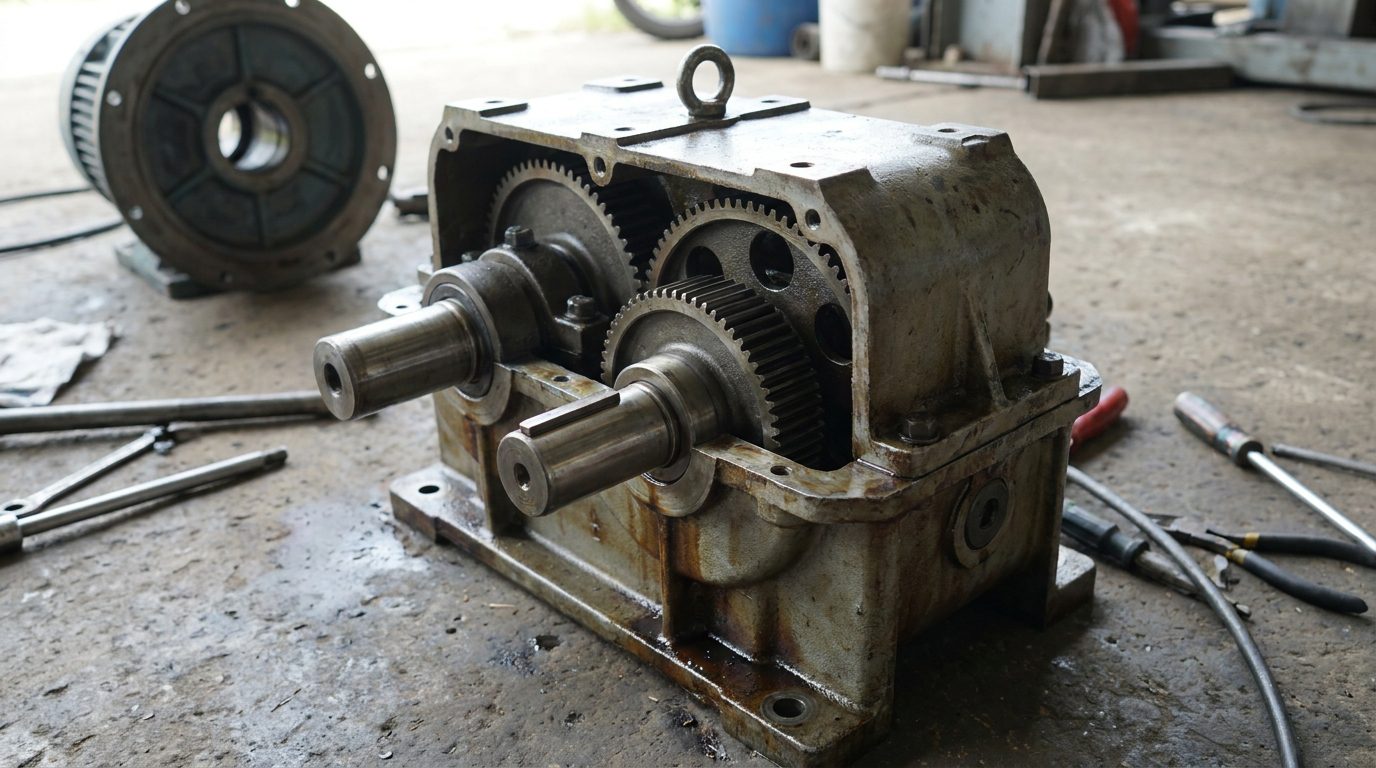
When a gearbox goes down, every hour matters. Whether you are replacing a failed unit, sourcing a spare, upgrading an OEM design, or planning a rebuild, the quality of your gearbox quote depends on the quality of information you provide. A complete request helps engineers and suppliers identify the correct reducer, confirm interchange options, avoid fitment problems, and shorten lead times.
For maintenance professionals, plant managers, OEMs, and industrial buyers, gathering the right details upfront can prevent costly mistakes. A gearbox that “looks close” may still have the wrong ratio, mounting position, input configuration, output shaft, service factor, or lubrication requirements. The result can be premature failure, installation delays, or unexpected modification costs.
This guide explains the essential information for a gearbox quote, including nameplate data, application details, mounting dimensions, operating conditions, and documentation that helps suppliers respond quickly and accurately.
If you are unsure what gearbox you have, or the nameplate is missing or damaged, Industrial Gearbox Solutions can help identify the unit using photos, dimensions, application data, and operating requirements. The more information you provide, the faster we can recommend a replacement, repair, or equivalent gearbox solution.
Use the form below to submit your gearbox quote request, upload photos, and share key details with our team.
When seeking a gearbox quote, it’s essential to understand the various factors that influence pricing, including specifications, application requirements, and service options. For those interested in learning more about gearbox maintenance and repair, a related article can provide valuable insights into the process. You can read about industrial gearbox repair services in Tallahassee, Florida, by visiting this link: Industrial Gearbox Repair in Tallahassee, Florida. This resource will help you understand the importance of proper maintenance and the services available to ensure your gearbox operates efficiently.
Why Accurate Gearbox Quote Information Matters
A gearbox quote is more than a price request. It is a technical specification review. The supplier must confirm that the proposed gearbox will fit, transmit the required torque, operate reliably, and match your equipment’s performance requirements.
Reducing Downtime and Delays
Incomplete information often creates back-and-forth communication. If a plant is down, this delay can be expensive. Supplying critical gearbox details at the beginning allows the quote team to check stock, verify interchangeability, and determine whether a standard unit, custom build, repair, or rebuild is the best option.
For example, a maintenance technician may request a “30:1 right-angle gearbox.” However, that description is not enough. The quote team also needs horsepower, input RPM, shaft sizes, mounting arrangement, output direction, service factor, and whether the unit operates in a washdown, hot, dusty, or shock-loaded environment.
Avoiding Incorrect Replacements
Two gearboxes may share the same ratio and horsepower rating but have different output shaft diameters, bolt patterns, lubrication systems, or thermal capacity. Installing the wrong unit can cause alignment problems, coupling failures, overheating, or damage to connected equipment.
Accurate quote information helps prevent:
- Incorrect ratio selection
- Wrong mounting position
- Shaft size mismatches
- Insufficient torque rating
- Incompatible motor adapters
- Lubrication problems
- Unplanned baseplate or coupling modifications
- Premature gearbox failure
Supporting Better Technical Recommendations
Sometimes the original gearbox is not the best replacement. It may be obsolete, undersized, repeatedly failing, or poorly suited for the duty cycle. With complete application data, an experienced gearbox supplier can recommend a modern equivalent, a higher service factor, a stronger gear design, or a rebuild strategy that improves reliability.
Essential Nameplate Information for a Gearbox Quote
The gearbox nameplate is usually the best starting point. It often contains the manufacturer’s model number, ratio, serial number, input speed, output speed, horsepower rating, and lubrication details. If the nameplate is readable, take clear photos and record all listed data.
Manufacturer and Model Number
The manufacturer and model number help identify the gearbox family, size, configuration, and available replacement parts. Common gearbox manufacturers include SEW-Eurodrive, Dodge, Falk, Sumitomo, Hansen, Flender, Rexnord, Nord, Bonfiglioli, David Brown, Philadelphia Gear, and many others.
When requesting a gearbox quote, provide:
- Manufacturer name
- Model number
- Serial number
- Part number, if available
- Assembly number or build code
- Any catalog or OEM reference numbers
If the gearbox was supplied as part of a machine, the OEM may have assigned its own part number. Include both the OEM part number and the gearbox manufacturer’s data whenever possible.
Gear Ratio
The gear ratio determines how much the gearbox reduces speed and increases torque. A 20:1 ratio means the input shaft turns 20 times for every one turn of the output shaft. Even small ratio differences can affect conveyor speed, mixer performance, pump flow, or machine timing.
If the ratio is not listed on the nameplate, you may be able to estimate it by rotating the input shaft and counting output shaft revolutions. However, for critical applications, the supplier should confirm ratio details before quoting.
Input and Output Speed
Input RPM is typically based on the motor speed or driven source. Common motor speeds include approximately 1750 RPM, 1450 RPM, 1150 RPM, or 950 RPM depending on motor frequency and pole count.
Output speed is calculated by dividing input speed by the gearbox ratio. However, exact output RPM may vary depending on motor slip, variable frequency drive settings, and operating conditions.
Provide:
- Motor RPM
- Input speed range
- Desired output RPM
- VFD operating range, if used
- Whether speed is constant or variable
Horsepower and Torque Rating
Horsepower alone is not enough. Torque is often the more important value for gearbox selection. Torque depends on horsepower and speed. A gearbox running at low output speed may transmit high torque even with moderate horsepower.
If known, provide:
- Motor horsepower or kW
- Output torque requirement
- Peak torque or starting torque
- Load inertia
- Frequency of starts and stops
- Shock load conditions
A quote based only on motor horsepower may miss overload conditions. For example, a conveyor that starts fully loaded several times per hour may need a higher service factor than one that runs continuously under a steady load.
Serial Number and Build Code
The serial number can reveal the original build configuration, internal gearset, shaft orientation, bearing arrangement, seals, lubrication type, and special modifications. If your gearbox is obsolete, the serial number may still help identify the closest current replacement or spare parts.
Always include a clear photo of the nameplate, even if you type the information into a quote request.
Check out our latest posts at https://industrialgearboxsolutions.com/blog/ for valuable industry insights.
Application Details Suppliers Need to Know
The gearbox application is just as important as the gearbox data. A unit used on a lightly loaded fan has different requirements than one used on a rock crusher, steel mill conveyor, cooling tower, mixer, or extruder.
Type of Driven Equipment
Describe the machine or process the gearbox drives. This helps the supplier estimate load characteristics, duty cycle, and service factor.
Common industrial gearbox applications include:
| Application | Typical Considerations |
|||
| Conveyors | Starts/stops, loaded starts, belt tension, outdoor exposure |
| Mixers and agitators | High radial loads, shock loads, continuous duty |
| Crushers and shredders | Severe shock, high torque, heavy-duty service factor |
| Pumps | Speed accuracy, alignment, continuous operation |
| Cooling towers | Corrosion, outdoor environment, vertical shaft arrangements |
| Extruders | High torque, thermal loads, thrust loads |
| Kilns and dryers | Slow speed, high torque, thermal expansion |
| Hoists and cranes | Braking, safety factors, intermittent duty |
| Packaging machinery | Precision, compact design, frequent cycling |
A short description of the equipment can prevent major sizing errors.
Duty Cycle and Operating Hours
Duty cycle affects gearbox life. A gearbox running 24/7 in a production line needs different consideration than a gearbox operating only a few hours per week.
Include:
- Hours per day
- Days per week
- Continuous or intermittent operation
- Number of starts and stops per hour
- Whether starts are loaded or unloaded
- Reversing frequency
- Braking or backdriving conditions
For example, a gearbox on a bucket elevator may experience high starting torque and must prevent rollback. A gearbox on a test stand may cycle frequently and require careful thermal analysis.
Load Characteristics
Load type has a direct impact on gearbox selection. Smooth loads are easier on gears and bearings, while shock loads can significantly reduce component life.
Describe the load as:
- Smooth and uniform
- Moderate shock
- Heavy shock
- Reversing load
- Cyclic load
- High-inertia load
- Overhung load
- Thrust load
If the gearbox has failed repeatedly, provide details about the failure mode. Broken teeth, worn bearings, leaking seals, overheating, or shaft damage can point to a sizing, alignment, lubrication, or application issue.
Service Factor Requirements
Service factor is a multiplier that accounts for operating conditions beyond ideal steady-state loading. It considers shock, duty cycle, starts, and environmental factors. A gearbox with an insufficient service factor may run for a while but fail prematurely.
If your facility or OEM specification requires a minimum service factor, include it in the quote request. If not, describe the application thoroughly so the supplier can recommend an appropriate value.
When seeking a gearbox quote, it’s essential to gather specific information to ensure an accurate estimate. Factors such as the gearbox type, application, and any existing issues play a crucial role in the quoting process. For those interested in understanding the repair aspect of gearboxes, a related article on industrial gearbox repair in Fishers, Indiana, provides valuable insights into the services available in that area. You can read more about it in this informative piece on industrial gearbox repair.
Mounting, Shaft, and Dimensional Information
Even if the gearbox is technically rated for the job, it must physically fit the equipment. Dimensional information is critical when quoting replacements, drop-in interchange units, or retrofit gearboxes.
Mounting Style
Gearboxes are available in many mounting arrangements. The correct mounting style affects lubrication, bearing loading, shaft orientation, and installation.
Common mounting styles include:
- Foot mounted
- Flange mounted
- Shaft mounted
- Torque arm mounted
- Hollow shaft mounted
- Vertical mounted
- Horizontal mounted
- Right-angle mounted
- Inline mounted
- Face mounted
Provide photos showing how the gearbox is installed, including the base, mounting bolts, connected motor, couplings, sprockets, sheaves, torque arm, or output connection.
Mounting Position and Orientation
A gearbox designed for horizontal operation may not be suitable for vertical operation without lubrication changes, seal modifications, or bearing adjustments. Mounting orientation affects oil level, vent position, drain location, and bearing lubrication.
Specify:
- Horizontal or vertical mounting
- Input shaft position
- Output shaft position
- Shaft rotation direction
- Whether the unit is above, below, or beside driven equipment
- Any clearance restrictions
- Whether the gearbox is exposed to washdown or outdoor conditions
If possible, include a simple sketch or annotated photo showing orientation.
Shaft Dimensions
Shaft sizes must match couplings, sprockets, pulleys, gears, or driven equipment. Even a small difference in shaft diameter can create installation problems.
For solid shafts, provide:
- Shaft diameter
- Shaft length
- Keyway width and depth
- Key length
- Threaded hole size, if present
- Distance from shaft end to mounting face
For hollow shafts, provide:
- Bore diameter
- Keyway dimensions
- Bushing type
- Shrink disc information
- Shaft engagement length
- Driven shaft diameter and tolerance
Bolt Pattern and Centerline Height
When replacing a gearbox, mounting dimensions can determine whether the new unit is a true drop-in replacement or requires modifications.
Important dimensions include:
| Dimension | Why It Matters |
|||
| Bolt hole spacing | Confirms baseplate compatibility |
| Centerline height | Maintains alignment with driven equipment |
| Overall length and width | Checks clearance in tight spaces |
| Shaft projection | Ensures coupling or sprocket alignment |
| Flange diameter | Confirms motor or machine interface |
| Pilot diameter | Ensures proper centering |
| Mounting foot size | Determines support and load distribution |
If you do not have a drawing, measurements and photos with a tape measure can be very helpful.
Motor and Input Drive Information
The gearbox input configuration must match the motor or drive system. Many quote delays occur because motor adapter, input shaft, or coupling details are missing.
Motor Details
If the gearbox is motor-mounted or supplied as a gearmotor, provide complete motor information.
Include:
- Motor horsepower or kW
- Voltage and phase
- Frequency, such as 50 Hz or 60 Hz
- Motor RPM
- Frame size
- Enclosure type, such as TEFC, ODP, washdown, explosion-proof, or IEEE 841
- Efficiency class
- Brake motor requirements
- Encoder or feedback device requirements
- Inverter-duty or VFD-rated motor requirements
For gearmotors, a photo of the motor nameplate and gearbox nameplate is ideal.
Input Configuration
The input side may be a motor adapter, C-face flange, IEC flange, solid input shaft, quill input, belt drive, chain drive, or coupling-driven arrangement.
Specify:
- C-face or IEC motor mount
- Input shaft diameter
- Input keyway size
- Coupling type
- Belt or chain drive details
- Pulley or sprocket diameter
- Input rotation direction
- Whether a backstop is required
If a VFD controls the motor, include the minimum and maximum operating speed. Gearboxes operating at low speeds may have lubrication concerns, while high speeds may have thermal limits.
Brake, Clutch, and Backstop Requirements
Some applications require additional components to prevent movement, control stopping, or protect equipment.
Mention if the system includes:
- Motor brake
- Clutch
- Torque limiter
- Overrunning clutch
- Backstop
- Holdback
- Mechanical brake
- Soft starter or VFD
Applications such as inclined conveyors, bucket elevators, and hoists often require backstops or braking systems to prevent reverse rotation.
Environmental and Operating Conditions
The environment can dramatically affect gearbox reliability. A gearbox used indoors in a clean, temperature-controlled facility has different requirements than one exposed to washdown chemicals, abrasive dust, high heat, or outdoor weather.
Temperature and Thermal Conditions
Gearboxes generate heat through friction and load. Ambient temperature, airflow, oil viscosity, and duty cycle all affect thermal performance.
Provide:
- Ambient temperature range
- Process temperature near the gearbox
- Indoor or outdoor location
- Ventilation conditions
- Whether the gearbox is near an oven, kiln, furnace, dryer, or hot process
- Any history of overheating
If the gearbox has been running hot, note the measured housing temperature, oil temperature, and operating conditions when measured.
Contamination and Washdown Exposure
Dust, moisture, chemicals, and abrasive materials can damage seals, contaminate oil, and shorten bearing life.
Identify exposure to:
- Water spray
- High-pressure washdown
- Caustic cleaning chemicals
- Food-grade sanitation procedures
- Cement dust
- Grain dust
- Coal dust
- Metal particles
- Outdoor rain, snow, or humidity
- Corrosive atmosphere
- Saltwater or marine environments
In these cases, the quote may need to include special seals, coatings, stainless hardware, food-grade lubricant, breathers, or washdown-rated components.
Hazardous or Regulated Environments
If the gearbox operates in a hazardous location or regulated industry, compliance requirements must be included in the quote.
Examples include:
- Explosion-proof requirements
- ATEX or IECEx certification
- Food-grade lubricant requirements
- USDA or FDA-related requirements
- Mining safety requirements
- Chemical plant specifications
- API, AGMA, or ISO standards
- Customer-specific engineering standards
Missing compliance information can result in a quote that is technically unsuitable for your facility.
Lubrication, Maintenance, and Failure History
Lubrication is one of the most important factors in gearbox life. When requesting a gearbox quote, especially for repair or replacement, provide information about oil type, maintenance practices, and any past failures.
Lubricant Type and Viscosity
If known, provide the current lubricant brand, grade, and viscosity. Gearboxes may require mineral oil, synthetic oil, food-grade oil, extreme-pressure oil, or special high-temperature lubricants.
Include:
- Oil type and viscosity
- Lubricant brand
- Last oil change date
- Oil analysis results
- Oil capacity
- Grease lubrication requirements
- Automatic lubrication system details
If the replacement gearbox will be installed in a different orientation, the oil fill level and lubrication configuration may need to change.
Maintenance History
Maintenance records help identify whether the gearbox is failing due to age, application severity, lubrication problems, contamination, misalignment, or overload.
Helpful maintenance details include:
- Installation date
- Last rebuild date
- Oil change frequency
- Bearing replacement history
- Seal replacement history
- Vibration readings
- Temperature readings
- Oil analysis reports
- Repeated failure patterns
For a gearbox repair quote, this information helps determine whether a standard rebuild is sufficient or whether design improvements are needed.
Failure Symptoms
If the gearbox has failed or is failing, describe the symptoms clearly.
Common symptoms include:
- Excessive noise
- Vibration
- Oil leaks
- Overheating
- Broken gear teeth
- Bearing failure
- Shaft movement
- Metal particles in oil
- Reduced output speed
- Seized unit
- Cracked housing
Photos of damaged components can help determine whether the unit should be repaired, replaced, upgraded, or reverse engineered.
Photos, Drawings, and Documentation to Include
Visual documentation can make a gearbox quote significantly faster and more accurate. Even experienced technicians may miss details that are obvious in a photo.
Recommended Photos
When submitting a gearbox quote request, include multiple clear photos from different angles.
Recommended photo checklist:
- Gearbox nameplate
- Motor nameplate
- Full gearbox assembly
- Input side
- Output side
- Mounting base or flange
- Shaft and coupling connection
- Oil fill, drain, and breather locations
- Any damage or leaks
- Surrounding machine layout
- Clearance restrictions
- Connected sprockets, pulleys, or torque arms
Take photos with good lighting and include a ruler or tape measure when showing shaft sizes or mounting dimensions.
Drawings and Manuals
If available, attach technical drawings, installation manuals, spare parts lists, or OEM documentation.
Useful documents include:
- Gearbox dimensional drawing
- Assembly drawing
- OEM machine manual
- Spare parts list
- Previous quote or invoice
- Engineering specification
- Maintenance records
- Oil analysis report
- Vibration report
- Failure analysis report
Even an old invoice can help identify the original gearbox model, ratio, and configuration.
When the Nameplate Is Missing
A missing or unreadable nameplate does not mean the gearbox cannot be identified. Suppliers can often help using photos and measurements.
Provide:
- Overall dimensions
- Shaft dimensions
- Mounting dimensions
- Gearbox type, such as worm, helical, bevel, planetary, or shaft-mounted
- Approximate ratio
- Motor horsepower and RPM
- Application details
- Photos of all sides
- Any casting numbers or stamped markings
In some cases, a gearbox may need to be inspected, measured, or reverse engineered to identify a suitable replacement.
Gearbox Quote Checklist
Use the following checklist before submitting your request. The more boxes you can complete, the faster and more accurate your gearbox quote will be.
| Information Needed | Details to Provide |
|||
| Manufacturer | Brand name on gearbox |
| Model number | Full model or catalog number |
| Serial number | Nameplate serial or build code |
| Ratio | Gear ratio or output RPM |
| Motor HP/kW | Motor power rating |
| Input RPM | Motor or drive speed |
| Output RPM | Required driven speed |
| Mounting style | Foot, flange, shaft, vertical, horizontal |
| Shaft details | Diameter, length, keyway, hollow bore |
| Application | Conveyor, mixer, pump, crusher, etc. |
| Duty cycle | Hours/day, starts/stops, reversing |
| Load type | Smooth, shock, heavy shock, cyclic |
| Environment | Indoor, outdoor, washdown, dusty, hot |
| Lubrication | Oil type, viscosity, food-grade requirements |
| Photos | Nameplates, shafts, mounting, full assembly |
| Drawings | Dimensional drawings or OEM documents |
| Failure history | Noise, leaks, overheating, broken parts |
| Required timeline | Emergency, planned outage, stock spare |
Emergency Quote Priorities
If the gearbox is down and production is stopped, focus first on the information that allows the supplier to identify and cross-reference the unit.
Priority details include:
- Clear nameplate photos
- Gearbox model and serial number
- Ratio
- Motor horsepower and RPM
- Mounting arrangement
- Shaft dimensions
- Application and load description
- Photos of the installed unit
- Required delivery timeline
If you do not know every detail, submit what you have and explain the urgency.
Planned Replacement Priorities
For planned outages, upgrades, and spare gearbox purchases, take more time to document the application fully. This creates an opportunity to improve reliability, upgrade obsolete models, reduce maintenance, and standardize inventory.
Planned replacement requests should include service factor, operating history, environmental exposure, maintenance records, and any desired improvements.
Common Mistakes to Avoid When Requesting a Gearbox Quote
Even experienced industrial buyers and maintenance teams can overlook key details. Avoiding these common mistakes can save time and prevent incorrect quotes.
Providing Only Horsepower and Ratio
Horsepower and ratio are important, but they do not define the gearbox. Suppliers also need mounting, shaft, duty cycle, service factor, operating environment, and application details.
A 10 HP, 40:1 gearbox could be a worm reducer, helical bevel gearbox, shaft-mounted reducer, planetary unit, or custom industrial drive. Each has different dimensions, efficiency, torque capacity, and cost.
Ignoring Mounting Orientation
Mounting orientation affects lubrication. A gearbox quoted for horizontal mounting may not be correct for vertical or inclined installation. Always specify how the gearbox is positioned in the machine.
Assuming All Replacements Are Drop-In
A replacement may be functionally correct but not dimensionally identical. If a drop-in replacement is required, provide drawings, measurements, and photos. Confirm shaft height, bolt pattern, shaft projection, and coupling alignment before purchasing.
Leaving Out Environmental Details
Washdown, dust, heat, and outdoor exposure can require different seals, coatings, lubricants, and breathers. If these details are omitted, the quoted gearbox may not last in the real operating environment.
Not Mentioning Repeated Failures
If the current gearbox has failed more than once, do not simply request the same replacement. Repeated failures may indicate undersizing, shock loading, misalignment, contamination, poor lubrication, or an application mismatch. Sharing failure history allows the supplier to recommend a better solution.
Repair, Replacement, or Upgrade: What Should You Quote?
Not every gearbox issue requires a new unit. Depending on the gearbox size, age, availability, and damage level, repair or rebuild may be the better option.
When Replacement Makes Sense
Replacement is often preferred when:
- The gearbox is small or standard
- A direct replacement is available
- The housing is cracked or severely damaged
- Internal parts are obsolete and unavailable
- Lead time is shorter than repair
- The existing unit is undersized
- A modern equivalent improves performance
A new gearbox quote may include updated materials, improved sealing, better efficiency, or a more readily available design.
When Repair or Rebuild Makes Sense
Repair may be cost-effective for large industrial gearboxes, custom units, obsolete drives, and gearboxes with long replacement lead times.
Repair quotes may involve:
- Disassembly and inspection
- Bearing replacement
- Seal replacement
- Gear repair or replacement
- Shaft repair or manufacturing
- Housing repair
- Reassembly and testing
- Painting and lubrication
- Failure analysis
For repair quotes, provide the same application information plus photos, symptoms, and maintenance history.
When an Upgrade Is the Best Option
If the gearbox is part of a critical process or has a history of failure, an upgrade may deliver the best long-term value. Upgrades may include a higher torque rating, improved bearing arrangement, synthetic lubricant, better sealing, cooling systems, or a more efficient gear design.
How Industrial Gearbox Solutions Helps with Gearbox Quotes
Industrial Gearbox Solutions supports maintenance teams, engineers, OEMs, and industrial buyers with gearbox identification, replacement sourcing, repair evaluation, and technical recommendations. Whether you have complete drawings or only a few photos, a knowledgeable gearbox team can help narrow down the best path forward.
Identification and Cross-Reference Support
If your gearbox is obsolete, foreign-made, custom-labeled, or missing a nameplate, cross-referencing may require experience with multiple manufacturers and gearbox styles. Industrial Gearbox Solutions can review photos, dimensions, and application data to identify possible replacements or repair options.
Replacement and Interchange Options
A quote may include an exact replacement, direct interchange, modified replacement, or engineered alternative. The best option depends on urgency, budget, fitment requirements, and long-term reliability goals.
Repair and Rebuild Evaluation
For large or critical gearboxes, repair may be the fastest or most economical solution. A repair evaluation can determine whether the unit is rebuildable and whether improvements are recommended to prevent repeat failure.
Conclusion: Better Information Leads to a Better Gearbox Quote
A fast, accurate gearbox quote starts with complete information. Nameplate data, ratio, motor horsepower, input and output speed, mounting style, shaft dimensions, application details, duty cycle, environment, lubrication, photos, and drawings all help suppliers identify the right solution.
For emergency breakdowns, provide the most critical details first: nameplate photos, ratio, motor data, mounting arrangement, shaft dimensions, application, and delivery timeline. For planned replacements or upgrades, include maintenance history, service factor requirements, environmental conditions, and documentation so the quote can address reliability as well as fit.
Industrial Gearbox Solutions is ready to help you identify, replace, repair, or upgrade your industrial gearbox. Gather the information you have, upload photos, and contact our team for a practical, technically reviewed gearbox quote that supports your production goals.
FAQs
1. What information is typically needed for a gearbox quote?
The information typically needed for a gearbox quote includes the application details, such as the type of machinery the gearbox will be used in, the required torque and speed specifications, and any environmental factors that may impact the gearbox’s performance.
2. Why is it important to provide application details when requesting a gearbox quote?
Providing application details is important because it allows the gearbox supplier to recommend the most suitable gearbox for the specific application. Different applications may require different types of gearboxes with varying torque, speed, and environmental resistance capabilities.
3. What other information may be required for a gearbox quote?
In addition to application details, other information that may be required for a gearbox quote includes the desired gearbox configuration, such as the mounting orientation, input and output shaft specifications, and any special requirements or customizations.
4. How does providing detailed information impact the accuracy of a gearbox quote?
Providing detailed information allows the gearbox supplier to accurately assess the requirements of the application and recommend a gearbox that meets those requirements. This can help ensure that the gearbox quote is accurate and that the selected gearbox will perform optimally in the intended application.
5. What are the potential consequences of providing incomplete or inaccurate information when requesting a gearbox quote?
Providing incomplete or inaccurate information when requesting a gearbox quote can lead to the selection of a gearbox that is not suitable for the application, resulting in performance issues, increased maintenance costs, and potential downtime. It is important to provide as much accurate information as possible to ensure the best gearbox selection and quote.