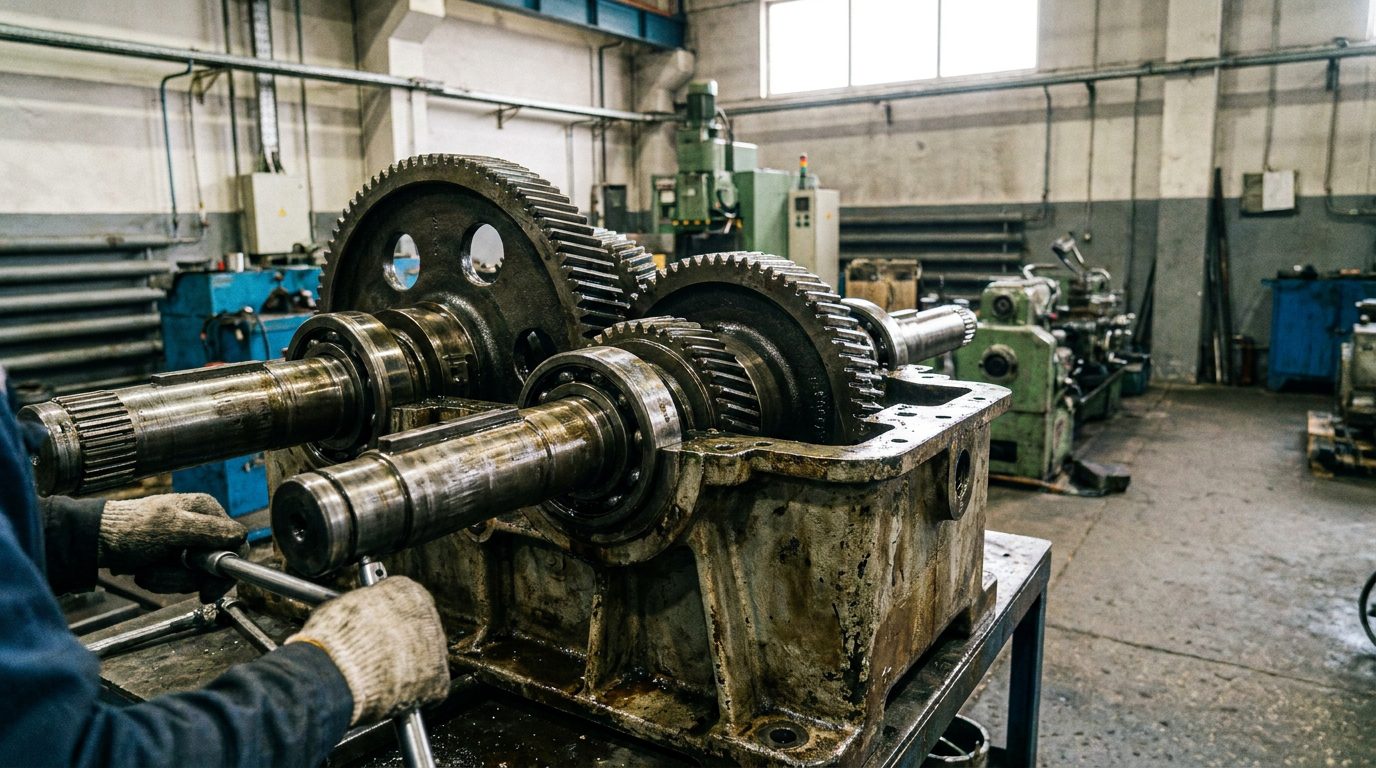
Heavy-load applications demand more than a standard power transmission setup. Whether you operate conveyors in mining, mixers in cement production, cranes in steel mills, or extruders in plastics manufacturing, the gearbox is often the component that determines uptime, output quality, and long-term maintenance cost.
Choosing the right industrial gearbox for heavy loads means evaluating torque capacity, shock-load resistance, thermal performance, service factor, mounting configuration, lubrication requirements, and spare parts availability. For maintenance professionals and plant managers, the goal is not simply to buy a gearbox that fits—it is to select a drive solution that performs reliably under continuous duty, harsh environments, and high mechanical stress.
This guide reviews the top industrial gearboxes for heavy loads, explains where each type performs best, and provides practical selection tips for engineers, OEMs, and industrial buyers.
If you are replacing a failed gearbox, upgrading an overloaded drive, or trying to identify an obsolete unit, Industrial Gearbox Solutions can help you determine the correct gearbox type, ratio, torque rating, shaft arrangement, and mounting configuration.
Send us your gearbox nameplate information, photos, dimensions, application details, or failure symptoms, and our team can help recommend a suitable replacement or repair path.
When considering the best industrial gearboxes for heavy loads, it’s essential to also understand the importance of maintenance and repair services to ensure optimal performance. A related article that delves into the specifics of gearbox repair can be found at Industrial Gearbox Repair in Murfreesboro, TN. This resource provides valuable insights into how proper repair techniques can extend the lifespan of gearboxes and enhance their efficiency in heavy-load applications.
What Makes a Gearbox Suitable for Heavy Loads?
Not every gearbox is designed for severe-duty operation. Heavy-load gearboxes must handle high torque, frequent starts and stops, reversing loads, impact forces, and continuous production schedules.
High Torque Capacity
Torque is the turning force transmitted through the gearbox. Heavy-duty industrial gearboxes are designed with larger gear tooth profiles, robust shafts, high-strength bearings, and rigid housings to carry greater loads without premature wear.
For example, a conveyor handling crushed rock requires much higher torque than a light packaging conveyor. If the gearbox is undersized, gear teeth may pit, bearings may overheat, and seals may fail due to excessive internal stress.
Service Factor and Duty Cycle
Service factor is one of the most important gearbox selection values. It accounts for real-world operating conditions such as:
- Shock loading
- Frequent starts and stops
- Long operating hours
- Load variation
- Ambient temperature
- Driven machine characteristics
A gearbox with a service factor of 1.0 may be acceptable for smooth, uniform loads. Heavy-load applications often require a service factor of 1.5, 2.0, or higher depending on the severity of the duty cycle.
Shock-Load Resistance
Industries such as mining, aggregate, steel, pulp and paper, and waste processing often expose gearboxes to sudden load spikes. Crushers, apron feeders, hammer mills, and rolling mills can generate shock loads that exceed normal operating torque.
Heavy-load gearboxes must have hardened gears, strong shafts, quality bearings, and proper lubrication to survive these conditions.
Thermal Capacity
A gearbox may be mechanically strong enough to transmit torque but still fail if it cannot dissipate heat. High loads generate heat through gear mesh friction, bearing friction, and oil churning.
For continuous-duty applications, thermal rating is just as important as mechanical horsepower rating. In some cases, external cooling fans, heat exchangers, or oil circulation systems may be required.
Top Industrial Gearbox Types for Heavy Loads
The best gearbox for a heavy-load application depends on speed, torque, space limitations, shaft orientation, efficiency requirements, and environmental conditions. Below are the most common and reliable gearbox types used in demanding industries.
1. Helical Gearboxes
Helical gearboxes are among the most widely used industrial gearboxes for heavy loads. Their angled gear teeth engage gradually, producing smooth torque transmission, high efficiency, and lower noise compared with spur gears.
Best Applications for Helical Gearboxes
Helical gearboxes are commonly used in:
- Heavy-duty conveyors
- Mixers and agitators
- Extruders
- Bucket elevators
- Rolling equipment
- Compressors
- Industrial pumps
They are an excellent choice where continuous operation, high efficiency, and moderate-to-high torque are required.
Advantages of Helical Gearboxes
Key benefits include:
- High power density
- Smooth and quiet operation
- Excellent efficiency, often above 95% per stage
- Strong load distribution across gear teeth
- Long service life when properly lubricated
Helical gearboxes are available in parallel shaft and inline configurations, making them flexible for many plant layouts.
Maintenance Considerations
Helical gearboxes typically require routine oil analysis, vibration monitoring, seal inspection, and alignment checks. Because they can transmit high torque, misalignment between the motor, gearbox, and driven equipment can accelerate bearing and gear wear.
2. Bevel Helical Gearboxes
Bevel helical gearboxes combine bevel gears and helical gears to transmit power at right angles while maintaining high efficiency and heavy-duty torque capacity. They are especially useful when the motor and driven shaft must be positioned at 90 degrees.
Best Applications for Bevel Helical Gearboxes
Common applications include:
- Mining conveyors
- Cement mills
- Cooling towers
- Large mixers
- Bulk material handling systems
- Steel processing lines
- Wastewater treatment equipment
Why Bevel Helical Gearboxes Perform Well Under Heavy Loads
The helical gear stages provide smooth, efficient torque transmission, while the bevel gear stage changes the direction of rotation. This makes bevel helical units ideal for applications where space constraints or equipment layout require a right-angle drive.
Compared with worm gearboxes, bevel helical gearboxes are typically much more efficient, especially in higher horsepower applications.
Practical Example
A cement plant may use a bevel helical gearbox on a large inclined conveyor carrying clinker. The gearbox must handle continuous operation, high starting torque, dust exposure, and variable load conditions. A properly selected bevel helical gearbox with a high service factor and suitable sealing system can significantly improve uptime.
3. Planetary Gearboxes
Planetary gearboxes are known for extremely high torque density. They use a central sun gear, multiple planet gears, and an outer ring gear to distribute load across several gear contacts at once.
Best Applications for Planetary Gearboxes
Planetary gearboxes are widely used in:
- Cranes and hoists
- Winches
- Slewing drives
- Heavy mobile equipment
- Steel mill machinery
- Wind turbines
- Track drives
- Industrial automation requiring compact high torque
Advantages of Planetary Gearboxes
Planetary gearboxes offer:
- High torque output in a compact package
- Excellent load sharing
- High reduction ratios
- Coaxial input and output options
- Strong shock-load capability
- Efficient power transmission
Because the load is shared among multiple planet gears, planetary units can handle very heavy loads relative to their size.
When to Choose a Planetary Gearbox
Choose a planetary gearbox when space is limited but torque requirements are high. For example, a crane hoist may need a compact gearbox that can lift heavy loads safely while fitting within a restricted housing envelope.
Planetary gearboxes are also popular where high reduction ratios are required without using a physically large multi-stage parallel shaft unit.
4. Worm Gearboxes
Worm gearboxes use a worm screw that meshes with a worm wheel. They are commonly used where right-angle power transmission, compact design, and high reduction ratios are needed.
Best Applications for Worm Gearboxes
Worm gearboxes are used in:
- Lifts and hoists
- Gates and valves
- Packaging equipment
- Indexing tables
- Small conveyors
- Material handling systems
- Equipment requiring self-locking characteristics
Strengths of Worm Gearboxes
Worm gearboxes can provide large speed reductions in a compact space. Some worm gear drives also have self-locking characteristics, which can be useful for holding loads in place.
They are simple, cost-effective, and widely available in many ratios and mounting configurations.
Limitations in Heavy-Load Applications
Although worm gearboxes can handle significant loads, they are generally less efficient than helical, bevel helical, or planetary gearboxes. Lower efficiency means more heat generation, which can become a problem in continuous heavy-duty service.
For intermittent heavy loads, worm gearboxes may perform well. For high-horsepower continuous applications, engineers often prefer bevel helical or planetary gearboxes.
5. Shaft-Mounted Gearboxes
Shaft-mounted gearboxes are designed to mount directly onto the driven shaft, eliminating the need for couplings, baseplates, and extensive alignment procedures. They are especially popular in conveyor applications.
Best Applications for Shaft-Mounted Gearboxes
Common uses include:
- Belt conveyors
- Screw conveyors
- Bucket elevators
- Aggregate handling systems
- Grain handling equipment
- Recycling lines
- Quarry and mining equipment
Advantages of Shaft-Mounted Gearboxes
Shaft-mounted gearboxes provide:
- Simplified installation
- Reduced alignment requirements
- Compact drive arrangement
- Easy retrofit options
- Reliable conveyor performance
They are often paired with torque arms to control rotation and absorb reaction forces.
Maintenance Tips
Because shaft-mounted gearboxes are frequently used in dusty, dirty, or outdoor environments, seal condition is critical. Inspect for oil leaks, contamination, worn breathers, and loose torque arms.
A failed torque arm or loose mounting can lead to shaft damage, bearing overload, or catastrophic gearbox failure.
6. Parallel Shaft Gearboxes
Parallel shaft gearboxes use gears arranged on parallel shafts and are commonly used where high torque and rugged construction are required.
Best Applications for Parallel Shaft Gearboxes
They are ideal for:
- Heavy conveyors
- Industrial mixers
- Crushers
- Mills
- Paper machines
- Extruders
- Large fans
- Processing equipment
Why Parallel Shaft Gearboxes Are Popular
Parallel shaft gearboxes are durable, efficient, and easy to service. They can be configured with multiple gear stages to achieve different speed reduction ratios.
Their robust design makes them a common choice in industries where uptime is essential and loads are consistently high.
Repair and Rebuild Potential
Parallel shaft gearboxes are often good candidates for repair or rebuild. Bearings, seals, gears, and shafts may be replaced or reconditioned, extending service life and reducing replacement costs.
Check out our latest posts at https://industrialgearboxsolutions.com/blog/ for valuable industry insights.
Comparison of Heavy-Load Industrial Gearboxes
The following table provides a quick comparison of common gearbox types used in heavy-load industrial applications.
| Gearbox Type | Torque Capacity | Efficiency | Best For | Key Advantage |
||:|:|||
| Helical Gearbox | High | Very High | Conveyors, mixers, pumps | Smooth, efficient continuous operation |
| Bevel Helical Gearbox | High | Very High | Right-angle heavy drives | Efficient 90-degree power transmission |
| Planetary Gearbox | Very High | High | Cranes, winches, compact drives | Maximum torque density |
| Worm Gearbox | Moderate to High | Low to Moderate | Intermittent right-angle drives | Compact high ratio and possible self-locking |
| Shaft-Mounted Gearbox | High | High | Conveyors and bulk handling | Easy installation on driven shaft |
| Parallel Shaft Gearbox | High | High | Crushers, mills, extruders | Rugged and serviceable design |
When considering the best industrial gearboxes for heavy loads, it’s essential to also understand the importance of maintenance and repair to ensure optimal performance. A related article discusses the significance of timely industrial gearbox repair services, which can greatly extend the lifespan of your equipment. For more insights on this topic, you can read about the various repair options available in Washington by following this link. Proper upkeep not only enhances efficiency but also minimizes unexpected downtime, making it a crucial aspect of managing heavy-duty machinery.
How to Select the Right Gearbox for Heavy Loads
Selecting from the top industrial gearboxes for heavy loads requires more than matching horsepower and output speed. A reliable gearbox selection should consider the entire drive system.
Define the Application Requirements
Before choosing a gearbox, collect the following information:
- Motor horsepower or kilowatt rating
- Input speed
- Desired output speed
- Required ratio
- Output torque
- Shaft orientation
- Mounting position
- Duty cycle
- Starts and stops per hour
- Load type
- Ambient temperature
- Environmental exposure
- Available space
- Required service factor
This information helps determine whether a helical, bevel helical, planetary, shaft-mounted, worm, or parallel shaft gearbox is best suited to the application.
Calculate Required Output Torque
Torque can be calculated using horsepower and speed. In imperial units:
Torque lb-in = HP × 63,025 ÷ RPM
In metric units:
Torque Nm = kW × 9,550 ÷ RPM
For example, a 50 HP motor operating through a gearbox with an output speed of 60 RPM produces approximately:
50 × 63,025 ÷ 60 = 52,521 lb-in of torque
However, this is only the theoretical torque. Engineers must also apply a service factor to account for real operating conditions.
Apply the Correct Service Factor
A lightly loaded fan may require a lower service factor, while a rock crusher, hammer mill, or reversing conveyor requires a much higher service factor.
Typical service factor considerations include:
- Uniform load: lower service factor
- Moderate shock: medium service factor
- Heavy shock: high service factor
- Continuous 24/7 operation: higher service factor
- Frequent starts and stops: higher service factor
- Reversing loads: higher service factor
Undersizing the service factor is one of the most common causes of premature gearbox failure.
Confirm Shaft and Mounting Requirements
Gearboxes are available with many shaft arrangements, including:
- Solid output shaft
- Hollow bore
- Tapered bore
- Double output shaft
- Flange mount
- Foot mount
- Shaft mount
- Right-angle configuration
- Inline configuration
A replacement gearbox must match not only the torque and ratio but also the physical installation requirements. Even a small shaft height or mounting difference can create costly installation delays.
Review Thermal Rating
For heavy-load applications, always check thermal capacity. A gearbox that is mechanically rated for the load may still overheat if installed in a hot area, operated continuously, or used in a confined space with poor airflow.
If overheating is a concern, consider:
- Synthetic lubricant
- Larger gearbox size
- External cooling fan
- Oil cooler
- Forced lubrication system
- Improved ventilation
- Heat-resistant seals
Common Industries That Use Heavy-Load Gearboxes
Heavy-duty gearboxes are found across nearly every major industrial sector. The operating environment often determines the best gearbox style and protection features.
Mining and Aggregate
Mining operations rely on rugged gearboxes for crushers, conveyors, feeders, screens, and mills. These applications involve dust, vibration, shock loading, and continuous production demands.
Recommended gearbox types often include:
- Bevel helical gearboxes
- Shaft-mounted gearboxes
- Planetary gearboxes
- Parallel shaft gearboxes
Cement and Construction Materials
Cement plants use gearboxes on kilns, mills, conveyors, elevators, mixers, and separators. These applications require high torque, strong sealing systems, and resistance to abrasive dust.
Helical and bevel helical gearboxes are common because of their efficiency and durability.
Steel and Metals Processing
Steel mills subject gearboxes to high torque, reversing loads, heat, impact, and contamination. Rolling mills, coil handling lines, and ladle equipment require gearboxes with robust housings and high service factors.
Planetary and parallel shaft gearboxes are often used for extreme torque applications.
Food, Beverage, and Packaging
While many food and packaging applications are lighter duty, some processes such as mixers, grinders, bulk conveyors, and bottling lines require reliable industrial gearboxes.
Stainless steel housings, washdown-duty seals, and food-grade lubricants may be required.
Pulp and Paper
Paper machines, pulpers, conveyors, and roll drives require precise and continuous gearbox performance. Moisture, heat, and chemical exposure can make sealing and lubrication especially important.
Helical and parallel shaft gearboxes are commonly used due to their efficiency and long service life.
Power Generation and Utilities
Power plants use industrial gearboxes in coal handling, cooling towers, pumps, fans, and ash handling systems. These applications often operate around the clock, making reliability and condition monitoring essential.
Key Features to Look for in Heavy-Duty Gearboxes
A quality heavy-load gearbox should be designed for durability, maintainability, and long-term performance.
Hardened and Ground Gears
Hardened and precision-ground gears improve load capacity, reduce noise, and extend service life. Gear tooth quality directly affects vibration, efficiency, and reliability.
Heavy-Duty Bearings
Bearings must be selected to handle radial loads, axial loads, and shock loads. In heavy-duty gearboxes, bearing failure is often linked to contamination, poor lubrication, misalignment, or overload.
Rigid Housing Construction
A gearbox housing must maintain shaft alignment under load. Weak or flexible housings can allow gear misalignment, leading to uneven tooth contact and accelerated wear.
Cast iron, ductile iron, and fabricated steel housings are common in heavy-duty industrial gearboxes.
Effective Sealing System
Seals prevent lubricant loss and contamination entry. In harsh environments, consider:
- Labyrinth seals
- V-ring seals
- Taconite seals
- Double-lip oil seals
- Breather filters
- Desiccant breathers
Improved sealing is especially valuable in mining, cement, aggregate, and outdoor conveyor applications.
Lubrication Flexibility
Heavy-load gearboxes may use mineral oil, synthetic oil, grease, or circulating oil systems depending on the design and application. The lubricant must match the speed, temperature, gear type, and load.
Synthetic lubricants can provide better thermal stability, oxidation resistance, and cold-start performance.
Gearbox Maintenance Best Practices for Heavy Loads
Even the best industrial gearbox will fail early without proper maintenance. A proactive maintenance plan reduces unplanned downtime and helps identify developing problems before catastrophic failure.
Perform Regular Oil Analysis
Oil analysis can detect:
- Metal wear particles
- Water contamination
- Dirt ingress
- Oxidation
- Additive depletion
- Incorrect viscosity
- Overheating indicators
For critical heavy-load gearboxes, oil analysis should be part of the preventive maintenance program.
Monitor Vibration and Temperature
Vibration analysis helps detect bearing defects, gear mesh problems, imbalance, misalignment, and looseness. Temperature monitoring can identify lubrication problems, overloading, or cooling issues.
A rising temperature trend is often an early warning sign that the gearbox is operating outside its intended conditions.
Inspect Seals, Breathers, and Lubricant Levels
Routine visual inspections should include:
- Oil level
- Oil color and clarity
- Seal leakage
- Breather condition
- Mounting bolts
- Couplings
- Torque arms
- Unusual noise
- Excessive vibration
A clogged breather can cause pressure buildup, forcing oil past seals. A low oil level can quickly lead to bearing and gear damage.
Maintain Proper Alignment
Misalignment increases bearing loads and gear tooth stress. For coupled drives, precision alignment between the motor, gearbox, and driven equipment is essential.
For shaft-mounted units, check the driven shaft condition, torque arm position, and mounting hardware.
Avoid Overloading the Gearbox
If production requirements have changed, the original gearbox may no longer be suitable. Increased conveyor speed, heavier material, higher start frequency, or process changes can overload a previously reliable gearbox.
When repeated failures occur, do not simply install another identical unit without reviewing the application.
Signs Your Heavy-Load Gearbox Needs Repair or Replacement
Identifying problems early can prevent secondary damage and reduce downtime.
Warning Signs to Watch For
Common symptoms include:
- Unusual noise or grinding
- Increased vibration
- Overheating
- Oil leaks
- Burnt lubricant smell
- Metal particles in oil
- Excessive backlash
- Output speed changes
- Bearing noise
- Cracked housing
- Repeated seal failures
Repair vs. Replacement
Repair may be practical when the housing, shafts, and major gears are still serviceable. Replacement may be better when parts are obsolete, lead times are excessive, damage is severe, or upgrading to a more robust gearbox would reduce future failures.
A professional gearbox inspection can help determine the most cost-effective path.
When to Upgrade
Consider upgrading if:
- The gearbox is repeatedly failing
- Load requirements have increased
- The unit is obsolete
- Parts are difficult to source
- Energy efficiency is poor
- Maintenance costs are rising
- The application has severe shock loads
- The gearbox runs hot even with proper lubrication
In many cases, upgrading from a worm gearbox to a bevel helical gearbox, or from an undersized helical gearbox to a larger parallel shaft or planetary unit, can improve reliability and reduce lifecycle cost.
OEM and Buyer Considerations
For OEMs and industrial buyers, gearbox selection impacts equipment performance, warranty claims, maintenance requirements, and customer satisfaction.
Standard vs. Custom Gearboxes
Standard gearboxes are cost-effective and readily available for common applications. Custom gearboxes may be required when equipment has unique mounting dimensions, special shaft arrangements, high shock loads, or industry-specific requirements.
Custom options may include:
- Special ratios
- Modified shafts
- Reinforced housings
- Custom mounting plates
- High-temperature seals
- Food-grade lubrication
- Washdown coatings
- Explosion-proof compatibility
- Condition monitoring sensors
Lead Time and Spare Parts Availability
A gearbox may be technically ideal, but if lead time is too long or replacement parts are unavailable, it can create production risk.
Before purchasing, consider:
- Manufacturer support
- Spare bearing and seal availability
- Gear set lead times
- Interchange options
- Repair capability
- Documentation availability
- Nameplate and model identification
Total Cost of Ownership
The lowest purchase price is not always the best value. A gearbox with better efficiency, stronger sealing, longer bearing life, and better parts support can reduce operating cost over time.
Total cost of ownership includes:
- Purchase price
- Installation labor
- Downtime cost
- Energy consumption
- Lubrication cost
- Maintenance frequency
- Repair cost
- Replacement lead time
- Production losses from failure
For heavy-load applications, reliability often delivers greater value than upfront savings.
Practical Gearbox Selection Checklist
Use this checklist when evaluating industrial gearboxes for heavy loads.
Application Data
- What machine is being driven?
- What is the required output speed?
- What is the motor horsepower or kW?
- What is the operating schedule?
- Are there shock loads or reversing loads?
- How many starts and stops occur per hour?
- Is the load constant or variable?
Mechanical Fit
- What is the shaft diameter?
- Is the shaft solid or hollow?
- What is the mounting style?
- What is the center distance or shaft height?
- Are there space restrictions?
- Is the gearbox right-angle, inline, or parallel shaft?
Environment
- Is the area dusty, wet, hot, or corrosive?
- Is washdown required?
- Is the gearbox outdoors?
- Is the atmosphere explosive or hazardous?
- Is there adequate ventilation?
Maintenance Requirements
- Can oil be drained easily?
- Is the breather accessible?
- Are inspection ports available?
- Is condition monitoring needed?
- Are spare parts available?
- Can the gearbox be repaired locally?
Conclusion: Choosing the Best Industrial Gearbox for Heavy Loads
The top industrial gearboxes for heavy loads include helical, bevel helical, planetary, worm, shaft-mounted, and parallel shaft designs. Each type has strengths, and the best choice depends on torque demand, duty cycle, space limitations, shaft arrangement, efficiency goals, and operating environment.
For continuous heavy-duty service, helical and bevel helical gearboxes are often preferred for their efficiency and durability. Planetary gearboxes are ideal when very high torque is needed in a compact package. Shaft-mounted gearboxes are excellent for conveyors and bulk handling systems. Worm gearboxes can be useful for compact right-angle drives, especially where intermittent duty or self-locking behavior is beneficial. Parallel shaft gearboxes remain a rugged, serviceable choice for crushers, mills, mixers, and other severe-duty machines.
If you are unsure which gearbox is right for your application, replacing an obsolete unit, or dealing with repeated failures, Industrial Gearbox Solutions can help you identify, source, repair, or upgrade your gearbox. Contact our team today with your application details, nameplate information, photos, or dimensions, and we will help you find a reliable solution for your heavy-load operation.
FAQs
What are industrial gearboxes used for?
Industrial gearboxes are used to transmit power from one part of a machine to another. They are commonly used in heavy machinery, such as mining equipment, construction machinery, and manufacturing equipment, to handle heavy loads and provide torque at low speeds.
What are the key factors to consider when choosing an industrial gearbox for heavy loads?
When choosing an industrial gearbox for heavy loads, it is important to consider factors such as the load capacity, gear ratio, efficiency, durability, and maintenance requirements. Additionally, the operating environment and specific application requirements should also be taken into account.
What types of industrial gearboxes are best suited for heavy loads?
For heavy loads, industrial gearboxes such as helical gearboxes, bevel gearboxes, and planetary gearboxes are commonly used. These types of gearboxes are designed to handle high torque and provide smooth, reliable power transmission in heavy-duty applications.
What are the benefits of using high-quality industrial gearboxes for heavy loads?
Using high-quality industrial gearboxes for heavy loads can result in increased efficiency, reduced maintenance costs, longer equipment lifespan, and improved overall performance. These gearboxes are designed to withstand the demands of heavy-duty applications and provide reliable power transmission.
How can maintenance and servicing prolong the lifespan of industrial gearboxes for heavy loads?
Regular maintenance and servicing, including lubrication, alignment checks, and inspection of components, can help prolong the lifespan of industrial gearboxes for heavy loads. Proper maintenance can prevent premature wear and damage, ensuring the gearboxes continue to operate efficiently and reliably.