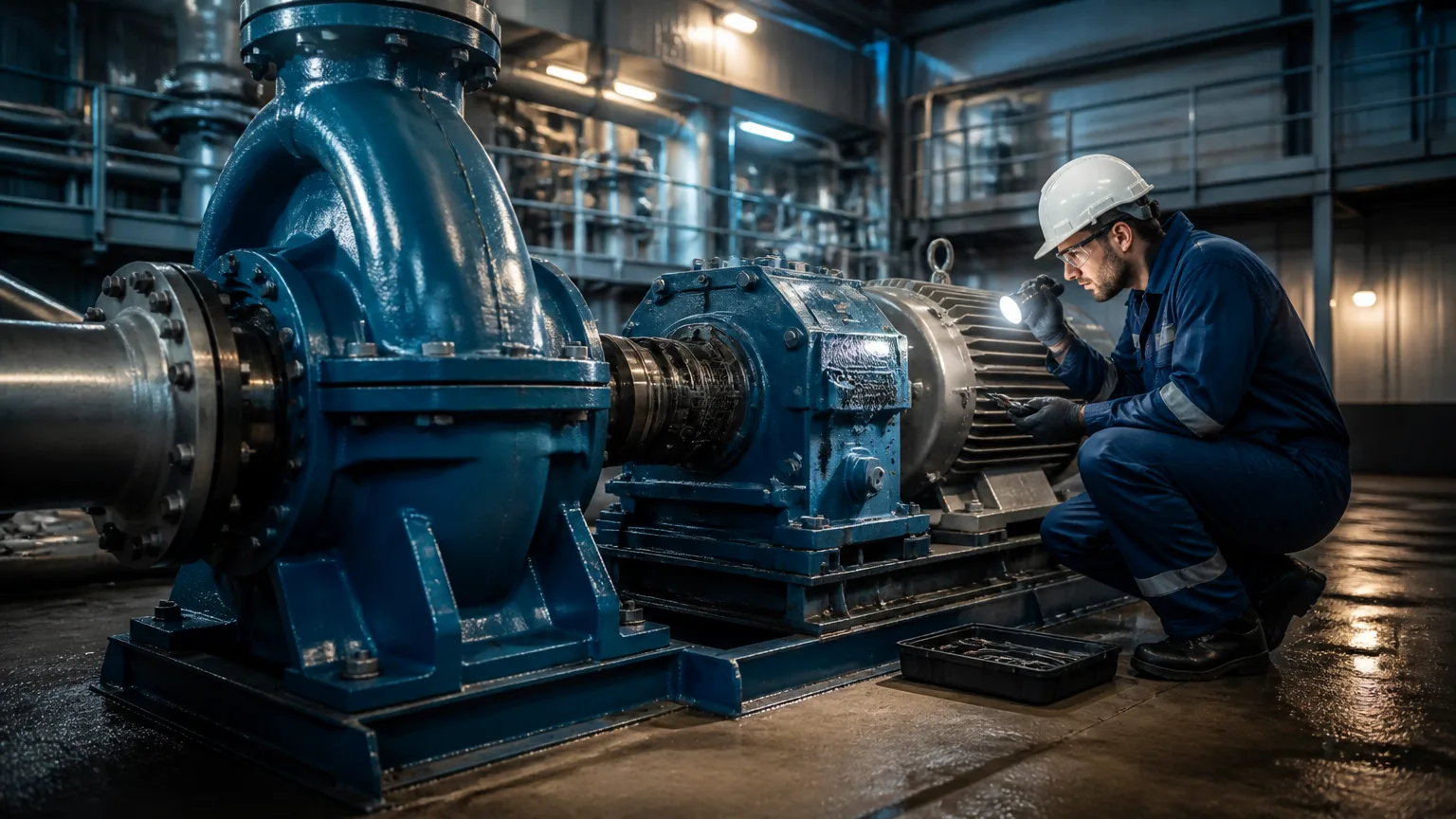
Water distribution equipment repair is essential to keeping municipal, agricultural, and industrial systems operating safely and efficiently. Pumps, motors, gearboxes, and transmission components work together to move water at the required pressure and volume. When one component degrades, the effects can spread across the entire facility.
Gearbox wear may reduce pump output, increase energy consumption, and trigger unplanned downtime. Even minor vibration, overheating, or unusual noise can signal a developing failure that becomes costly if ignored. Reliable repair protects service continuity and helps facilities avoid emergency replacements.
This guide focuses on practical decisions for restoring performance. You will learn how to identify failure symptoms, assess repair versus replacement, and select compatible components, including choosing the right gearbox for power transmission. It also explains how proper alignment, lubrication, and load assessment can prevent repeat failures.
Recognizing Common Failure Signs in Water Distribution Gearboxes
Early warning signs often appear before a gearbox, pump drive, or connected motor fails. Abnormal noise, such as grinding, whining, or rhythmic knocking, may indicate worn gears, damaged bearings, or inadequate lubrication. Rising vibration can point to internal damage, shaft imbalance, loose mounting, or misalignment between the motor and gearbox.
Overheating commonly results from excessive loading, poor lubrication, restricted airflow, or failing bearings. Check oil for a dark color, burnt odor, metal particles, or water contamination. These conditions suggest lubrication breakdown, gear wear, bearing damage, or moisture entering through a failed seal.
Leaking seals require prompt inspection. Lost lubricant can accelerate internal wear, while a fluctuating output speed may indicate slipping components, damaged gearing, an unstable motor, or an overloaded pump. Reduced water flow or pressure may also originate in the driven pump, blocked pipework, or a failing impeller—not the gearbox itself.
Before removing equipment, document operating temperature, noise, vibration, speed, flow, and pressure. Record recent maintenance, lubricant changes, alignment work, and load changes. This information helps technicians separate internal failure from installation or pump problems. Review common issues that cause gearbox repairs, including lubrication breakdown, installation errors, and excessive loading. Early diagnosis supports faster, more accurate water distribution equipment repair.
A Practical Diagnostic and Repair Process
A qualified repair provider begins with a documented inspection. Technicians examine the housing, shafts, gears, bearings, seals, lubrication system, couplings, and mounting surfaces. They look for connected wear patterns, not only isolated damaged parts. For example, gear tooth wear may reflect misalignment, poor lubrication, or excessive loading elsewhere in the drive system.
The diagnostic stage combines visual findings with measurable evidence. Vibration analysis can reveal imbalance, looseness, or bearing damage. Backlash checks identify gear clearance problems, while oil analysis can detect contamination, overheating, and metallic wear debris. Technicians also record dimensional measurements and review load history, operating speed, maintenance records, and pump conditions. Together, these details help separate the root cause from the visible failure.
After removing the gearbox, technicians perform a controlled teardown and precision cleaning. Each component is measured against manufacturer specifications. Worn, cracked, contaminated, or obsolete parts are replaced with compatible components. Manufacturer-specific experience is especially valuable when servicing established equipment families. For demanding applications, experienced Amarillo gearbox repair specialists can apply proven procedures and component knowledge.
During rebuilding, technicians set correct bearing fits, gear backlash, shimming, and shaft alignment. They install new seals, verify mounting surfaces, and fill the unit with the specified fresh lubricant. A quality rebuild ends with documented run testing, including temperature, vibration, noise, leakage, and load checks. These records confirm performance and provide a baseline for future water distribution equipment repair and preventive maintenance.
Repair or Replacement: How Facilities Should Decide
Repair is usually practical when the gearbox housing and shafts remain serviceable. It also makes sense when replacement parts are available, the existing ratio still suits the pump, and technicians can complete the rebuild within the planned outage window. A documented inspection should confirm gear, bearing, seal, and bore conditions before approval.
Replacement becomes more compelling when castings are cracked, shafts are severely damaged, or the design is obsolete. Repeated failures, poor efficiency, unavailable parts, and changing production demands are also warning signs. A gearbox that no longer matches pump speed, torque, or duty requirements can undermine even well-executed water distribution equipment repair.
Compare total installed cost, not just the purchase price. Include removal, installation, alignment, coupling changes, controls, lubrication, commissioning, and expected downtime. Confirm future parts availability and maintenance support before selecting a replacement.
The new unit must match torque, speed, service factor, duty cycle, mounting configuration, and environmental exposure. Consider water, humidity, contamination, and temperature at the installation site. Pump requirements, including starting loads and operating range, must also guide selection. Reviewing industrial gearbox solutions for different applications can help teams compare suitable configurations. A repair may cost less initially, but replacement can deliver better efficiency, reliability, and lifecycle value.
Coordinating Gearbox, Pump, and Motor Performance
Gearbox repair cannot be isolated from the motor and pump. Motor output, gearbox ratio, and pump speed determine system pressure and flow. Confirm these relationships before installing a repaired or replacement unit, or performance problems may shift elsewhere.
During electric motor applications in industry, selection and operating conditions influence the complete drive system. Check motor condition, coupling alignment, base rigidity, pipe strain, controls, and the pump’s operating point. These checks help ensure the repaired gearbox matches actual demand.
Excessive starts, variable loads, cavitation, restricted suction, and operation away from the pump’s design point can shorten gearbox life. Verify starting loads and control settings during water distribution equipment repair, then document pressure, flow, vibration, and temperature under normal conditions.
Building a More Reliable Water Distribution Repair Strategy
Successful water distribution equipment repair depends on early symptom recognition, root-cause diagnosis, correct repair practices, and application-matched replacement parts. When a pump or gearbox fails urgently, choose a provider that evaluates the entire drive train—not one that simply replaces the damaged component.
Keep service records, lubrication schedules, vibration and temperature trends, spare-part details, and emergency contacts accessible. This preparation supports faster decisions and preventive follow-up. The result is reduced downtime, steadier water flow and pressure, improved energy performance, and greater confidence in production continuity.