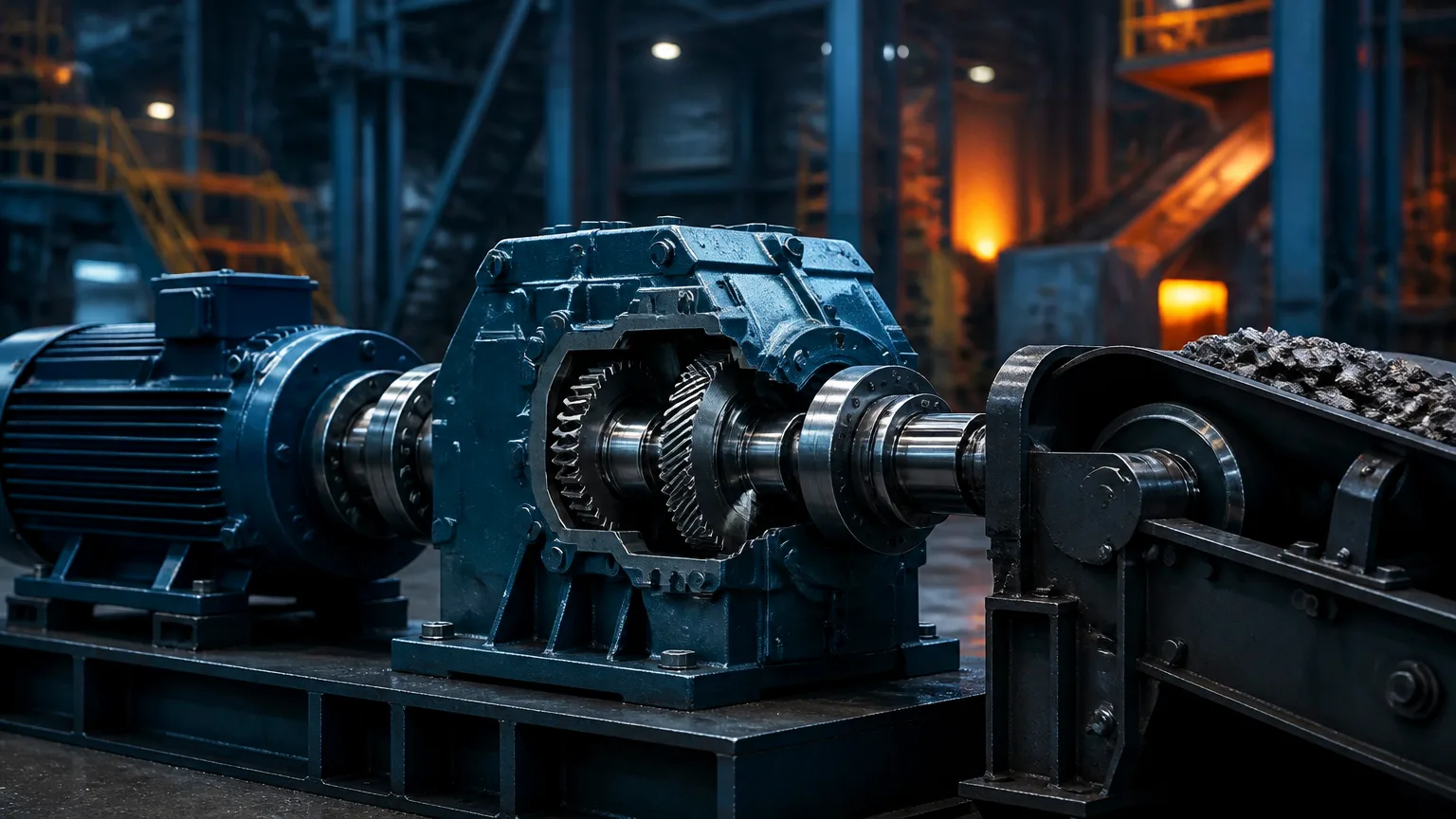
Reducer equipment plays a critical role in industrial power transmission. It lowers motor speed while increasing usable torque, enabling conveyors, mixers, pumps, extruders, and other machinery to operate effectively. The right reducer helps maintain stable performance under demanding production conditions.
Selecting a replacement or repair solution requires more than matching a model number. An undersized, incompatible, or poorly supported unit can overheat, wear prematurely, and cause unplanned downtime or repeat failures. This article explains how load demands, operating conditions, equipment compatibility, serviceability, and lifecycle cost guide better decisions. For broader context, review this guide to power transmission and choosing the right gearbox. With the right evaluation, you can improve reliability and avoid costly missteps.
Start With the Application and Performance Requirements
Define the application before comparing reducer types or suppliers. Start with the motor horsepower, required output speed, operating hours, and driven equipment. Reviewing industrial electric motor applications can also clarify how motor selection affects the complete drive system.
Do not size reducer equipment from horsepower alone. Calculate both continuous and peak torque, including startup loads, intermittent overloads, and shock loads. These conditions often determine the required service factor, particularly on conveyors, crushers, mixers, and other equipment with demanding starts.
Confirm the required output speed and reduction ratio. Determine whether the system needs variable-speed operation, precise positioning, or synchronized movement. These requirements may influence the reducer design, motor controls, feedback devices, and allowable backlash.
Application details directly affect sizing. A conveyor incline increases lifting torque, while heavier materials increase load demand. Mixer viscosity can raise startup torque, and long operating hours increase thermal and durability requirements. Also specify starts and stops per hour and the required direction of rotation.
Evaluate the reducer as part of the motor-and-driven-equipment system, not as an isolated component. A properly matched combination improves reliability, controls energy use, and reduces premature wear.
Choose a Reducer Design That Fits the Operating Environment
Select reducer equipment based on the machine’s physical layout and operating demands. Helical reducers provide efficient, smooth power transmission and typically generate less noise. Review this helical gearbox design when efficiency, continuous operation, and manageable maintenance are priorities.
Inline designs suit applications with aligned motor and driven shafts. Parallel-shaft reducers support compact, low-profile layouts and high torque transmission. Bevel reducers change the shaft direction, making them useful when right-angle mounting solves a footprint or access challenge. Compare shaft orientation, mounting position, available space, and load direction before choosing a configuration.
Worm reducers offer compact construction and high reduction ratios. However, sliding contact can reduce efficiency and increase heat generation in some applications. Confirm that available cooling can manage the thermal load, especially during continuous operation. Also consider noise levels, lubrication access, inspection needs, and expected service intervals.
The operating environment further affects the selection. Dust, moisture, washdown chemicals, and high ambient temperatures may require sealed enclosures, corrosion-resistant materials, or upgraded cooling. Equipment installed in explosive areas must meet the applicable hazardous-location requirements. Match the reducer’s enclosure protection and mounting arrangement to real site conditions, not just catalog specifications.
Verify Compatibility, Installation, and Replacement Constraints
Before ordering replacement reducer equipment, document the existing unit thoroughly. Record the manufacturer, model, ratio, nameplate data, input and output shaft dimensions, mounting orientation, center distance, flange pattern, and keyway details. Include drawings and inspection measurements where possible.
A replacement does not always need to be identical. However, it must meet or exceed the application’s torque, speed, service-factor, thermal, and dimensional requirements. Confirm that the new unit fits the available space and connects correctly to the motor and driven equipment.
Check coupling size, shaft loading, backlash, and alignment requirements before installation. Also verify base rigidity, guarding, and access for maintenance. Address these items during commissioning, not after installation delays or premature failures occur.
Lubrication is equally important. Confirm oil type, viscosity, fill level, sealing requirements, and compatibility with the operating temperature. OEM documentation, certified drawings, and a supplier’s engineering review can identify unsuitable substitutes early. For additional gearbox repair and replacement guidance, compare the proposed reducer against the existing installation and site conditions before releasing the order.
Compare Repair, Rebuild, and Replacement Options
Start with a documented inspection before selecting a solution. Repair or rebuilding may be appropriate when the housing and major gear geometry remain serviceable. It can also make sense for specialized reducer equipment or units with difficult-to-source replacements. For example, Brevini gearbox repair and service options may preserve a proven installation while addressing bearing, seal, or lubrication problems.
Replacement is often more practical when the housing is cracked, gears are severely damaged, or critical parts are obsolete. Recurring failures, inadequate capacity, and poor energy performance also indicate that continued repairs may increase risk and operating costs. A new unit may provide better efficiency, support, and expected service life.
Compare more than the purchase price. Review inspection findings, lead times, warranty terms, spare-parts access, installation labor, and expected downtime. A motor-driven conveyor, for example, may justify rebuilding if a replacement requires extensive alignment work. Conversely, a fast-available replacement can be the better choice when an aging reducer threatens production. Base the decision on total cost, availability, and dependable performance.
Make the Selection With a Lifecycle View
Choose reducer equipment through a disciplined, lifecycle-based process. Define the load, torque, speed, duty cycle, and starts per hour. Then match the design to the environment, mounting arrangement, maintenance program, and available budget.
Verify compatibility with the motor and driven equipment, including dimensions, shaft details, rotation, and nameplate data. When requesting a quotation or technical review, provide complete application and nameplate information. Compare purchase price with availability, serviceability, energy use, and expected operating life.
The best reducer delivers required torque and speed reliably while fitting real site conditions. Before approving a repair or replacement, involve a qualified gearbox specialist. Professional inspection and documented engineering checks can prevent repeat downtime and protect your facility’s production schedule.