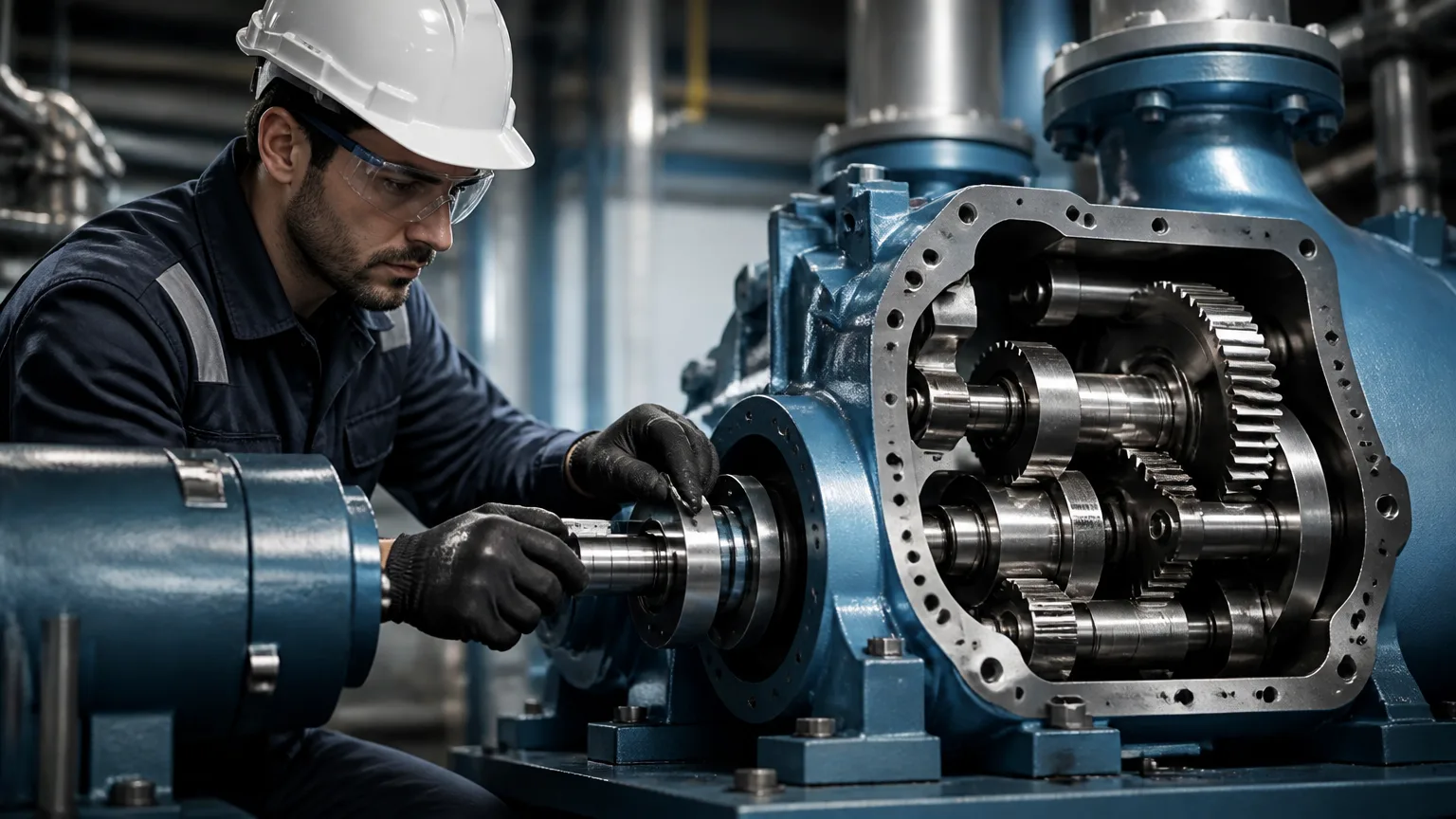
Viking pump repair begins with more than the pump itself. These positive-displacement pumps support critical manufacturing and process operations, where unplanned downtime can disrupt production and threaten product quality. Noise, heat, leakage, reduced flow, or motor overload may point to the pump—or to its gearbox, coupling, seals, motor, or transmission alignment.
A complete drive-system view helps maintenance teams identify the true cause before replacing parts. This approach supports sound repair-versus-replacement decisions, protects connected equipment, and restores dependable service faster. The same principles can guide related work, including Waukesha pump repair. This guide outlines practical diagnostic checks, repair considerations, and commissioning steps to help teams return equipment to stable operation with confidence.
Recognizing Viking Pump Failure Symptoms and Finding the Root Cause
Effective Viking pump repair starts with diagnosis, not immediate removal or parts replacement. Common warning signs include abnormal vibration, rising bearing temperature, unusual gear noise, seal leakage, inconsistent discharge pressure, reduced capacity, and motor-current changes.
Begin by comparing current readings with documented baseline data. Record pressure, speed, temperature, amperage, and flow during normal operation. This helps technicians separate gradual wear from sudden mechanical failure and identifies changes that may involve the pump, drive, or process system.
Inspect lubrication level and condition for contamination, discoloration, or metal debris. Check shaft and coupling alignment, mounting bolts, and piping for strain or movement. Confirm relief-valve settings and review suction conditions, including restricted strainers, low supply levels, air ingress, cavitation, or solids contamination.
Performance problems may originate in the gearbox rather than the Viking pump itself. The gearbox must transmit the correct speed and torque; worn gears, damaged bearings, or incorrect ratios can reduce flow while increasing heat, vibration, and motor load. Use this broader assessment when reviewing gearbox repairs near me.
If operating data points to a mechanical issue, inspect coupling components and listen for changes across the gearbox and pump housing. A structured diagnosis prevents unnecessary parts orders and ensures the repair addresses the root cause.
What a Professional Viking Pump and Gearbox Repair Process Includes
A qualified viking pump repair process begins with lockout/tagout, fluid draining, and contamination control. The repair team should identify the equipment and record nameplate data, gear ratios, rotation direction, and operating history before removal.
After isolation, technicians remove the pump and gearbox using procedures that protect shafts, couplings, and connected piping. They should document existing conditions, including leakage, unusual noise, vibration, wear patterns, and any alignment concerns.
During teardown, inspection should cover pump internals, shafts, bearings, mechanical seals, timing gears, gearbox bearings, gear teeth, housings, and lubrication passages. Technicians should photograph findings and compare damaged components with manufacturer tolerances. Depending on the condition, gearbox rebuilding may restore service more economically than full replacement.
A complete inspection also includes dimensional checks and shaft runout measurements. The provider should verify backlash, bearing clearances, endplay, and seal fits. If cracks or fatigue are suspected, non-destructive inspection methods, such as dye penetrant or magnetic particle testing, should be documented.
Replacement parts must match approved specifications and be installed with correct clearances, torque values, lubrication, and alignment. Before returning equipment to production, technicians should test rotation, leaks, vibration, temperature, pressure, flow, and load response. The final report should record measurements, parts used, test results, and any recommended follow-up actions.
Repair or Replace? Making the Right Gearbox Decision
Repair is often the practical choice when the housing and major shafts remain serviceable. It also makes sense when replacement parts are available and the original gearbox is correctly sized for the Viking pump application. A rebuild can reduce lead time and preserve established mounting, alignment, and control arrangements.
Replacement becomes more appropriate when the housing is cracked, gears have severe damage, or critical components are obsolete. Repeated failures, inadequate torque capacity, poor efficiency, or an unsuitable ratio also justify evaluating a new gearbox or complete pump package.
Compare total lifecycle cost, not purchase price alone. Include downtime, engineering, installation, alignment, controls, spare parts, commissioning, and expected maintenance. A lower-cost rebuild may offer better value, while a new package may reduce long-term risk.
Any replacement must match speed, torque, service factor, mounting arrangement, shaft dimensions, rotation, and duty cycle. Confirm these requirements against the Viking pump’s process conditions, including pressure, flow, viscosity, and operating hours. This disciplined comparison helps maintenance teams choose the most reliable path for Viking pump repair and future service.
Preventing Repeat Failures After Viking Pump Repair
A disciplined installation prevents many repeat failures after Viking pump repair. Confirm soft-foot correction, coupling alignment, pipe support, fastener torque, relief protection, and correct rotation before startup. Verify that the pump starts without abnormal noise, leakage, vibration, or load response.
Build lubrication checks into the preventive maintenance program. Use the specified lubricant and inspect for contamination, foaming, overheating, or unexplained consumption. Operating teams should also follow approved pressure, flow, speed, and temperature limits. Avoid extended dry running, frequent starts, and operation outside the pump’s intended duty cycle.
Use trend-based monitoring to identify deterioration early. Track vibration, temperature, pressure, flow, motor current, and seal condition at defined intervals. Compare readings with commissioning values and investigate gradual changes before they become emergency failures.
Keep detailed records of repair findings, replaced parts, clearances, torque values, test results, and operating conditions. Review these records during inspections and budget planning. Stock critical seals, bearings, couplings, and other long-lead parts based on failure history and equipment criticality.
A More Reliable Approach to Viking Pump Repair
Reliable Viking pump repair starts with identifying the root cause, inspecting the complete drive train, and comparing rebuild and replacement options. Review the gearbox, coupling, bearings, and pump together—not just the visibly damaged part. When applicable, use guidance on Brevini gearbox repair to support sound decisions.
Verify performance under realistic load, then document testing, measurements, and follow-up actions. Treat recurring failures as engineering and maintenance-system issues. Maintenance leaders should gather equipment data and consult a qualified industrial repair provider to reduce downtime and extend service life.