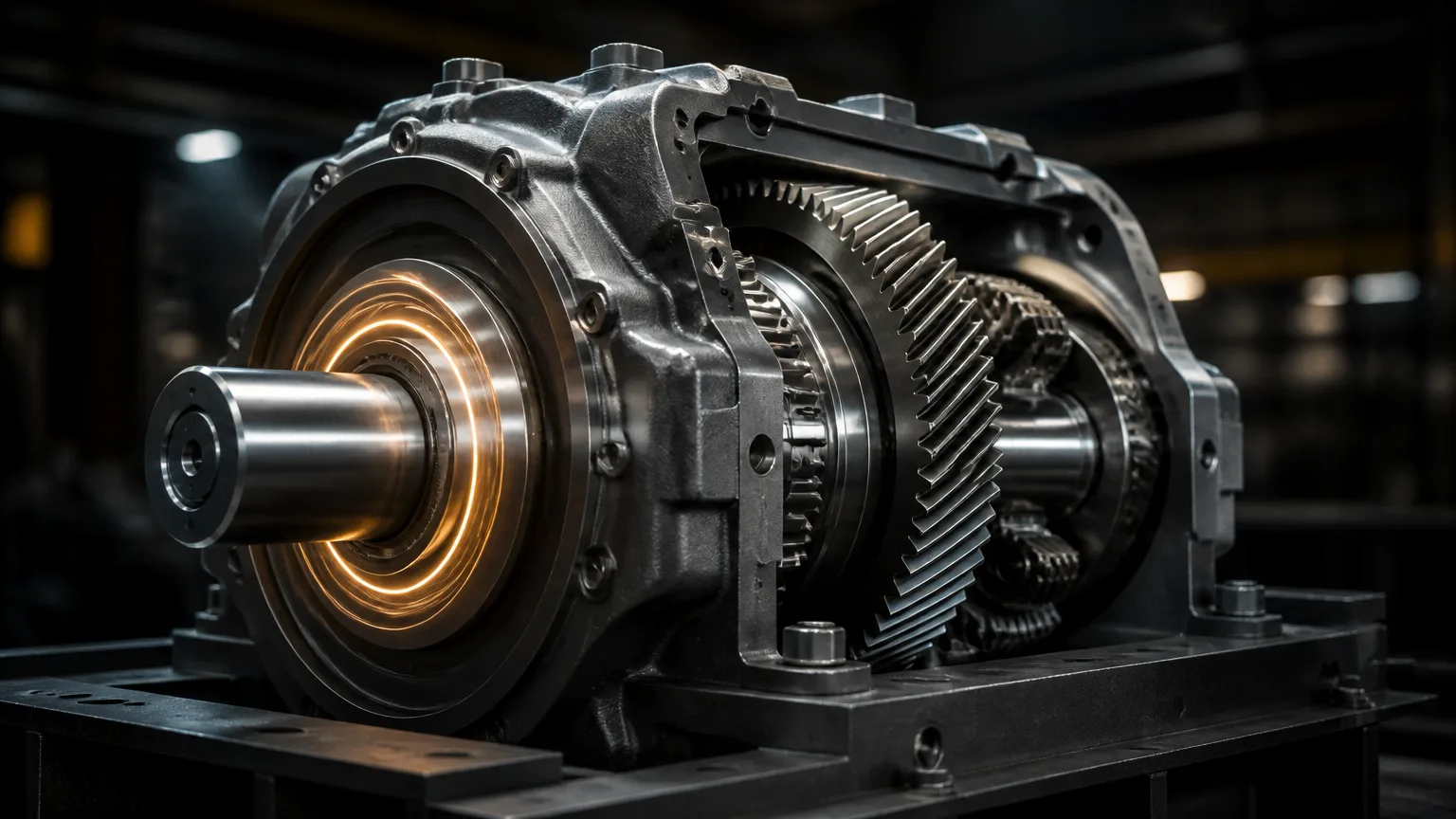
Torque capacity is the twisting force a gearbox can transmit continuously and during short-term operating demands. It is a primary selection criterion, yet horsepower and speed reduction alone rarely reveal whether a unit will perform reliably. Understanding industrial gearbox applications helps clarify why operating conditions matter.
An undersized gearbox may overheat, break teeth, damage shafts, and cause repeated downtime. An oversized unit can raise purchase, installation, and energy costs without improving performance. The right choice matches capacity to the actual load type, duty cycle, output speed, environment, and service expectations. This article explains how to evaluate those factors and select a gearbox that delivers dependable torque, efficient operation, and the service life your equipment requires.
Start With the Application’s Actual Torque Demand
Before comparing gearbox models, determine how much torque the driven equipment actually needs. Start with the motor’s rated power and the required output speed. The basic relationship is:
Torque (Nm) = 9,550 × power (kW) ÷ speed (rpm)
For horsepower, use:
Torque (lb-ft) = 5,252 × horsepower ÷ speed (rpm)
These formulas estimate running torque at the shaft. They do not capture every force the gearbox may experience. Include gearbox efficiency when calculating output torque, and apply an appropriate service factor for the application.
Separate running torque from starting torque, peak torque, and shock loads. A conveyor may require high starting torque when fully loaded. A crusher can impose sudden impact loads, while a mixer may experience changing resistance throughout its cycle. Mills and steel-processing equipment can combine continuous duty with severe transient loads, making gearboxes for steel mill applications especially dependent on accurate load analysis.
Gather the motor nameplate data, actual output speed, load measurements, acceleration requirements, and process-cycle information. Record how often the equipment starts, stops, reverses, or operates under overload. Do not rely only on the original gearbox nameplate. Its rating may reflect a different process, operating schedule, or safety margin than the current equipment requires. This information establishes the torque capacity the replacement must provide.
Account for Service Factors, Duty Cycles, and Shock Loads
Operating conditions can significantly increase the torque a gearbox must handle. A service factor provides a safety margin based on daily operating hours, load uniformity, starts per hour, reversing, vibration, and impact or fluctuating loads.
Continuous-duty equipment with a steady load usually creates fewer stress spikes than intermittent or cyclic machinery. Frequent starts and stops can stress gears, shafts, and bearings more severely than steady running. High-inertia loads and reversing cycles create additional shock loads that may exceed the motor’s normal output torque.
Apply the service factor to the calculated application torque before selecting the gearbox. The selected unit must meet this adjusted requirement, not merely match the motor’s rated output. Manufacturer ratings and application tables can help determine the appropriate factor for each operating condition.
For example, a mixer may require 1,000 lb-ft during steady operation but experience much higher torque when starting a full batch. If the gearbox only matches the motor’s nominal rating, repeated starts can damage gear teeth or shafts. Frequent maintenance may then lead to Lightnin gearbox repair for mixers and agitators. Selecting sufficient torque capacity from the outset helps prevent premature failure and unplanned downtime.
Evaluate Gearbox Design, Materials, and Installation Compatibility
Confirm that the gearbox design suits the application, not just the calculated load. Gear type and reduction ratio affect output torque, speed, noise, backlash, and efficiency. Review gear and shaft materials, bearing arrangement, lubrication system, thermal rating, and enclosure design. Torque capacity is meaningful only when the gears, shafts, bearings, housing, and lubrication system share the same duty rating.
Installation compatibility is equally important. Check mounting orientation, shaft diameter, keyways, flange patterns, coupling alignment, backlash, and available space before approving a replacement. Even a properly rated gearbox can fail if misalignment, restricted ventilation, or incorrect mounting affects its bearings or lubricant. A reliable gearbox manufacturer can also verify these mechanical interfaces and recommend suitable modifications.
Environmental conditions may require additional protection. Dust, moisture, chemicals, washdown procedures, contamination risk, and ambient temperature influence sealing, coatings, lubricant selection, and enclosure requirements. For example, food-processing washdown may require corrosion-resistant materials and improved sealing, while high temperatures can reduce lubricant life and thermal capacity. Confirm expected efficiency as well, since heat losses increase operating costs and may limit continuous torque output. Document these requirements before final selection and installation.
Decide Whether Repair or Replacement Is the Better Solution
When an existing gearbox fails, apply torque capacity analysis before deciding its future. A qualified inspection should assess gear tooth wear, pitting, cracks, shaft runout, bearing condition, housing damage, and lubrication contamination. Inspectors should also look for evidence of overload, including deformed teeth, fractured components, or heat damage.
Repair is practical when the housing and major components remain serviceable. Rebuilding can restore performance when damage is limited and replacement parts are available. Replacement is safer when the gearbox is obsolete, repeatedly overloaded, or structurally damaged.
Compare repair cost and lead time with a replacement gearbox offering a more suitable torque rating. Newer designs may also provide improved sealing, better efficiency, and readily available parts. For guidance on repair gear drives and prevent repeat failures, evaluate the entire failure history, not only the damaged component.
Finally, correct the root cause before returning equipment to service. Misalignment, poor lubrication, undersizing, excessive starts, and driven-equipment problems can quickly damage a repaired gearbox again. A durable solution addresses both the gearbox condition and the load that caused the failure.
Specify Torque Capacity With Confidence
Calculate operating and peak torque, apply the correct service factor, and verify the complete mechanical and environmental specification. Then compare repair and replacement economics before committing to a solution.
Involve a gearbox specialist when records are incomplete, shock loading is severe, or a replacement must fit an existing drive train. Choosing the right torque capacity improves reliability, protects production schedules, and reduces recurring emergency repairs.