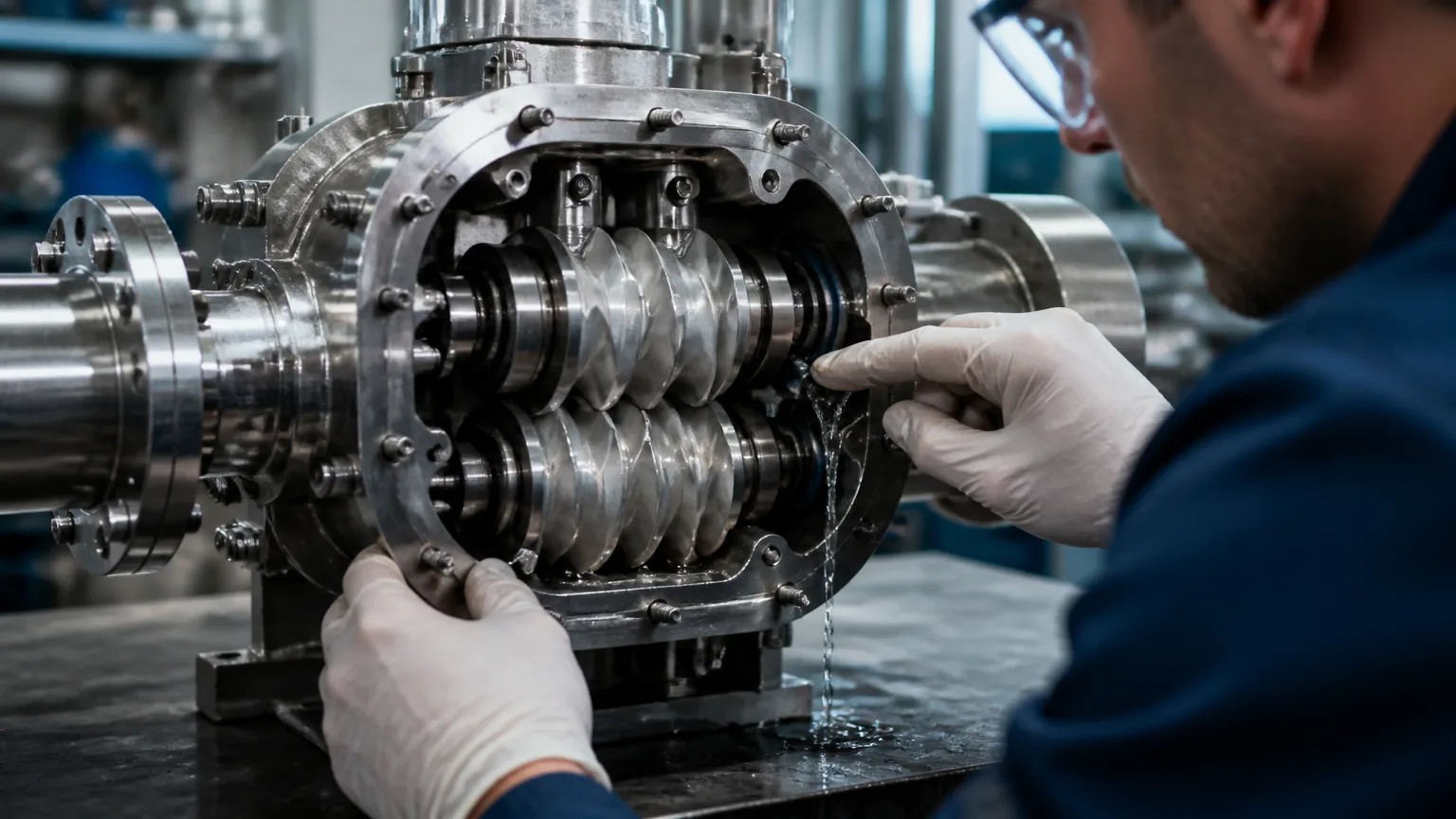
Waukesha pump repair begins with accurate diagnosis, not automatic parts replacement. These positive-displacement pumps support demanding manufacturing and process operations, where faults can reduce throughput, contaminate product, damage connected gearboxes, and trigger costly unplanned downtime.
Noise, leakage, vibration, and reduced flow are symptoms—not complete diagnoses. The underlying cause may involve worn seals, incorrect clearances, misalignment, cavitation, improper lubrication, or operating conditions outside the pump’s design range. Effective repair identifies that root cause before work begins.
Unlike routine pump maintenance, which may focus on scheduled inspections and consumable changes, corrective repair requires detailed inspection, service documentation, and correctly specified replacement parts. This approach prevents repeat failures and protects adjacent equipment. For broader pump repair, replacement, and maintenance guidance, use established inspection practices as a foundation. The sections ahead explain common Waukesha pump faults and the solutions that restore reliable performance.
Common Waukesha Pump Faults: Leakage, Wear, and Loss of Performance
Seal leakage is one of the most visible Waukesha pump faults. Worn mechanical seals, damaged O-rings, incorrect installation, or dry running can allow product to escape. Excessive pressure and incompatible process fluids can also damage sealing surfaces and accelerate failure.
Record the leak’s location, timing, and severity before starting Waukesha pump repair. This information helps technicians identify whether the issue involves the seal faces, elastomers, shaft, or operating conditions. Replacing damaged components without correcting the root cause can lead to another leak.
Reduced flow, poor pressure, and declining efficiency often indicate internal wear. Worn rotors, excessive clearances, damaged rotor surfaces, or incorrect timing can prevent the pump from moving product effectively. These conditions may develop gradually, making trend data valuable during inspections.
Abnormal noise or vibration requires prompt investigation. Possible causes include bearing wear, shaft misalignment, coupling problems, cavitation, or foreign material inside the pump. Continuing operation can damage rotors, seals, bearings, and connected equipment.
Before dismantling the unit, record fluid temperature, pressure, flow rate, vibration levels, and operating speed. Also note when the fault began and whether it follows startup, cleaning, or a process change. These details connect symptoms to likely component failures and support a faster, more accurate repair.
Gearbox and Drive Problems That Affect Waukesha Pump Operation
Gearbox faults can mimic problems inside the Waukesha pump chamber. Insufficient or contaminated lubricant may cause worn gears, damaged bearings, overheating, and seal failure. Backlash can also produce impact loading and unstable operation.
Common warning signs include vibration, unusual gear noise, elevated housing temperature, and fluctuating speed. These symptoms may originate in the gearbox, motor, coupling, or drive train rather than the pump itself. Compare pump pressure and flow with shaft speed, temperature, and vibration readings to help isolate the source.
Drive conditions can transfer damaging loads to pump shafts and bearings. Misalignment, soft foot, excessive belt or chain tension, and an incorrectly sized drive are frequent causes. A flexible coupling does not correct poor alignment, and an oversized motor can impose excessive torque during startup.
During Waukesha pump repair, technicians should first perform root-cause analysis instead of replacing parts based on symptoms alone. Professional gearbox service typically includes dimensional inspection, lubricant and seal checks, gear and bearing replacement, alignment verification, and load testing. These industrial gearbox solutions for manufacturers help confirm that the repaired drive matches operating demands.
If the pump chamber passes inspection, run the motor and gearbox independently where safe. Stable pressure with persistent gear noise or housing heat points toward the transmission, not the pump.
Waukesha Pump Repair Solutions: What the Service Process Should Include
A reliable waukesha pump repair begins with lockout/tagout and process-fluid isolation. The technician should drain and clean the unit safely, then collect operating history, fault records, and nameplate information. Record pressure, temperature, flow, speed, vibration, and the timing of the failure.
During teardown, inspect rotors, shafts, seals, bearings, covers, casing surfaces, timing components, and couplings. If the pump chamber passes inspection, run the motor and gearbox independently where safe. Stable pressure with persistent gear noise or housing heat points toward the transmission.
A quality repair verifies clearances, shaft runout, gear tooth condition, bearing fits, lubrication requirements, seal compatibility, and shaft alignment. It should not simply install a seal kit. Replace damaged components with parts suited to the fluid, speed, temperature, and pressure.
Repair is appropriate when damage remains localized. Rebuild the unit when wear is widespread, but the housing and original design remain serviceable. Replacement may be better when parts are unavailable, structural damage exists, or lifecycle costs make restoration impractical. For transmission work, choosing a gearbox rebuild service helps confirm proper scope and workmanship.
Reassembly should follow documented torque, fit, lubrication, and alignment requirements. Testing should include leak checks, no-load and operating-speed checks, vibration readings, temperature monitoring, and confirmation of flow and pressure under normal conditions.
Preventing Repeat Failures and Deciding Between Repair and Replacement
Prevent recurrence by linking maintenance findings to operating conditions. Schedule lubricant analysis, seal and bearing inspections, vibration monitoring, alignment verification, and checks for abnormal temperature or pressure. Investigate cavitation, frequent dry starts, pressure relief problems, excessive speed, thermal cycling, and process-fluid changes before returning the pump to service.
Use current Waukesha specifications during assembly. Confirm compatible elastomers, approved lubricants, accurate clearances, and a gearbox ratio and service factor matched to the application. Document the failure mode, measured conditions, and corrective action. This record gives maintenance teams a baseline for future predictive maintenance.
Repair is not always the lowest-cost option. Compare downtime exposure, replacement lead times, repairable core condition, energy consumption, parts availability, warranty coverage, and total cost of ownership. A well-supported Waukesha pump repair is practical when the core remains sound. Replacement may be better when damage is extensive, efficiency has declined, or continued downtime creates greater production risk.
Restore Reliable Waukesha Pump Performance with the Right Repair Strategy
Leaks, reduced output, vibration, noise, heat, and repeated seal or bearing failures demand timely diagnosis. Effective Waukesha pump repair evaluates the pump, gearbox, drive, operating conditions, and post-repair performance together. Provide your repair provider with nameplate data, service history, operating details, photos, and failed components. For further support, review this practical gearbox repair guidance. A documented repair or replacement plan restores production reliability and prevents recurring mechanical failures.