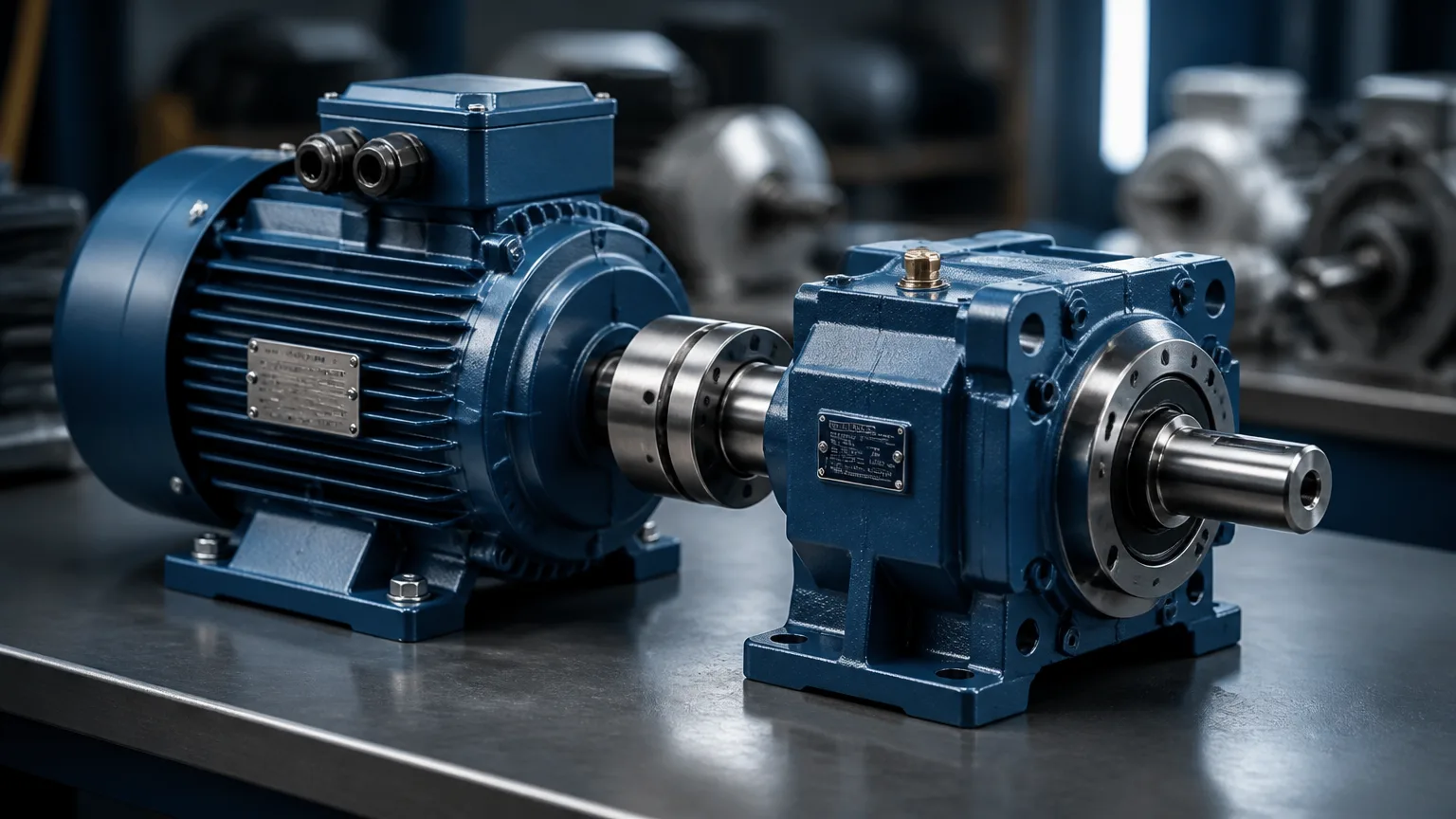
Electric motor types directly influence gearbox reliability, not just energy consumption. A motor may deliver rated horsepower efficiently, yet still create problems if its torque, speed, starting behavior, or mounting arrangement does not match the gearbox and driven equipment.
These decisions arise during new equipment design, motor replacement, gearbox repair, and drive-system upgrades. Selection should consider the load profile, duty cycle, environmental conditions, available power, required speed, and compatibility with the existing gearbox—not horsepower alone. A mismatched motor can increase shock loads, overheating, vibration, and premature wear. Whether specifying a new drive or planning an industrial gearbox rebuild, this guide provides practical direction for choosing a motor that supports dependable system performance.
The Main Electric Motor Types Used in Industry
The right choice among common electric motor types depends on speed control, load behavior, efficiency, and maintenance requirements. Three-phase AC induction motors remain the general-purpose standard for pumps, fans, conveyors, compressors, and many gearbox-driven machines.
Induction motors are durable, relatively affordable, and straightforward to maintain. They suit demanding industrial environments and pair well with gearboxes for conveyor systems and other continuous-duty equipment. Variable-frequency drives (VFDs) also allow them to operate across a broad speed range.
However, review acceleration, low-speed cooling, and gearbox lubrication before using a VFD. Reduced motor speed can affect cooling airflow, while slow operation may change the gearbox’s lubrication conditions.
Synchronous motors are advantageous when constant speed, high efficiency, or power-factor correction justifies greater system complexity. They are often selected for large, continuous loads where improved electrical performance can reduce operating costs.
Brushless DC motors provide compact, efficient speed control for automated equipment, robotics, and applications with frequent speed changes. Brushed DC motors remain useful where variable speed or existing DC infrastructure is important, but brush wear requires periodic inspection and replacement. Brushless designs reduce this maintenance, although their electronic controls can increase upfront cost and system complexity.
Match Motor Characteristics to the Gearbox and Load
Select a motor by usable shaft torque, not horsepower alone. Rated torque must meet the gearbox input requirement, while starting torque must handle high-inertia loads, jam conditions, frequent starts, and shock loading. These demands may require a larger motor or higher service factor.
Confirm the motor’s speed matches the gearbox ratio and process requirements. A gearbox can reduce motor speed while increasing output torque, but an incorrect ratio may cause overheating, overspeeding, poor process control, or premature gear and bearing wear. Also check the duty cycle, thermal capacity, and expected continuous loading.
Load analysis must include inertia and forces transmitted through couplings and reducers. Radial or axial loads can exceed motor or gearbox bearing limits, especially when belt drives, misalignment, or overhung loads are present. Coupling alignment and allowable loads should be verified before installation.
When replacing a motor, match its frame size, shaft diameter, keyway, mounting orientation, and coupling dimensions. Check whether the application needs a brake or special enclosure. In abrasive, continuously loaded environments such as cement and aggregate plants, thermal capacity and mechanical durability are critical. Selection guidance for gearboxes for cement plants can help align motor and reducer specifications with demanding service conditions.
Choose for Efficiency, Controls, and the Operating Environment
Selecting among electric motor types requires more than comparing purchase prices. Review NEMA or IEC efficiency ratings, expected annual operating hours, load variation, and total cost of ownership. A highly efficient motor can deliver significant savings in continuously operating conveyors, pumps, and fans.
The operating environment also determines the required enclosure and protection. Specify washdown resistance for food or wastewater facilities, dust protection for aggregate plants, corrosion resistance for chemical areas, and hazardous-location certification where flammable gases or vapors exist. Motors using variable-frequency drives need adequate cooling at reduced speeds, especially when gearbox loads remain high.
Variable-frequency drives provide precise process control and soft starting, reducing mechanical shock through the motor and gearbox. However, they can introduce harmonics, bearing currents, electrical noise, and low-speed thermal stress. Shaft grounding, filtering, forced ventilation, and compatible gearbox components may be necessary.
Wastewater and pumping systems require careful attention to moisture ingress, seal condition, corrosion, and frequent cycling. Confirm compatibility between the motor, pump, and gearbox, including starting torque and duty cycle. For application-specific guidance, review gearboxes for wastewater treatment plants.
Motor Replacement, Repair, and Troubleshooting Decisions
Before ordering a replacement, document the original motor nameplate, gearbox ratio, service factor, mounting arrangement, symptoms, vibration, temperature, current draw, and failure history. This information helps determine whether the problem involves the motor, gearbox, controls, or the complete drive.
Replace only the motor when the gearbox passes inspection and the replacement matches speed, torque, frame, duty cycle, and environmental requirements. Repeated gearbox failures require deeper troubleshooting. Misalignment, excessive starting torque, poor control settings, undersizing, coupling problems, or an unsuitable duty cycle may be responsible—not defective gears alone.
Evaluate bearings, seals, lubrication, shafts, gear teeth, and housing condition together. Installing a new motor onto a damaged gearbox can quickly recreate the failure. If wear is extensive, rebuild the complete drive or replace the motor and gearbox as a matched assembly.
A different motor technology may suit changed production needs, but confirm controls, braking, speed range, and thermal performance first. When components are obsolete, ratios are unusual, or legacy machinery has changed, custom gears for gearboxes can provide a practical alternative to an unsuitable off-the-shelf combination.
Select the Complete Drive System, Not Just the Motor
The best choice among electric motor types must deliver the required torque, speed, efficiency, control, and environmental protection. It must also match the gearbox and driven machine mechanically.
Define the load, compare motor technologies, verify gearbox compatibility, account for conditions and controls, then validate the complete assembly before installation. If failures recur, specifications are incomplete, or legacy equipment complicates replacement, involve a qualified repair or power-transmission specialist.