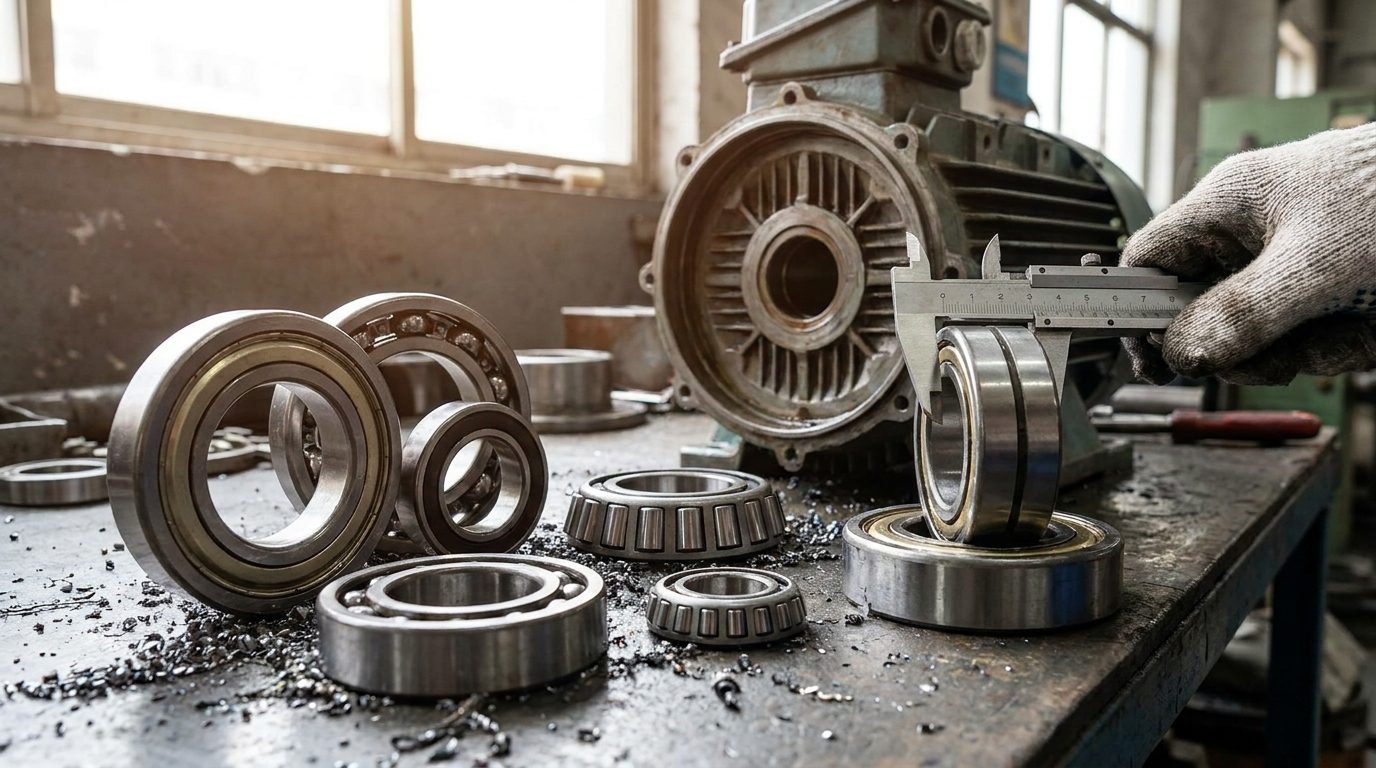
Electric motors are the heart of industrial operations, driving everything from conveyor belts and pumps to mixers and fans. When these vital components falter, production grinds to a halt, leading to costly downtime and significant financial losses. While motor windings and rotor imbalances often grab the spotlight, a disproportionately high percentage of motor failures – sometimes exceeding 50% – can be traced back to the humble yet critical bearings. These unsung heroes are the silent saboteurs when they fail, and understanding the intricacies of their demise is paramount for plant managers, maintenance teams, engineers, buyers, and operators alike. This article delves into the common causes of electric motor bearing failure, outlines how to spot the warning signs, and explores effective diagnosis, repair, replacement, and crucially, prevention strategies to keep your critical assets running smoothly and reliably.
Understanding the reasons behind electric motor bearing failures is crucial for maintaining optimal performance and extending the lifespan of machinery. For further insights into the maintenance and repair of industrial equipment, you may find the article on industrial gearbox repair in Bangor, Maine, particularly useful. It provides valuable information on how to address issues related to gearboxes, which often work in conjunction with electric motors. You can read more about it here: Industrial Gearbox Repair in Bangor, Maine.
Unlock Your Gearbox and Motor Expertise: Share Your Nameplate Details
The Multifaceted Causes of Electric Motor Bearing Failure
Electric motor bearings are subjected to relentless stress, friction, and environmental challenges. Their failure is rarely due to a single factor, but rather a complex interplay of design, application, maintenance, and operational issues. Understanding these root causes is the first step towards proactive management.
Mechanical Stress and Load-Related Failures
Bearings are designed to handle specific loads – radial (perpendicular to the shaft) and axial (parallel to the shaft). Exceeding these design limits, whether intentionally or unintentionally, is a leading cause of premature bearing failure.
Overloading
- Application Mismatch: Using a motor with insufficient capacity for the driven equipment is a common oversight. This leads to the motor and its bearings constantly operating under heavy load, accelerating wear.
- Sudden Load Changes: Applications with frequent, abrupt changes in load, such as those with reciprocating compressors or crushers, can shock bearings and lead to fatigue or deformation.
- Misalignment: This is perhaps the most insidious cause of mechanical stress. When the motor shaft and the driven equipment shaft are not perfectly aligned, the resulting forces are transferred unevenly to the bearings, causing excessive radial and/or axial loads. This can manifest in various forms:
- Angular Misalignment: The shafts are at an angle to each other.
- Parallel Misalignment: The shafts are parallel but offset.
- Combination Misalignment: A blend of both angular and parallel offset.
- Soft Foot: When a motor’s base is not perfectly flat, causing uneven mounting pressure, which in turn misaligns the shaft.
- Improper Installation and Mounting:
- Shaft Interference Fit: Too tight a fit on the shaft can distort the inner ring of the bearing, leading to increased friction and premature wear. Conversely, too loose a fit can cause fretting corrosion.
- Housing Interference Fit: Similar to shaft fit issues, improper housing fit can distort the outer ring.
- Bearing Seating: If bearings are not properly seated against their shoulders or are cocked during installation, it creates uneven load distribution.
- Hammering or Excessive Force: Using hammers or excessive force during installation can damage the bearing races and rolling elements, creating microscopic imperfections that propagate into larger failures.
Vibration and Shock Loads
- Unbalanced Rotors: A rotor that is not properly balanced will create centrifugal forces that cause vibration. This vibration is transmitted through the motor and to the bearings, leading to a pounding action that hammers the raceways.
- External Vibrations: The environment in which the motor operates can also be a source of vibration. Mounting a motor on a structure that vibrates significantly can transfer these forces to the bearings.
- Sudden Stops/Starts: While not always a direct cause of bearing failure, repeated jarring during emergency stops or rapid startups can contribute to cumulative stress.
Lubrication Failures: The Lifeblood of Bearings
Lubrication is critical for reducing friction, dissipating heat, and preventing wear between the moving parts of a bearing. Inadequate or improper lubrication is a primary contributor to bearing failure.
Insufficient Lubrication
- Low Lubricant Levels: When the lubricant level drops below what’s required to coat the rolling elements and raceways, direct metal-to-metal contact occurs, leading to rapid wear and heat generation.
- Infrequent Relubrication: Over time, lubricants degrade and lose their effectiveness. Failure to adhere to a proper relubrication schedule means the bearing operates with depleted lubricating properties.
- Incorrect Lubricant Type: Using a lubricant with the wrong viscosity, additives, or base oil for the specific bearing type, operating temperature, and speed can lead to inadequate lubrication. For instance, a grease that is too light may be squeezed out under load, while a grease that is too heavy may not flow properly to all areas.
Contaminated Lubrication
- Dirt and Debris: The most common contaminant, dirt, dust, and metal particles from wear or external sources, act as abrasives. They get trapped between the rolling elements and raceways, causing micro-pitting, scoring, and ultimately, fatigue.
- Moisture and Water: Water ingress can lead to rust and corrosion on bearing surfaces, weakening the metal and initiating fatigue. It also degrades the lubricant itself.
- Chemical Contamination: Exposure to aggressive chemicals in the operating environment can break down the lubricant and corrode bearing components.
- Degraded Lubricant: Over time, lubricants can oxidize and degrade, forming sludge and varnish. This reduces their lubricating properties and can impede the free movement of bearing elements.
Environmental Factors and Contamination
The operating environment plays a significant role in bearing health. Harsh conditions can introduce contaminants and accelerate wear processes.
High Temperatures
- External Heat Sources: Proximity to furnaces, steam lines, or other high-temperature equipment can raise the operating temperature of the motor and its bearings beyond the lubricant’s capacity or the material’s tolerance.
- Overheating due to Overload: As mentioned earlier, overloading causes increased friction and heat generation within the motor.
- Poor Ventilation: Inadequate airflow around the motor prevents heat dissipation, leading to elevated temperatures.
- Lubricant Breakdown: High temperatures accelerate lubricant degradation, reducing its effectiveness.
- Thermal Expansion: Excessive heat can cause differential expansion between bearing components, leading to tight fits and increased stress.
Contamination (as discussed under Lubrication)
- Dust and Dirt: Especially prevalent in dusty environments like mines, foundries, or woodworking shops.
- Moisture: Found in high-humidity areas, washdown zones, or near steam.
- Chemicals: Present in food processing, chemical plants, or areas with aggressive cleaning agents.
Electrical Issues and Their Impact on Bearings
While electric motors are designed to handle electrical currents, certain electrical phenomena can have detrimental effects on bearings, leading to a specific type of failure known as electrical pitting.
Electrical Discharge Machining (EDM) or Electrical Fluting
- VFD-Induced Currents: Variable Frequency Drives (VFDs) are widely used to control motor speed. However, they can generate common-mode voltage and shaft voltages. These voltages can cause capacitive coupling, allowing small electrical currents to flow through the bearings.
- Asymmetrical Magnetic Fields: Imperfections in motor construction or manufacturing can lead to asymmetrical magnetic fields that induce currents.
- Grounding Issues: Improper grounding of the motor or the driven equipment can create pathways for stray electrical currents to flow through the bearings.
These currents, even if very small, can discharge as sparks across the tiny gaps between the rolling elements and the raceways. This microscopic “welding” and subsequent “breaking” action erodes the metal surface, creating a characteristic washboard-like pattern of pits, known as fluting. This fluting leads to increased vibration, noise, and ultimately, premature bearing failure.
Ageing and Material Fatigue
Even with ideal operating conditions and meticulous maintenance, bearings have a finite lifespan.
- Fatigue: Over time, the constant cyclic loading on the bearing surfaces leads to microscopic cracks that propagate and eventually cause material to break away – a process known as fatigue. This is a natural end-of-life phenomenon, but it can be significantly accelerated by the other failure mechanisms discussed.
- Corrosion: While sometimes linked to moisture, corrosion can also occur due to chemical attack or galvanic action, weakening the bearing material.
- Wear: Normal wear is inevitable, but it becomes accelerated when lubrication is inadequate or contaminants are present.
Check out our blog for more articles on industrial gearbox solutions: more articles.
Spotting the Warning Signs: Early Detection is Key
The best way to combat bearing failure is to identify the problem before it becomes catastrophic. Vigilant monitoring and listening for these warning signs can save significant time and money.
Audible Clues: The Symphony of Failure
- Increased Noise: This is often the first indicator. Listen for:
- Grinding or Scraping: Suggests metal-to-metal contact due to lack of lubrication or wear.
- Rattling or Knocking: Can indicate excessive internal clearance, debris, or loose components.
- High-Pitched Whining or Screeching: Often associated with electrical fluting or very high speeds with insufficient lubrication.
- Humming: Can sometimes be related to electrical issues or bearing brinelling (indentations from impact).
- Changes in Tone: Even if the noise is not overtly alarming, a change in the bearing’s usual hum or whirring sound can signify an emerging issue.
Vibrational Clues: Feeling the Disruption
- Increased Vibration Levels: Modern predictive maintenance tools like accelerometers can detect subtle increases in vibration that are imperceptible to the human touch.
- Changes in Vibration Pattern: Specific types of bearing failures often produce distinct vibration signatures. For example, fluting might create a broadband vibration.
- Roughness: A “rough” feel when touching the motor housing can indicate bearing damage.
Thermal Clues: The Heat of the Matter
- Elevated Bearing Temperatures: Using an infrared thermometer to monitor bearing housing temperatures can reveal abnormal increases. Consistent readings significantly above the ambient or expected operating temperature are a red flag.
- Hot Spots: Localized hot spots on the bearing housing can indicate specific areas of friction or damage.
Visual Clues: What You Can See
- Lubricant Leakage: While sometimes normal for certain grease types, excessive or discolored lubricant leakage can indicate seal failure or internal bearing damage.
- Discoloration of Lubricant: Dark or burnt-smelling lubricant is a strong indicator of overheating and lubricant degradation.
- Rust or Corrosion: Visible rust on bearing surfaces or within the lubricant suggests moisture ingress.
- Damaged Seals: Cracked, torn, or missing seals expose the bearing to contamination.
- Bearing Races (during inspection): Looking for pitting, spalling (flaking of metal), scoring, or brinelling on the bearing races.
Understanding the reasons behind electric motor bearing failures is crucial for maintaining optimal performance and longevity of machinery. For a deeper insight into the overall maintenance and repair of electric motors, you can refer to a related article that provides comprehensive guidance on the subject. This resource highlights essential practices for ensuring the reliability of electric motors, which can be found in The Ultimate Guide to 24/7 Electric Motor Repair in California. By exploring this article, you can gain valuable knowledge that complements your understanding of bearing failures and enhances your maintenance strategies.
Diagnosing the Root Cause: Pinpointing the Problem
Once warning signs are detected, a systematic approach to diagnosis is crucial to avoid replacing good parts or misdiagnosing the problem.
On-Site Diagnostics and Monitoring
- Vibration Analysis: This is a cornerstone of predictive maintenance. Specialized software can analyze vibration frequencies to identify specific bearing defects (e.g., outer race defect, inner race defect, ball defect).
- Thermography: Infrared cameras can quickly identify hot spots on motor housings and bearing areas, highlighting potential issues.
- Lubricant Analysis (Oil/Grease Analysis): Sending lubricant samples to a laboratory for analysis can reveal:
- Contamination Levels: Presence of dirt, water, or wear metals.
- Lubricant Condition: Degradation, oxidation, and additive depletion.
- Wear Particle Analysis: Identifying the type and quantity of wear metals can indicate the specific components that are failing.
- Acoustic Analysis: Using specialized microphones and software to analyze bearing noise can help identify early-stage damage.
Off-Site and Invasive Diagnostics
- Motor Disassembly and Inspection: This is often necessary for a definitive diagnosis. During disassembly, carefully inspect:
- Bearings: Examine for signs of wear, pitting, spalling, corrosion, and discoloration. Check for proper fit and freedom of movement.
- Shafts: Look for bending, scoring, or signs of fretting corrosion.
- Housings: Inspect for damage, wear, or signs of overheating.
- Seals: Check for integrity and signs of wear.
- Lubricant: Examine the condition of the lubricant remaining in the bearing and housing.
- Electrical Testing:
- Insulation Resistance Testing: To check the integrity of motor windings.
- Shaft Voltage Testing: To detect the presence of harmful electrical currents.
- EDM Monitoring: Specialized equipment can detect the micro-discharges that cause electrical fluting.
Repair vs. Replacement: Making the Right Decision
The decision to repair or replace a bearing, or indeed the entire motor, depends on several factors, including the extent of damage, cost, availability, and operational criticality.
Bearing Repair and Replacement Options
- Bearing Replacement: This is the most common solution.
- Standard Bearings: Readily available from numerous manufacturers.
- Specialty Bearings: For unique applications, custom or specialized bearings may be required, potentially leading to longer lead times and higher costs.
- Bearing Kits: Often available with all necessary bearings for a specific motor model.
- Bearing Reconditioning (Limited Applicability): In some niche industrial applications, especially with very large or expensive bearings, reconditioning might be an option. This typically involves meticulous cleaning, inspection, and potentially regrinding of raceways. However, for most electric motor bearings, replacement is the more practical and cost-effective solution.
Motor Repair and Replacement Options
- Motor Rewinding: If the motor windings are damaged (but the rotor and frame are intact), rewinding can be a viable option, especially for larger or specialized motors.
- Component Replacement: Replacing damaged shafts, fans, or housings.
- Motor Replacement: For smaller motors, or if multiple components are damaged, replacing the entire motor is often the most efficient choice. This allows for the opportunity to upgrade to a more energy-efficient or robust model.
Key Considerations for Repair/Replacement Decisions:
- Cost-Benefit Analysis: Compare the cost of repair (labor and parts) versus the cost of a new motor, factoring in the potential for future failures if only a partial repair is done.
- Downtime Impact: The longer the repair or replacement process, the greater the production loss. Consider the availability of spare parts and service providers.
- Root Cause Resolution: Simply replacing a failed bearing without addressing the underlying cause will lead to repeat failures. Ensure that misalignment, lubrication issues, or electrical problems are rectified.
- Motor Age and Condition: An aging motor with multiple issues might be more cost-effective to replace than to repair repeatedly.
- Warranty Considerations: If the motor is under warranty, follow the manufacturer’s recommended procedures.
Cost Implications and Risk Mitigation
Bearing failures can be incredibly expensive, not just in terms of replacement parts but also in lost production, potential secondary damage, and emergency repair costs.
Cost Breakdown of Bearing Failures:
- Direct Costs:
- Cost of new bearings.
- Cost of new motor (if required).
- Lubricants and seals.
- Indirect Costs:
- Downtime Costs: Lost production output, idle labor, penalties for missed delivery deadlines. This is often the most significant cost.
- Secondary Damage: A failing bearing can seize, leading to shaft damage, rotor contact with stator, or even motor burnout, significantly increasing repair costs.
- Emergency Repair Costs: Expedited shipping, overtime labor, and premium rates for repair services.
- Safety Incidents: A catastrophic bearing failure can lead to flying debris, posing a risk to personnel.
- Environmental Costs: Spilled lubricants requiring cleanup.
Mitigating the Risks
- Proactive Maintenance Programs: Implementing robust lubrication schedules, vibration analysis, and thermography can detect issues early.
- Quality Control: Ensuring proper installation, alignment, and lubrication during maintenance activities.
- Inventory Management: Maintaining a stock of critical spare bearings and potentially spare motors for essential equipment.
- Training: Ensuring maintenance personnel are well-trained in bearing installation, lubrication best practices, and diagnostic techniques.
- Root Cause Analysis (RCA): Thoroughly investigating every bearing failure to understand the underlying cause and implement corrective actions.
- Using High-Quality Components: Investing in reputable bearing brands known for their reliability and performance.
Prevention Strategies: The Long-Term Solution
The most effective approach to electric motor bearing failure is prevention. By implementing a comprehensive strategy, you can significantly extend bearing life and reduce unexpected downtime.
1. Rigorous Lubrication Management
- Establish a Lubrication Schedule: Based on manufacturer recommendations, operating conditions, and lubricant type.
- Use the Correct Lubricant: Consult bearing and motor manufacturers’ specifications for the appropriate grease or oil type, viscosity, and additives.
- Proper Lubricant Application:
- Grease: Avoid over-greasing, which can cause heat buildup and churning. Use the correct method (e.g., grease gun, manual application) and quantity.
- Oil: Ensure correct oil levels and that the lubrication system is functioning properly.
- Maintain Lubricant Cleanliness: Store lubricants in clean containers, use clean dispensing equipment, and prevent contamination during application.
- Regular Lubricant Analysis: As mentioned, this provides invaluable insight into the health of the lubricant and the bearing.
2. Precision Alignment and Mounting
- Laser Alignment: For critical applications, use laser alignment tools to ensure precise shaft alignment between the motor and driven equipment. This is far more accurate than traditional methods.
- Check for Soft Foot: Before tightening motor hold-down bolts, ensure the motor base is flat and all mounting feet make solid contact with the baseplate.
- Correct Interference Fits: Ensure bearings are installed with the correct interference fit on shafts and in housings, following manufacturer guidelines.
- Proper Installation Tools: Use bearing heaters, presses, or specialized installation kits to avoid damaging bearings during installation. Never use a hammer directly on bearing components.
3. Effective Vibration Monitoring and Control
- Regular Vibration Analysis: Implement a scheduled program for vibration monitoring using accelerometers and analysis software.
- Address Imbalance: Ensure rotors are dynamically balanced if vibration analysis indicates imbalance.
- Inspect and Maintain Drive Components: Check couplings, belts, and pulleys for wear or damage that could induce vibration.
4. Thermal Management
- Ensure Adequate Ventilation: Keep motor cooling vents clean and unobstructed.
- Monitor Operating Temperatures: Use thermography or temperature sensors to track bearing housing temperatures.
- Address Overload Conditions: Investigate and resolve any issues causing motors to operate under excessive load.
- Shield from External Heat: If motors are located near heat sources, consider insulation or shielding.
5. Electrical Considerations
- Install Common-Mode Chokes and Filters: For VFD-driven motors, these can help mitigate shaft voltages.
- Ensure Proper Grounding: Verify that motors and driven equipment are properly grounded.
- Consider In-Line Shaft Grounding Systems: For critical applications or where VFDs are heavily utilized, these systems can effectively dissipate shaft currents.
- Use High-Quality Motors: Motors manufactured with tighter tolerances and better insulation can be less susceptible to induced currents.
6. Environmental Protection
- Use Appropriate Seals: Ensure motors are equipped with seals suitable for the operating environment (e.g., lip seals, labyrinth seals, purged seals).
- Guard Against Contaminants: Implement dust control measures, use protective covers, and maintain clean operating areas.
- Manage Moisture: Address sources of humidity and prevent water ingress.
7. Training and Knowledge Sharing
- Educate Maintenance Teams: Provide regular training on bearing types, failure modes, installation best practices, lubrication techniques, and diagnostic tools.
- Foster a Culture of Proactivity: Encourage all personnel to report unusual noises, vibrations, or any signs of distress from rotating equipment.
Frequently Asked Questions (FAQ)
Q1: How often should electric motor bearings be lubricated?
A1: Lubrication intervals vary significantly based on bearing type, size, speed, operating temperature, load, and the type of lubricant used. Always consult the motor manufacturer’s manual or the bearing manufacturer’s recommendations. For greased bearings, a common starting point might be every 6-12 months for moderate applications, but this is a broad generalization. Regular lubricant analysis can help refine these schedules.
Q2: Can I use any grease for my electric motor bearings?
A2: Absolutely not. Using the wrong grease can be as detrimental as no lubrication at all. Factors like base oil type, viscosity, thickener type, temperature range, and additives are critical. Always refer to the motor or bearing manufacturer’s specifications.
Q3: What is the difference between bearing spalling and pitting?
A3: Spalling is the flaking or peeling of material from the bearing raceway or rolling elements, typically caused by fatigue. Pitting is the formation of small, localized depressions on the surface. Electrical fluting is a specific type of pitting characterized by wave-like patterns.
Q4: How do I know if my motor has electrical discharge machining (EDM) damage?
A4: EDM damage, or electrical fluting, is characterized by a washboard-like pattern of pits on the bearing raceways and rolling elements. This is often accompanied by a high-pitched whining noise from the motor. Measurement of shaft voltages and currents can confirm the presence of the electrical activity causing this damage.
Q5: Is it always cheaper to replace a bearing than to repair the motor?
A5: For small to medium-sized motors, replacing the entire motor is often more cost-effective than complex repairs, especially if multiple components are damaged. However, for very large, custom, or expensive motors, repair (including rewinding and component replacement) can be more economical than a full replacement. A thorough cost-benefit analysis is always recommended.
Conclusion: Empowering Proactive Protection
Electric motor bearing failure is a common, yet largely preventable, cause of industrial downtime. By understanding the multifaceted reasons behind these failures, from mechanical stress and lubrication issues to electrical phenomena and environmental factors, plant managers, maintenance teams, engineers, buyers, and operators can adopt a more proactive approach. Implementing rigorous lubrication management, ensuring precise alignment, leveraging vibration and thermal monitoring, and addressing electrical and environmental challenges are not merely maintenance tasks; they are strategic investments in operational reliability and profitability. By shifting from reactive repairs to proactive prevention, your organization can significantly reduce the silent saboteurs lurking within your critical motor assets, ensuring consistent production and sustained success.