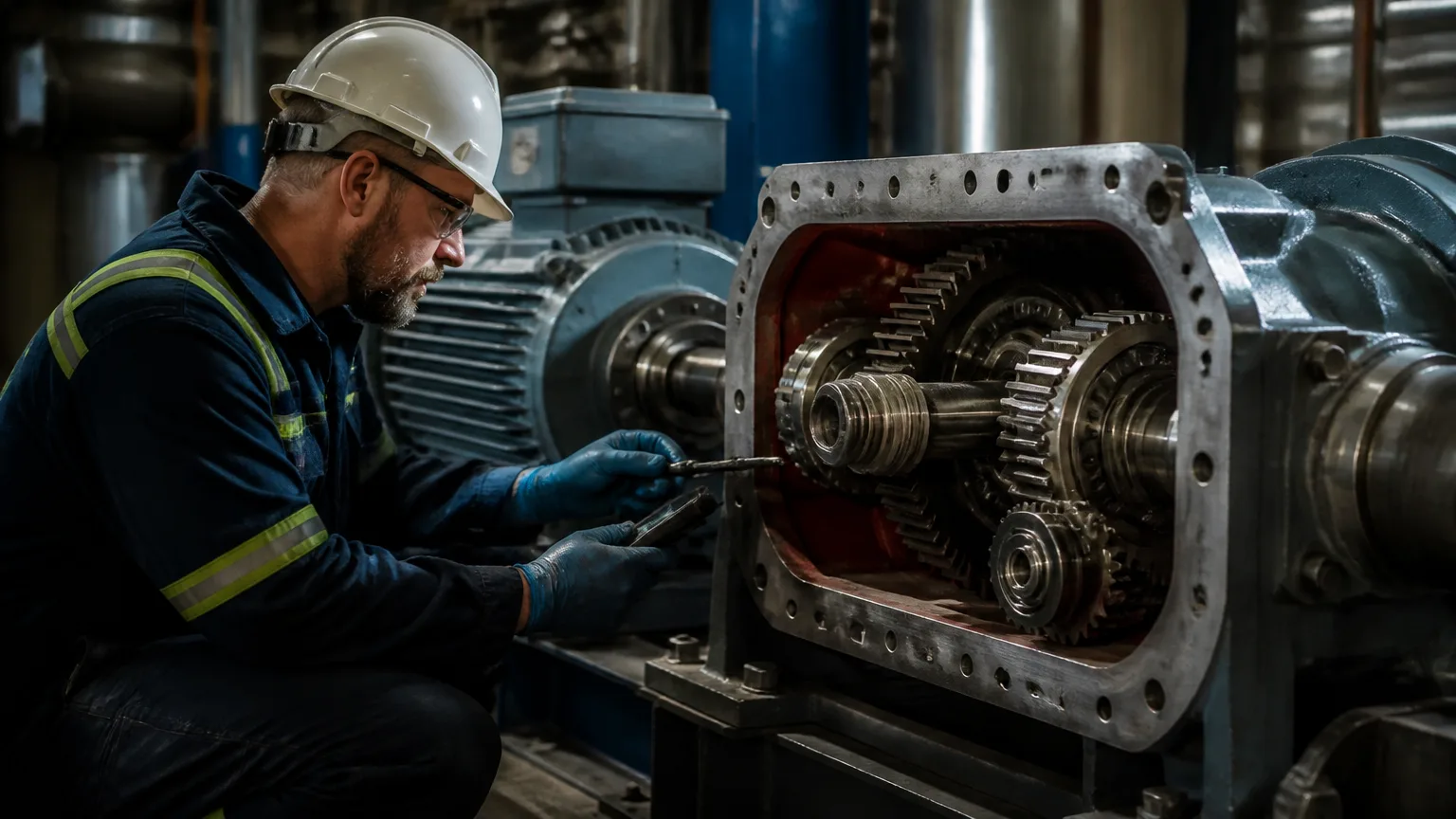
Searching for “repair gearbox near me” is not simply a local-service decision. A gearbox failure can halt production, damage connected equipment, and create serious safety risks. Choosing the right specialist is therefore an operational decision with consequences for uptime, cost, and reliability. Contact our industrial gearbox service team with your model and symptoms for assistance.
The best provider evaluates the gearbox within its complete drive system. They should understand its duty cycle, load, speed, operating environment, and connection to motors, conveyors, pumps, or other machinery. This knowledge supports accurate fault diagnosis and a sound repair-versus-replacement recommendation.
Use the provider’s industrial gearbox solutions and technical capabilities as a benchmark when comparing local services. Look for proven inspection methods, suitable repair facilities, responsive support, and clear reporting. This guide explains how to assess those factors, helping you choose a specialist who can respond quickly without compromising long-term performance.
Start With the Gearbox’s Application and Failure Symptoms
Before searching for “repair gearbox near me,” collect the technical information a specialist needs. Identify the gearbox type, manufacturer, model, ratio, rated torque, operating speed, lubrication method, and working environment. Include details about temperature, contamination, moisture, shock loads, and the driven equipment.
Describe the symptoms precisely rather than reporting only a “broken gearbox.” Ask maintenance personnel to document:
- Noise, vibration, overheating, oil leakage, backlash, abnormal wear, reduced output speed, and recurring seal or bearing failures.
Application data helps reveal the root cause. A gearbox may appear repairable in isolation but be undersized, misaligned, overloaded, poorly lubricated, or mismatched to the driven machine. These conditions can cause a repeat failure after otherwise competent repairs.
Send nameplate photographs, assembly drawings, maintenance records, oil-analysis results, and failure-history details with your service request. Note when the symptoms began, whether loads or speeds changed, and which components failed previously. This information reduces diagnostic delays and helps the specialist define the initial inspection and repair scope.
For additional context on likely faults and corrective actions, review this practical gearbox repair guidance before contacting local providers.
Verify Industrial Repair Expertise and Inspection Capability
A general mechanical repair shop may replace visible parts, but industrial gearbox repair requires a documented, systematic process. Ask whether the provider performs a complete teardown, cleans components, and records findings before recommending repairs or replacement parts.
The inspection should include measured clearances, gear tooth condition, shaft runout, bearing fits, housing dimensions, and seal surfaces. Technicians should assess pitting, scoring, cracks, overheating, misalignment, and lubrication-related damage. Photographs and parts condition assessments help confirm the failure’s root cause.
Confirm that the shop supports the gearbox brands, configurations, torque ranges, and operating conditions used at your facility. This matters when you need Lufkin gearbox repair and replacement options, or when the unit is custom-built, obsolete, or difficult to source.
Ask about machining, shaft repair, gear replacement, bearing and seal installation, and alignment procedures. A capable specialist should also explain how it verifies backlash, contact patterns, endplay, and concentricity during assembly.
Finally, request a written inspection report. It should identify failed components, measured conditions, recommended corrective actions, and testing results. Providers offering repair gearbox near me services should be able to explain what caused the failure and how the repair will prevent recurrence.
Compare Repair, Rebuild, and Replacement Recommendations
After reviewing the inspection report, compare the specialist’s recommendation against your production requirements. A repair may involve replacing wear components such as bearings, seals, or shims. It may also include repairing damaged gears or shafts when the housing and remaining parts meet specifications.
A rebuild is more extensive. It typically involves dismantling, cleaning, inspecting, and restoring the complete unit with new or remanufactured internal components. A specialist may instead supply a new or remanufactured replacement gearbox when damage is widespread, parts are unavailable, or the existing design no longer suits the application.
Evaluate each option using total cost of ownership, not only the quoted repair price. Consider:
- Lead time, expected service life, efficiency, warranty, spare-parts availability, and installation requirements.
- Compatibility with the motor, controls, coupling, foundation, and driven equipment.
- Torque capacity, gear ratio, duty cycle, operating temperature, contamination, and washdown conditions.
- The risk and cost of another failure, including lost production and emergency installation.
For example, replacing a SEW-Eurodrive, Nord, or Flender gearbox requires matching ratio, mounting dimensions, shaft geometry, and torque rating. A different configuration may improve efficiency or service access, while redesign may better handle shock loads or harsh environments. Use this Western Gear gearbox repair and replacement guide when comparing recommendations from a repair gearbox near me provider.
Evaluate Service Responsiveness, Testing, and Installation Support
A responsive specialist can reduce downtime when a gearbox fails unexpectedly. Ask whether the provider offers emergency response, pickup and delivery, field service, and scheduling that fits your facility’s outage window. Request realistic lead times and clarify which tasks can be completed on-site versus in a controlled shop environment.
Before approving the repair, ask how the gearbox will be tested. A suitable process may include run testing, vibration checks, backlash or alignment verification, and leak inspection. The provider should also confirm lubrication requirements, including the correct oil or grease, fill level, and any filtration needs.
Service should continue through commissioning, not end at shipment. Require clear warranty terms, inspection records, installation guidance, and recommended break-in procedures. Confirm who will support alignment, startup, and troubleshooting after installation. Consistent communication throughout the job helps prevent surprises and ensures the repair gearbox near me provider remains accountable for the result.
Choose the Specialist That Reduces Repeat Failure Risk
The right specialist combines application knowledge, proven industrial gearbox experience, transparent findings, and technically justified recommendations. Confirm documented testing, dependable project execution, and support after installation before approving the work.
Treat the first repair as an opportunity to correct alignment, lubrication, loading, contamination, and maintenance practices. These factors often determine whether repairs last. Learn how to repair gear drives and prevent repeat failures through stronger corrective planning.
When comparing providers for “repair gearbox near me,” contact a qualified specialist with the nameplate, symptoms, operating data, and downtime requirements ready for review.