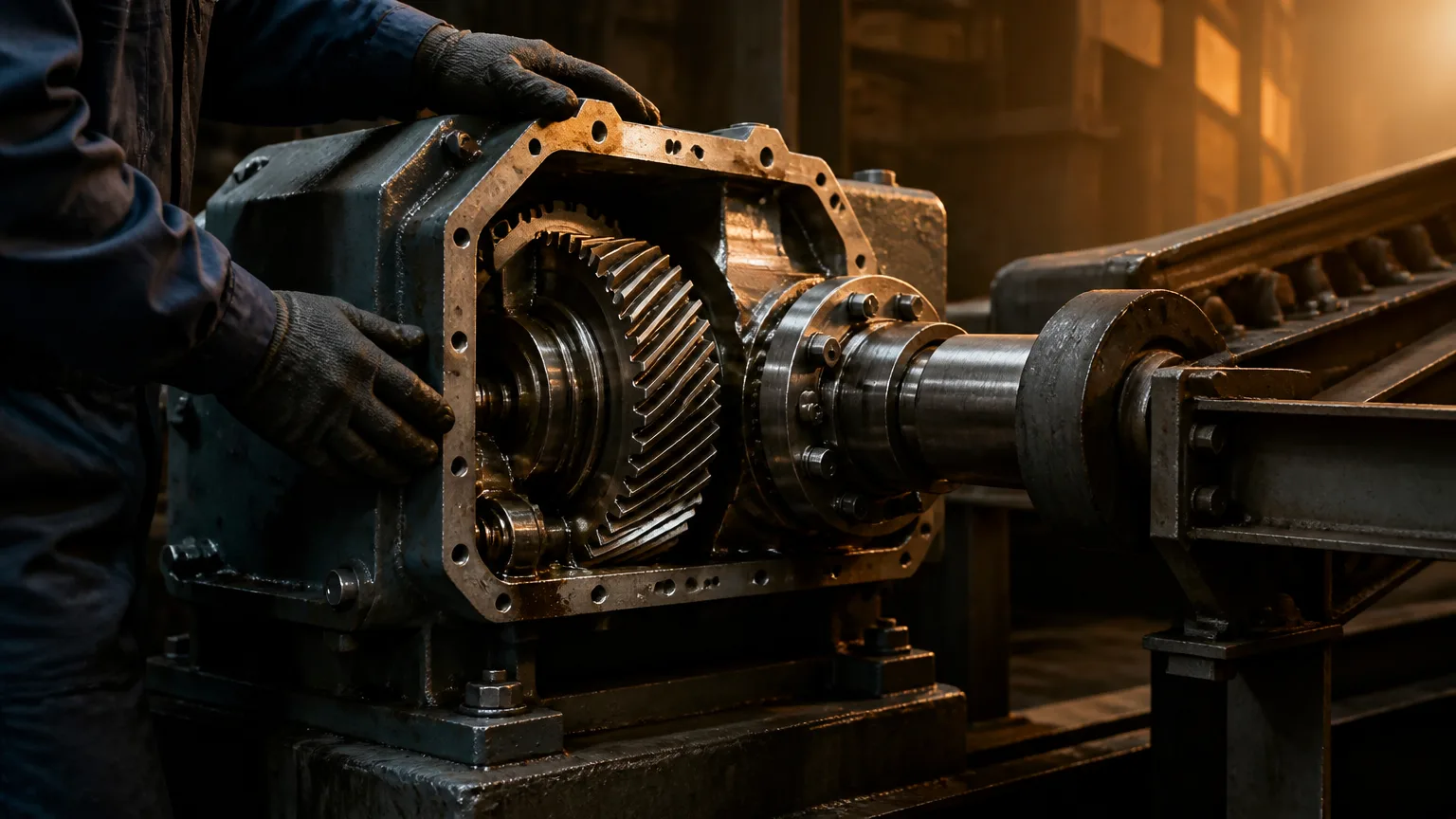
A western gear gearbox is a critical power-transmission component in conveyors, mixers, crushers, and other industrial equipment. When unusual noise, vibration, overheating, oil leakage, inconsistent speed, or reduced torque appears, the cause may be a developing gearbox problem—not an isolated symptom.
Choosing repair or replacement requires more than comparing immediate prices. Uptime demands, personnel safety, operating conditions, parts availability, and total lifecycle cost all influence the right decision. This guide helps maintenance managers, engineers, and procurement teams evaluate inspection, repair, remanufacture, and replacement options. For additional industrial gearbox expertise, Industrial Gearbox Solutions provides practical resources to support a reliable, cost-effective path forward.
Recognizing Western Gear Gearbox Failure
Early warning signs often appear before a Western Gear gearbox fails completely. Whining or grinding can indicate bearing wear, gear damage, poor lubrication, or incorrect alignment. Knocking may point to damaged gear teeth, excessive backlash, loose components, or shaft movement.
Monitor operating temperature and oil condition during routine checks. Elevated temperature can result from overload, insufficient lubricant, blocked cooling, or misalignment. Oil containing metal particles, discoloration, or unusual odors may signal internal wear. Seal leakage can reduce lubricant levels and allow contamination, while visible shaft movement may indicate worn bearings, damaged seals, or housing distortion.
Record when each symptom occurs, including the load, speed, gearbox temperature, and startup conditions. This information helps technicians separate mechanical wear from installation errors, changing process conditions, or transient startup behavior. Teams should also review industrial drive mechanism basics when tracing problems through connected components.
A structured inspection should follow any severe or recurring symptom. Continued operation with heavy noise, rising temperature, contaminated oil, or excessive movement can turn a replaceable bearing, seal, or gear into extensive gear-train and housing damage. Early isolation protects connected equipment and reduces the risk of an unplanned shutdown.
Inspection and Diagnosis Before Repair
Before opening a Western Gear gearbox, gather its model, serial number, ratio, horsepower, input and output speeds, and mounting configuration. Record the duty cycle, lubricant specification, and service history, including prior repairs, operating temperatures, and recurring symptoms. This information helps technicians identify correct replacement parts and assess whether industrial gearbox repair services are appropriate.
Begin with a visual inspection for oil leaks, cracked housings, loose fasteners, damaged seals, corrosion, and unusual wear patterns. Take an oil sample to check for metal particles, water, contamination, viscosity changes, or lubricant breakdown. Measure backlash and inspect shafts for runout, scoring, bending, or excessive movement. Check bearing condition and examine gear teeth for pitting, scuffing, spalling, cracking, or abnormal contact patterns.
Verify coupling and mounting alignment before attributing damage to internal components. Where appropriate, use vibration analysis and thermographic testing to identify bearing defects, misalignment, overloaded gears, or developing hot spots. Compare findings with operating records and manufacturer limits.
The failed part is rarely the complete diagnosis. Overload, contamination, misalignment, inadequate lubrication, and thermal stress can cause repeat failure. Correct the root cause alongside replacing damaged gears, bearings, seals, or shafts to restore reliable operation.
When Repair or Rebuilding Is the Better Option
Repair or rebuilding is often practical when the gearbox housing remains structurally sound. A repair-friendly western gear gearbox may also have repairable shafts, identifiable failure causes, and replacement parts that are readily available. The unit should still meet the application’s required speed, torque, load, and service-life expectations.
A professional rebuild involves far more than replacing bearings or seals. The process should include complete disassembly, thorough cleaning, dimensional checks, and detailed inspection of gears, shafts, housings, and fits. Worn parts are replaced, components are reassembled under controlled conditions, and the finished gearbox undergoes operational testing.
Repair can also reduce downtime when a replacement unit requires modification, sourcing, or extended delivery. However, compare the total cost, including labor, parts, machining, testing, shipping, and future reliability. If the housing is cracked, critical gears are unavailable, or damage extends across the gear train, replacement may provide better value.
Before authorizing work, request a written scope. It should identify tolerances, replacement parts, testing procedures, warranty terms, and expected turnaround time. For related planning, review these Ferguson gearbox service considerations. You can also consult these Ferguson gearbox service considerations.
When Replacement Is the More Reliable Choice
Replacement may be the safer option when a western gear gearbox has a cracked or severely worn housing. It may also be necessary when critical gears are unavailable, the ratio or capacity no longer suits production, or repeated repairs have not restored reliability.
A direct replacement preserves the existing design, but an upgraded gearbox may better meet current torque, speed, and service demands. Before selecting either option, verify torque rating, service factor, shaft dimensions, mounting arrangement, lubrication requirements, operating environment, and motor compatibility.
Evaluate the full lifecycle cost, not only the purchase price. Confirm lead time, spare-parts support, installation modifications, commissioning requirements, and warranty coverage. Include the cost of lost production, especially when a short planned outage is less expensive than another emergency repair.
Experienced qualified gearbox repair providers can compare repair and replacement risks. Their assessment may identify whether a standard equivalent, upgraded unit, or remanufactured gearbox offers the most dependable path forward.
Planning a Reliable Western Gear Gearbox Solution
A dependable western gear gearbox decision starts with documented symptoms and a confirmed root cause. Inspect the gearbox, assess damage, compare repair and replacement costs, and verify the selected solution against load, speed, duty cycle, and operating requirements. Qualified technical support can clarify whether repair, remanufacture, or replacement offers the lowest long-term risk.
After returning the gearbox to service, prevent repeat failures through correct lubrication, precise alignment, effective load management, and vibration monitoring. Schedule inspections to identify temperature changes, contamination, noise, or movement early. This disciplined process reduces unplanned downtime and helps protect connected equipment, production schedules, and maintenance budgets.