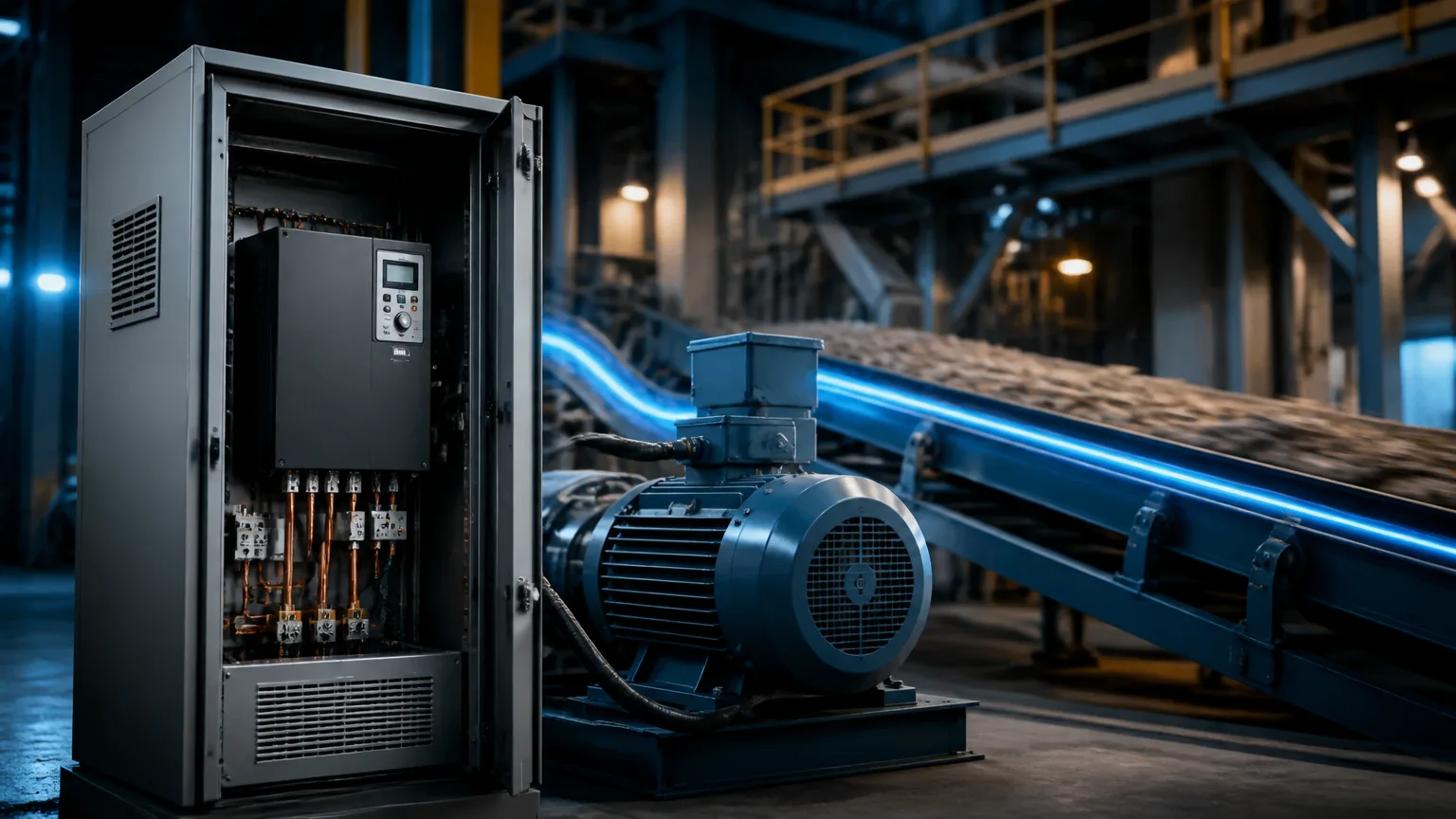
A variable speed drive regulates motor speed and torque to match changing production requirements. By adjusting power delivery, it helps equipment respond to load changes, improve process control, and potentially reduce energy waste. These capabilities make drives essential across conveyors, mixers, pumps, crushers, and other industrial systems.
This article examines common drive applications, major types, and practical maintenance practices. It also explains how drive condition affects gearbox reliability. Misalignment, overloads, poor lubrication, and control faults can accelerate gearbox wear and cause costly downtime. For manufacturers and facility managers, understanding these connections supports better decisions about maintaining, repairing, or replacing a drive and its connected gearbox. Use Industrial Gearbox Solutions as a resource when evaluating drivetrain performance and long-term equipment needs.
What Is a Variable Speed Drive and How Does It Work?
A variable speed drive controls how quickly a motor-driven machine operates. Its main components include the motor, controller, transmission elements, sensors, and feedback systems. Together, they regulate speed, torque, acceleration, and deceleration instead of forcing equipment to run at one fixed operating point.
The controller receives commands from an operator, automation system, or process sensor. It then adjusts the motor’s power supply and monitors actual performance through feedback. This allows the drive to respond to changing loads, reduce mechanical stress, and support consistent production.
A variable frequency drive changes an AC motor’s frequency and voltage electronically. DC motor controllers adjust voltage or current, while servo systems combine precise control with position feedback. By contrast, mechanical variable-speed transmissions change output speed through belts, pulleys, gears, or other transmission elements. The motor may continue running at one speed while the mechanical output changes.
Selecting the right drive requires more than matching motor horsepower. Consider the load profile, starting torque, duty cycle, environmental conditions, and the gearbox’s allowable input and output speeds. Understanding how electric motors interact with the gearbox also helps prevent overloads, overheating, and premature wear.
Common Types of Variable Speed Drives
The most common variable speed drive in modern facilities is the variable frequency drive (VFD). It adjusts AC motor speed by controlling frequency and voltage, making it suitable for pumps, fans, conveyors, mixers, compressors, and other equipment requiring adjustable speed or soft starting. VFDs can also reduce energy use and mechanical stress when properly configured.
DC drives remain practical for certain legacy systems and applications requiring strong low-speed torque. They provide responsive speed control, but maintenance teams must inspect brushes, commutators, cooling systems, and control components regularly. Facilities operating DC motors may retain these drives when replacement would require extensive equipment modifications.
Servo drives support precise positioning, rapid acceleration, and dynamic response. They are common in robotics, packaging machinery, machine tools, and other systems where accuracy matters more than basic speed regulation. Mechanical variable-speed drives offer a simpler alternative for rugged applications requiring direct, dependable speed adjustment, though their mechanical components need inspection for wear, lubrication issues, and alignment problems.
When selecting a drive, compatibility matters more than rated horsepower alone. Confirm that the drive matches the motor, gearbox ratio, braking system, load profile, and control architecture. This approach helps prevent unstable operation, excessive torque, overheating, and premature drivetrain failure.
Industrial Uses and Benefits of Variable Speed Drives
Variable speed drives support conveyors, aggregate handling systems, extrusion lines, packaging equipment, pumps, fans, mixers, machine tools, water systems, and material-processing equipment. By matching motor speed to process requirements, manufacturers can improve throughput, product consistency, and control.
Controlled ramp-up and ramp-down reduce mechanical shock on couplings, shafts, bearings, and gearboxes. Speed matching can also limit spills, improve dosing accuracy, and protect products during conveying, mixing, extrusion, or packaging. In reversing conveyor cycles, the drive must manage changing torque without overstressing the drivetrain.
Energy savings are often greatest with variable-torque loads, especially pumps and fans. Reducing speed can significantly lower power consumption in these applications. Heavy constant-torque equipment requires careful analysis of load demand, thermal capacity, duty cycle, and starting requirements before claiming savings.
Bulk-material conveyors may face high starting loads, shock loading, abrasive dust, contamination, and frequent reversals. These conditions make correct drive and gearbox selection essential. Review options such as gearboxes for aggregate conveyors alongside motor ratings, braking needs, enclosure protection, and service factors.
Variable Speed Drive Maintenance, Troubleshooting, and Repair
A reliable variable speed drive requires routine electrical, mechanical, and environmental checks. Follow the manufacturer’s isolation procedure, discharge stored energy, back up parameters, and use approved methods for testing.
Inspect ventilation, cooling fans, filters, terminals, cables, grounding, and enclosure seals. Record vibration, abnormal noise, temperature changes, and fault history. These checks can identify restricted airflow, loose connections, contamination, or cooling failure before they damage the motor or gearbox.
Common symptoms require a structured diagnosis:
- Unstable speed or inconsistent output: check feedback devices, parameters, wiring, and mechanical backlash.
- Nuisance trips or poor acceleration: investigate current limits, incoming power, load changes, and gearbox lubrication.
- Overheating: inspect cooling, motor loading, bearing health, oil level, and contaminated gearbox oil.
- Unusual vibration: verify shaft alignment, coupling condition, bearings, mounting, and internal gear damage.
Repeated overload or overcurrent faults should never be attributed to the drive alone. Confirm lubrication, alignment, coupling condition, backlash, and gearbox oil contamination. Professional inspection is recommended when internal damage or repeated drive failures are suspected. Depending on condition, planetary gearbox repairs may involve rebuilding the gearbox, replacing damaged components, or upgrading the complete drive package. Comparing these options can reduce downtime and cost more effectively than repeated component-level repairs.
Choosing the Right Repair or Replacement Strategy
Selecting a variable speed drive requires evaluating the complete drivetrain: motor, coupling, gearbox, controls, and load. Before requesting recommendations, document operating conditions, fault history, maintenance records, and performance symptoms.
That information helps determine whether continued servicing, a gearbox rebuild, drive replacement, or a complete engineered upgrade offers the best balance of reliability, compatibility, lifecycle cost, and downtime risk. Qualified gearbox specialists can inspect the entire system and recommend a solution that protects production equipment and long-term performance.