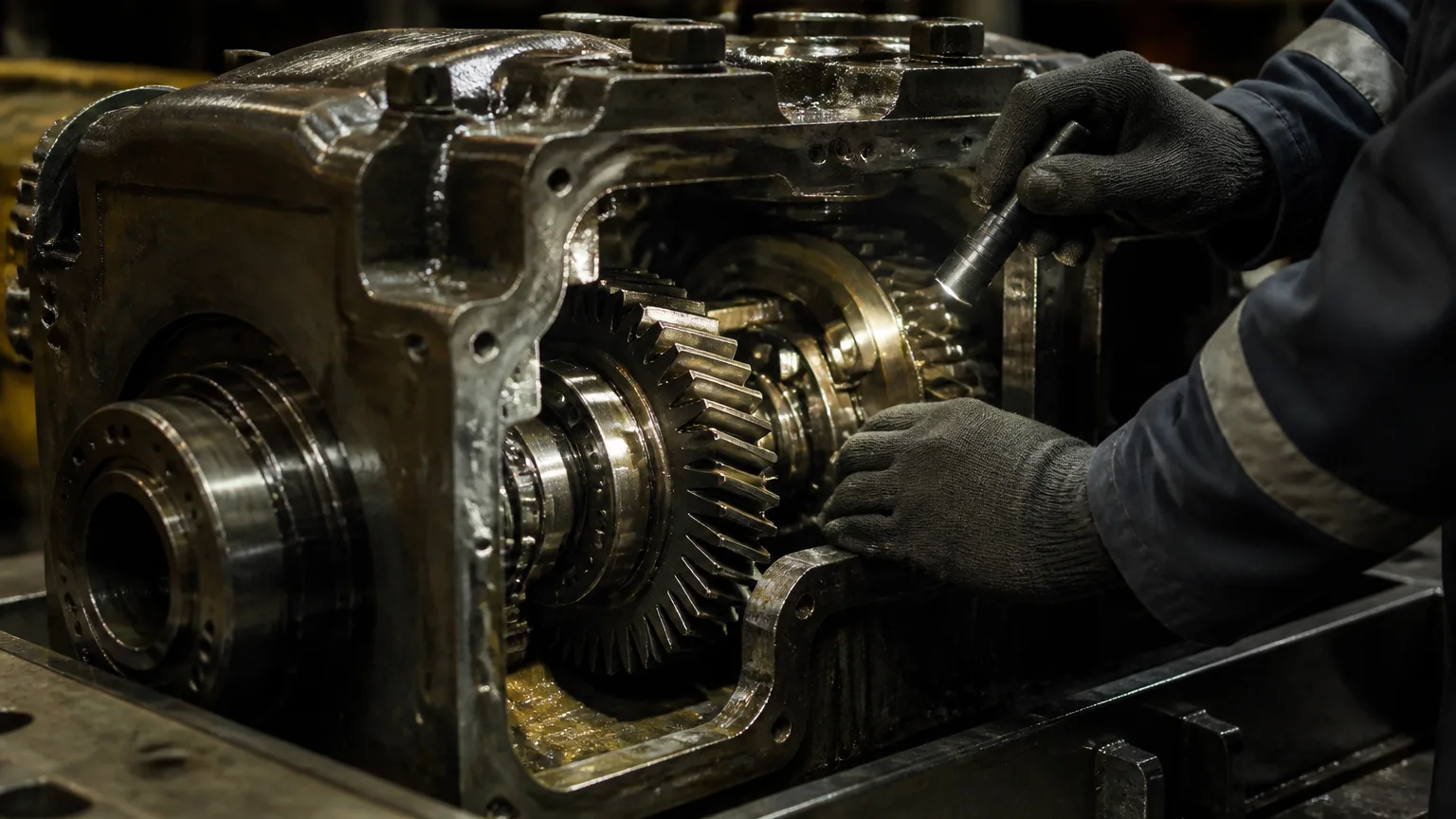
A Lufkin gearbox company unit often supports critical equipment in demanding industrial applications, where reliability and consistent torque transmission matter. Unusual noise, vibration, overheating, oil contamination, leakage, or declining output can signal gearbox trouble. However, symptoms alone do not determine whether repair or replacement is the best choice.
A professional inspection should come first. Specialists can assess gear and bearing wear, housing condition, lubrication, alignment, and operating loads before recommending a repaired gearbox, rebuilt unit, replacement gearbox, or complete redesign.
The right decision depends on the gearbox’s condition, production requirements, downtime constraints, and long-term lifecycle costs. This article explains how manufacturers can compare practical options and plan a reliable response. For broader support, explore Industrial Gearbox Solutions for industrial gearbox capabilities and engineering guidance.
Diagnosing a Lufkin Gearbox Before Choosing a Solution
A reliable decision begins with failure analysis, not a parts replacement list. A qualified Lufkin gearbox company will review operating history, including load changes, speeds, temperature, vibration, maintenance records, and the conditions surrounding the failure.
Technicians then inspect gears, shafts, bearings, seals, housing bores, and lubrication systems. They measure tooth wear, shaft runout, bearing fits, backlash, and alignment. Mounting conditions also require attention because loose foundations, soft feet, or uneven bolt loading can transfer damaging forces into the gearbox.
The investigation should identify the root cause, not just the visibly damaged component. Poor lubrication, contamination, misalignment, shock loading, and inadequate maintenance can create repeat failures after an otherwise successful repair. For example, replacing a worn bearing will not solve excessive backlash or a distorted housing bore.
Experienced gearbox specialists document measurements, photographs, and component conditions throughout the inspection. They can distinguish repairable wear from structural damage, such as cracked housings, damaged gear teeth, or unusable shaft seats.
The final report should define whether the unit needs:
- Cleaning, seals, bearings, and adjusted clearances
- Gear or shaft replacement with housing restoration
- Complete refurbishment or a replacement gearbox
This evidence supports a solution that matches reliability requirements, production demands, and available downtime.
Lufkin Gearbox Repair and Rebuild Options
When the housing and major geometry remain serviceable, a comprehensive rebuild can return a Lufkin gearbox to dependable operation. The process typically begins with disassembly, cleaning, and dimensional inspection. Technicians then evaluate gears, shafts, bores, keyways, and mounting surfaces for wear or distortion.
Repair scope can remain limited, such as replacing bearings, seals, and damaged fasteners. More extensive work may include correcting damaged gear teeth, restoring worn bores, repairing the housing, or manufacturing obsolete components. Precision machining helps restore critical fits and clearances before reassembly.
A documented refurbishment should record inspection findings, replacement parts, machining measurements, assembly procedures, and test results. Testing may include backlash checks, rotation checks, vibration monitoring, temperature review, and load verification where practical. This documentation gives maintenance teams a clear service history and supports future planning.
Specialized designs require additional care. For example, planetary gear repair requires inspection of load paths, planetary gears, pins, carriers, bearings, and sun and ring gear alignment.
Rebuilding may also preserve an established footprint, shaft arrangement, and mounting pattern. That can reduce installation changes and shorten procurement time compared with sourcing a new gearbox. For production-critical equipment, these advantages may make refurbishment the more practical option when inspection confirms adequate structural integrity.
When Replacing a Lufkin Gearbox Makes More Sense
Replacement becomes more practical when a gearbox has severe structural or mechanical damage. A housing cracked beyond economical repair, extensively damaged gears or shafts, or repeated failures can make restoration difficult to justify. If repair costs approach the value of a suitable replacement, a lufkin gearbox company may recommend replacing the unit instead.
A direct replacement matches the original gearbox’s dimensions, shaft arrangement, mounting pattern, and performance specifications. A rebuilt exchange unit offers another practical option, especially when a tested replacement is available and downtime must remain limited. These choices can simplify installation, much like a well-planned Dodge gearbox repair strategy.
A newly engineered gearbox may be better when the existing design is obsolete, parts are unavailable, or production demands have changed. Engineers can select or configure the unit for the application’s torque, speed, ratio, duty cycle, load profile, and mounting requirements.
Before purchasing, verify dimensional compatibility, shaft arrangement, rotation, lubrication, motor or drive interface, and service factor. The decision should also include installation labor, alignment, commissioning, spare-parts availability, and expected downtime. A lower purchase price may not represent the lowest lifecycle cost if integration delays or early failures affect production.
Planning the Lufkin Gearbox Service Process
A well-organized service project helps a facility receive an accurate recommendation from a Lufkin gearbox company. Before removal, collect the nameplate, drawings, photographs, service history, operating speed and torque, lubricant details, failure symptoms, connected-equipment information, and production schedule.
Use a clear workflow to control scope and downtime:
- Isolate and remove the gearbox safely.
- Inspect the unit and document findings.
- Approve the repair or replacement scope.
- Source or manufacture required parts.
- Complete assembly and testing.
- Reinstall, align, and return the gearbox to service.
Provide complete operating data, especially when comparing refurbishment with Davis Standard gearbox repair. Before startup, confirm oil selection, coupling alignment, fastener torque, and free rotation. Monitor temperature and vibration during operation, then document a controlled break-in period.
Ask the service provider for inspection reports, replacement-part quality standards, testing procedures, warranty coverage, and future maintenance support. These details help prevent surprises and establish a reliable maintenance plan.
Selecting the Right Lufkin Gearbox Path
Choosing repair or replacement is an engineering and reliability decision, not simply a parts purchase. A documented inspection can identify whether targeted repair, complete rebuilding, a rebuilt exchange unit, direct replacement, or an upgraded gearbox offers the best value.
Condition, application demands, lifecycle cost, and downtime priorities should guide the decision. Engage a qualified industrial gearbox provider early, especially for obsolete, production-critical units or repeated failures. Provide equipment details and symptoms so a Lufkin gearbox company can recommend a dependable path forward.