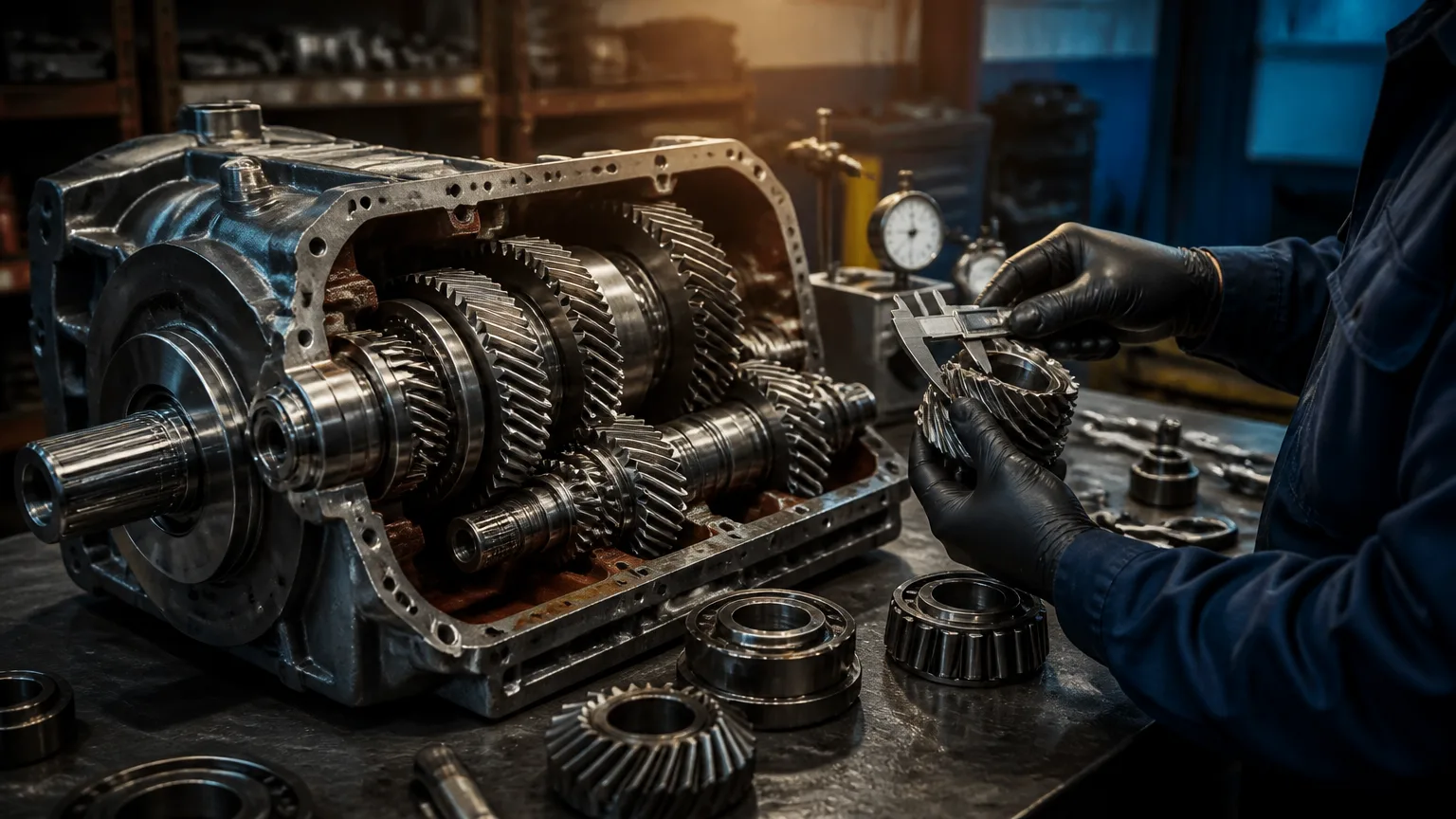
Overhauling gearbox equipment is a controlled process for restoring reliability, efficiency, and safe operation. It begins with accurate diagnosis, not assumptions based on noise, heat, or vibration alone. For plant managers, maintenance teams, and manufacturers, inspection data helps determine whether repair is practical or replacement is the better investment.
A typical overhaul includes disassembly, cleaning, dimensional inspection, and replacement or refurbishment of damaged components. Technicians then reassemble the unit, apply the correct lubrication, and conduct performance testing under suitable conditions. Because the gearbox affects the wider mechanical transmission systems, correct diagnosis is essential before authorizing major work. This guide explains how a structured repair and testing process can reduce unplanned downtime and support confident maintenance decisions.
When Does a Gearbox Need an Overhaul?
A gearbox may require an overhaul when its behavior changes from normal operating conditions. Warning signs include abnormal noise, rising vibration, overheating, contaminated oil, repeated seal leakage, excessive backlash, declining output, or unexplained increases in energy consumption. These symptoms can indicate worn gears, bearings, shafts, or seals, but they do not identify the root cause by themselves.
Review the gearbox’s operating history before removing it from service. Load increases, lubrication records, alignment problems, and previous repairs can explain why a component failed. For example, metal particles in oil may indicate gear or bearing wear, while recurring seal leakage may result from shaft damage, excessive pressure, or misalignment.
A gearbox should not automatically be rebuilt whenever a symptom appears. Connected motors, couplings, shafts, foundations, and driven equipment can create vibration, overload, or poor output. Inspecting the complete drive system can prevent unnecessary overhauling gearbox work and reduce the risk of repeating the failure.
Before removal, safely isolate the equipment and apply lockout/tagout procedures. Document operating conditions, including load, temperature, speed, noise, and vibration measurements. Take photographs, record nameplate data, and note oil condition and leakage locations. This evidence helps technicians assess the repair accurately and compare findings during testing. When several warning signs appear together, schedule a controlled inspection before secondary damage or an unexpected shutdown occurs.
Inspection and Disassembly: Finding the Root Cause
Before overhauling a gearbox, technicians document its condition and operating context. They photograph external damage, record component positions, and mark bearing caps, gears, and shims before removal. The lubricant is drained into a clean container for sampling, while precision fits, machined surfaces, and sealing areas remain protected.
Disassembly follows a controlled sequence to prevent secondary damage or lost evidence. Technicians inspect gears for pitting, scoring, tooth wear, cracks, and abnormal contact patterns. Bearings are checked for brinelling, spalling, looseness, and discoloration. Shafts, keys, housings, and seals are examined for wear, distortion, fretting, and leakage paths.
Dimensional checks confirm whether components remain within specification. Runout measurements can reveal bent shafts, while backlash verification helps identify gear mesh or alignment problems. Hardness testing may assess suspected material damage, and non-destructive testing can locate cracks that visual inspection misses.
Every finding supports a root-cause analysis. A damaged gear may result from misalignment, overload, contamination, inadequate lubrication, or excessive temperature. Replacing it without correcting the underlying condition can cause repeat failure. These heavy-duty gearbox repair considerations also help determine whether each part should be reused, repaired, or replaced.
Repair, Replacement, or Rebuild: Selecting the Right Scope
The inspection findings determine whether the gearbox needs a minor repair, partial rebuild, complete overhaul, or replacement. Minor work may include seals and bearings. A partial rebuild can add gear refurbishment or shaft repair, while a complete overhaul may include housing correction, machining, and replacement of all wear-critical parts.
Repair providers balance technical condition with equipment availability, production demands, and lifecycle cost. A gearbox with sound gears and housing may justify overhauling gearbox components. Severe damage, obsolete parts, or unacceptable lead times may support installing a new unit. For guidance on choosing the right shop gearbox for a plant, confirm the application before selecting replacement equipment.
Replacement decisions must account for torque, speed ratio, duty cycle, service factor, mounting dimensions, shaft configuration, lubrication, and motor and driven-equipment compatibility. Total cost includes machining, parts, engineering, testing, installation, alignment, commissioning, inventory risk, and expected service life—not only the initial quote.
Manufacturer drawings, serial numbers, interchange data, and a clear bill of materials reduce delays, especially for obsolete or specialized gearboxes. Reviewing Hansen gearbox repair and replacement options can also clarify available alternatives.
Testing the Overhauled Gearbox Before Installation
Before installation, verify assembly quality against the manufacturer’s drawings and specifications. Check fastener torque, shaft rotation, bearing preload or endplay, seal installation, gear backlash, and lubricant grade. Confirm the breather or vent is correctly configured and unobstructed.
A controlled test should include both no-load and loaded running. During warm-up, record vibration, temperature, noise, speed, oil leaks, and current draw from the connected drive. Note any unusual changes, such as rising temperature, increasing vibration, or abnormal noise. Test duration and acceptance limits must reflect the gearbox design, duty, and application.
Record all readings in the overhaul report. These results establish a baseline for commissioning and future condition monitoring. Before startup, also confirm coupling alignment, foundation condition, guarding, and connected equipment. Even a successfully tested gearbox can fail when installation conditions are incorrect. This disciplined approach helps demonstrate that overhauling gearbox work has restored reliable service readiness.
Return to Service With a Documented Maintenance Plan
A successful overhauling gearbox project does not end when the unit leaves the repair shop. It combines accurate diagnosis, qualified workmanship, disciplined testing, and follow-up maintenance.
Retain inspection findings, replaced-part records, test data, lubricant details, alignment measurements, and recommended inspection intervals in the asset history. A qualified partner offering industrial gearbox repair and replacement solutions can also guide repair-versus-replacement decisions, source compatible components, and support installation and commissioning.
With proactive monitoring and timely intervention, facilities protect production capacity, extend gearbox life, and reduce the likelihood of another emergency shutdown.