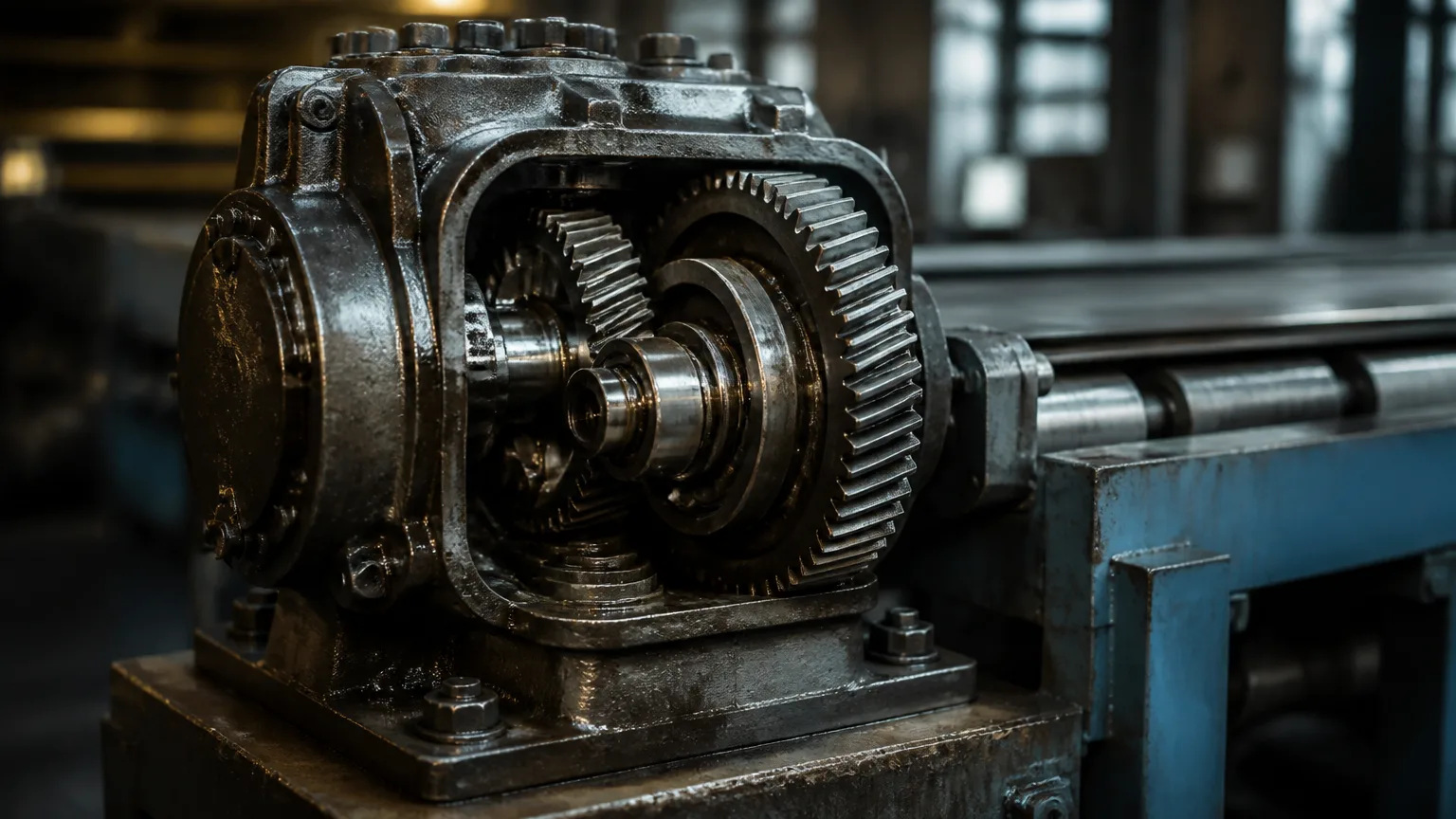
Heavy-duty gearboxes are critical power-transmission components in demanding industrial environments. They handle high torque, shock loads, heat, contamination, and continuous duty cycles while keeping conveyors, mixers, crushers, and production lines moving. When performance declines, even minor gearbox issues can quickly lead to unplanned downtime and rising operating costs.
This guide helps manufacturers and facility managers select the right gearbox specifications for each application. It also explains how to recognize repair needs, assess common failure causes, and make informed repair-versus-replacement decisions. With support from Industrial Gearbox Solutions, you can approach gearbox maintenance with greater confidence, reduce disruption, and protect long-term equipment performance.
How to Select a Heavy-Duty Gearbox for the Application
Selecting heavy-duty gearboxes requires more than comparing nameplate horsepower or torque ratings. Start with the driven equipment’s required torque, horsepower, input speed, output speed, and gear ratio. Confirm the gearbox can handle startup loads, peak loads, operating temperatures, and the actual driven load.
Consider the duty cycle and service factor carefully. Continuous operation, frequent starts and stops, shock loading, reversing, and variable loads can require additional capacity. A conveyor carrying heavy material, for example, may impose higher starting and peak torque than its average running load suggests.
Also verify the mechanical installation requirements:
- Mounting orientation and lubrication suitability
- Shaft configuration, diameter, and direction of rotation
- Available space, including service and alignment clearance
- Ambient temperature, contamination, and moisture exposure
Gear ratio selection shows how these factors interact. A higher reduction ratio generally increases output torque and lowers output speed, but it can reduce efficiency and affect motor performance. A lower ratio may improve speed and efficiency while providing less torque multiplication. Review gear ratios alongside motor characteristics and load requirements.
Finally, match the gearbox to the equipment’s real operating profile, not an idealized rating. Confirm thermal capacity, peak torque, service factor, and duty cycle with the manufacturer before specifying the unit.
Common Heavy-Duty Gearbox Failure Signs and Causes
Early warning signs can reveal developing problems before a heavy-duty gearbox causes an unplanned shutdown. Monitor the gearbox for:
- Abnormal noise, vibration, or backlash
- Overheating or rising energy consumption
- Oil leaks or metal particles in the lubricant
- Inconsistent output speed or declining torque transmission
These symptoms often point to specific mechanical or operating issues. Inadequate lubrication increases friction and temperature, while contaminated oil accelerates bearing and gear wear. Metal particles may indicate damaged gear teeth or deteriorating bearings. Excessive backlash can result from worn gears, loose components, or incorrect adjustment.
Vibration may stem from shaft misalignment, bearing wear, or a loose foundation. Overloads can deform gear teeth and shafts, while repeated thermal stress can reduce material strength and damage seals. Oil leaks may then worsen lubrication loss and accelerate failure.
Before removing the gearbox, document load, speed, temperature, noise, vibration, oil condition, and recent operating changes. Record inspection findings and photographs when possible. This symptom history helps technicians diagnose the root cause, avoid unnecessary parts replacement, and select appropriate gearbox repair services when failure strikes. Prompt investigation also helps determine whether repair remains practical or replacement is more appropriate.
Repair, Rebuild, or Replace: Making the Right Decision
When a gearbox fails, the lowest immediate invoice may not deliver the best lifecycle value. Compare repair scope, replacement-part availability, lead time, total cost, remaining service life, design obsolescence, and the consequences of continued downtime. This broader review is especially important for heavy-duty gearboxes supporting critical production assets.
Repair is often practical when the housing, shafts, gears, and other major components remain serviceable. A professional rebuild typically includes:
- Teardown and cleaning, followed by dimensional inspection
- Gear and bearing evaluation for wear, pitting, cracks, and alignment issues
- Shaft and housing checks for damage, distortion, and excessive clearances
- Replacement of seals and other wear components
- Reassembly, lubrication, and operational testing
A rebuild can restore dependable performance while extending useful service life. However, replacement may be the better choice after severe damage, repeated failures, an obsolete design, or a mismatch between the gearbox and the application. Limited parts availability or a long rebuild lead time can also make a replacement unit more economical when downtime is costly.
For additional industrial gear repair guidance, review failure history and operating conditions with a qualified specialist. Also compare the repair-or-replace factors for a Link Belt gearbox before committing to a solution. Evaluate total lifecycle value—not simply the fastest quote.
Preventive Maintenance After Installation or Repair
A structured maintenance program protects heavy-duty gearboxes and reduces the risk of another unplanned shutdown. Set intervals according to load, speed, environment, lubricant type, and manufacturer recommendations—not calendar time alone.
Schedule lubricant sampling and changes to detect contamination, wear particles, or viscosity changes. Inspect for leaks, and periodically check seals and breathers. Monitor vibration and temperature against established baseline readings. Rising values can reveal misalignment, bearing damage, inadequate lubrication, or developing gear problems.
Verify coupling and shaft alignment after installation, repair, or equipment changes. Check fasteners for loosening and confirm operating practices remain within the gearbox rating. Correct alignment, proper lubrication, and controlled loading improve mechanical efficiency and extend component life.
Retain inspection records, repair histories, lubricant results, operating measurements, and baseline vibration data. Trend analysis helps identify gradual deterioration and schedule corrective work before a failure interrupts production.
Build Reliability Into Every Gearbox Decision
Reliable performance starts with accurate application data and continues through condition monitoring, timely repair, and disciplined maintenance. Match heavy-duty gearboxes to actual loads, duty cycles, thermal demands, and operating conditions—not idealized ratings. Record inspections, lubricant results, vibration trends, and repair history to support informed decisions.
Before approving service, ask qualified providers for documented inspection findings, compatible replacement parts, testing details, and realistic lead-time expectations. Address noise, heat, leakage, or vibration before minor symptoms become major failures. A properly selected and professionally maintained gearbox protects production uptime, energy performance, and long-term operating costs.