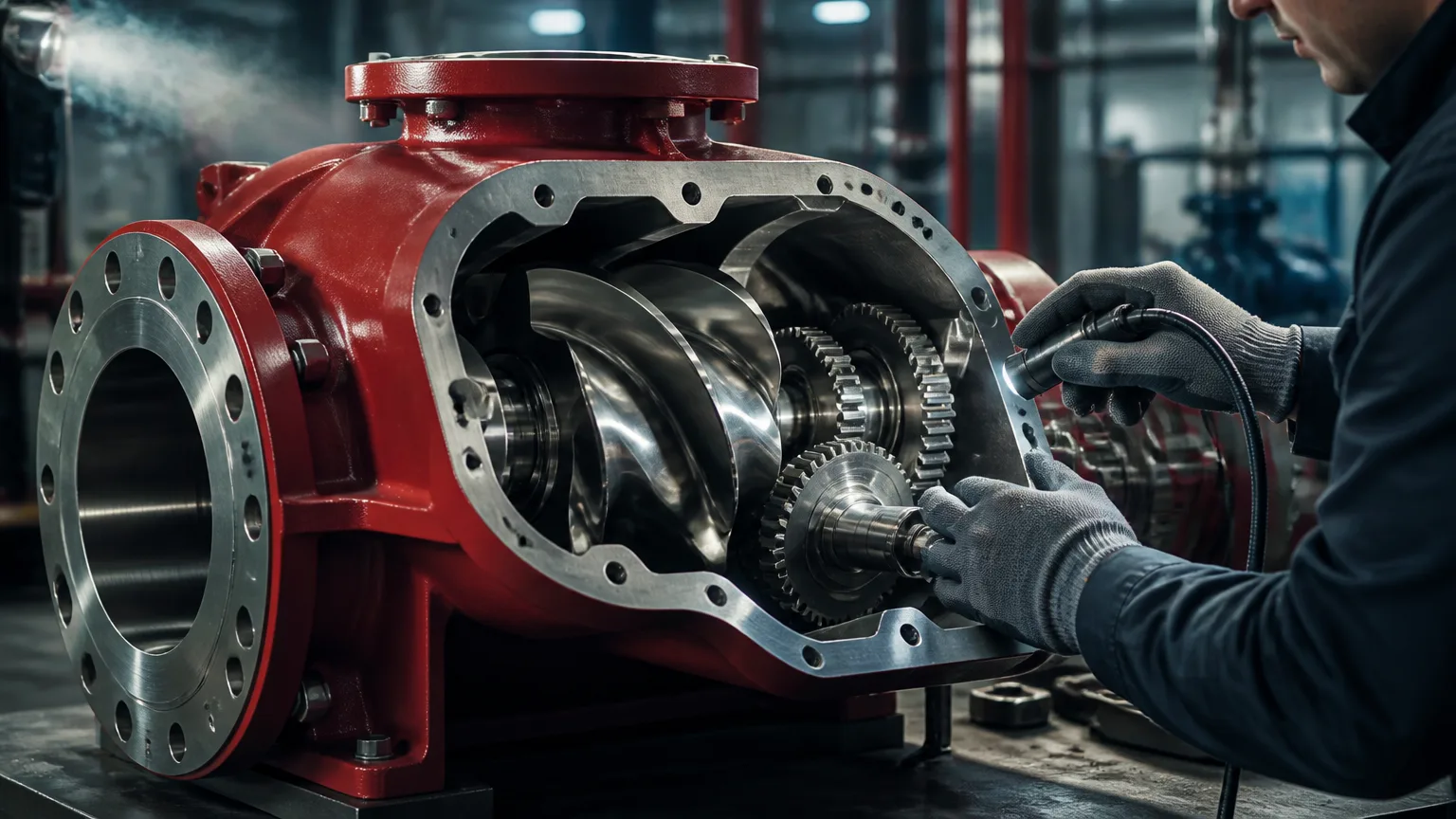
Roots blower repair is essential for maintaining reliable airflow, pressure, and production across industrial processes. A minor change in noise, vibration, temperature, or output can signal developing damage. Left unchecked, it may affect the blower, timing gears, bearings, seals, drive system, or connected gearbox.
Effective repair begins with accurate diagnosis, not automatic component replacement. Technicians must identify the failure’s source, restore damaged parts, verify alignment and clearances, and address the conditions that caused the fault. This approach helps prevent repeat failures and protects surrounding equipment.
For manufacturers and industrial facilities, the right response may involve in-house troubleshooting, specialist repair, or complete replacement. Industrial Gearbox Solutions provides broader gearbox assessment and restoration capabilities to support that decision. This article examines common faults, practical fixes, and preventive maintenance steps that help protect uptime.
Noise, Vibration, and Overheating: Identifying Mechanical Faults
Abnormal noise often provides the first warning of a mechanical fault. A rumbling sound can indicate worn bearings, while gear whine may point to damaged timing gears, incorrect backlash, or inadequate lubrication. Scraping or knocking suggests that rotor timing or internal clearances may have changed, allowing components to contact each other.
Vibration should be assessed against historical operating data, not judged in isolation. A gradual increase may indicate bearing wear, coupling misalignment, looseness, or excessive operating loads. Sudden changes require prompt investigation, particularly when accompanied by rising gearbox or bearing temperatures.
Bearing deterioration and gear backlash can alter rotor timing and clearances. As a result, the blower may lose efficiency, draw more power, or suffer damaging internal contact. Overheating can also result from low or contaminated oil, restricted cooling, misalignment, or operation beyond the specified pressure and speed.
Before dismantling equipment for roots blower repair, follow a controlled process:
- Isolate, lock out, and depressurize the blower safely.
- Check oil level, colour, contamination, and metal particles.
- Inspect the coupling, guards, mounting bolts, and alignment.
- Record vibration and temperature readings for comparison.
- Verify shaft runout, gear backlash, bearing fits, and critical dimensions.
Early specialist support can limit secondary damage. When failure threatens production, gearbox repairs 24/7 may help restore reliable operation quickly.
Airflow Loss, Pressure Problems, and Seal Failure
Reduced air delivery does not always indicate mechanical wear. Start by checking for blocked intake filters, closed valves, undersized pipework, or incorrect relief-valve settings. These process restrictions can create low flow or unstable pressure and should be corrected before recommending a rebuild.
If operating conditions are sound, inspect the blower for internal leakage and wear. Damaged or worn rotors, excessive clearances, bearing movement, and incorrect timing can reduce displacement and pressure. During specialist roots blower repair, technicians should measure clearances, rotor condition, shaft runout, and end-plate condition against manufacturer specifications.
Seal failure can produce oil leakage, air loss, and contamination. Common faults include worn shaft seals, leaking housing joints, and damaged gaskets or O-rings. Contamination entering the lubricant can accelerate bearing and gear wear, while operating with a low oil level may cause overheating, scoring, and rapid component failure.
A qualified inspection should identify whether the root cause is mechanical, process-related, or both. Corrective work may include replacing seals, cleaning contaminated lubricant circuits, restoring clearances, or repairing damaged rotors and housings. Review the repair decision alongside broader industrial gear repair criteria when connected drive equipment also shows wear.
Gearbox, Drive, and Lubrication Faults
Gearbox and drive faults can disable a Roots blower even when the rotors remain serviceable. Worn timing gear teeth, damaged bearings, and excessive backlash can cause noise, vibration, heat, and loss of air delivery.
Poor lubrication often creates a damaging cycle. Contaminated or degraded oil loses its protective film, allowing heat and metal-to-metal contact. Pitting and scoring then develop on timing gears and gearbox components, accelerating wear and spreading debris through the lubricant.
Motor loading, coupling condition, and alignment must be assessed together. A motor drawing excessive current may indicate an overloaded blower, seized bearing, tight rotor clearance, or shaft misalignment. Coupling wear or angular misalignment creates shaft forces that overload bearings and gears, so the blower symptom is not always an isolated fault. Proper alignment also supports mechanical efficiency and reduces energy loss.
For effective roots blower repair, technicians should:
- Test the oil for viscosity, contamination, and wear metals. Inspect gear teeth, bearings, shafts, housings, seals, and coupling elements. Check shaft runout, gear backlash, bearing fits, and housing condition.
- Replace damaged gears, bearings, seals, couplings, and other wear components. Remove contamination and correct the overload source before reassembly.
- Complete precision shaft and coupling alignment, then verify vibration, temperature, motor load, and operating clearances. Capture baseline readings for future comparison.
Roots Blower Repair or Replacement: Choosing the Right Fix
The right Roots blower repair depends on condition, cost, lead time, and operating requirements. Compare the repair scope, replacement cost, downtime, parts availability, warranty, and expected service life. The lowest initial price may create higher maintenance costs later.
A targeted repair suits isolated faults, such as worn bearings, failed seals, or minor coupling damage. Extensive gear, shaft, housing, or rotor damage usually supports a complete blower or gearbox rebuild. A replacement unit may be more reliable when critical parts are unavailable, lead times are excessive, or the existing machine has limited remaining life.
An upgraded drive system can also improve efficiency, control, and load handling. Before authorizing major work, document failure evidence, including vibration trends, temperatures, lubricant condition, and damaged components. Obtain a condition-based assessment from a qualified specialist. This evaluation helps match the solution to production demands and supports a defensible decision on repair, rebuild, replacement, or upgrade.
Reduce Downtime with a Planned Roots Blower Repair Strategy
Recurring noise, heat, vibration, leakage, or performance loss should trigger investigation before secondary damage develops. Early roots blower repair, supported by root-cause diagnosis and precision workmanship, protects production reliability while extending blower and gearbox life.
Make inspection records, lubricant monitoring, alignment checks, and planned spare-parts support part of an ongoing reliability program. These controls reveal developing faults and support timely maintenance decisions, including whether to repair or replace connected equipment.
When conditions change, specialist assessment can confirm whether repair, rebuild, or replacement delivers the best operational outcome. Acting early reduces downtime and improves long-term asset value.