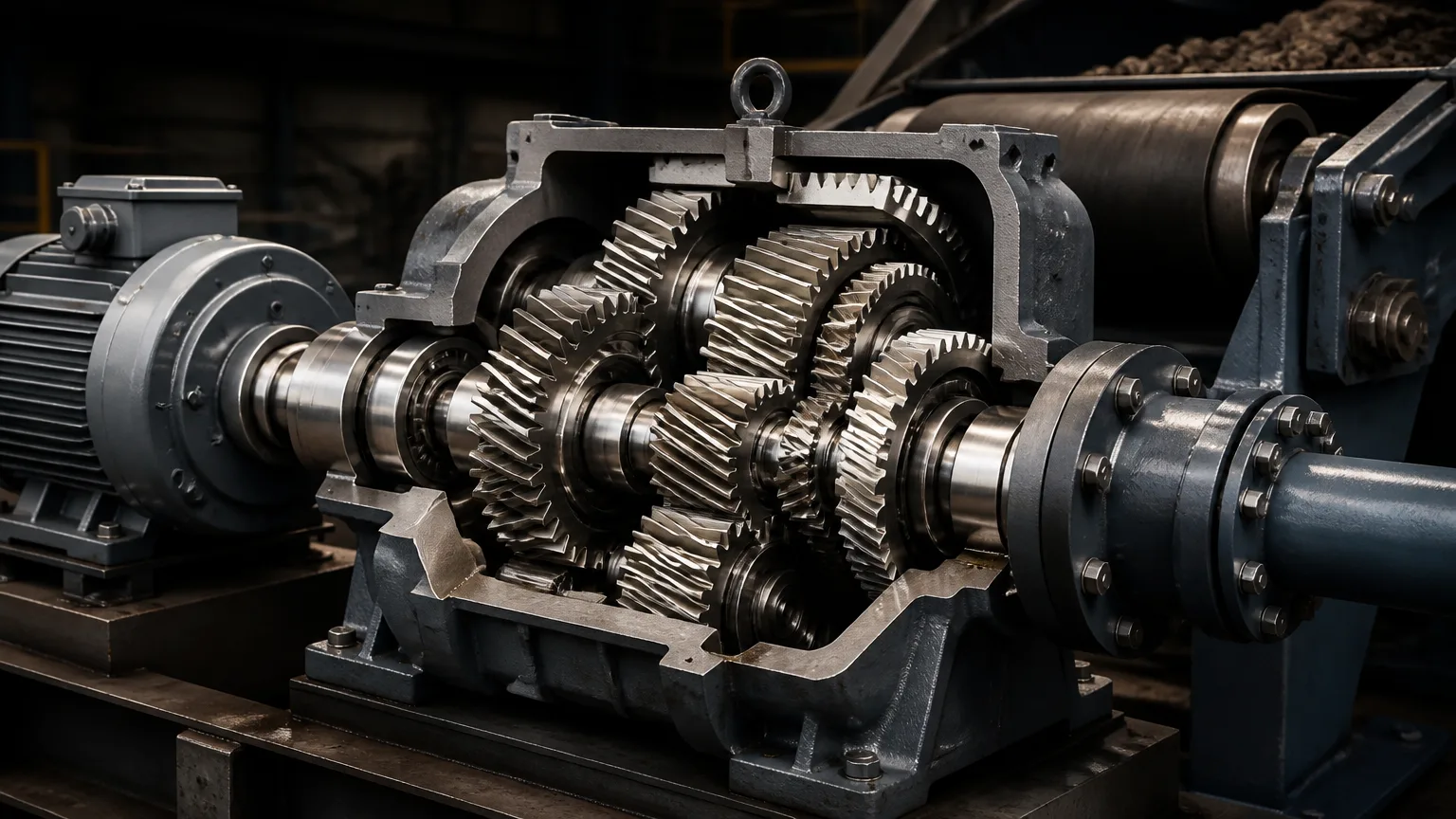
A mechanical transmission transfers and modifies power between a prime mover and industrial equipment. It controls speed, torque, direction, and motion through coordinated components, including gears, shafts, bearings, couplings, and housings. Selecting the right system is essential for reliable, efficient operation.
Manufacturers and facility managers must match transmission design to operating demands such as load, speed, duty cycle, environment, and available space. These decisions affect energy use, workplace safety, production continuity, and total lifecycle cost. The guidance from Industrial Gearbox Solutions can help teams evaluate these priorities with greater confidence.
This article explains common transmission types and their industrial applications, from conveyors and mixers to pumps and heavy processing equipment. It also clarifies when repair, rebuilding, or replacement makes the most practical sense. Understanding these options helps maintenance teams protect uptime, control costs, and respond quickly when transmission performance declines.
What Is a Mechanical Transmission?
A mechanical transmission transfers power from a motor or engine to driven equipment. Power travels through the input shaft, passes through gears or other transmission elements, and leaves through the output shaft. The output then drives equipment such as a conveyor, pump, mixer, or crusher.
Transmission ratios determine how speed and torque change. A higher output speed usually produces less torque, while a lower speed produces more torque. This torque conversion is essential when equipment must start, move, or process heavy loads. Torque conversion helps explain this relationship in practical terms.
Reduction gearboxes are often necessary for conveyors, mixers, extruders, crushers, and material-handling systems. Motors typically run faster than these machines can safely or effectively operate. Reducing speed increases available torque and supports stable, controlled performance.
Selecting the right transmission requires more than matching a ratio. Consider the load profile, duty cycle, required ratio, shock loads, mounting arrangement, lubrication needs, operating environment, and available service access. These factors influence efficiency, component life, maintenance requirements, and the risk of unexpected downtime.
Common Types of Mechanical Transmissions
The right mechanical transmission depends on load, speed, space, and operating conditions. Spur, helical, bevel, worm, and planetary gearboxes each solve different power-transfer challenges.
Spur gearboxes use straight-cut teeth and offer a simple, efficient, cost-effective design. They suit moderate-speed applications with parallel shafts, such as conveyors and basic material-handling equipment. However, they can produce more noise and vibration than helical designs. Helical gearboxes use angled teeth for smoother, quieter engagement and generally higher load capacity. They are common in mixers, pumps, conveyors, and continuous-duty production lines.
Bevel and worm gearboxes transfer power through a 90-degree shaft arrangement. Bevel units provide efficient right-angle transmission and handle demanding loads, but require accurate alignment. Worm gearboxes are compact and may provide self-locking behavior, which benefits lifts and positioning systems. Their sliding tooth contact creates more heat and usually lowers efficiency, so lubrication and cooling require careful attention.
Planetary gearboxes distribute load across multiple gears. This provides high torque density, compact packaging, and strong shock-load performance. They are valuable in heavy-duty processing, lifting systems, and automated machinery. Facilities should plan for specialized planetary gearbox repair when internal components require service.
When selecting a replacement, verify:
- Ratio, torque rating, shaft geometry, footprint, and mounting pattern
- Lubricant type, service access, and environmental conditions
- Compatibility with the existing motor, coupling, controls, and duty cycle
A physically interchangeable unit may still fail if its thermal rating or control response does not match the application.
Industrial Uses and Efficiency Considerations
A mechanical transmission supports many industrial systems by matching motor speed and torque to equipment demands. Gearboxes drive conveyors, pumps, mixers, extruders, compressors, packaging lines, machine tools, crushers, and material-handling equipment. Each application imposes different load patterns, speeds, and control requirements.
Continuous-duty equipment can overheat if lubrication, cooling, or thermal capacity is inadequate. Reversing loads and frequent starts and stops increase torque stress, while vibration, contamination, high temperatures, and misalignment accelerate wear. Crushers and conveyors may also experience sudden shock loads that exceed normal operating torque.
Efficiency depends on more than the gearbox rating. Clean, suitable lubricant reduces friction, while healthy gears and bearings transmit power with fewer losses. Sound seals keep out dust and moisture and retain lubricant. Accurate alignment, correct loading, and proper coupling condition also protect mechanical efficiency.
An apparently adequate gearbox can still fail early when its service factor ignores impact loading, reversals, or demanding duty cycles. Review the complete operating profile before selecting or replacing a unit, and inspect these conditions during maintenance.
Diagnosing Mechanical Transmission Problems
Begin by recording operating conditions before dismantling the unit. Note vibration and temperature readings, oil condition, noise changes, load history, and when the failure began.
Use symptoms to guide the initial investigation:
- Unusual noise or vibration may indicate damaged gears or bearings. Overheating often points to poor lubrication, excessive load, or inadequate cooling. Oil leakage commonly results from failed seals, while backlash or poor output suggests wear, misalignment, or damaged coupling components.
A qualified technician should then complete a controlled inspection. This may include teardown, dimensional checks, gear-contact analysis, shaft and bearing inspection, and a review of housing damage. These findings help separate a correctable fault from deeper mechanical transmission damage.
A component-level repair may suit a unit with limited wear and available parts. Choose a complete rebuild when several internal components have reached the end of their service life. Replacement may be better when the housing is damaged, parts are unavailable, downtime is critical, or total repair costs approach a new unit. Select an experienced gearbox repair service for an accurate assessment.
Repair or Replace: Making the Right Transmission Decision
The right mechanical transmission solution depends on design, failure mode, operating demands, repairability, lead time, and total lifecycle cost—not purchase price alone. Preventive inspection, correct lubrication, alignment checks, and accurate operating data help prevent emergencies and improve replacement specifications.
Choose a support provider that evaluates the complete powertrain. The right partner can deliver a tested, application-matched gearbox or rebuild that restores reliable performance and protects uptime.