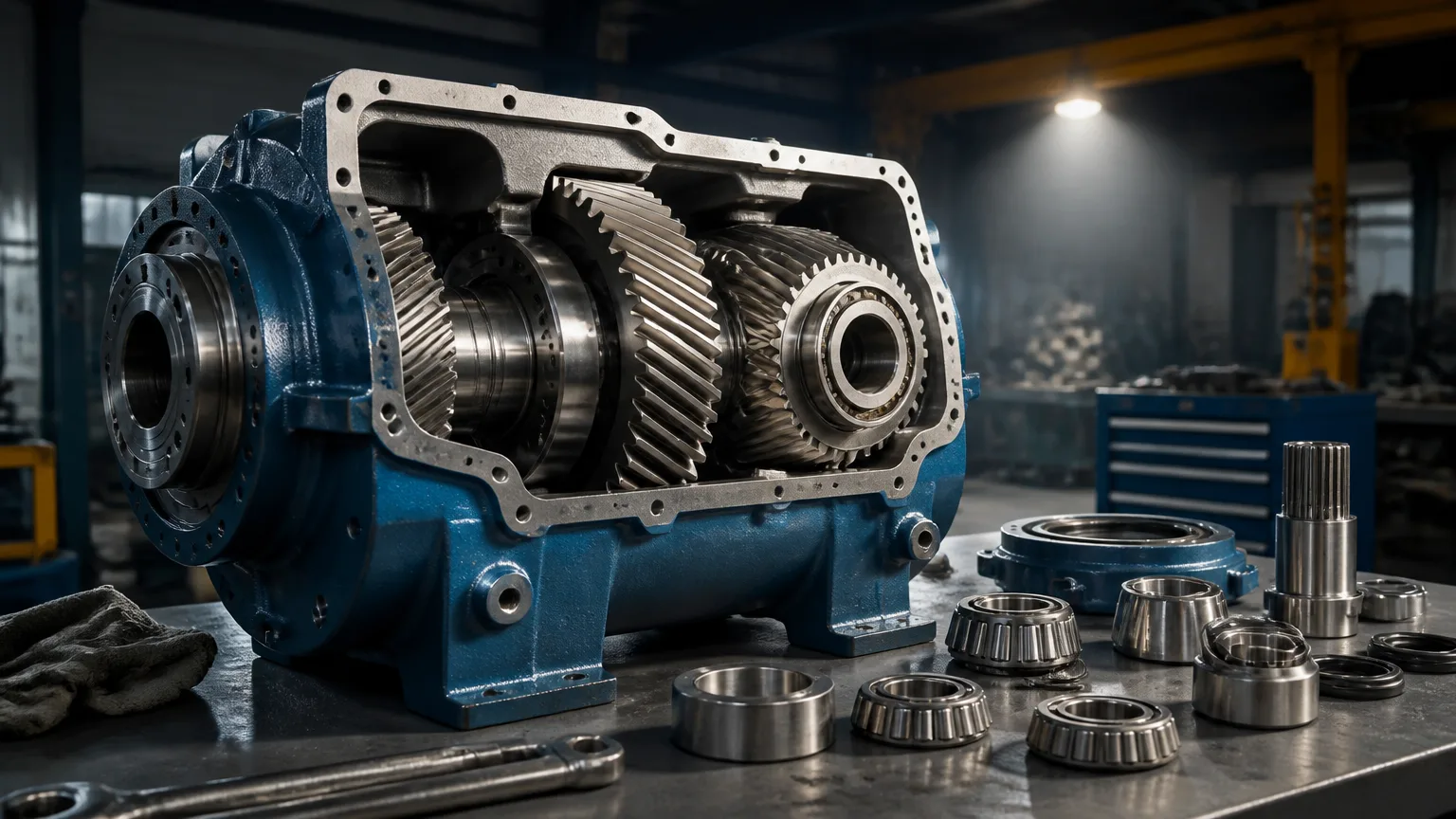
A Hansen gearbox is a critical component in many industrial drive systems, transferring torque reliably under demanding operating conditions. When failure occurs, manufacturers and maintenance teams must weigh repair, replacement, and interchange as connected decisions—not isolated services. Downtime, production losses, compatibility, torque requirements, and lifecycle cost can all depend on that choice.
The right solution depends on the gearbox’s failure condition, specifications, application demands, and the availability of a compatible replacement. Careful inspection and documentation provide the foundation for avoiding misalignment, incorrect ratios, and premature repeat failures. This guide from Industrial Gearbox Solutions compares each pathway, helping industrial facilities select a practical solution that restores performance and supports long-term reliability.
Diagnosing a Hansen Gearbox Before Choosing a Remedy
A reliable remedy starts with a structured diagnosis. Common warning signs include abnormal noise, rising vibration, overheating, contaminated oil, leaking seals, excessive backlash, and declining output performance. These symptoms may indicate internal damage, but they can also result from installation or operating problems.
Before authorizing work, inspect the complete drive system rather than focusing only on the damaged component. A qualified technician should examine:
- Gears, shafts, bearings, housing, seals, and lubrication
- Couplings, mounting surfaces, alignment, and fasteners
- The motor, brake, driven equipment, and load conditions
Failure documentation helps establish whether repair is economical. Record operating hours, temperatures, noise changes, vibration readings, oil condition, maintenance history, and the circumstances surrounding the failure. Photographs and inspection reports can also identify progressive wear or a sudden overload.
Collect the Hansen gearbox nameplate, ratio, input and output speeds, torque requirements, service factor, mounting orientation, motor details, and operating environment. Dust, moisture, corrosive chemicals, temperature extremes, and frequent starts may affect the remedy.
An isolated bearing or seal failure may support a cost-effective repair. Damaged gears, cracked housings, obsolete parts, or repeated failures may justify replacement or interchange. When production cannot wait, gearbox repairs 24/7 can help stabilize operations while the full assessment continues.
When Hansen Gearbox Repair or Rebuild Is the Better Option
Repair or rebuilding an existing Hansen gearbox is often the best choice when production continuity matters. It can reduce cost and lead time, especially when the housing and major gear geometry remain serviceable. Repair is also attractive when original parts or compatible alternatives are available.
A professional rebuild begins with complete disassembly, cleaning, and dimensional inspection. Technicians may replace bearings and seals, repair gears or shafts, evaluate the housing, renew lubrication, and complete precision reassembly. This process can restore reliable operation without requiring changes to mounting arrangements, shaft connections, or driven equipment.
Repair becomes less practical when the housing is cracked, gear damage is extensive, or obsolete components cannot be sourced. Repeated failures may also indicate alignment, loading, lubrication, or application problems that a rebuild alone will not resolve. In some cases, proven Falk gearbox repair services provide a useful comparison when evaluating compatible solutions.
Quality control protects reliability after reinstallation. A credible provider should document measured clearances, replaced components, gear contact patterns, and run-test results. The final report should also identify recommendations for shaft alignment, foundation correction, lubrication, or load changes. These records help confirm that the rebuilt Hansen gearbox meets operating requirements and reduce the risk of another premature failure.
When Replacement Makes More Sense Than Repair
A rebuilt Hansen gearbox may not be the best investment when damage extends beyond individual components. Cracked housings, extensively damaged gear trains, unavailable proprietary parts, and repeated failures can make replacement the more dependable option. Replacement also deserves consideration when repair costs approach the value of a new or remanufactured unit with stronger support.
Compare total cost of ownership, not only the purchase price. Include removal, machining, freight, installation, commissioning, lost production, spare parts, and warranty coverage. A replacement with a higher initial price may reduce downtime and future maintenance costs. Facilities can also review these repair-or-replace decision factors for a Link Belt gearbox when evaluating similar industrial gearbox decisions.
Before ordering, define the existing installation and operating demands:
- Verify ratio, torque capacity, thermal rating, service factor, and lubrication requirements.
- Confirm shaft arrangement, mounting dimensions, and foundation interfaces.
- Check motor, coupling, brake, and guard compatibility.
- Review lead times, commissioning support, warranty terms, and spare-parts availability.
A replacement specification should document these requirements, along with duty cycle, speed, load changes, and environmental conditions. This prevents a physically interchangeable gearbox from creating new problems, such as insufficient thermal capacity, incorrect rotation, or difficult coupling alignment. A qualified supplier can then recommend a direct replacement, modified unit, or complete drive package.
Hansen Gearbox Interchange: Compatibility Beyond Physical Fit
Interchanging a Hansen gearbox is an engineering compatibility exercise, not a simple bolt-on substitution. A replacement may match the footprint yet fail to provide the required ratio, torque, speed, thermal capacity, duty cycle, or service factor. This distinction separates dimensional interchange from functional interchange.
Evaluate gear ratios, output direction, shaft diameter and extension, keyway dimensions, mounting position, and coupling interfaces. Also confirm braking or backstopping requirements, especially on conveyors, hoists, and inclined equipment. For additional guidance, review gear ratios in industrial gearboxes.
Before ordering, compare certified ratings, manufacturer drawings, and application data with field measurements. Confirm the alternate unit can handle the actual load, speed, starts per hour, and operating environment. The correct solution may be a direct replacement, modified gearbox, or complete drive package.
During commissioning, verify foundation condition, shaft alignment, rotation, lubrication, vibration, temperature, and load. Monitor performance under normal and peak conditions before approving the interchange for continuous service.
Selecting a Reliable Hansen Gearbox Solution
Start with diagnosis, then compare repair and replacement through lifecycle costs—not purchase price alone. Treat the failed Hansen gearbox as evidence of possible alignment, lubrication, loading, or maintenance issues.
A documented repair, correctly specified replacement, or engineered interchange can restore production and improve efficiency. Experienced industrial gearbox support helps minimize downtime and protect reliability. Before requesting an evaluation, gather the nameplate, application data, failure symptoms, drawings, and photos.