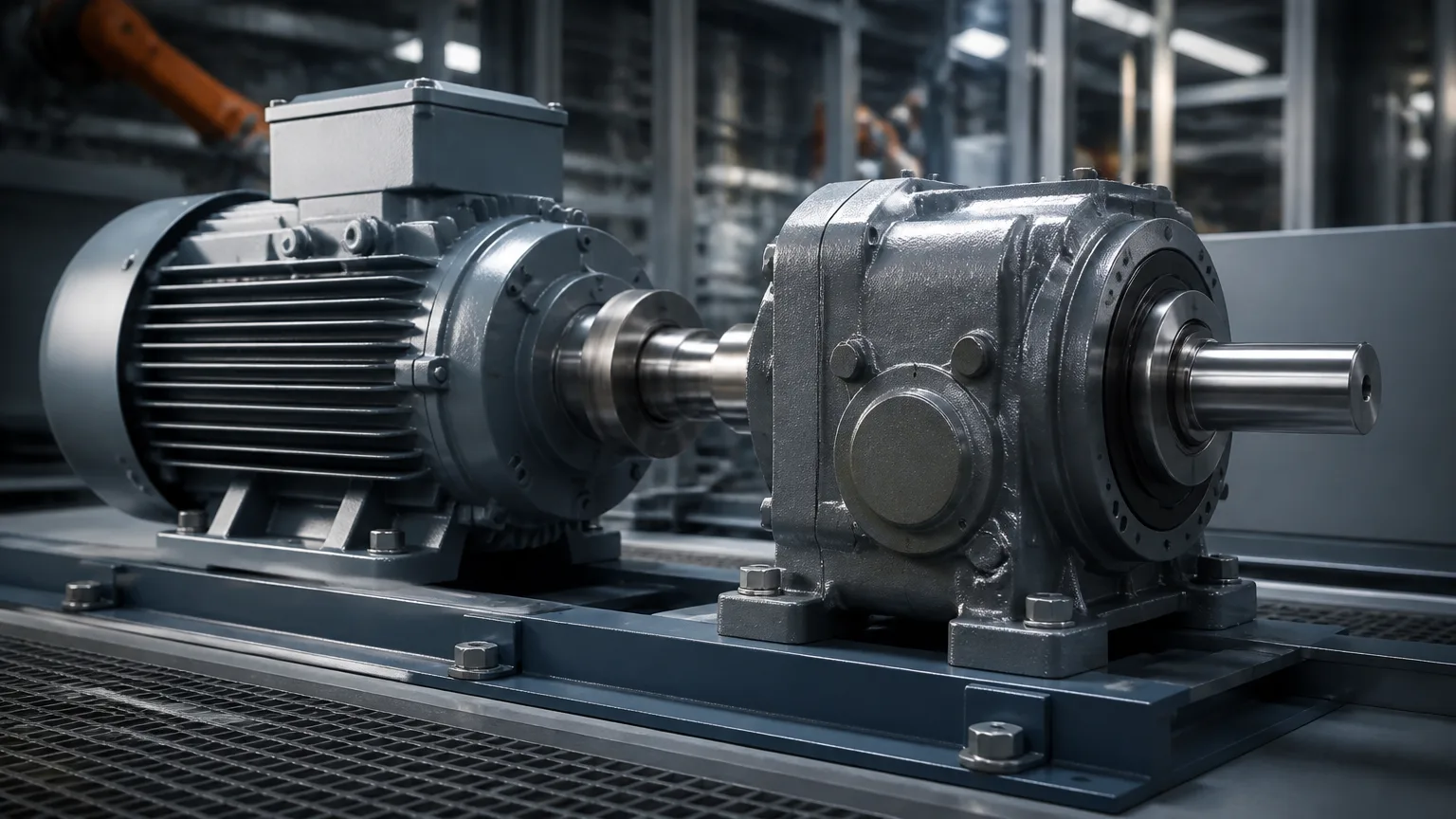
Choosing induction motors and gearboxes is a single drive-system decision. In an operating facility, a poor match can disrupt production, overload components, or cause avoidable downtime. A motor’s nameplate horsepower alone does not show whether it suits the gearbox or the driven load. The application, required machine speed, and operating conditions matter too. For available motor options, see our industrial electric motor selection.
Whether you’re replacing equipment or planning a new drive, start by defining the load and calculating its speed and torque needs. Then verify motor-to-gearbox compatibility and weigh repair against replacement. Understanding electric motor applications in industry provides useful context for making that choice. This practical approach helps you select a drive that meets demand without putting equipment at risk.
Start With the Driven Load and Required Output
Before choosing an induction motor, define what the machine needs at the gearbox output. Identify the driven equipment, its normal and peak load, required output speed, operating hours, and start-stop frequency. These details establish the conditions the complete drive must handle.
The gearbox ratio reduces motor speed to the required output speed while increasing output torque. Efficiency losses mean the available torque is lower than an ideal ratio calculation suggests. Use this relationship to guide selection, not as a substitute for manufacturer sizing data.
Operating patterns matter. A conveyor running steadily for long shifts may need a different selection from a mixer that runs intermittently. Equipment with a high starting load, such as a loaded conveyor, can demand substantial torque before it reaches normal speed.
Shock loads and frequent starts add stress to gearbox components and the motor. Account for these conditions when selecting a service factor and reviewing application-specific load characteristics. This helps prevent undersizing and premature wear. Excessive oversizing can also raise costs and affect system performance, so match the drive to actual operating demands.
Match Motor Speed, Power, and Torque to the Gearbox
Start with the motor’s actual operating speed and the gearbox’s target output speed. Estimate the reduction ratio by dividing motor speed by required output speed. For example, a motor running at 1,750 rpm paired with a target output of 70 rpm needs a ratio near 25:1. Use the motor’s expected loaded speed, not its synchronous speed, which is a theoretical value and may differ in service.
Next, confirm that the drive can supply the load’s required power and output torque. Gearbox output torque depends on motor power, speed reduction, and transmission efficiency. Compare the calculated requirement with the gearbox’s rated torque, allowing for the application’s duty and load characteristics. A ratio that meets the speed target does not automatically mean the gearbox is adequately sized.
Check starting torque and operating conditions, too. Frequent starts, variable-frequency drive operation, and low-speed running can affect motor performance and gearbox heating. Confirm these factors, along with thermal limits, with the manufacturer or a qualified engineer. Verify the gearbox’s allowable input speed and duty limits before selecting a motor.
Finally, review applicable gearbox reliability standards to identify relevant specifications and verification practices. Standards can guide checks, but they are not a universal sizing formula. Properly matching induction motors and gearboxes requires ratings and operating conditions to be assessed together.
Check Mounting, Shaft, and Operating Conditions
After confirming ratings and service factors, check whether the motor and gearbox will physically fit the application. Verify flange or foot mounting, shaft diameter and configuration, coupling type, rotation direction, and alignment before ordering a replacement. Small interface differences can prevent installation or create damaging loads. This is another example of the importance of matching components.
Next, confirm the motor’s electrical supply and environment. Check voltage and frequency, then select an enclosure and cooling method suited to the installation. Ambient heat, dust, moisture, washdown, and hazardous-area requirements may all affect the correct configuration. A motor designed for a clean indoor space may not withstand a hot, contaminated production area.
Service life also depends on installation and care. Misalignment can increase vibration and bearing loads, while poor lubrication or contamination can accelerate gear wear. Excessive heat may point to inadequate cooling, overload, or a mismatch between components. Before replacing a failed unit, check whether the root cause is a component fault or a system-level issue involving the motor, gearbox, or operating conditions. Ensure technicians can access lubrication points and inspection areas safely for routine maintenance.
Decide Whether to Repair or Replace the Gearbox
Before deciding, document symptoms such as noise, vibration, heat, leakage, and changes in output speed. Then check whether the motor or driven load is adding stress. Induction motors that start frequently, run overloaded, or operate outside expected conditions can contribute to gearbox wear.
Repair may be appropriate when technicians can restore the gearbox to specification and it remains suitable for the application. Compare the repair scope, parts availability, lead time, and expected service life with the cost and downtime risk of replacement. Review gearbox repair options alongside the unit’s condition and operating requirements.
Replacement may be preferable when the gearbox’s ratings or interfaces no longer match the motor and load, or when a suitable unit is unavailable within the required timeframe. For example, reducing gearbox downtime starts with diagnosing the complete drive—not simply swapping the component that appears to have failed. This helps teams address root causes and choose a solution with reliable service life.
Confirm the Pairing Before Returning to Service
Start with the load and required output, then verify motor and gearbox ratings, interfaces, and operating conditions. Matching induction motors and gearboxes is a system decision involving performance, fit, and duty—not horsepower alone. A motor that fits physically may still be unsuitable for the application.
If specifications are uncertain, or repair versus replacement could affect production reliability, consult a qualified industrial gearbox specialist before returning equipment to service. Have the nameplates, load details, symptoms, and downtime constraints ready to support a faster, more informed decision.