Philadelphia Gear gearboxes are critical assets in power, manufacturing, and other demanding industrial operations. When performance declines, philadelphia gear oem gearbox repair can restore reliable operation while accounting for the unit’s original design and operating duty. The right path may be to repair the existing gearbox, replace worn components, or pursue a replacement unit. For practical next steps, review our industrial gearbox repair and replacement services.
The choice depends on gearbox condition, application requirements, lead time, and lifecycle cost. An inspection and condition assessment should come first, before setting the repair scope, cost, or schedule. Experienced industrial gearbox solutions can help evaluate these factors and identify a practical next step.
Start With a Gearbox Condition Assessment
Before recommending repairs, a provider should assess the Philadelphia Gear unit and its operating conditions. Maintenance teams can share when symptoms began and document unusual noise, vibration, heat, oil leakage, contamination, or changes in performance. Load, operating hours, maintenance records, and recent process changes can help put those symptoms in context.
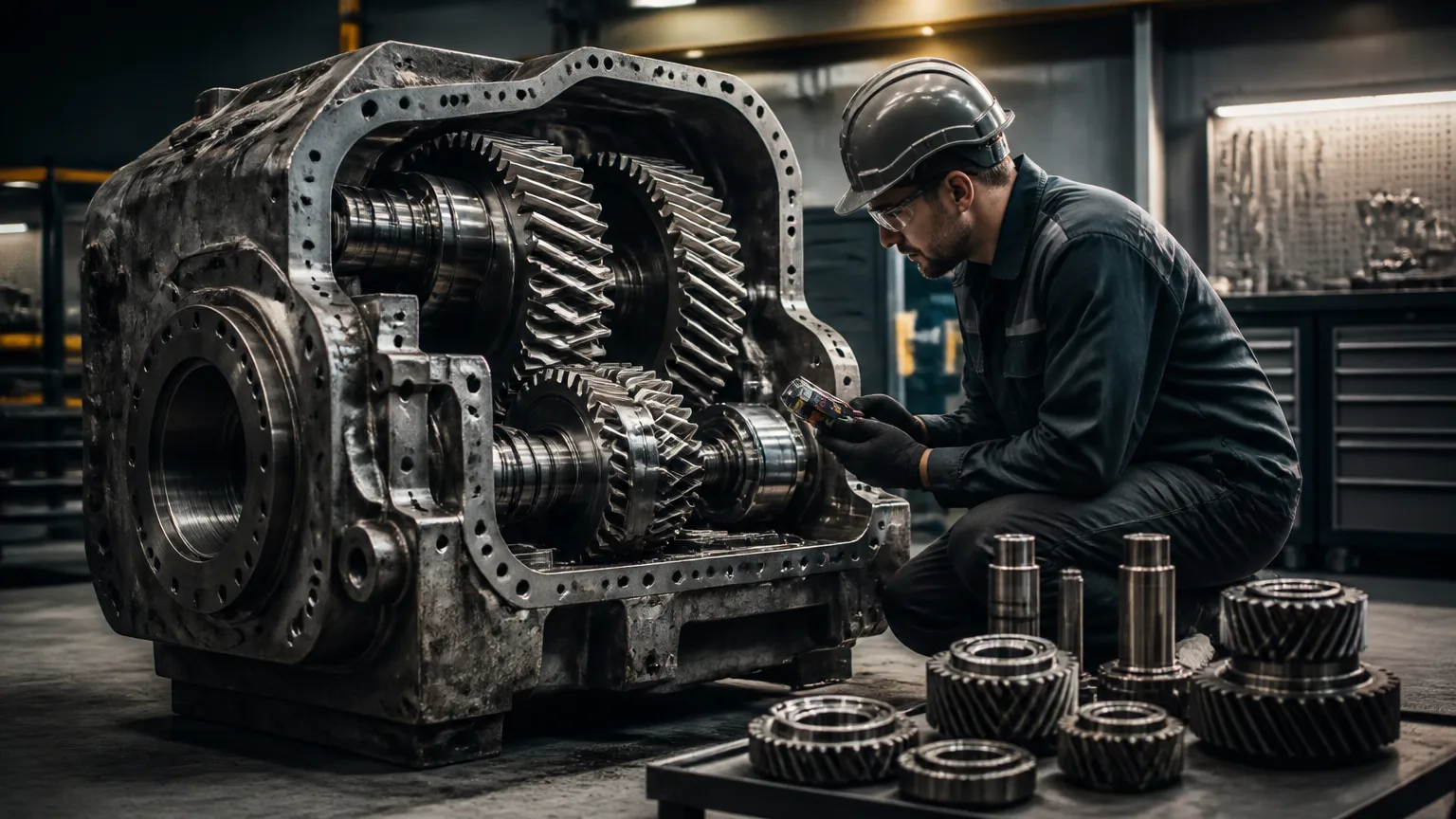
A visual inspection can reveal external leaks, damaged seals, loose connections, or signs of overheating. Technicians may then measure backlash, shaft movement, clearances, and other relevant dimensions. If the unit is opened, teardown findings can show the condition of gears, bearings, shafts, and lubrication surfaces.
Together, these findings help distinguish possible wear, lubrication problems, misalignment, or component damage. Symptoms alone do not confirm a cause: excess heat, for example, may have several underlying explanations. A documented assessment gives the repair provider a basis for defining the scope, parts, and schedule for philadelphia gear oem gearbox repair.
Comparable assessments can help teams understand the diagnostic process, even though gearbox designs and procedures differ. For an example of a gearbox repair approach focused on reducing downtime, see how another repair project connects inspection findings with practical next steps.
Repair, Rebuild or Replace Components
Once inspection findings are clear, the repair scope can range from targeted work to a full rebuild. A targeted repair may address leaking seals, worn bearings, or another serviceable part while leaving sound components in place. This can be appropriate when damage is limited and the gearbox’s overall condition supports continued operation.
A rebuild involves a broader process: teardown, cleaning, inspection, replacement of worn or damaged parts, reassembly, and verification. It may be recommended when wear is widespread, internal condition is uncertain, or a focused repair would leave significant risks unaddressed. For context on how repair scopes can differ across gearbox designs, see an example of gearbox repair options.
Replacement parts should not be selected by appearance or availability alone. They need to meet dimensional requirements, suit the operating environment, and remain compatible with the gearbox’s design and duty. A part that fits physically may still be unsuitable for the required load, speed, temperature, or lubrication conditions. These considerations are central to evaluating philadelphia gear oem gearbox repair options.
Other industrial equipment can illustrate the range of service decisions without confirming shared parts or procedures. For example, another industrial gearbox repair case describes repair considerations for vane pumps, a different equipment type. The right recommendation for a Philadelphia Gear unit depends on its inspection results, component suitability, application demands, and expected service life.
OEM Repair, Engineering Support and Replacement Units
A Philadelphia Gear gearbox may require more than a standard repair when its design, duty cycle, or failure mode calls for specialized evaluation. OEM-level knowledge can help assess design details, identify suitable repair approaches, and determine whether components or engineering review are needed. Confirm directly with the provider whether it has the relevant expertise, parts access, and authorization for your unit.
When requesting an assessment, share the nameplate details, available drawings, clear photos, operating conditions, and failure history. These details help connect the gearbox’s design with its application and service demands. For guidance on what to prepare when discussing gear repair services, gather records on load, speed, lubrication, and past maintenance.
That information can help determine whether repair is practical, whether replacement components are suitable, or whether engineering review is warranted. If damage, component availability, cost, or expected service life makes repair impractical, a replacement unit may be an option. Compatibility should be verified against the existing installation and operating requirements, including ratio, shaft arrangement, mounting, load, and speed.
A request for philadelphia gear oem gearbox repair should not assume a specific part, authorization, or turnaround is available. Confirm those details, along with the proposed scope and schedule, directly with the provider before planning the work.
Choose the Option That Fits the Plant’s Needs
Compare repair and replacement proposals by total lifecycle cost and expected service life, not the initial quote alone. A lower-cost repair may suit the application if inspection findings support a reliable return to service. If significant risks remain, replacement may offer better long-term value.
Match each option to production priorities and procurement requirements. Consider the outage window, shipping and installation logistics, testing needs, warranty terms, and the impact of another failure. For example, a repair that fits the budget may still be impractical if parts delivery extends downtime beyond the planned outage.
Ask each provider for a clear written proposal explaining the scope, assumptions, inspection findings, schedule, and unresolved risks. For philadelphia gear oem gearbox repair, confirm any authorization, parts availability, and warranty coverage directly with the provider. This gives maintenance and purchasing teams a sound basis for comparing cost, risk, and operational fit.
Make the Gearbox Decision With Evidence
The right choice—targeted repair, rebuild, or replacement—depends on documented gearbox condition and production needs. Consider the unit’s role, operating demands, expected service life, and the risks of downtime before deciding. A condition assessment gives maintenance and purchasing teams evidence to compare options and their costs.
To assess philadelphia gear oem gearbox repair or replacement options, gather the asset details, operating conditions, and failure history. Share them with a qualified provider so they can evaluate feasibility and outline a practical scope, schedule, and next step.