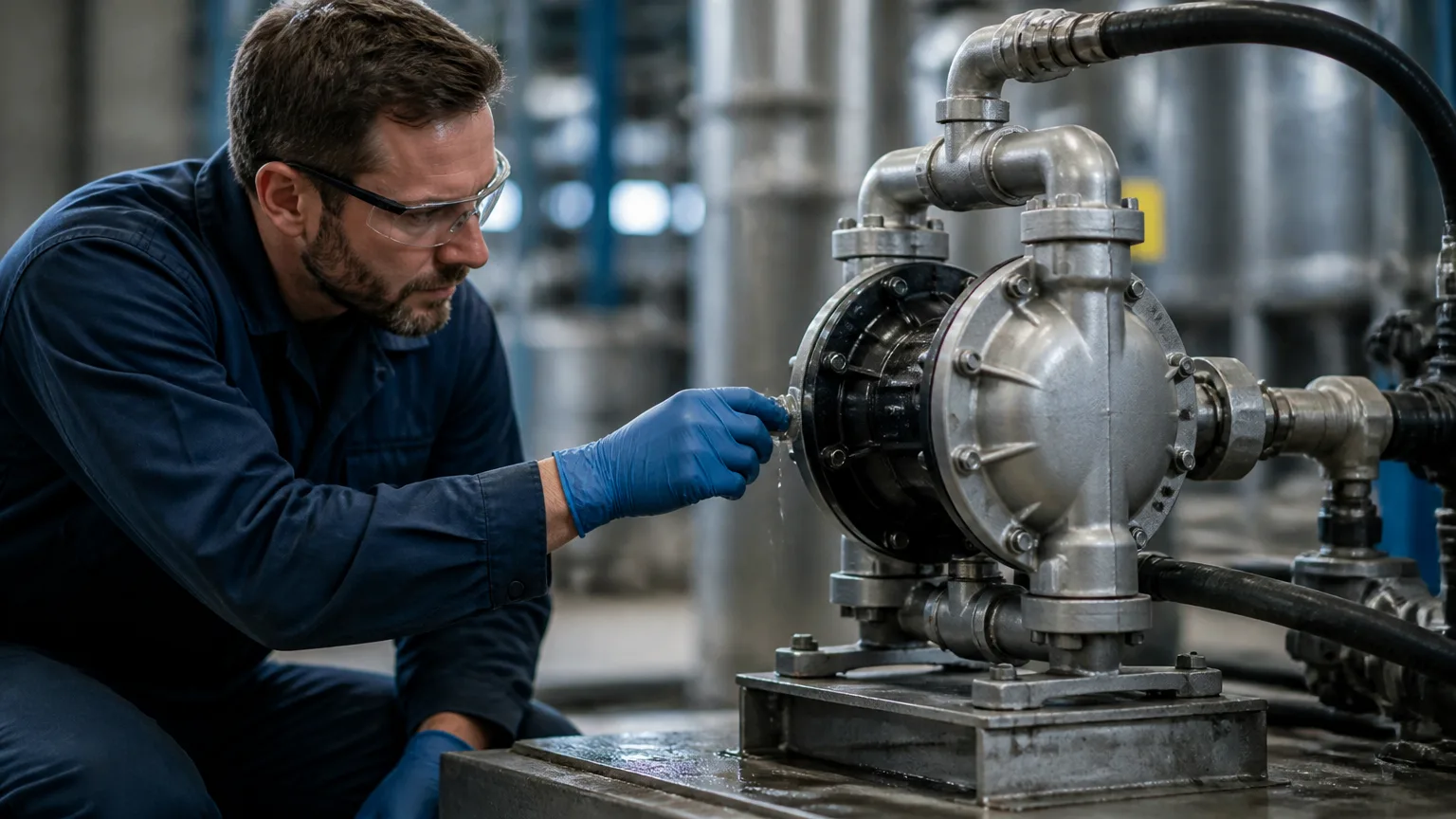
A diaphragm pump problem can disrupt production quickly, especially when the unit handles critical process fluids. If you’re searching for diaphragm pump repair near me, start by noting symptoms such as reduced output, leaks, unusual noise, or repeated cycling. These clues can point to anything from a supply issue to worn pump components.
Before inspecting the equipment, follow your site’s lockout and chemical-handling procedures. Never open a pressurized pump. This article covers safe first checks, common fault clues, and how to choose qualified local repair support. For related troubleshooting context, see Goulds pump repair guidance.
Start with the Symptoms and Operating Conditions
Before dismantling the pump, record what changed and when the problem occurs. Note flow or pressure readings, cycle rate, fluid temperature, operating hours, and whether the fault appears at startup or under load. Compare these details with normal operating conditions and recent process changes.
Pulsing flow, loss of prime, or erratic cycling can point to air leaks, a restricted supply, incorrect settings, or internal wear. These symptoms are clues, not diagnoses. For example, a sudden pressure drop after a valve adjustment may indicate a process restriction, while gradually worsening performance may warrant closer inspection for wear.
Review maintenance history, recent repairs, fluid changes, and operating conditions before calling for diaphragm pump repair near me. Share this information with the local technician, along with the steps needed to reproduce the fault. A clear record can help distinguish an isolated process issue from a developing mechanical problem and reduce unnecessary disassembly. For a structured way to document pump issues, see a maintenance-team approach to Viking pump repair.
Check the Air Supply, Fluid Path, and External Connections
After recording the symptoms, check accessible components around the pump before suspecting an internal failure. Inspect air lines, regulators, filters, and connections for damage, moisture, loose fittings, or pressure below the manufacturer’s specification. Do not adjust or dismantle components beyond your site’s approved operator-level procedures.
Follow the fluid path next. Look for blocked or collapsed suction and discharge hoses, clogged strainers, leaking fittings, and valves in the wrong position. Confirm the fluid is compatible with the pump’s wetted materials; incompatibility can damage components or cause leaks. Never open a pressurized pump or connection.
A pressure drop or fluid leak may originate in connected piping or other system equipment, not the pump itself. Trace the affected line only as far as safe and accessible, and note what you observe for a qualified technician. These checks can help narrow the issue before seeking diaphragm pump repair near me. For related system-level context, review broader water distribution equipment repair considerations.
Look for Diaphragm, Valve, and Drive-System Warning Signs
After recording the symptoms, note any changes in leakage, output, or operating rhythm. Fluid in the air exhaust can indicate a damaged diaphragm, while leakage at the pump body may point to worn seals or loose connections. Persistent loss of capacity or abnormal cycling can also signal diaphragm or check-valve wear.
A technician may inspect diaphragms for cracking, swelling, abrasion, or chemical damage. These conditions can shorten service life, but repair or replacement decisions depend on the pump design, the fluid being handled, and manufacturer guidance. Avoid opening the pump yourself; internal inspection requires proper isolation and safe handling.
For mechanically driven units, the assessment should also cover drive alignment, coupling condition, and vibration. Gearbox noise or heat may indicate a drive problem that affects pump performance; learn how gearboxes can fail and be repaired. Do not run equipment showing severe noise, overheating, or vibration. A technician can distinguish pump faults from related equipment issues, much as a practical guide to liquid-ring vacuum pump repair explains fault assessment for another pump type. Share your observations when seeking diaphragm pump repair near me.
Choose a Local Repair Provider and Decide Whether to Repair or Replace
Once you have documented the symptoms, contact local providers with the pump make, model, serial number, fluid details, operating conditions, and observed issues. Ask what their inspection includes, whether they can source compatible replacement parts, how they test repairs, and what lead time to expect. If the pump uses an associated motor or gearbox, confirm whether the provider can assess those components too.
When comparing options for diaphragm pump repair near me, look beyond the initial quote. Clarify what the estimate covers and how the provider will report findings before proceeding. A clear inspection scope and post-repair test plan can help you judge whether the work addresses the cause, not just the visible damage.
Repair may make sense when the cost is reasonable, parts are available, and the pump has useful service life remaining. Compare that option with replacement availability, expected downtime, repeat failures, and the consequences of another interruption. A replacement may be preferable when the pump is near the end of its life or failures keep recurring, but the right choice depends on your operating needs and site constraints.
Make the Next Repair Decision with Clear Evidence
Document symptoms, operating conditions, and maintenance history before contacting a repair provider. Accurate records help technicians identify root causes and avoid unnecessary parts replacement. Complete only safe, external checks; arrange qualified inspection if internal damage or drive-system faults are suspected.
For mechanically driven installations, assess pump and gearbox condition together. Plan repair or replacement around reliability needs, production demands, and expected downtime. Clear evidence helps you choose the right diaphragm pump repair near me and move forward with confidence.