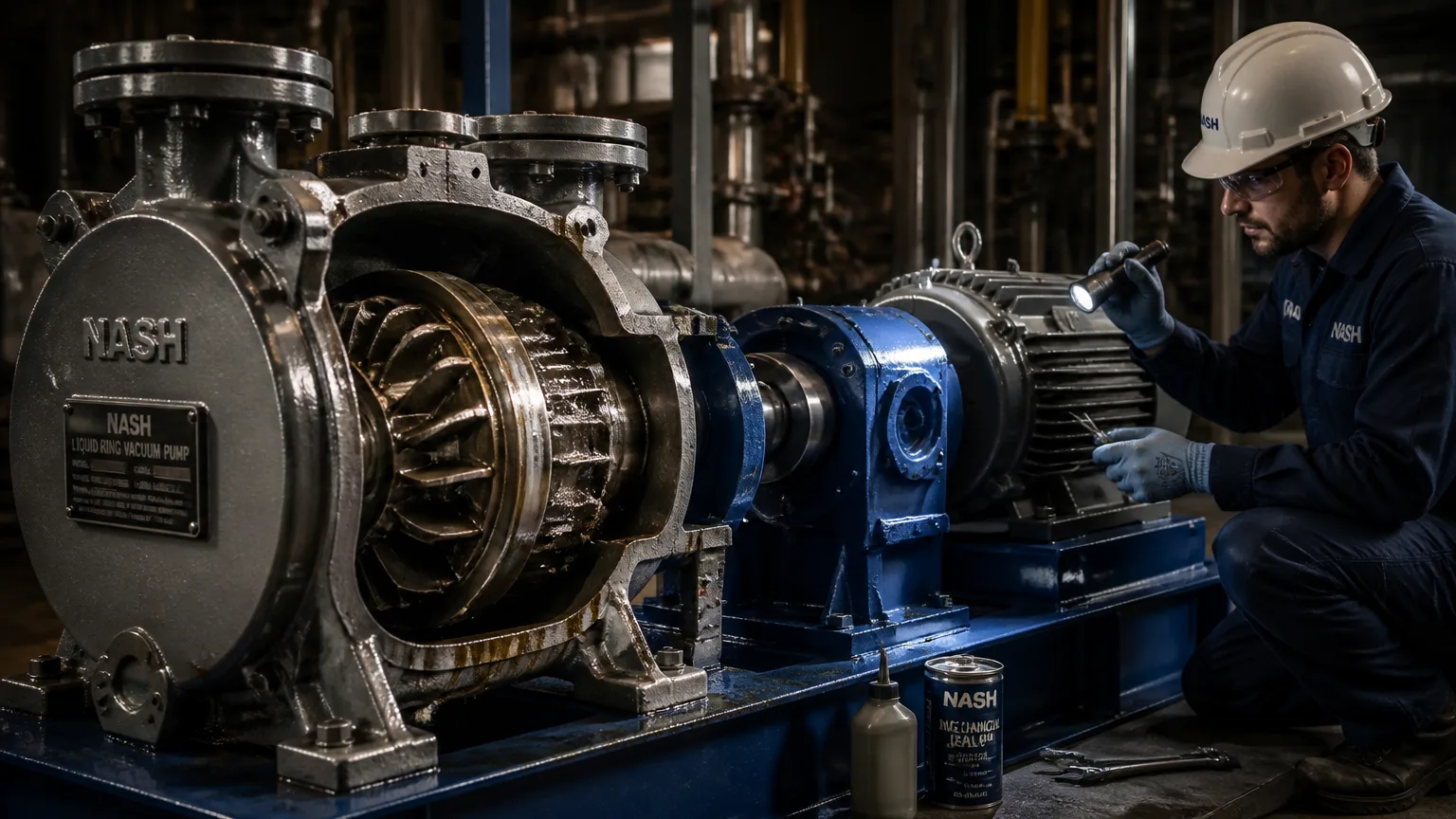
Nash liquid ring vacuum pumps support demanding industrial processes, but reliable vacuum depends on more than the pump itself. Effective nash liquid ring vacuum pump repair starts with the complete drive system: pump, motor, coupling, and gearbox must operate together.
A gearbox problem may appear as vacuum loss, unusual noise, overheating, vibration, or unstable operation. These symptoms can also result from seal wear, misalignment, lubrication issues, or changing process conditions. This Nash vacuum pump repair guide helps connect those symptoms to practical inspection steps.
Repair, replacement, or continued operation should never rely on symptoms alone. The right decision considers inspection data, operating conditions, part availability, and the cost of downtime. Use this guide to identify faults, protect industrial uptime, and select a reliable path forward.
How the Nash Pump and Gearbox Work Together
A Nash liquid ring vacuum pump creates pumping action as its impeller rotates inside a liquid seal. The rotating liquid ring forms chambers that trap and compress gas, producing a reliable vacuum across changing process conditions.
The gearbox transfers power from the motor or other driver to the pump shaft. It also controls shaft speed and manages torque through the correct gear ratio. Understanding speed reduction in industrial machinery helps explain why the pump must operate within its specified speed range.
Speed that is too low can reduce capacity, while excessive speed may increase heat, vibration, and seal wear. Excessive torque can damage gears, shafts, or bearings, especially during startup or under heavy operating loads. Correct shaft alignment is equally important because misalignment increases vibration and can cause coupling, bearing, and mechanical seal failures.
Lubrication supports both torque transmission and heat control. Contaminated, degraded, or insufficient oil can accelerate gear and bearing damage. Review the related drive mechanism components when tracing power-transfer problems.
Before authorizing Nash liquid ring vacuum pump repair, gather the pump model, gearbox ratio, service history, operating speed, and fluid conditions. Record vibration and temperature readings under normal load. This information helps technicians distinguish pump faults from gearbox or operating-condition problems.
Common Gearbox and Pump Problems to Diagnose
Before disassembly, compare current conditions with documented baseline readings. Check vibration, bearing temperature, oil level, motor current, vacuum, evacuation time, and operating speed under normal load. Changes in these values can reveal developing faults before visible damage occurs.
Use symptoms to guide inspection, not to confirm a gearbox failure on their own:
- Abnormal gear noise, shaft play, rising bearing temperature, or increasing vibration may indicate worn gears, bearings, poor lubrication, misalignment, loose fasteners, or coupling damage.
- Oil contamination or leakage can result from degraded seals, overfilling, blocked breathers, or water entering the gearbox. Inspect oil condition and identify the leak source before replacing components.
- Reduced vacuum, longer evacuation times, or inconsistent performance may involve liquid-ring flow, poor water quality, incorrect operating levels, suction restrictions, leaking seals, or damaged pump internals.
- Motor-related symptoms, including unstable speed, high current, or overheating, can imitate gearbox overload and require separate electrical and mechanical checks.
Inspect alignment, lubrication, mounting fasteners, coupling condition, and pump operating levels. Confirm adequate seal water flow and check the suction path for restrictions. During Nash liquid ring vacuum pump repair, technicians should correlate each symptom with inspection data, service history, and fluid conditions. A complete gearbox replacement is justified only after these checks identify gearbox damage or unacceptable repair risk.
Nash Liquid Ring Vacuum Pump Gearbox Repair Process
A professional Nash liquid ring vacuum pump repair begins with controlled removal and a complete inspection. Before selecting replacement parts, the repair shop verifies the gearbox model, ratio, gear tooth condition, bearing wear, shaft runout, housing bores, seals, keys, and mounting surfaces. These checks prevent incorrect parts and reveal dimensional damage that may cause repeat failure.
Technicians then identify the root cause, not just the visible fault. Misalignment, overload, inadequate lubrication, or an unresolved pump-side issue can damage a newly repaired gearbox. Dimensional inspection should confirm shaft fits, bore condition, gear backlash, endplay, and required clearances. Industrial Gearbox Solutions can support this evaluation when specialized gearbox expertise is required.
Damaged gears, bearings, seals, keys, or shafts are replaced with verified components. During reassembly, technicians control cleanliness, follow torque procedures, confirm clearances, and install fresh lubricant at the specified level and grade. Mounting surfaces are corrected before coupling alignment.
Finally, the gearbox is rotated by hand and checked for binding. A controlled test run confirms temperature, noise, vibration, and rotation direction. Load testing under representative conditions verifies alignment and performance before the repaired unit returns to service. Record all measurements for future maintenance.
Repair or Replace: Choosing the Right Gearbox Solution
Repair is usually practical when the housing is recoverable, wear is moderate, and replacement gears and bearings are available. Rebuilding also makes sense when the existing design still matches the Nash pump’s ratio, torque, speed, and operating requirements. A qualified inspection should confirm shaft condition, gear tooth geometry, bearing fits, seals, and housing alignment.
Replacement is often safer when the housing is cracked, gears are severely damaged, or critical components are obsolete. Repeated failures or excessive restoration costs also support replacement. A different pump ratio, capacity, or operating speed may require a new gearbox rather than another rebuild.
Compare repair and replacement using total cost, including labor, parts, testing, downtime, and lead time. An exchange unit may restore service faster, but it must be fully compatible. Verify shaft arrangement, ratio, torque rating, speed, mounting dimensions, lubrication requirements, and the Nash pump’s operating envelope. Use reducer equipment selection guidance when evaluating alternatives. During nash liquid ring vacuum pump repair, document the decision and confirm performance through controlled testing.
Keeping a Nash Vacuum Pump Reliable After Repair
Reliable operation continues with scheduled lubricant checks, vibration and temperature trending, alignment verification, coupling inspections, and leak monitoring. Periodically review vacuum performance to detect changes before they become failures. These practices support safe operation and extend gearbox service life.
Retain drawings, model numbers, inspection reports, service history, and critical spare information. Complete records help accelerate future Nash liquid ring vacuum pump repair or replacement decisions. Qualified gearbox specialists can evaluate repairability, replacement compatibility, and long-term reliability, helping your facility protect uptime and plan service with confidence.