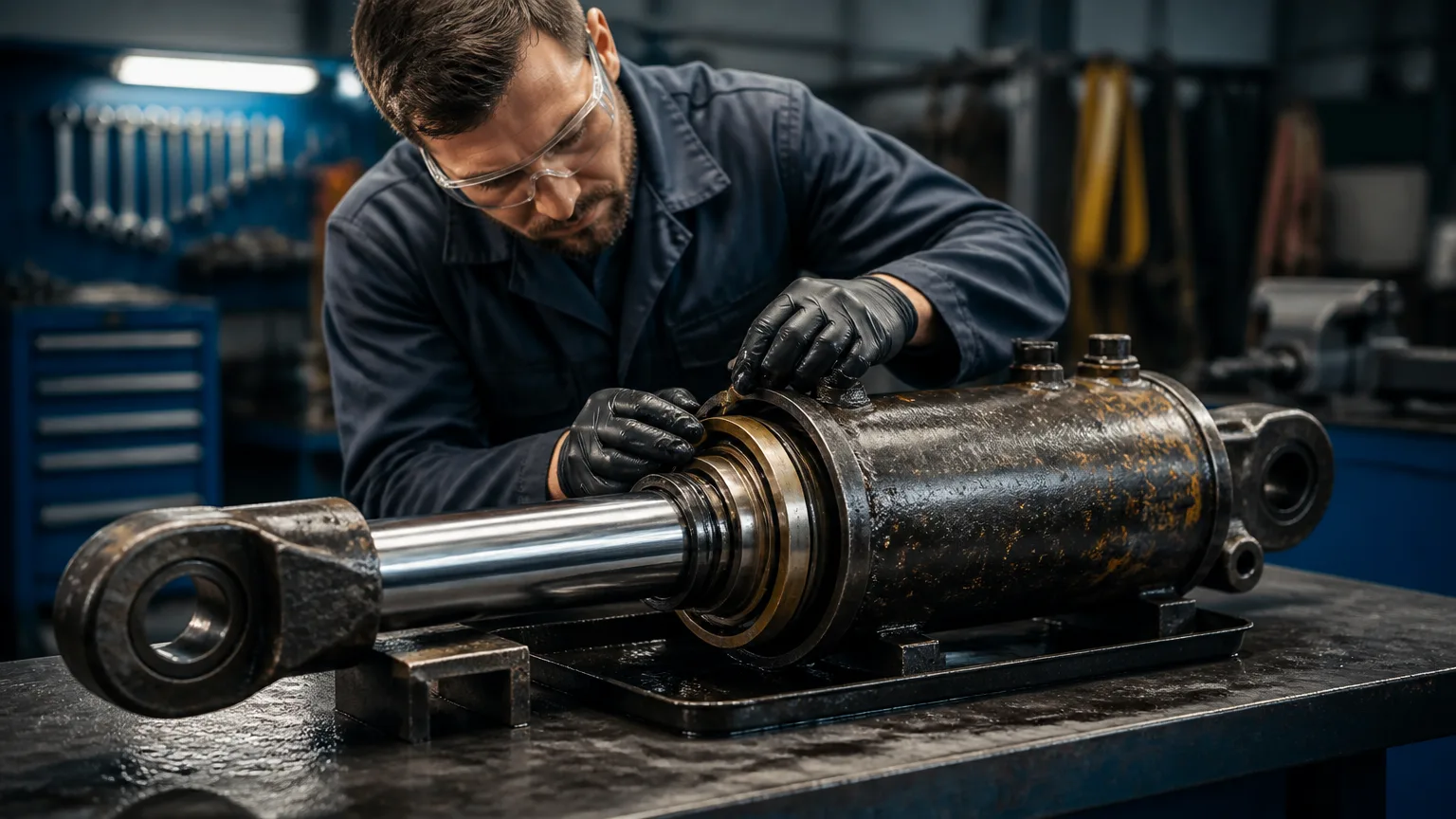
Leaking, drifting, slow, or damaged cylinders can disrupt production and create serious workplace safety risks. When hydraulic cylinder repair Denver services are needed, fast, accurate action helps protect uptime and prevent minor faults from becoming larger failures.
A qualified repair provider does more than replace visible seals or damaged components. Technicians inspect the cylinder, identify the failure’s root cause, assess rebuild options, and confirm compatibility with the machine’s hydraulic system. They also test performance before returning equipment to service.
This article explains what to expect from a professional Denver repair process, including evaluation, repair decisions, pressure testing, and service coordination. It also considers related power-transmission equipment, where Industrial Gearbox Solutions can support broader industrial repair needs. The goal is practical guidance for planning service with confidence.
Start With Inspection and Failure Diagnosis
When a cylinder arrives for hydraulic cylinder repair in Denver, technicians first review its symptoms and service history. Onsite evaluations follow the same process, beginning with operating conditions, leaks, slow movement, pressure loss, and unusual noise.
The inspection includes visual checks for corrosion, scoring, bent rods, damaged mounts, and external leaks. Technicians measure the rod, barrel, piston, and mounting points to identify wear or dimensional changes. They also examine fluid for contamination, since dirt or moisture can quickly damage seals and internal surfaces.
Seal failure is only one possible cause. Recurring problems may result from misalignment, excessive side loading, incorrect pressure, contaminated fluid, or a damaged rod. Technicians also check barrel wear, mounting condition, and alignment with connected equipment.
Facilities should provide as much operating information as possible:
- Cylinder specifications, working pressures, application details, failure history, photographs, and production requirements.
These findings determine the repair scope. A cylinder may need a simple reseal, component machining, rod replacement, barrel repair, or a full rebuild. Clear diagnostic information helps technicians recommend the right solution instead of repeating a repair that will fail again.
Repair, Rebuild, or Replace: Understanding the Recommendation
A qualified provider compares repair, rebuild, and replacement based on the cylinder’s condition and operating demands. For hydraulic cylinder repair Denver facilities, the process may include disassembly, cleaning, seal replacement, rod straightening or replacement, honing, bushing work, welding, machining, and reassembly.
A basic repair is often practical when damage is limited to seals, bushings, or minor surface wear. Rebuilding becomes more economical when the barrel remains sound, but several internal components need service. Technicians may restore the cylinder and pressure-test it before returning it to production.
Replacement may be safer when the barrel is severely damaged, the rod cannot be reliably restored, or the cylinder operates in a critical application. The recommendation should also consider cylinder size, material condition, duty cycle, replacement-part availability, lead time, and the cost of production downtime.
Ask the provider to explain expected service life, warranty coverage, and failure risks for each option. Facilities may also benefit from a partner that coordinates multiple industrial repairs. For example, gear repair services can support related power-transmission equipment without forcing an unrelated gearbox solution. This broader capability can simplify scheduling while keeping each repair aligned with the equipment’s actual needs.
What Happens During Rebuilding and Testing
After approval, the technician follows a controlled rebuilding process. The sequence may include:
- Disassembly and cleaning: Technicians document the cylinder’s condition, then disassemble it safely. Each part is cleaned to remove oil, debris, and contamination.
- Measurement and inspection: Technicians measure the rod, barrel, piston, grooves, and other components. They check wear, scoring, corrosion, distortion, and dimensional clearances.
- Repair or replacement: Damaged rods may be polished, machined, or replaced. Barrels, pistons, glands, and other parts are repaired or replaced when they fall outside specifications.
- Seal installation and reassembly: Correct seals are installed for the fluid, pressure, temperature, and application. The cylinder is then reassembled using documented clearances and torque specifications.
- Testing and documentation: Final records identify completed work, installed parts, measurements, and test results.
Testing should confirm pressure retention, leakage control, smooth extension and retraction, and proper alignment. A professional shop also tests under conditions relevant to the application, such as operating pressure, stroke length, and load requirements. These checks help manufacturers and maintenance teams avoid premature failure after hydraulic cylinder repair in Denver.
If technicians discover unexpected damage, unavailable parts, or a broader repair requirement, they should explain the scope change before proceeding. They should also provide updated costs and completion timing. For related equipment, reviewing effective gearbox repair practices can support more consistent maintenance planning.
Planning Downtime, Installation, and Preventive Maintenance
Effective hydraulic cylinder repair in Denver starts with a realistic production plan. Schedule service during an approved maintenance window, but allow time for inspection findings, custom machining, seal availability, shipping, and final pressure testing. An optimistic turnaround estimate can create avoidable production delays.
Coordinate removal with maintenance, operations, and production teams. Confirm isolation procedures, lifting requirements, hose identification, and storage for removed components. During reinstallation, use clean hydraulic fluid, route hoses without kinks or abrasion, and verify mounting alignment. Follow the manufacturer’s torque specifications for fasteners and connections.
Before full operation, remove trapped air from the cylinder and hydraulic circuit. Commission the equipment gradually while checking for leaks, abnormal movement, pressure changes, and unusual noise. Controlled testing helps identify installation issues before the machine returns to full load.
A repaired cylinder depends on the wider hydraulic and mechanical system. Inspect pumps, valves, electric motors, gearboxes, load conditions, and operating pressures for factors that may have caused the original failure. Set preventive inspection intervals for seals, rods, hoses, alignment, fluid cleanliness, and mounting hardware. Document findings and schedule follow-up checks to reduce repeat failures.
Choosing a Hydraulic Cylinder Repair Partner in Denver
Choose a provider offering industrial-duty experience, transparent diagnosis, realistic timelines, documented testing, and installation support. The lowest quote may increase total costs through repeat downtime. For broader needs, evaluate hydraulic cylinder repair Denver capabilities alongside gearbox repair expertise.