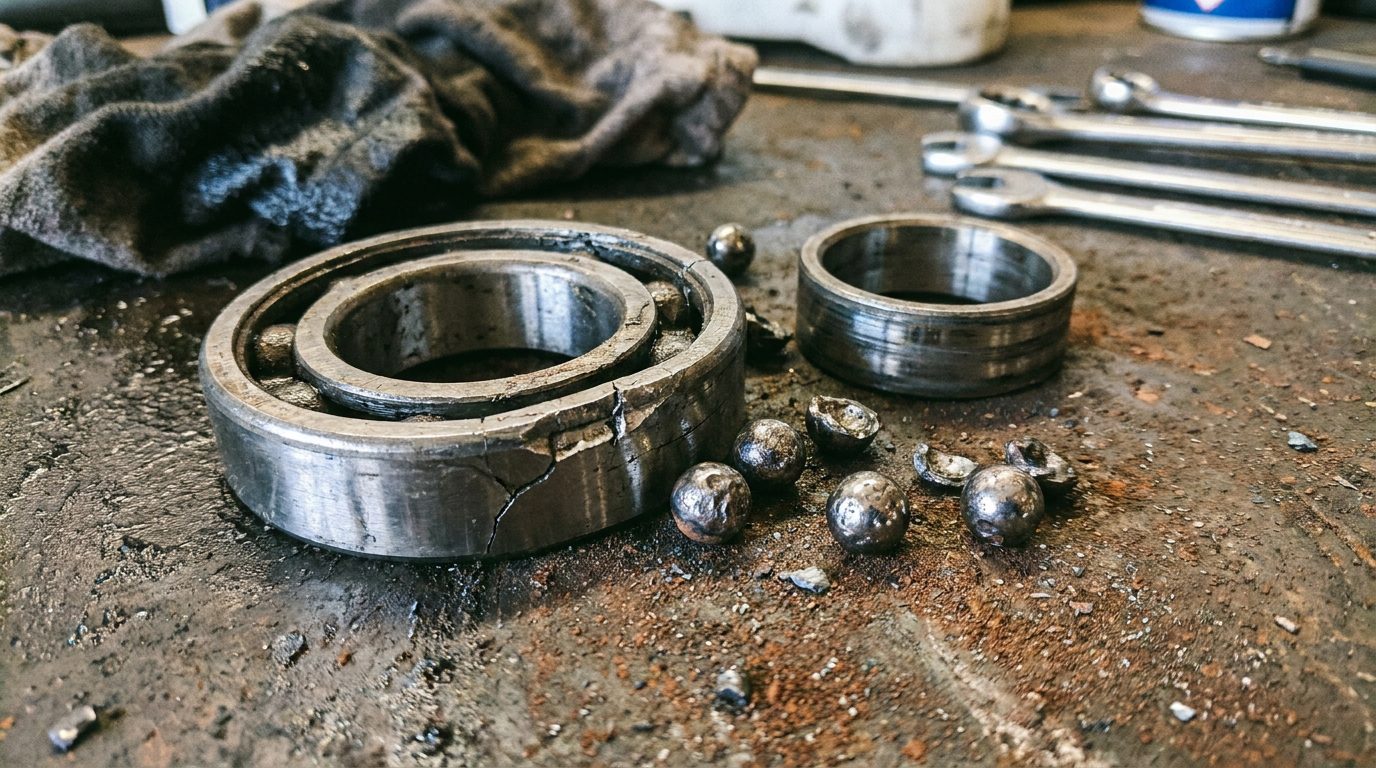
Identifying Early Signs of Bearing Failure is one of the most important reliability practices for industrial gearboxes, motors, pumps, conveyors, mixers, crushers, and other rotating equipment. Bearings rarely fail without warning; they typically produce detectable changes in vibration, temperature, lubrication condition, noise, shaft movement, and operating performance long before catastrophic damage occurs. For maintenance managers, plant engineers, reliability engineers, mechanics, and purchasing professionals, recognizing these early warning signs can prevent unplanned downtime, secondary gearbox damage, safety risks, and emergency repair costs. This guide explains how to identify bearing distress early, troubleshoot likely causes, inspect bearings properly, and decide when repair or replacement is the best path forward.
Early signs of bearing failure include abnormal vibration, unusual noise, rising operating temperature, lubricant contamination, metal particles in oil or grease, increased current draw, shaft movement, reduced equipment performance, and visible wear during inspection. The most reliable way to identify bearing failure early is to combine routine sensory inspections with vibration analysis, oil analysis, thermography, ultrasound, and scheduled gearbox inspections. If symptoms are caught early, maintenance teams may correct lubrication, alignment, load, contamination, or installation issues before the bearing damages gears, shafts, seals, housings, or connected equipment.
Understanding the early warning signs of bearing failure is crucial for maintaining the efficiency and longevity of machinery. For those interested in further exploring related topics, the article on continuous versus intermittent gearbox operation provides valuable insights into how different operational modes can impact the performance and reliability of gear systems. You can read more about it here: Continuous vs. Intermittent Gearbox Operation.
Why Early Bearing Failure Detection Matters
Bearings support rotating shafts, control axial and radial loads, reduce friction, and maintain gear mesh alignment inside industrial gearboxes. When a bearing begins to fail, the problem often spreads quickly. A damaged bearing can allow shaft deflection, gear misalignment, seal leakage, excessive heat, and destructive vibration.
For gearbox-driven equipment, bearing failure is especially costly because it can damage:
- Gear teeth and gear mesh contact patterns
- Shafts, journals, and keyways
- Bearing housings and bores
- Oil seals and labyrinth seals
- Couplings, motors, pumps, conveyors, fans, and driven machinery
- Lubrication systems and filtration components
According to reliability principles supported by organizations such as AGMA, SKF, Timken, and Noria, most bearing failures are not random. They usually trace back to root causes such as poor lubrication, contamination, overload, misalignment, improper installation, electrical damage, or operating conditions outside the equipment’s design limits.
For industrial gearbox support, see our related resources on industrial gearbox repair, gearbox inspection services, and gearbox rebuilds.
Common Early Signs of Bearing Failure
Bearing failure usually progresses through stages. In the earliest stage, symptoms may only be visible through vibration analysis, ultrasound, or oil analysis. As damage worsens, mechanics may notice noise, heat, looseness, lubricant discoloration, or visible wear.
Abnormal Vibration
Vibration is one of the most reliable early indicators of bearing distress. A healthy bearing produces a predictable vibration signature. When defects develop on the inner race, outer race, rolling elements, or cage, vibration levels change.
Common vibration-related warning signs include:
- Increased overall vibration amplitude
- High-frequency vibration peaks
- Repeating defect frequencies
- Impacts or shock pulses
- Sidebands around bearing fault frequencies
- Changes in velocity, acceleration, or envelope readings
Reliability engineers often use vibration analysis to detect bearing defects before they can be heard or felt. This is especially important for critical gearboxes in continuous-duty operations.
Unusual Noise
Noise is often one of the first symptoms noticed by operators or mechanics. Bearing noise may sound like:
- Grinding
- Growling
- Rumbling
- Clicking
- Squealing
- Humming
- Metallic scraping
- Intermittent knocking
A smooth-running gearbox should not suddenly develop harsh or inconsistent operating sounds. Noise may indicate insufficient lubrication, spalling, contamination, cage damage, excessive clearance, or misalignment.
Rising Operating Temperature
Heat is both a symptom and a cause of bearing failure. A bearing running hotter than normal may be experiencing increased friction, lubricant breakdown, excessive preload, misalignment, or overloading.
Warning signs include:
- Gearbox housing temperature trending upward
- Bearing cap or bearing area hotter than adjacent surfaces
- Oil temperature exceeding normal operating limits
- Discolored paint near bearing housings
- Burnt oil smell
- Grease leakage or oil thinning due to heat
Temperature should be evaluated as a trend, not just as a single reading. A gearbox that normally runs at 150°F but gradually rises to 175°F under similar load conditions deserves investigation.
Lubricant Contamination or Breakdown
Lubrication problems are among the most common causes of bearing failure. Oil or grease protects bearing surfaces by reducing friction, carrying away heat, and preventing metal-to-metal contact.
Early lubricant warning signs include:
- Darkened or oxidized oil
- Milky oil indicating water contamination
- Metallic particles in oil samples
- Sludge, varnish, or deposits
- Burnt odor
- Grease hardening or softening
- Excessive foaming
- Low oil level
- Wrong lubricant viscosity
Noria provides extensive guidance on lubrication analysis and contamination control. See Noria’s lubrication resources at https://www.noria.com for deeper reference.
Metal Particles in Oil or Grease
Metal particles are a strong indicator of internal wear. Fine metallic debris may come from early bearing surface distress, while larger flakes can indicate spalling or advanced damage.
Inspection methods include:
- Magnetic drain plug checks
- Oil sample laboratory analysis
- Filter debris analysis
- Ferrography
- Patch testing
- Visual inspection of grease purged from bearing cavities
If bronze, steel, or other metallic particles are present, the gearbox should be inspected promptly to determine whether bearing, gear, or shaft wear is occurring.
Increased Shaft Movement or Looseness
Bearing wear can cause excessive radial or axial movement. This can lead to gear misalignment, seal damage, coupling stress, and vibration.
Symptoms may include:
- Shaft endplay outside specification
- Visible shaft wobble
- Seal leakage
- Coupling misalignment
- Gear tooth contact pattern changes
- Abnormal backlash
- Excessive bearing clearance
Excessive looseness should never be ignored in a gearbox because shaft position directly affects gear mesh quality.
Industrial gearbox bearing failure can lead to costly downtime and production losses, so it’s important to address the issue promptly. Industrial gearbox bearing failure
Major Causes of Bearing Failure
Understanding the cause of bearing failure is essential. Replacing a failed bearing without correcting the root cause often results in repeat failure.
Lubrication Failure
Lubrication failure includes too little lubricant, too much lubricant, wrong lubricant, degraded lubricant, or contaminated lubricant. In industrial gearboxes, incorrect oil viscosity is a common problem. If the lubricant is too thin, it may not provide adequate film strength. If it is too thick, it may cause churning, heat, and inefficient operation.
Common lubrication-related causes include:
- Low oil level
- Wrong ISO viscosity grade
- Incompatible grease
- Overgreasing
- Undergreasing
- Oxidation
- Water contamination
- Dirt ingress
- Foaming
- Additive depletion
- Blocked oil passages
SKF and Timken both emphasize the importance of correct lubrication and contamination control in maximizing bearing life. Useful references include SKF at https://www.skf.com and Timken at https://www.timken.com.
Contamination
Contamination introduces abrasive particles or corrosive fluids into the bearing contact zone. Even small particles can dent raceways and rolling elements, creating stress risers that grow into fatigue damage.
Common contaminants include:
- Dust
- Sand
- Metal debris
- Water
- Process chemicals
- Cleaning solvents
- Coolant
- Rust particles
- Degraded lubricant byproducts
Contamination often enters through failed seals, poor breathers, open inspection covers, improper oil transfer practices, or inadequate filtration.
Misalignment
Misalignment places uneven load on bearings. In gearboxes, misalignment may be caused by poor installation, soft foot, foundation movement, thermal growth, coupling errors, or shaft deflection.
Misalignment symptoms include:
- Elevated vibration at running speed
- Increased bearing temperature
- Edge loading on bearing raceways
- Uneven gear tooth contact
- Coupling wear
- Premature seal failure
Laser alignment and precision installation practices help reduce misalignment-related bearing failures.
Overload and Shock Loading
Bearings are designed for specific radial and axial loads. If equipment is overloaded or exposed to repeated shock loads, bearing fatigue accelerates.
Common overload sources include:
- Jammed conveyors
- Crusher shock loads
- Mixer process surges
- Incorrect gearbox sizing
- Excess belt tension
- Pump cavitation
- Sudden starts and stops
- Torque spikes
- Improper clutch or brake settings
Purchasing professionals should ensure replacement bearings and gearboxes are rated for real operating loads, not just nameplate assumptions.
Improper Installation
A bearing can fail prematurely if it is installed incorrectly. Installation damage may not be obvious at startup, but it can significantly reduce bearing life.
Common installation mistakes include:
- Hammering directly on bearing rings
- Applying force through rolling elements
- Incorrect heating practices
- Contaminated assembly environment
- Wrong fits or tolerances
- Incorrect preload or clearance
- Damaged shaft journals
- Burrs on housing shoulders
- Reusing damaged locknuts or washers
Precision assembly is critical during gearbox repair. For help with failure analysis and rebuilds, visit Industrial Gearbox Solutions repair services.
Electrical Damage
Electric current passing through bearings can create fluting, pitting, and frosting on raceways. This is common in variable frequency drive applications when shaft grounding or insulation is inadequate.
Symptoms include:
- Washboard-like raceway fluting
- High-frequency vibration
- Audible whining
- Premature lubricant degradation
- Repeated bearing failures in motor-driven equipment
Solutions may include shaft grounding rings, insulated bearings, proper VFD grounding, and electrical discharge protection.
Understanding the early warning signs of bearing failure is crucial for maintaining the efficiency and longevity of machinery. For those looking to delve deeper into the implications of bearing issues, a related article discusses the important considerations when deciding between repair and replacement of gearboxes. This insightful piece can be found here, and it emphasizes how timely interventions can prevent more extensive damage and costly downtime.
Bearing Failure Symptoms by Severity
| Early Warning Signs of Bearing Failure |
|---|
| 1. Unusual noises such as grinding or squealing |
| 2. Excessive vibration or shaking |
| 3. Overheating of the bearing |
| 4. Increased friction or resistance |
| 5. Visible wear or damage on the bearing surface |
The table below helps maintenance teams prioritize response based on symptom severity.
| Symptom | Possible Cause | Severity | Recommended Action |
|||:||
| Slight increase in vibration | Early bearing defect, imbalance, lubrication issue | Low to Medium | Trend vibration, inspect lubrication, schedule follow-up |
| High-frequency vibration peaks | Race or rolling element defect | Medium | Perform vibration analysis and oil sampling |
| Gearbox running hotter than normal | Lubrication failure, overload, misalignment | Medium | Check oil level, viscosity, load, and alignment |
| Grinding or growling noise | Surface damage, contamination, poor lubrication | High | Reduce load if possible and inspect immediately |
| Metal particles in oil | Bearing or gear wear | High | Perform oil analysis and internal inspection |
| Excessive shaft movement | Bearing clearance, wear, housing damage | High | Shut down if severe; inspect bearing fits and shaft |
| Smoke, burning odor, severe noise | Advanced failure or seizure | Critical | Stop equipment immediately |
| Seal leakage with vibration | Shaft movement or bearing wear | High | Inspect bearing, seal, shaft, and housing bore |
Understanding the early warning signs of bearing failure is crucial for maintaining the efficiency and longevity of machinery. For those looking to delve deeper into the applications of industrial gearboxes, a related article provides valuable insights into how these components function and their importance in various industries. You can explore this further in the article on industrial gearbox applications, which highlights the significance of proper maintenance and monitoring to prevent costly downtime.
Troubleshooting Bearing Failure in Industrial Gearboxes
Troubleshooting should be systematic. Jumping to conclusions can lead to unnecessary bearing replacement or missed root causes.
Step 1: Confirm the Operating Conditions
Start by documenting how the gearbox is running.
Record:
- Load level
- Speed
- Operating temperature
- Lubricant type
- Oil level
- Ambient conditions
- Recent maintenance work
- Recent process changes
- Runtime since last inspection
- Alarm history
- Vibration trend history
Changes in operating conditions often explain sudden changes in bearing behavior.
Step 2: Inspect Lubrication
Lubrication should be checked early in the troubleshooting process because it is one of the most common failure contributors.
Inspect:
- Oil level
- Oil color
- Oil smell
- Oil viscosity
- Water contamination
- Foam
- Sediment
- Filter condition
- Breather condition
- Grease consistency
- Lubricant compatibility
If oil analysis is available, review particle count, viscosity, water content, acid number, oxidation, additive levels, and wear metals.
Step 3: Analyze Vibration Data
Vibration analysis can identify whether the issue is likely bearing-related or caused by imbalance, misalignment, looseness, gear mesh, resonance, or process forces.
Useful vibration methods include:
- Overall vibration trending
- FFT spectrum analysis
- Time waveform analysis
- Acceleration enveloping
- Shock pulse monitoring
- Bearing fault frequency analysis
- Phase analysis
Vibration data should be interpreted by trained personnel because gearbox vibration signatures can be complex.
Step 4: Check Alignment and Foundation
Poor alignment and unstable foundations often contribute to bearing stress.
Inspect:
- Coupling alignment
- Soft foot
- Baseplate condition
- Loose mounting bolts
- Foundation cracks
- Pipe strain
- Belt tension
- Thermal growth
- Structural resonance
Correcting alignment and foundation issues may prevent repeat failures after bearing replacement.
Step 5: Perform Internal Inspection When Needed
If symptoms suggest advanced damage, plan an internal gearbox inspection. Depending on equipment criticality, this may require shutdown.
Inspect:
- Bearing raceways
- Rolling elements
- Bearing cages
- Gear tooth contact
- Shaft journals
- Housing bores
- Oil passages
- Seals
- Retaining hardware
- Magnetic plugs
- Oil sump debris
Photograph all findings and preserve failed parts for root cause analysis.
Inspection Methods for Early Detection
A strong condition monitoring program combines multiple inspection methods. No single tool catches every failure mode.
Visual Inspection
Visual inspection remains valuable when performed consistently.
Look for:
- Oil leaks
- Grease leakage
- Discoloration
- Rust
- Loose bolts
- Damaged breathers
- Broken sight glasses
- Cracked housings
- Misaligned couplings
- Unusual debris near seals
Operators and mechanics should be trained to report small changes before they become major failures.
Vibration Analysis
Vibration analysis is one of the best technologies for detecting bearing defects early. It can identify fault frequencies associated with:
- Ball pass frequency outer race
- Ball pass frequency inner race
- Ball spin frequency
- Fundamental train frequency
- Gear mesh issues
- Shaft imbalance
- Misalignment
- Looseness
For critical gearboxes, vibration data should be collected on a scheduled route or through permanent sensors.
Oil Analysis
Oil analysis is especially valuable for enclosed gearboxes. It can reveal internal problems without disassembly.
Key oil analysis tests include:
| Test | What It Detects | Bearing Failure Relevance |
||||
| Particle count | Dirt and cleanliness level | High particles accelerate bearing wear |
| Wear metals | Iron, chromium, copper, tin | Indicates bearing, gear, or bushing wear |
| Water content | Moisture contamination | Water reduces film strength and causes corrosion |
| Viscosity | Lubricant thickness | Incorrect viscosity causes heat and wear |
| Acid number | Oxidation and oil degradation | Degraded oil loses protective capability |
| Ferrography | Particle size and type | Helps identify fatigue, cutting, and sliding wear |
| FTIR | Oxidation, additives, contamination | Confirms lubricant condition |
Noria’s lubrication training and reference materials are helpful for developing oil analysis programs.
Infrared Thermography
Thermography identifies abnormal heat patterns. It is useful for comparing similar gearboxes, bearing housings, motors, and driven equipment.
Thermography can detect:
- Overheated bearings
- Lubrication problems
- Misalignment-related heat
- Electrical issues
- Cooling problems
- Overloaded components
Thermal images should be compared against baseline readings under similar load and ambient conditions.
Ultrasound Testing
Ultrasound can detect high-frequency friction, impacting, and lubrication issues. It is useful for slow-speed bearings where traditional vibration analysis may be more difficult.
Ultrasound can help identify:
- Lack of lubrication
- Overlubrication
- Early surface defects
- Bearing impacts
- Cavitation in connected equipment
- Air leaks that may affect pneumatic systems nearby
Borescope Inspection
A borescope allows internal inspection without full gearbox disassembly. It can help identify visible bearing cage damage, debris, gear wear, oil condition, and broken components.
Borescope inspection is useful when:
- Vibration indicates a developing fault
- Oil analysis shows elevated wear metals
- Shutdown time is limited
- The gearbox is difficult to remove
- A preliminary inspection is needed before repair planning
Bearing Failure Modes and What They Look Like
Recognizing failure modes helps determine root cause.
Fatigue Spalling
Fatigue spalling appears as flaking or pitting on raceways or rolling elements. It often develops after repeated stress cycles.
Possible causes:
- Normal fatigue life
- Overload
- Misalignment
- Contamination dents
- Insufficient lubrication film
Abrasive Wear
Abrasive wear creates dull, scratched, or polished surfaces. It often results from dirt, metal particles, or inadequate filtration.
Possible causes:
- Contaminated oil
- Poor seals
- Dirty assembly practices
- Inadequate breathers
- Poor oil transfer practices
Corrosion
Corrosion appears as rust, staining, or etching. It may cause noisy operation and accelerated fatigue.
Possible causes:
- Water contamination
- Chemical exposure
- Condensation
- Improper storage
- Inadequate corrosion protection
Smearing and Scuffing
Smearing looks like dragged, torn, or transferred metal. It usually indicates sliding contact, poor lubrication, or speed/load issues.
Possible causes:
- Oil film breakdown
- Rapid acceleration
- Skidding
- Improper preload
- Wrong lubricant viscosity
Cage Damage
Bearing cage damage may include cracks, wear, deformation, or broken pockets. Cage failure can quickly become catastrophic.
Possible causes:
- Vibration
- Misalignment
- Poor lubrication
- Shock loading
- Improper installation
- Foreign object damage
Electrical Fluting
Electrical fluting creates parallel grooves across raceways. It is commonly associated with electrical discharge.
Possible causes:
- VFD-induced shaft currents
- Poor grounding
- Motor electrical issues
- Inadequate insulation
Prevention Strategies for Longer Bearing Life
Preventing bearing failure requires controlling the conditions that shorten bearing life.
Improve Lubrication Practices
Best practices include:
- Use the correct lubricant viscosity and specification
- Keep oil at the proper level
- Avoid mixing incompatible lubricants
- Filter new oil before use
- Use clean transfer containers
- Maintain breathers and seals
- Control water contamination
- Establish oil change intervals based on analysis
- Use condition-based lubrication where possible
A lubrication program should be documented and audited regularly.
Control Contamination
Contamination control is one of the highest-return reliability improvements.
Recommended actions:
- Install desiccant breathers where appropriate
- Upgrade seals in dirty or wet environments
- Filter oil during transfer
- Use sealed and labeled lubricant containers
- Keep inspection covers closed
- Clean around fill ports before opening
- Use kidney-loop filtration for critical gearboxes
- Monitor ISO cleanliness targets
Use Precision Installation Methods
Precision installation reduces early-life bearing failures.
Important practices:
- Verify bearing part numbers and specifications
- Inspect shaft and housing fits
- Use induction heaters when appropriate
- Avoid open flames for heating bearings
- Apply force only to the proper bearing ring
- Use calibrated tools
- Set preload or clearance correctly
- Confirm shaft endplay
- Maintain a clean assembly environment
Align Equipment Correctly
Alignment should be verified after installation and periodically during operation.
Best practices include:
- Laser align couplings
- Check soft foot before alignment
- Account for thermal growth
- Verify baseplate stability
- Control pipe strain
- Set belt tension correctly
- Recheck alignment after initial run-in
Store Bearings Properly
Bearings can be damaged before installation if stored incorrectly.
Storage recommendations:
- Keep bearings in original packaging
- Store in a clean, dry area
- Avoid vibration exposure
- Protect from temperature extremes
- Rotate inventory using first-in, first-out practices
- Do not open packaging until installation
- Prevent corrosion during long-term storage
Repair vs. Replacement: How to Decide
When early signs of bearing failure appear, maintenance and purchasing teams must decide whether to monitor, repair, rebuild, or replace the gearbox or bearing assembly.
When Monitoring May Be Acceptable
Monitoring may be acceptable when:
- Vibration increase is minor and stable
- No metal particles are present
- Temperature remains within normal limits
- Equipment is non-critical
- A planned outage is near
- The root cause is known and controlled
Monitoring should include more frequent inspections and clear alarm limits.
When Bearing Replacement Is Recommended
Bearing replacement is often required when:
- Bearing fault frequencies are increasing
- Metal particles are found in oil
- Noise is worsening
- Temperature is rising
- Shaft movement exceeds tolerance
- Oil analysis confirms active wear
- The bearing shows spalling, corrosion, or cage damage
- The equipment is critical to production
Replacement should include root cause correction, not just installation of a new bearing.
When Gearbox Repair or Rebuild Is Needed
A full gearbox repair or rebuild may be necessary if bearing failure has damaged related components.
Consider gearbox repair or rebuild when inspection finds:
- Damaged gears
- Worn shafts
- Housing bore wear
- Seal journal damage
- Cracked housings
- Excessive backlash
- Oil system contamination
- Multiple bearing failures
- Misalignment caused by internal wear
For evaluation and repair support, contact Industrial Gearbox Solutions or learn more about emergency gearbox repair.
Replacement Cost vs. Downtime Risk
Purchasing professionals should evaluate total cost, not just bearing price.
Consider:
| Factor | Repair/Replace Decision Impact |
|||
| Equipment criticality | Critical assets may justify immediate replacement |
| Lead time | Long lead times increase downtime risk |
| Failure progression | Fast-developing faults require urgent action |
| Secondary damage risk | Gearbox damage can exceed bearing cost |
| Labor and crane access | Difficult access favors planned repair |
| Production schedule | Planned outages reduce cost |
| Spare availability | In-stock spares improve flexibility |
| Root cause confidence | Unknown root causes increase repeat failure risk |
Maintenance Best Practices for Industrial Bearings
A disciplined maintenance program reduces bearing failures and improves asset reliability.
Establish Baseline Data
Baseline data helps detect abnormal changes.
Capture:
- Normal vibration readings
- Normal operating temperatures
- Oil analysis results
- Noise levels
- Load and speed conditions
- Alignment readings
- Lubricant specifications
- Bearing clearances and endplay
- Gear tooth contact patterns
Create Inspection Routes
Inspection routes should be consistent and documented.
Include:
- Visual leak inspection
- Temperature measurement
- Listening checks
- Vibration readings
- Oil level checks
- Breather condition checks
- Seal condition checks
- Foundation and bolt checks
- Lubricant sample schedule
Use Condition-Based Maintenance
Condition-based maintenance uses real asset health data instead of fixed intervals alone.
Technologies may include:
- Vibration monitoring
- Oil analysis
- Ultrasound
- Thermography
- Online temperature sensors
- Particle counters
- Remote gearbox monitoring
This approach helps maintenance teams repair equipment before failure while avoiding unnecessary replacement.
Train Operators and Mechanics
Operators are often the first to notice changes. Training should cover:
- Normal vs. abnormal sounds
- Safe temperature observations
- Leak reporting
- Vibration awareness
- Lubrication contamination risks
- When to escalate concerns
- How to document symptoms
Mechanics should also be trained in bearing handling, installation, alignment, lubrication, and failure documentation.
Troubleshooting Checklist for Early Bearing Failure
Use this checklist when bearing failure is suspected:
- Confirm equipment speed, load, and operating conditions
- Compare vibration readings to baseline
- Listen for grinding, growling, clicking, or squealing
- Check bearing housing temperature
- Inspect oil level and lubricant condition
- Sample oil for laboratory analysis
- Inspect magnetic plugs and filters for debris
- Check for water contamination
- Verify correct lubricant type and viscosity
- Inspect seals and breathers
- Check coupling alignment
- Inspect foundation and mounting bolts
- Review recent maintenance history
- Check for overload or process changes
- Inspect shaft movement and endplay
- Plan borescope or internal inspection if needed
- Preserve failed parts for root cause analysis
Authoritative References for Bearing Reliability
The following organizations provide valuable technical guidance on bearings, gearboxes, lubrication, and reliability:
- SKF bearing knowledge and condition monitoring resources: https://www.skf.com
- Timken bearing engineering and maintenance resources: https://www.timken.com
- AGMA gear standards and gearbox guidance: https://www.agma.org
- Noria lubrication and oil analysis education: https://www.noria.com
These sources are useful for maintenance teams developing bearing failure prevention programs, lubrication standards, and gearbox reliability strategies.
Suggested Branded Images
Image 1: Technician Inspecting Industrial Gearbox Bearing
Alt text: Technician inspecting an industrial gearbox bearing for early signs of bearing failure
Caption: A technician checks bearing condition during a scheduled industrial gearbox inspection.
Recommended placement: Near the introduction or “Common Early Signs of Bearing Failure.”
Image 2: Vibration Analysis on Gearbox Drive
Alt text: Reliability engineer using vibration analysis to identify early bearing failure in a gearbox
Caption: Vibration analysis can detect bearing defects before they become audible or visible.
Recommended placement: Near “Inspection Methods for Early Detection.”
Image 3: Contaminated Gearbox Oil Sample
Alt text: Contaminated gearbox oil sample showing metal particles from bearing wear
Caption: Oil analysis helps identify metal particles, water contamination, and lubricant degradation.
Recommended placement: Near “Lubricant Contamination or Breakdown.”
Image 4: Failed Bearing Race With Spalling
Alt text: Failed bearing race with spalling caused by fatigue and lubrication issues
Caption: Bearing race spalling is a common sign of advanced bearing damage.
Recommended placement: Near “Bearing Failure Modes and What They Look Like.”
Image 5: Precision Gearbox Rebuild at Industrial Gearbox Solutions
Alt text: Industrial Gearbox Solutions technician rebuilding a gearbox after bearing failure
Caption: Precision gearbox repair includes bearing replacement, root cause analysis, and component inspection.
Recommended placement: Near “Repair vs. Replacement.”
SEO Metadata
Meta title: Identifying Early Signs of Bearing Failure | Industrial Gearbox Solutions
Meta description: Learn how to identify early signs of bearing failure in industrial gearboxes, including vibration, noise, heat, lubrication issues, inspection methods, troubleshooting, prevention, and repair decisions.
Primary keyword: Identifying Early Signs of Bearing Failure
Secondary keywords:
- bearing failure symptoms
- early bearing failure signs
- industrial gearbox bearing failure
- gearbox bearing inspection
- bearing failure troubleshooting
- bearing vibration analysis
- gearbox oil analysis
- bearing maintenance best practices
- bearing repair vs replacement
- industrial gearbox maintenance
Suggested URL slug: identifying-early-signs-of-bearing-failure
Search intent: Informational and commercial investigation for maintenance, reliability, engineering, and purchasing teams seeking to detect bearing failure early and reduce gearbox downtime.
Key Takeaways
- Bearings usually show warning signs before catastrophic failure.
- Common early symptoms include vibration, noise, heat, lubricant contamination, metal particles, and shaft movement.
- Lubrication failure, contamination, misalignment, overload, improper installation, and electrical damage are leading causes.
- Vibration analysis, oil analysis, thermography, ultrasound, and visual inspections improve early detection.
- Replacing a bearing without correcting the root cause often leads to repeat failure.
- Critical gearboxes should be monitored with condition-based maintenance practices.
- Repair vs. replacement decisions should consider equipment criticality, lead time, secondary damage risk, and inspection findings.
- Precision installation, contamination control, proper lubrication, and alignment are essential for long bearing life.
FAQs
What is the first sign of bearing failure?
The first sign is often a change in vibration or ultrasonic noise that may not yet be audible to operators. In many cases, vibration analysis detects bearing defects before visible wear, heat, or loud noise appears.
What does a failing bearing sound like?
A failing bearing may sound like grinding, growling, rumbling, squealing, clicking, or metallic scraping. The sound may increase with speed or load and often becomes more consistent as damage progresses.
Can a bearing fail without warning?
Sudden bearing failure can happen, especially after shock loading, severe contamination, lubricant loss, or installation damage. However, most bearing failures produce detectable warning signs if the equipment is monitored properly.
What causes most industrial bearing failures?
The most common causes include poor lubrication, contamination, misalignment, overload, improper installation, electrical damage, and inadequate maintenance practices.
How do you inspect a gearbox bearing?
Inspection may include checking vibration, temperature, oil condition, metal debris, shaft movement, seal condition, and alignment. Internal inspection may involve borescope examination or gearbox disassembly to inspect raceways, rolling elements, cages, shafts, and housings.
Is heat always a sign of bearing failure?
Not always. Heat can also be caused by overload, excessive lubricant, wrong lubricant viscosity, misalignment, high ambient temperature, or process changes. However, a rising temperature trend near a bearing should always be investigated.
Can lubrication fix a noisy bearing?
If noise is caused by insufficient lubrication and no physical damage has occurred, correcting lubrication may reduce noise. If raceways, rolling elements, or cages are damaged, lubrication may temporarily reduce symptoms but will not repair the bearing.
When should a bearing be replaced?
A bearing should be replaced when inspection confirms spalling, pitting, cage damage, excessive clearance, corrosion, rising vibration severity, metal debris, or unsafe operating conditions. Replacement should include correcting the underlying cause.
How can oil analysis detect bearing failure?
Oil analysis detects wear metals, particle contamination, water, viscosity changes, oxidation, and lubricant degradation. Elevated iron, chromium, or abnormal debris patterns may indicate bearing wear inside a gearbox.
Should I repair or replace the entire gearbox after bearing failure?
It depends on the extent of damage. If the bearing failed early and no secondary damage occurred, bearing replacement may be sufficient. If gears, shafts, housings, seals, or lubrication systems are damaged, a gearbox rebuild or replacement may be required.
Conclusion
Identifying early signs of bearing failure is essential for protecting industrial gearboxes and rotating equipment from costly downtime and secondary damage. Maintenance teams should watch for abnormal vibration, noise, heat, lubricant contamination, metal particles, and shaft movement, then use proven inspection tools such as vibration analysis, oil analysis, thermography, ultrasound, and borescope inspection. The most successful reliability programs do more than replace failed bearings; they identify and correct root causes such as lubrication problems, contamination, misalignment, overload, improper installation, and electrical damage. If your gearbox is showing signs of bearing distress, schedule an expert inspection before a minor issue becomes a major failure.
FAQs
What are the common early warning signs of bearing failure?
Some common early warning signs of bearing failure include unusual noises such as grinding or squealing, excessive vibration, increased operating temperature, and visible wear on the bearing itself.
What are the potential causes of bearing failure?
Bearing failure can be caused by a variety of factors including improper lubrication, contamination, overloading, misalignment, and inadequate maintenance.
How can bearing failure be prevented?
Bearing failure can be prevented by ensuring proper lubrication, regular maintenance and inspection, avoiding contamination, proper installation, and addressing any issues such as misalignment or overloading promptly.
What are the consequences of bearing failure?
Bearing failure can lead to equipment downtime, increased maintenance costs, production delays, and potential safety hazards for personnel.
When should bearings be replaced?
Bearings should be replaced when any of the early warning signs of failure are observed, or as part of a regular maintenance schedule based on the manufacturer’s recommendations and the operating conditions of the equipment.