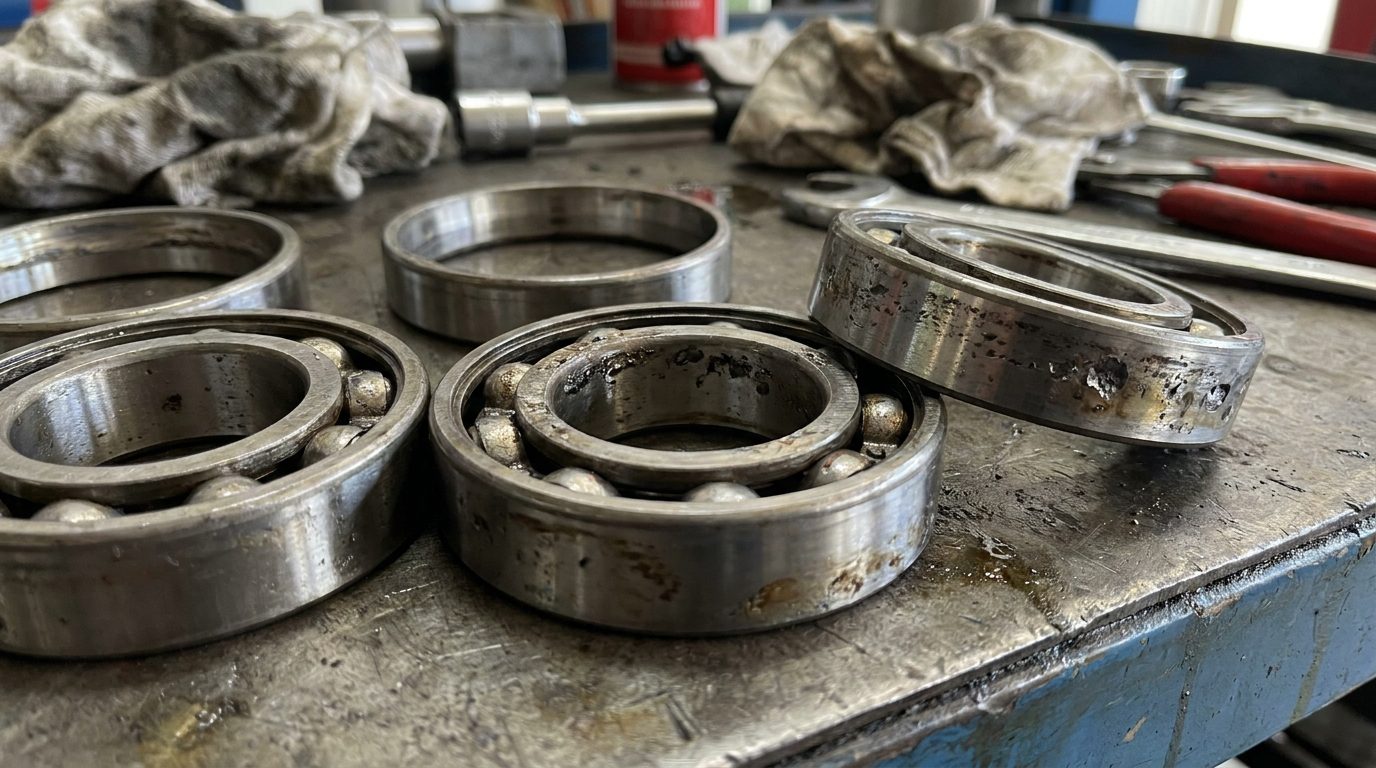
Bearing wear patterns are one of the fastest ways to understand what is happening inside an industrial gearbox, motor, pump, conveyor drive, or rotating asset before a catastrophic failure occurs. For maintenance managers, plant engineers, reliability engineers, mechanics, and purchasing teams, knowing how to read these patterns helps identify root causes such as misalignment, contamination, improper lubrication, overload, electrical damage, and installation errors. Because bearings often fail as a symptom of a larger mechanical or lubrication issue, wear pattern analysis is not just about replacing a bearing; it is about protecting uptime, gearbox reliability, and total lifecycle cost.
Bearing wear patterns reveal the operating conditions and failure modes affecting a bearing. Common patterns include normal fatigue spalling, abrasive wear, adhesive smearing, false brinelling, true brinelling, electrical fluting, corrosion, edge loading, cage damage, and heat discoloration. The most common causes are poor lubrication, contamination, misalignment, excessive load, vibration during shutdown, improper mounting, and electrical current passage. Effective troubleshooting includes visual inspection, vibration analysis, lubricant analysis, temperature monitoring, shaft and housing checks, and reviewing operating conditions. Preventing bearing wear requires proper lubrication, clean storage and handling, correct installation, alignment, sealing, condition monitoring, and timely gearbox maintenance.
For those interested in understanding the intricacies of bearing wear patterns, a related article that delves into the various aspects of gearbox manufacturing can provide valuable insights. This resource highlights the importance of selecting the right components to minimize wear and enhance performance. To explore more about gearbox manufacturers and their impact on machinery longevity, you can visit the article here: Gearbox Manufacturers.
What Bearing Wear Patterns Reveal About Equipment Health
Bearings are precision components designed to support rotating shafts, control friction, and manage radial and axial loads. In industrial gearboxes, bearings also help maintain gear mesh alignment. When a bearing begins to wear abnormally, it often leaves visible evidence on the raceways, rolling elements, cage, or lubricant.
For gearbox applications, bearing wear patterns can point to deeper problems such as:
- Gear misalignment
- Shaft deflection
- Contaminated oil
- Incorrect oil viscosity
- Overloaded reducers
- Failed seals
- Improper preload or endplay
- Soft foot or baseplate distortion
- Electrical discharge from motors or VFDs
- Poor installation practices
A worn bearing is rarely an isolated issue. If a facility replaces the bearing without correcting the root cause, the same failure may return quickly.
For related gearbox failure support, see Industrial Gearbox Solutions resources on gearbox repair, inspection, rebuilding, and replacement:
- Industrial gearbox repair services: https://industrialgearboxsolutions.com/gearbox-repair/
- Gearbox rebuild services: https://industrialgearboxsolutions.com/gearbox-rebuild/
- Emergency gearbox repair: https://industrialgearboxsolutions.com/emergency-gearbox-repair/
- Gearbox inspection services: https://industrialgearboxsolutions.com/gearbox-inspection/
Common Bearing Wear Patterns and What They Mean
Different wear patterns tell different stories. A skilled technician or reliability engineer can often identify likely failure causes by examining the raceway marks, discoloration, surface finish, and damage distribution.
Normal Running Marks
A healthy bearing typically develops smooth, consistent contact paths on the inner and outer raceways. These marks should be centered and uniform, depending on the bearing type and load direction.
Normal wear characteristics may include:
- Even raceway contact
- Smooth polished surface
- No pitting, scoring, or flaking
- No unusual discoloration
- Consistent lubricant film
In gearbox bearings, the location of the contact path can indicate whether the bearing is carrying the expected radial or axial load. If the pattern is offset, uneven, or concentrated near an edge, further inspection is needed.
Fatigue Spalling
Fatigue spalling appears as flaking or pitting on the raceway or rolling elements. It often starts below the surface due to repeated stress cycles and eventually breaks through the surface.
Typical signs include:
- Small pits that grow into larger flakes
- Rough vibration signature
- Audible rumbling or growling
- Metallic debris in lubricant
- Increased operating temperature
Fatigue can occur after a bearing reaches the end of its calculated service life, but premature spalling is commonly caused by overload, contamination, poor lubrication, or misalignment.
SKF provides detailed guidance on bearing damage modes and fatigue mechanisms in its bearing failure analysis resources: https://www.skf.com
Abrasive Wear
Abrasive wear is caused by hard particles such as dirt, sand, metal chips, or degraded lubricant additives moving through the bearing contact zone. These particles scratch and polish the raceways, causing material loss.
Common indicators include:
- Dull or frosted raceway appearance
- Fine scratches in the rolling direction
- Worn rolling elements
- Increased bearing clearance
- Dirty or dark lubricant
In industrial gearboxes, abrasive wear often points to poor filtration, failed breathers, damaged seals, contaminated oil transfer containers, or inadequate flushing after a rebuild.
Adhesive Wear and Smearing
Adhesive wear, often called smearing, occurs when the lubricant film fails and metal surfaces slide against each other. This can create torn, smeared, or scuffed areas on raceways, rollers, or cage surfaces.
Common causes include:
- Low oil viscosity
- Insufficient lubrication
- Excessive speed
- Skidding under light load
- Sudden acceleration or deceleration
- High operating temperature
Smearing is especially important in high-speed gearbox applications or lightly loaded bearings where rolling elements may slide instead of roll properly.
True Brinelling
True brinelling appears as permanent indentations in the raceway caused by excessive static or shock loads. The spacing of the dents usually matches the rolling element spacing.
Common causes include:
- Dropping the bearing or gearbox component
- Pressing through the rolling elements during installation
- Shock loading during operation
- Improper lifting or handling
- Excessive static loads
True brinelling is physical deformation. Once it occurs, the bearing cannot be restored and should generally be replaced.
False Brinelling
False brinelling looks similar to true brinelling but is caused by vibration while the bearing is stationary or oscillating through a very small angle. Instead of impact dents, it produces fretting wear at the contact points.
Common causes include:
- Standby equipment vibration
- Long-term storage near operating machines
- Transport vibration
- Windmilling shafts
- Micro-movement without full lubricant film formation
False brinelling is common in spare motors, pumps, and gearboxes that sit idle near running equipment. It can also affect equipment shipped long distances without proper shaft locking.
Electrical Fluting
Electrical fluting appears as washboard-like grooves across the bearing raceway. It is caused by electrical current passing through the bearing and creating tiny arc damage points that develop into evenly spaced ridges.
Common causes include:
- Variable frequency drives
- Poor grounding
- Shaft currents
- Electrical discharge machining effects
- Inadequate motor grounding rings or insulated bearings
Symptoms often include high-frequency vibration, audible noise, and repeated motor or gearbox bearing failure.
Corrosion and Etching
Corrosion appears as reddish-brown rust, dark staining, or etched surfaces. It occurs when moisture, chemicals, or acidic lubricant byproducts attack the bearing surfaces.
Common causes include:
- Water contamination
- Condensation
- Poor storage conditions
- Failed seals
- Chemical exposure
- Degraded oil
In gearboxes, corrosion is often linked to water ingress through breathers, shaft seals, washdown practices, or outdoor exposure.
Edge Loading
Edge loading occurs when the contact pattern is concentrated at one side or edge of the raceway or rolling element. This is a major warning sign because bearings are designed to distribute load across the proper contact zone.
Common causes include:
- Shaft misalignment
- Housing bore misalignment
- Bent shaft
- Improper bearing seating
- Excessive shaft deflection
- Gear mesh issues
- Incorrect bearing selection
Edge loading can quickly lead to overheating, spalling, cage damage, and gearbox failure.
Industrial gearbox bearing failure can lead to costly downtime and production losses, so it’s important to address the issue promptly. Industrial gearbox bearing failure
Bearing Wear Pattern Reference Table
| Wear Pattern | Visual Appearance | Likely Cause | Common Symptoms | Recommended Action |
||||||
| Normal running marks | Smooth, even contact path | Normal operation | Stable vibration and temperature | Continue monitoring |
| Fatigue spalling | Pits, flakes, rough raceway | Overload, age, contamination, poor lubrication | Rumbling, vibration, metal debris | Replace bearing and find root cause |
| Abrasive wear | Scratches, dull raceways | Dirt, metal particles, poor filtration | Increased clearance, dirty oil | Improve sealing, filtration, flushing |
| Smearing | Scuffed or torn metal surface | Lubrication failure, skidding, high speed | Heat, noise, rapid wear | Correct lubricant and operating conditions |
| True brinelling | Permanent dents matching rolling elements | Shock load or improper mounting | Clicking, vibration | Replace bearing, correct handling |
| False brinelling | Fretting marks at rolling element spacing | Vibration while stationary | Noise at startup, early failure | Rotate stored shafts, isolate vibration |
| Electrical fluting | Washboard grooves | Shaft current, VFD issues | High-frequency vibration, whining | Improve grounding, use insulated bearings |
| Corrosion | Rust, staining, etching | Water or chemical contamination | Noise, roughness, lubricant degradation | Eliminate moisture, change oil, replace bearing |
| Edge loading | Wear concentrated at raceway edge | Misalignment, shaft deflection | High temperature, vibration | Check alignment, housing, shaft fits |
| Cage damage | Cracked, worn, or deformed cage | Poor lubrication, shock, misalignment | Erratic noise, severe vibration | Replace bearing, inspect root cause |
Understanding bearing wear patterns is crucial for maintaining the efficiency and longevity of machinery. For those interested in delving deeper into related topics, you might find the article on industrial gearbox repair particularly insightful. It explores various aspects of gearbox maintenance and repair, which can help in identifying and addressing wear issues effectively. You can read more about it here.
Causes of Bearing Wear in Industrial Gearboxes
| Bearing Wear Pattern | Description |
|---|---|
| Normal Wear | Even wear across the entire surface of the bearing |
| Inner Race Wear | Wear concentrated on the inner race of the bearing |
| Outer Race Wear | Wear concentrated on the outer race of the bearing |
| Ball Wear | Wear concentrated on the balls of the bearing |
| Roller Wear | Wear concentrated on the rollers of the bearing |
Bearing wear can result from one or multiple root causes. In gearbox applications, the most common contributors are lubrication problems, contamination, improper installation, misalignment, overload, and operating environment.
Lubrication Failure
Lubrication is one of the most important factors in bearing life. A bearing needs the right lubricant type, viscosity, cleanliness, and volume. Too little lubricant causes metal-to-metal contact. Too much grease can cause churning, heat, and seal failure. Incorrect oil viscosity can prevent formation of a proper film under load.
Lubrication-related bearing wear may be caused by:
- Incorrect oil viscosity
- Wrong grease thickener or base oil
- Over-greasing
- Under-greasing
- Oil oxidation
- Foam or aeration
- Water contamination
- Additive depletion
- Poor lubricant storage and handling
Noria offers extensive lubrication best practices and oil analysis education for reliability teams: https://www.noria.com
Contamination
Contamination is one of the most common reasons bearings fail prematurely. Even small particles can disrupt the lubricant film and create abrasive wear.
Common contaminants include:
- Dirt and dust
- Metal wear debris
- Water
- Process chemicals
- Paint flakes
- Rust particles
- Fibers or lint from rags
- Degraded lubricant sludge
Contamination usually enters through failed seals, open breathers, improper oil transfer methods, or poor maintenance practices.
Misalignment
Misalignment causes uneven load distribution across the bearing. In gearboxes, misalignment can come from improper coupling alignment, distorted foundations, shaft deflection, incorrect housing fits, or internal gear mesh problems.
Symptoms of misalignment-related wear include:
- Edge loading
- Elevated temperature
- High axial vibration
- Premature seal failure
- Coupling wear
- Repeated bearing failures
Improper Installation
Bearings are precision components and can be damaged before the machine even starts. Improper mounting often causes brinelling, cocked bearings, incorrect internal clearance, or raceway damage.
Common installation mistakes include:
- Hammering directly on the bearing
- Applying force through rolling elements
- Heating bearings unevenly
- Contaminating components during assembly
- Reusing damaged locknuts or washers
- Incorrect shaft or housing fits
- Failure to verify bearing seating
Timken provides bearing installation and maintenance guidance for industrial users: https://www.timken.com
Overload and Shock Loading
Bearings are designed for specific load ratings. Excessive radial load, axial thrust, impact loading, or torque spikes can shorten bearing life.
Common overload sources include:
- Jammed conveyors
- Crusher shock loads
- Mixer overloads
- Sudden reversing
- Process upsets
- Gear tooth damage
- Incorrect gearbox sizing
If the application has changed since the gearbox was installed, the existing bearing arrangement may no longer be appropriate.
Heat and Thermal Growth
Excessive heat reduces lubricant viscosity, accelerates oxidation, and can alter bearing internal clearances. Thermal growth can also affect shaft and housing fits.
Heat-related causes include:
- Inadequate lubrication
- Excessive preload
- Misalignment
- Overload
- Poor ventilation
- Incorrect oil level
- High ambient temperature
- Cooling system failure
Discoloration of bearing surfaces can indicate excessive heat exposure.
Symptoms of Bearing Wear
Bearing wear often gives warning signs before total failure. The earlier those symptoms are recognized, the more time maintenance teams have to plan repairs and avoid emergency downtime.
Common Operational Symptoms
Watch for:
- Increased vibration
- Rising bearing temperature
- Unusual noise, including growling, clicking, rumbling, or whining
- Oil leaks or failed seals
- Higher motor current
- Increased gearbox backlash
- Visible metal particles in oil
- Reduced equipment efficiency
- Intermittent alarms from condition monitoring systems
Lubricant-Related Symptoms
Gearbox oil or grease can reveal important evidence:
- Darkened oil
- Burnt odor
- Milky appearance from water
- Foam or aeration
- Metallic glitter
- Sludge or varnish
- Increased particle count
- Abnormal iron, chromium, or copper levels in oil analysis
Vibration Symptoms
Vibration analysis can detect bearing defects before they become visible. Depending on the failure mode, analysts may see:
- Bearing fault frequencies
- High-frequency energy
- Harmonics
- Sidebands
- Increased noise floor
- Changes in axial or radial vibration
For critical gearboxes, vibration analysis should be paired with oil analysis and visual inspection.
Troubleshooting Bearing Wear Patterns
Troubleshooting should move from symptom identification to root cause confirmation. Avoid replacing the bearing without asking why it failed.
Step-by-Step Troubleshooting Process
- Document the failure
- Record asset ID, operating hours, load, speed, temperature, lubricant type, and recent maintenance.
- Preserve evidence
- Keep the failed bearing, oil sample, seals, filters, and any debris.
- Inspect the bearing visually
- Look for spalling, scoring, corrosion, discoloration, brinelling, fluting, and cage damage.
- Review lubricant condition
- Check oil level, viscosity, contamination, particle count, water content, and additive health.
- Check alignment and fits
- Inspect shaft journals, housing bores, shoulders, locknuts, and coupling alignment.
- Evaluate operating conditions
- Review load changes, shock events, temperature changes, and duty cycle.
- Compare with historical failures
- Determine whether the failure is recurring on the same asset or location.
- Correct the root cause
- Update lubrication, sealing, installation, alignment, grounding, or gearbox design as needed.
Troubleshooting Table by Symptom
| Symptom | Possible Bearing Wear Pattern | Likely Root Cause | Next Inspection Step |
|||||
| Growling noise | Spalling or abrasive wear | Fatigue, contamination, poor lubrication | Inspect raceways and oil debris |
| Clicking noise | Brinelling or localized damage | Shock load, improper mounting | Check rolling element spacing marks |
| High temperature | Smearing, preload, misalignment | Lubrication failure or excessive load | Verify oil viscosity, alignment, endplay |
| Metallic oil debris | Spalling, cage wear, gear wear | Surface fatigue or internal damage | Perform oil analysis and borescope inspection |
| Washboard raceways | Electrical fluting | Shaft current or VFD issue | Check grounding and motor current paths |
| Rust staining | Corrosion | Water ingress or poor storage | Test oil for water and inspect seals |
| Edge contact | Edge loading | Misalignment or shaft deflection | Check shaft, housing, coupling alignment |
| Repeated failures | Multiple possible | Root cause not corrected | Conduct full failure analysis |
Inspection Methods for Bearing Wear
A complete inspection combines visual examination, measurement, lubricant analysis, and condition monitoring.
Visual Inspection
After disassembly, inspect:
- Inner raceway
- Outer raceway
- Rolling elements
- Cage or separator
- Seals
- Shaft fits
- Housing fits
- Lubricant condition
- Gear teeth and surrounding components
Use proper lighting and magnification. Photograph the bearing before cleaning, after cleaning, and from multiple angles. Label the bearing location and orientation so the wear pattern can be matched to load direction.
Borescope Inspection
For gearboxes that cannot be immediately disassembled, borescope inspection can reveal early evidence of bearing damage, gear tooth wear, oil pooling, corrosion, or debris.
Borescope inspections are useful for:
- Planned outage preparation
- Confirming suspected failures
- Evaluating large gearboxes
- Reducing unnecessary teardown
- Documenting asset condition
Vibration Analysis
Vibration analysis is one of the most effective predictive maintenance methods for bearing defects. It can identify early-stage damage before audible noise or temperature increases occur.
Best practices include:
- Establish baseline readings
- Trend data over time
- Monitor radial and axial points
- Use high-frequency detection
- Compare readings to known bearing fault frequencies
- Integrate findings with oil analysis
Oil Analysis
Oil analysis provides evidence of contamination, wear metals, lubricant degradation, and water ingress.
Recommended oil analysis tests include:
- Viscosity at 40°C and 100°C
- Particle count
- Karl Fischer water test
- Acid number
- Elemental spectroscopy
- Ferrous density
- Analytical ferrography
- Oxidation and nitration
- Additive depletion
AGMA standards and technical documents are useful references for enclosed industrial gear drive lubrication and maintenance practices: https://www.agma.org
Dimensional Inspection
Measure critical surfaces to determine whether the bearing failed because of improper fits or component distortion.
Inspect:
- Shaft journal diameter
- Housing bore diameter
- Roundness
- Taper
- Surface finish
- Shoulder squareness
- Bearing seat damage
- Endplay or preload
- Locknut condition
A replacement bearing installed on a worn shaft or distorted housing may fail quickly.
Prevention: How to Reduce Bearing Wear
Preventing bearing wear requires a complete reliability approach that includes lubrication, cleanliness, alignment, training, and condition monitoring.
Improve Lubrication Practices
Best practices include:
- Use the correct lubricant specified for the gearbox and bearing arrangement
- Confirm viscosity based on load, speed, temperature, and OEM recommendations
- Maintain proper oil level
- Avoid mixing incompatible lubricants
- Store lubricants indoors in sealed containers
- Use dedicated, clean transfer equipment
- Label all lubricants clearly
- Filter new oil before use when appropriate
- Perform routine oil analysis
Control Contamination
Contamination control is one of the highest-return reliability improvements for gearboxes.
Recommended actions:
- Upgrade breathers to desiccant breathers where needed
- Replace worn seals
- Use proper fill and drain filtration
- Keep inspection ports closed
- Use clean funnels, pumps, and containers
- Flush gearboxes after major failures
- Maintain clean rebuild areas
- Avoid open oil buckets and dirty transfer containers
Install Bearings Correctly
Installation quality strongly affects bearing life.
Best practices include:
- Use induction heaters where appropriate
- Never hammer directly on the bearing
- Apply mounting force to the correct ring
- Keep bearings wrapped until installation
- Verify shaft and housing fits
- Use clean gloves and tools
- Follow torque specifications
- Confirm endplay or preload
- Document installation measurements
Maintain Alignment
Alignment should be checked after installation, after foundation repairs, and after major process changes.
Important alignment checks include:
- Coupling alignment
- Shaft runout
- Soft foot correction
- Baseplate level
- Gear contact pattern
- Housing bore alignment
- Thermal growth compensation
Protect Stored Bearings and Spare Gearboxes
Stored bearings and gearboxes can fail before they are ever installed if not protected from vibration, moisture, and contamination.
Storage recommendations:
- Keep bearings in original packaging
- Store in clean, dry, temperature-stable areas
- Avoid locations near vibrating equipment
- Rotate spare gearbox shafts periodically
- Use rust preventive protection
- Seal breathers and openings
- Document storage dates and inspections
Repair vs. Replacement: What Should You Do?
When bearing wear is found, the next decision is whether to replace only the bearing, rebuild the gearbox, or replace the entire gearbox. The right answer depends on severity, availability, criticality, cost, and root cause.
When Bearing Replacement May Be Enough
Bearing replacement may be appropriate when:
- Damage is localized to the bearing
- Shaft and housing fits are within tolerance
- Gear teeth are in good condition
- Lubrication system is clean and functional
- Root cause is identified and corrected
- No secondary damage is present
- The gearbox housing is structurally sound
When a Gearbox Rebuild Is the Better Option
A rebuild is often recommended when bearing wear is accompanied by:
- Gear tooth wear
- Shaft damage
- Housing bore wear
- Seal surface damage
- Contaminated internal components
- Excessive backlash
- Repeated bearing failures
- Unknown internal condition
- Critical equipment downtime risk
A professional rebuild can include bearing replacement, seal replacement, gear inspection, shaft repair, housing restoration, contact pattern checks, and test run verification.
When Replacement Should Be Considered
Full gearbox replacement may be best when:
- The gearbox is obsolete
- Replacement parts are unavailable
- Housing damage is severe
- Repair cost approaches replacement cost
- Lead time supports replacement
- The application has changed significantly
- The gearbox is undersized
- Reliability history is poor
Purchasing professionals should compare total lifecycle cost, not only the immediate purchase price. A cheaper repair that fails again in six months may cost more than a properly engineered rebuild or replacement.
Maintenance Best Practices for Longer Bearing Life
A reliable bearing maintenance program should be proactive, documented, and supported by training.
Recommended Maintenance Checklist
| Task | Recommended Frequency | Purpose |
||:||
| Check gearbox oil level | Daily to weekly | Prevent lubrication starvation |
| Monitor temperature | Daily to monthly | Detect friction, overload, or lubrication issues |
| Listen for abnormal noise | Daily rounds | Identify early bearing distress |
| Inspect seals and breathers | Monthly | Prevent contamination |
| Perform vibration analysis | Monthly to quarterly | Detect developing bearing defects |
| Conduct oil analysis | Quarterly or per criticality | Monitor wear, contamination, and lubricant health |
| Check coupling alignment | Annually or after disturbance | Prevent misalignment wear |
| Inspect foundation and fasteners | Annually | Reduce vibration and distortion |
| Review failure history | After each event | Improve root cause prevention |
| Borescope critical gearboxes | Planned outages | Confirm internal condition |
Documentation Matters
Maintenance teams should record:
- Bearing part numbers
- Installation date
- Lubricant type
- Oil analysis results
- Vibration trends
- Alignment readings
- Operating temperature
- Failure photos
- Root cause findings
- Corrective actions
Good documentation helps purchasing teams standardize spares and helps reliability teams identify repeat failure patterns.
Branded Image Suggestions
Image 1: Bearing Wear Pattern Comparison Chart
Alt text: Bearing wear patterns comparison chart showing spalling, brinelling, fluting, corrosion, and abrasive wear in gearbox bearings.
Caption: Common bearing wear patterns help maintenance teams identify root causes before gearbox failure occurs.
Image 2: Technician Inspecting Gearbox Bearing
Alt text: Industrial Gearbox Solutions technician inspecting a worn gearbox bearing during failure analysis.
Caption: A professional bearing inspection can reveal lubrication, contamination, alignment, and overload problems.
Image 3: Oil Analysis and Bearing Debris
Alt text: Gearbox oil sample with metallic bearing wear debris prepared for oil analysis.
Caption: Oil analysis helps detect bearing wear, contamination, and lubricant degradation before catastrophic failure.
Image 4: Electrical Fluting on Bearing Raceway
Alt text: Close-up of electrical fluting on an industrial bearing raceway caused by shaft current.
Caption: Electrical fluting often appears as washboard grooves and may indicate grounding or VFD-related issues.
Image 5: Gearbox Rebuild with New Bearings
Alt text: Rebuilt industrial gearbox with new bearings, seals, and inspected gear components.
Caption: Replacing bearings during a gearbox rebuild is most effective when the original root cause is corrected.
Authoritative References and Further Reading
For deeper technical guidance, reliability teams can reference:
- SKF bearing damage and failure analysis resources: https://www.skf.com
- Timken bearing maintenance and installation resources: https://www.timken.com
- AGMA gear drive standards and lubrication guidance: https://www.agma.org
- Noria lubrication and oil analysis education: https://www.noria.com
These sources are especially useful when building bearing inspection procedures, lubrication standards, gearbox maintenance plans, and root cause analysis programs.
Frequently Asked Questions
What is the most common cause of bearing wear?
The most common causes of premature bearing wear are poor lubrication and contamination. Incorrect viscosity, low oil level, water ingress, dirt, and metal particles can all disrupt the lubricant film and damage bearing surfaces.
How can you identify bearing wear patterns?
Bearing wear patterns are identified through visual inspection, magnification, vibration analysis, oil analysis, and dimensional checks. The location, shape, texture, and color of the wear marks help determine the likely failure mode.
What does bearing spalling look like?
Spalling looks like pits, flakes, or craters on the raceway or rolling elements. It is usually associated with fatigue, overload, contamination, or lubrication failure.
What is the difference between true brinelling and false brinelling?
True brinelling is permanent denting caused by shock or excessive static load. False brinelling is fretting wear caused by vibration while the bearing is stationary or moving only slightly.
Why do gearbox bearings keep failing?
Repeated gearbox bearing failures usually mean the root cause has not been corrected. Common unresolved issues include misalignment, contaminated oil, incorrect lubricant, worn shaft fits, housing distortion, overload, or electrical current damage.
Can a worn bearing be repaired?
Most industrial rolling element bearings are replaced rather than repaired. However, the gearbox, shaft, housing, and related components may be repairable depending on their condition.
When should a gearbox be rebuilt instead of just replacing the bearing?
A gearbox rebuild should be considered when bearing damage is accompanied by gear wear, shaft damage, seal failure, contamination, housing wear, or repeated failures. A rebuild allows the entire drive to be inspected and restored.
How does oil analysis help detect bearing wear?
Oil analysis identifies wear metals, contamination, water, viscosity changes, oxidation, and particle counts. These indicators can reveal bearing distress before a complete mechanical failure occurs.
What does electrical fluting look like on a bearing?
Electrical fluting appears as evenly spaced washboard-like grooves on the bearing raceway. It is caused by electrical current passing through the bearing, often related to VFD-driven motors or grounding issues.
How often should gearbox bearings be inspected?
Inspection frequency depends on criticality, load, speed, environment, and failure history. Critical gearboxes should be monitored with routine vibration analysis and oil analysis, with visual or borescope inspections during planned outages.
Key Takeaways
- Bearing wear patterns provide valuable evidence about gearbox and rotating equipment health.
- Common patterns include spalling, abrasive wear, smearing, brinelling, false brinelling, fluting, corrosion, edge loading, and cage damage.
- The most common root causes are lubrication failure, contamination, misalignment, overload, improper installation, and electrical current damage.
- Replacing a bearing without correcting the root cause often leads to repeat failure.
- Vibration analysis, oil analysis, visual inspection, and dimensional checks should be used together.
- Clean lubrication practices, proper installation, alignment, sealing, and condition monitoring greatly extend bearing life.
- Repair vs. replacement decisions should consider asset criticality, secondary damage, lead time, and total lifecycle cost.
SEO Metadata
Meta title: Understanding Bearing Wear Patterns: Causes, Symptoms, Inspection, and Prevention
Meta description: Learn how to identify bearing wear patterns in industrial gearboxes, including spalling, brinelling, fluting, corrosion, lubrication failure, troubleshooting, and repair vs. replacement guidance.
Primary keyword: bearing wear patterns
Secondary keywords:
- bearing failure analysis
- gearbox bearing wear
- industrial bearing inspection
- bearing spalling
- false brinelling
- electrical fluting
- gearbox maintenance
- bearing troubleshooting
- bearing lubrication failure
- gearbox repair
Suggested URL slug: understanding-bearing-wear-patterns
Search intent: Informational and commercial investigation for maintenance, reliability, engineering, and purchasing professionals evaluating bearing failures in industrial gearboxes and rotating equipment.
Conclusion
Understanding bearing wear patterns gives maintenance and reliability teams a practical advantage: the ability to detect problems early, diagnose root causes accurately, and prevent repeat gearbox failures. Whether the issue is lubrication starvation, contamination, misalignment, electrical fluting, brinelling, corrosion, or overload, the bearing surface usually contains evidence. The key is to preserve that evidence, inspect it correctly, and connect the wear pattern to operating conditions.
For industrial gearboxes, bearing failure can quickly lead to gear damage, shaft damage, seal failure, unplanned downtime, and expensive emergency repairs. A structured approach that combines inspection, oil analysis, vibration monitoring, correct installation, and contamination control can significantly improve reliability. If your plant is experiencing repeated bearing failures, rising gearbox temperatures, abnormal noise, or metallic debris in oil, it may be time for a professional gearbox inspection or rebuild evaluation.
FAQs
What are bearing wear patterns?
Bearing wear patterns refer to the specific types of wear that occur on the surface of a bearing due to various factors such as friction, load, and lubrication. These wear patterns can provide valuable insights into the condition of the bearing and the underlying causes of wear.
What are the common types of bearing wear patterns?
Common types of bearing wear patterns include abrasive wear, adhesive wear, fatigue wear, and corrosive wear. Abrasive wear occurs due to the presence of hard particles in the lubricant, while adhesive wear results from metal-to-metal contact. Fatigue wear is caused by repeated loading and unloading, and corrosive wear is the result of chemical reactions with the lubricant.
How can bearing wear patterns be identified?
Bearing wear patterns can be identified through visual inspection of the bearing surfaces, as well as through the use of specialized equipment such as microscopes and surface analysis tools. By examining the specific characteristics of the wear patterns, it is possible to determine the root causes of the wear and take appropriate corrective actions.
What are the implications of bearing wear patterns?
Understanding bearing wear patterns is crucial for predicting and preventing bearing failure. By identifying the specific wear patterns, maintenance professionals can diagnose potential issues with lubrication, alignment, or load distribution, and take proactive measures to address these issues before they lead to catastrophic failure.
How can bearing wear patterns be mitigated?
To mitigate bearing wear patterns, it is important to implement proper lubrication practices, ensure correct alignment and installation, and monitor operating conditions such as temperature and load. Regular maintenance and monitoring of bearing wear patterns can help extend the lifespan of bearings and prevent costly downtime.