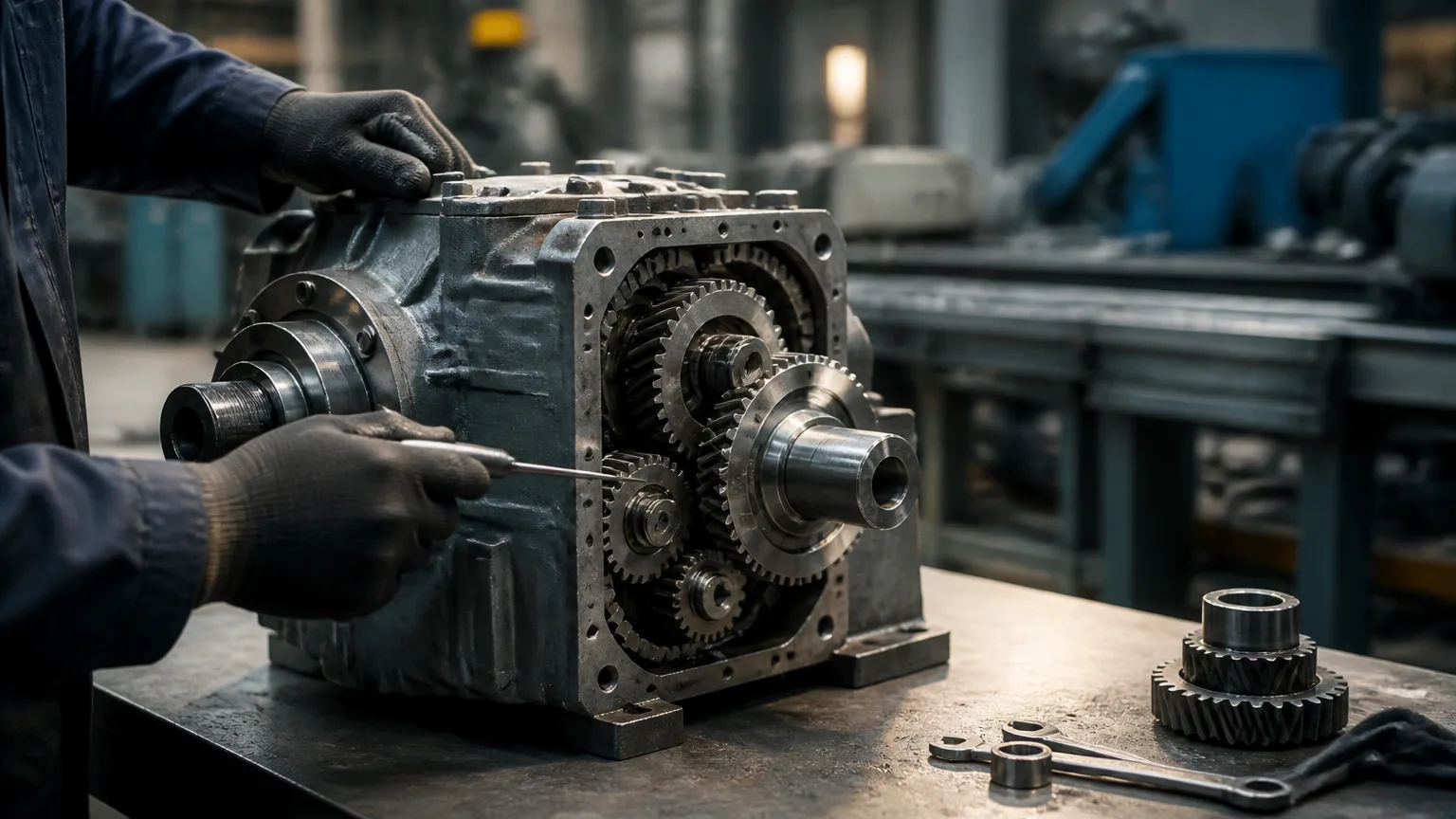
A failed camco gearbox can interrupt production, compromise safe operation, and put reliable output at risk. The right response depends on the gearbox’s role in the process, the severity of the failure, and how much downtime the facility can accept—not simply the unit’s age. Compare industrial gearbox repair and replacement options before deciding how to restore service.
Targeted repair, a full rebuild, or replacement may each be practical, depending on equipment condition, parts availability, and total lifecycle cost. This article outlines how to weigh those options and plan a return to service. For broader support, explore industrial gearbox solutions.
Start With Symptoms and a Thorough Inspection
Before choosing repair or replacement, identify what the gearbox is telling you. Unusual noise or vibration can point to worn bearings, damaged gears, or misalignment. Overheating, lubricant leaks, or contaminated oil may indicate lubrication problems, failing seals, or internal wear. Changes in output speed, torque, or backlash can signal damage that needs prompt attention.
A thorough inspection helps distinguish a correctable fault from deeper damage. Check lubricant condition for metal particles, discoloration, or the wrong viscosity. Inspect bearings, gears, shafts, and seals, and verify alignment and mounting. Compare findings with the unit’s operating history, including load changes, maintenance records, and the conditions when symptoms began. A leak, for example, may be a seal issue—or a sign of shaft wear that caused the seal to fail.
For an accurate assessment, provide a repair provider with the Camco model and serial information, duty cycle, and failure conditions. These details help scope parts, labor, and testing needs. A systematic review of common gearbox issues and repair options can also help teams understand how symptoms relate to potential causes.
When Targeted Repair or a Rebuild Makes Sense
A targeted repair can restore a Camco gearbox when inspection confirms the damage is localized. Replacing a failed seal, bearing, or damaged gear may be appropriate if the housing, shafts, and related components remain serviceable. This narrower scope can reduce repair time and cost, but it depends on confirming the cause of failure and checking nearby parts for wear.
A rebuild is more comprehensive. It typically involves teardown, cleaning, detailed measurement, replacement or reconditioning of worn parts, and reassembly to applicable tolerances. This approach may make sense when wear affects multiple components but the housing and major parts remain suitable for continued service.
A responsible estimate should document inspection findings, proposed parts and labor, testing procedures, warranty terms, and the risk of hidden damage discovered after disassembly. Ask how the shop will verify performance and what conditions could change the quoted scope. Manufacturer-specific examples can provide useful context, such as an example of gearbox repair focused on reducing downtime, but repair requirements vary by model and manufacturer.
Evaluate expected reliability against the gearbox’s operating demands, repair history, and the cost of downtime. A qualified provider should explain what the work can reasonably address—and when remaining wear or uncertainty makes replacement the safer option.
When Replacement Is the Better Option
A repair may not be practical when inspection finds severe gear or shaft damage, a compromised housing, or failures that keep returning after service. If critical components are obsolete or unavailable, a rebuild may be delayed or impossible. These conditions are reasons to investigate replacement, not assume the existing Camco gearbox can be restored reliably.
Compare the full repair cost and lead time with the purchase and installation of a replacement. Include downtime, labor, alignment, commissioning, and any downstream costs if the gearbox fails again. A replacement with a shorter delivery time or lower failure risk may improve availability enough to justify its higher initial price.
Before choosing a substitute, confirm that its ratio, torque capacity, and service factor suit the application. Check input and output configuration, mounting dimensions, and shaft dimensions, then verify the unit can handle the duty cycle and work with the driven equipment. A mismatch can create fit issues, reduce performance, or cause premature wear. Review speed reducer selection and repair considerations when comparing options.
Ask the supplier or repair provider to confirm compatibility and expected performance before ordering. Provide the gearbox model, operating conditions, and equipment interface details. This check can prevent installation delays and help ensure replacement addresses the original problem rather than introducing a new one.
Compare Providers, Costs, and Return-to-Service Plans
Compare written estimates against the same scope. Confirm inspection findings, parts sourcing, machining, balancing or testing, freight, and warranty coverage. These details make costs more meaningful than a single bottom-line price.
Assess each provider’s experience with your gearbox type and ability to obtain or reproduce suitable components. Ask how the team will communicate findings during teardown and whether its turnaround estimate accounts for parts availability. For more guidance on how to compare gearbox rebuild providers, review the questions to ask before choosing a shop.
Build removal, installation, alignment, lubrication, and startup checks into the downtime estimate. Include contingency time for unexpected damage or delays. A delivery date is not the same as a commissioned return to service; confirm testing and startup responsibilities before approving the camco gearbox repair or replacement plan.
Choose the Option That Protects Long-Term Uptime
Start with a condition assessment, then compare repair or rebuild scope with replacement cost. The right choice depends on measured wear, parts availability, production impact, and expected lifecycle cost—not a universal preference for repair or replacement. Before committing, verify the camco gearbox’s model, interfaces, and operating requirements.
After return to service, schedule follow-up maintenance and record baseline readings such as temperature, vibration, and noise. Share the gearbox details and failure conditions with a qualified provider to request a documented assessment and plan.