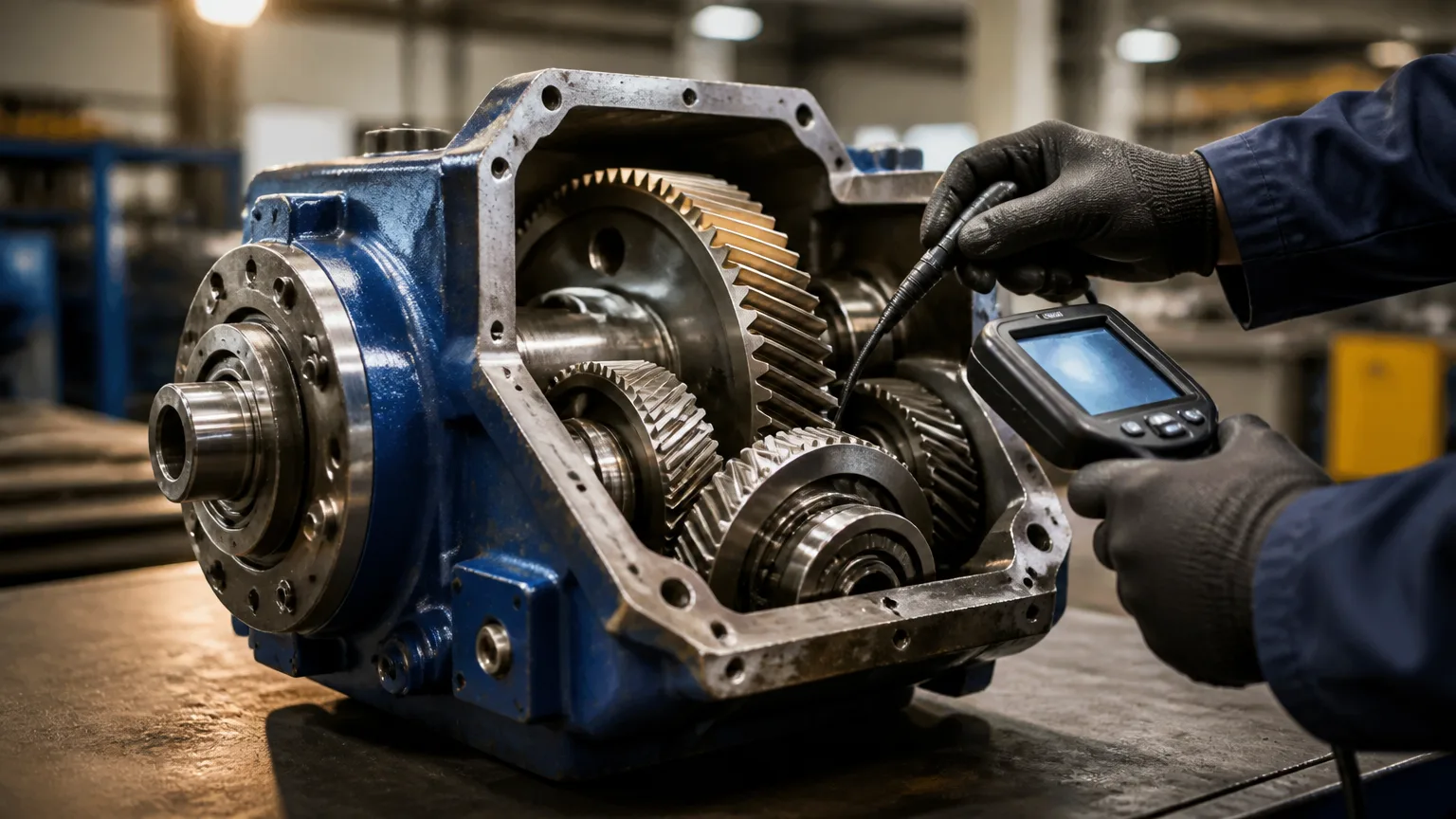
A gear reducer keeps industrial equipment operating at the speed and torque its application requires. When warning signs appear, prompt gear reducer repair can protect reliability—but continued operation may worsen damage, increase production costs, or trigger unplanned downtime.
Deciding whether to repair or replace depends on the reducer’s condition, application, parts availability, and the cost of lost production—not just the initial repair quote. This guide covers common warning signs, repair costs, and practical options to help you make an informed decision. For support with industrial gear reducer solutions, explore our resources.
Warning Signs That a Gear Reducer Needs Attention
A gear reducer may show trouble through changes in sound, vibration, temperature, lubrication, or output. Listen for grinding, knocking, or a new whine, and note unusual vibration or a housing that runs hotter than normal. These symptoms can point to misalignment, overload, lubrication problems, or internal wear; none confirms a specific fault on its own.
Inspect the reducer for oil leaks, dark or cloudy lubricant, and metal particles in the oil. Changes in output speed or torque can also signal a problem, especially when the driven equipment struggles under its usual load. Record when symptoms occur, along with load, speed, temperature, and recent operating changes. This information helps technicians assess the cause.
Some warning signs call for immediate action. Shut down the equipment if there is a sudden, severe increase in noise or vibration, rapid overheating, a major oil loss, or an abrupt drop in output that risks further damage. For less severe or intermittent changes, arrange a scheduled inspection and monitor conditions closely. If symptoms escalate, document them and act promptly; guidance on emergency gear repair can help you plan to limit downtime.
What Drives Gear Reducer Repair Costs?
A repair estimate depends on the reducer’s size and design, the damage, and how accessible the unit is. Replacing a bearing or a single gear may be straightforward; damage to multiple gears, shafts, or the housing can require extensive machining or replacement parts. Parts availability also matters: obsolete or custom components may take longer to source and cost more.
A reliable price may not be possible until a technician inspects and tears down the reducer. Teardown reveals internal wear that may not be visible from outside, while inspection checks shaft condition, housing alignment, and other components. Labor, testing, transport, and any required reassembly all affect the final estimate.
When comparing gear reducer repair quotes, check that each covers the same work, parts, testing, schedule, and warranty. A lower invoice may exclude work another provider includes, making the estimates difficult to compare directly. Ask what could change the price once the unit is open.
Also consider the full cost of the repair plan, not just the invoice. Lost production during downtime can outweigh the repair cost, and expedited service may add charges. If operations cannot wait, include the cost of a temporary replacement unit in the comparison.
Repair, Rebuild, or Replace: Comparing Your Options
Once the unit is open, compare the repair scope with the reducer’s condition, operating demands, and expected service life. Targeted gear reducer repair may suit limited damage, such as a failed bearing or seal, when the housing and other components remain serviceable.
A full rebuild can make sense when several internal parts are worn but the housing and design remain viable. Replacing bearings, gears, seals, and other affected components can restore performance without changing the installation. Confirm that the rebuilt unit will meet the application’s load and operating requirements.
Replacement may be the better choice when damage is extensive, parts are unavailable, or the reducer is obsolete. A new unit may also offer better lead time or lifecycle value when ongoing repairs and downtime costs outweigh the investment. Before choosing an equivalent or substitute, verify capacity, gear ratio, mounting, shaft arrangement, and operating conditions.
An engineered alternative may address constraints that a standard replacement cannot. Check compatibility with the driven equipment and controls, and involve a qualified specialist to assess the options. For help evaluating providers, see how to choose a gearbox repair specialist.
Compare total cost, including installation, downtime, expedited service, and any temporary replacement equipment. The lowest initial quote may not be the most economical choice over the reducer’s expected service life.
How to Make the Repair Decision With Confidence
Before approving gear reducer repair, ask for a clear inspection report. It should identify failed components, the probable root cause, proposed work, testing, turnaround time, and warranty terms. These details help you compare repair plans and understand what the provider stands behind.
Check that the reducer suits its actual duty and loads. Recurring failures may signal overload or an application mismatch, not a one-time component defect. Confirm industrial gearbox load capacity against operating conditions before authorizing repeat repairs.
Assess the provider’s methods and evidence, not just the quote. Precision repair practices, dimensional checks, and documented test results can help show whether the work meets the unit’s requirements. Learn how precision engineering in gearbox repair supports reliable results.
Finally, weigh technical suitability against downtime and business risk. A repair may cost less upfront, but a short warranty or uncertain turnaround can increase exposure. Approve the plan when the findings, application fit, testing, and total cost align with your operating needs.
Protect Reliability After the Repair
Respond promptly to changing noise, heat, vibration, or oil leaks, and obtain a documented assessment before choosing a solution. Compare repair and replacement by total cost and risk, including downtime, installation, and the reducer’s expected service life.
After gear reducer repair, follow the manufacturer’s lubrication and inspection requirements. Track temperature, vibration, and oil condition after return to service, and investigate changes early. Timely diagnosis and a properly scoped repair can help protect production reliability; replacement is not always necessary.