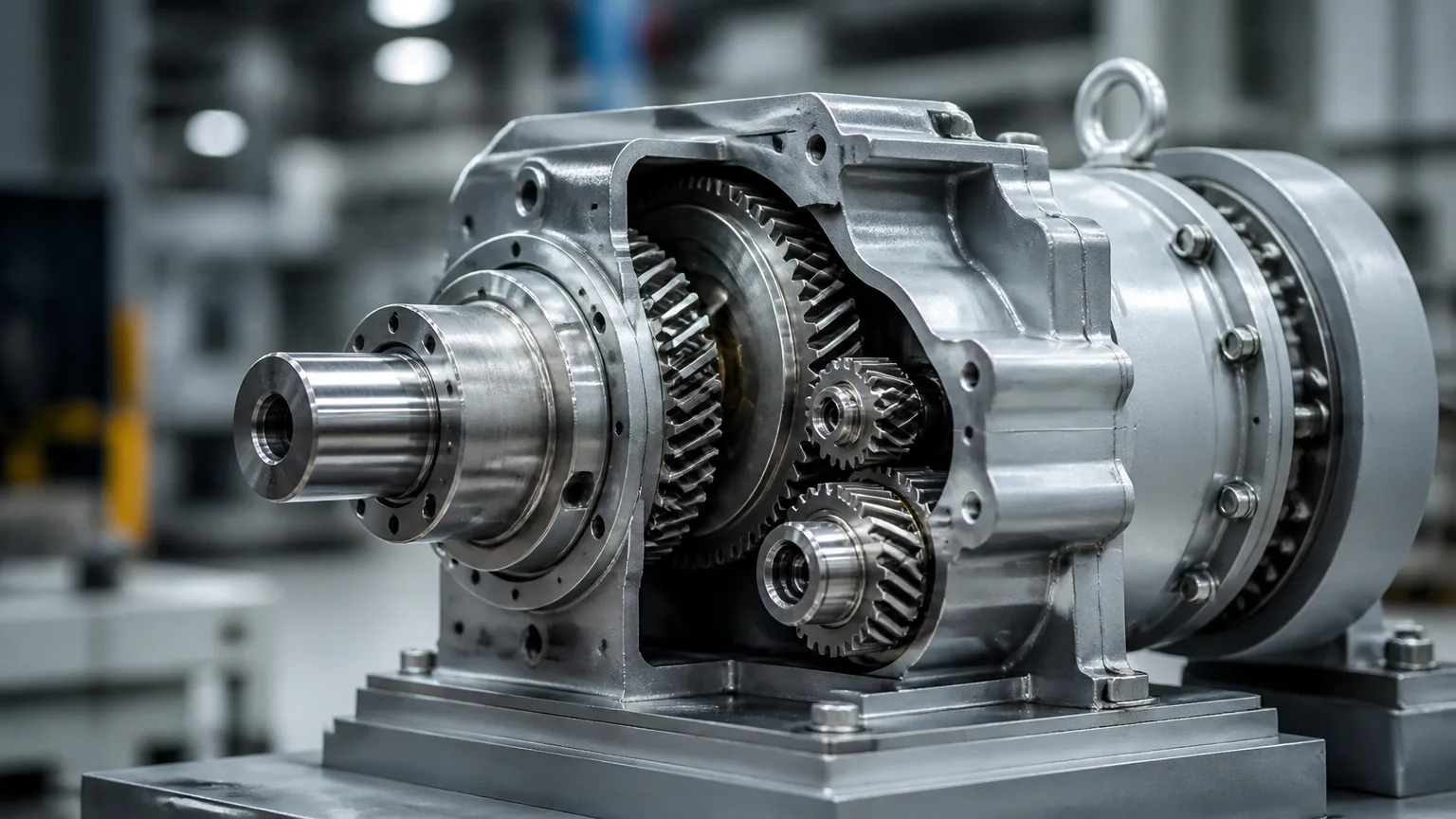
Precision gearing starts with the job the gearbox must do—not the numbers on its nameplate. The right unit supports reliable production, uses energy efficiently, and avoids premature wear. A poor match can lead to downtime, damaged equipment, or costly retrofit work.
Start with the driven equipment and its operating conditions, then work back to the gearbox. Consider the required speed, torque, load, and duty cycle alongside how the unit will fit the installation. This approach helps distinguish a suitable replacement from one that merely looks compatible.
The sections ahead explain how to define performance needs, check physical fit, and account for the operating environment. They also help you decide when repair makes sense—and when replacement is the more reliable choice.
Define the Required Speed, Torque, and Duty
Start with the driven load’s required output speed and the motor’s available input speed. Divide input speed by output speed to establish the reduction ratio. For example, a 1,750 rpm motor driving equipment that needs 175 rpm requires a 10:1 ratio. For more detail, see how industrial gearboxes reduce speed.
A matching ratio does not guarantee the gearbox can handle the application. Specify the required output torque and power, then check that the gearbox’s rated capacity covers the load. Consider load type and efficiency, and verify calculations against the actual machine—not motor horsepower alone. This is essential in precision gearing, where the gearbox must meet operating demands as well as speed targets.
Define the duty pattern, too. Note hours of operation, starts and stops per hour, reversals, shock loads, and peak torque. A conveyor with steady loading places different demands on a gearbox than a crusher that starts under load or experiences sudden impacts.
Use these conditions to establish service requirements and an appropriate safety margin. If operating conditions vary, include the most demanding expected case. Confirm the selection with application data so the gearbox can deliver the required performance reliably over its intended service life.
Match Gearbox Type and Installation Geometry
Once performance requirements are clear, choose a gearbox arrangement that suits the machine’s layout and load direction. A parallel-shaft gearbox can fit applications where input and output shafts need to run in line or parallel. Right-angle units redirect power when space or shaft orientation calls for it. Neither type is universally better; the correct choice depends on the drive, driven equipment, and available space.
Specify the mounting position and dimensions, along with the input and output shaft orientation. Confirm shaft diameters, keyways, and coupling requirements so the gearbox connects properly to the motor and driven equipment. Check clearances for the housing, lubrication access, guards, and maintenance work. Small differences can prevent installation or make future service difficult.
For a replacement, record the existing nameplate data and measure the mounting points, shafts, and surrounding space. Then verify those details against current operating needs and any machine modifications made since the original installation. If condition or compatibility is uncertain, a gearbox repair and inspection process can help assess the unit before you specify a replacement. Careful fit checks support reliable precision gearing and reduce avoidable installation delays.
Account for Environment, Lubrication, and Reliability
With performance and fit established, define the conditions the gearbox must withstand. Specify ambient and operating temperatures, dust or moisture exposure, washdown frequency, and corrosive chemicals. For hazardous areas, confirm the site’s classification and required equipment approvals. These details affect housing materials, seals, coatings, and cooling needs.
Choose a lubrication method that suits the duty cycle and available service access. Account for lubricant type, sealing, oil-change access, and any monitoring needs, such as temperature or vibration checks. Follow the manufacturer’s recommendations for gearbox orientation and lubricant selection; incorrect choices can shorten bearing and gear life.
A reliable specification also includes a realistic inspection and service plan. Consider whether technicians can safely reach inspection points and drains, and how often the unit can be serviced without disrupting production. Align gearbox maintenance requirements with the operating environment and expected workload. This helps turn precision gearing into dependable performance after installation.
Choose Repair, Rebuild, or Replacement with Better Data
Once fit and service needs are clear, assess the gearbox’s condition before requesting a repair or replacement quote. Record noise, vibration, heat, leakage, and lubricant condition, along with load and operating history. Include when symptoms began and how they change across operating conditions.
Inspection findings help show whether a fault is limited to serviceable components, such as seals or bearings, or indicates wider wear or damage. They may also reveal that the original gearbox was unsuitable for the application. A gearbox repair case study illustrates why inspection evidence matters when planning a repair.
Compare the repair or rebuild scope with replacement costs, expected service life, and production downtime. Share nameplate details, photos, interface measurements, and performance requirements with a qualified specialist. This evidence reduces guesswork and helps prevent ordering a mismatched unit, supporting a more reliable precision gearing decision.
Turn the Specification into a Reliable Decision
A complete, application-based specification makes precision gearing decisions more reliable. Confirm duty and load, speed and torque, gearbox configuration and interfaces, operating environment, and maintenance expectations using verified machine data.
Before planning service or replacement, gather nameplate details, installation measurements, operating records, and condition observations. Then share them with a qualified specialist; use how to choose a gearbox repair specialist to guide your selection. This practical step reduces guesswork and helps match the gearbox to the machine.