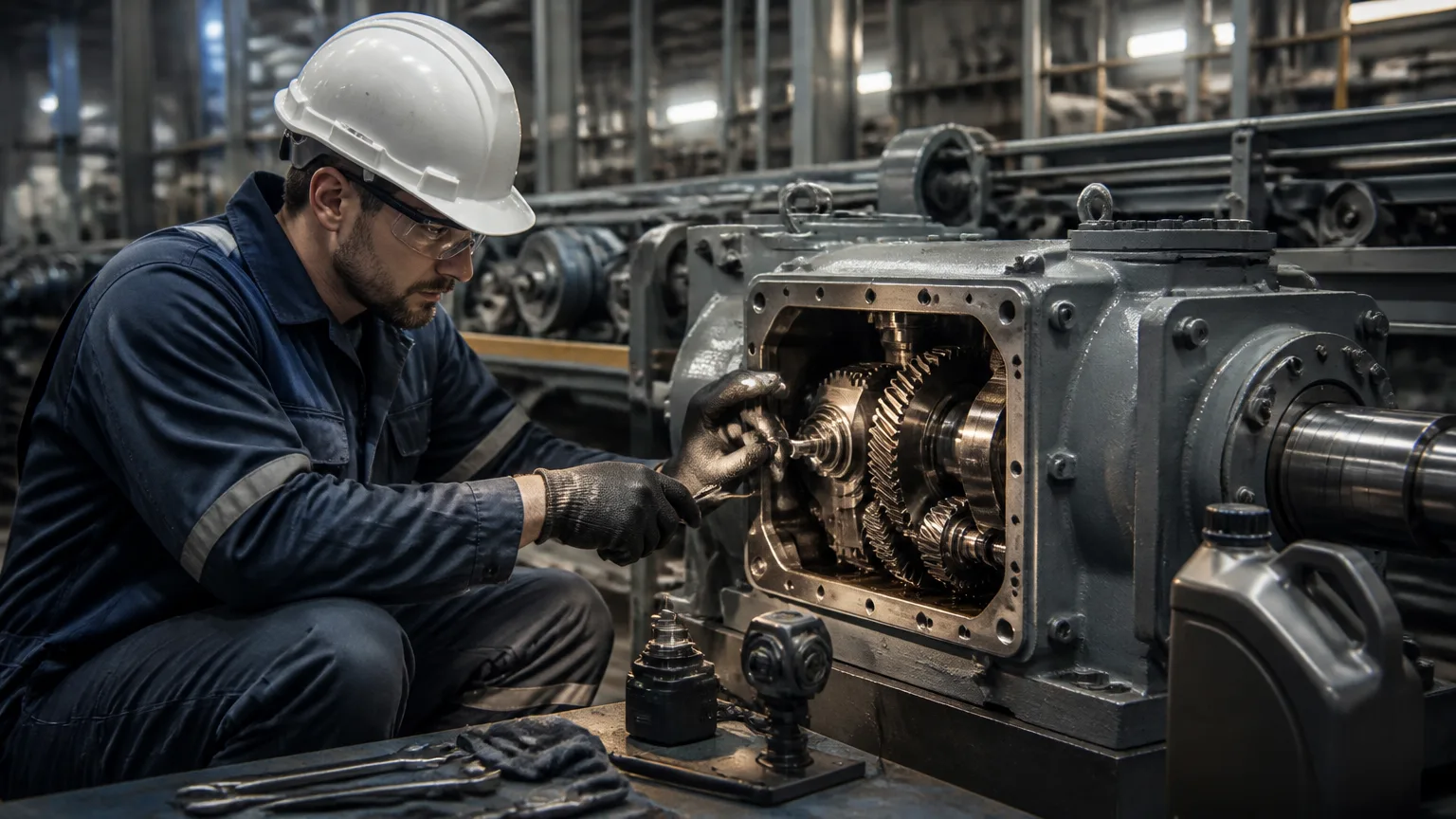
Industrial gearbox maintenance requirements directly affect uptime, efficiency, safety, and asset life. These gearboxes support production lines, material handling systems, pumps, mixers, and other equipment operating under demanding loads. When maintenance is delayed, minor issues can develop into costly failures and extended downtime.
A reliable program combines routine inspection, correct lubrication, shaft alignment, condition monitoring, and documented service intervals. Requirements should reflect the gearbox design, duty cycle, load, environment, and manufacturer guidance. Practical support from Industrial Gearbox Solutions can help teams apply these requirements with confidence.
This guide explains how to recognize normal wear, identify developing problems, and organize effective service practices. It also helps manufacturers and facility managers decide when routine maintenance is sufficient—and when professional gearbox repair or replacement support is the safer, more economical choice.
Establish a Maintenance Schedule Based on Operating Conditions
Effective maintenance requirements begin with the gearbox’s actual operating conditions. Review load, speed, duty cycle, temperature, contamination risk, and the manufacturer’s recommendations. A heavily loaded, high-speed gearbox usually needs more frequent attention than lightly loaded equipment in a clean environment.
Start by recording baseline conditions while the gearbox operates normally. Note noise, vibration, housing temperature, oil level, and power demand. These records make gradual deterioration easier to identify before it causes an unexpected failure.
Divide the schedule into three levels:
- Routine operator checks: Inspect for leaks, unusual noise, vibration, overheating, and changes in oil level during regular rounds.
- Periodic maintenance: Check lubricant condition, fasteners, seals, breathers, alignment, and coupling condition at defined intervals.
- Planned shutdown inspections: Open accessible covers, inspect gear teeth and bearings, measure backlash, and check for wear or contamination.
Increase inspection frequency in high-load, high-temperature, corrosive, dusty, or frequently cycled applications. Environmental exposure and repeated starts can accelerate lubricant breakdown and component wear. Always adjust intervals when inspection results show faster deterioration than expected.
Maintain service records for every inspection. Include the lubricant type, component replacements, observed wear, measurements, and follow-up actions. This history supports better scheduling and helps identify recurring problems before they develop into major gearbox repairs.
Inspect Lubrication, Seals, and Gearbox Housing
Lubricant checks are central to gearbox maintenance requirements. Confirm the specified lubricant grade, fill level, cleanliness, and change interval. Overfilling can increase churning losses and heat, while an incompatible lubricant may damage gears, bearings, and seals.
Inspect the oil visually and by smell. Metallic particles can indicate internal wear, while foaming may signal contamination, overfilling, or air ingress. Dark discoloration or a burnt odor often points to overheating. Record findings and arrange oil analysis when contamination or wear is suspected.
Check seals, shafts, covers, and drain plugs for recurring leaks. Damaged seals allow lubricant loss and contaminant entry, while blocked or damaged breathers can create pressure that forces oil past otherwise sound seals. Clean the breather and verify that it vents correctly.
Examine the housing for cracks, corrosion, loose fasteners, and impact damage. Inspect mounting surfaces for distortion, soft feet, or uneven contact. These conditions can indicate misalignment and transfer abnormal loads into the gearbox. Unusual vibration, heat, or repeat leakage warrants further investigation.
When corrective work is required, Bonfiglioli gearbox repair demonstrates why manufacturer-specific parts, tolerances, and service procedures matter. Use service records to document measurements, replaced components, lubricant details, and follow-up actions.
Monitor Alignment, Vibration, Noise, and Temperature
Condition monitoring helps maintenance teams detect gearbox faults before they cause downtime. Compare current readings with established equipment baselines, not only generic acceptable ranges. A gradual change from normal operation can reveal developing damage early.
Use multiple inspection methods together:
- Vibration analysis can identify misalignment, worn bearings, gear damage, looseness, or mounting problems.
- Infrared temperature checks can reveal overload, inadequate lubrication, friction, or failing components.
- Oil analysis can detect contamination, metal particles, and lubricant breakdown.
- Visual inspections can confirm leaks, loose fasteners, damaged guards, or shaft movement.
Abnormal noise, rising temperature, or changing shaft behavior requires investigation. For example, increasing vibration with coupling movement may indicate misalignment, while heat and metallic debris may point to bearing or gear damage. These findings help determine whether the gearbox needs adjustment, planned repair, or immediate shutdown.
Inspection priorities also depend on the application. Lightnin gearbox repair for mixers and agitators may require closer attention to overhung loads, shaft alignment, mixing resistance, and equipment configuration. Record readings, operating conditions, and corrective actions to strengthen maintenance requirements and improve future decisions.
Recognize When Repair or Replacement Is the Better Option
Inspection findings should guide the next step: repair, rebuild, replacement, or an upgrade. Repair may suit isolated bearing, seal, shaft, or gear damage when the housing and major components remain serviceable. A rebuild can restore broader internal wear while retaining a sound housing and compatible parts.
Replacement becomes more practical after repeated failures, extensive housing damage, or poor efficiency. Obsolete parts, changed production demands, and operating conditions outside the original design also support replacement. Compare repair costs with the value, availability, and expected service life of a new gearbox. Include downtime, energy use, installation, and future maintenance requirements in the total cost of ownership.
Before removing a gearbox for evaluation, document its nameplate data, ratio, mounting dimensions, shaft details, and duty requirements. Record the failure history, operating loads, lubricant condition, and previous repairs. This information helps suppliers confirm compatibility and identify upgrades, such as improved sealing, capacity, efficiency, or monitoring features. A professional assessment is especially important when repair costs approach the value of a new unit.
Turn Gearbox Maintenance Into a Reliability Program
Gearbox reliability depends on disciplined inspections, correct lubrication, condition monitoring, and accurate service records. These maintenance requirements reduce unplanned downtime, support safer operations, improve energy performance, and make replacement planning more predictable.
Escalate findings involving internal gear damage, repeated failures, complex disassembly, or uncertain replacement specifications to a qualified service provider. Review Lufkin gearbox repair and replacement options against the application’s actual loads, operating conditions, and lifecycle costs before choosing restoration or replacement.