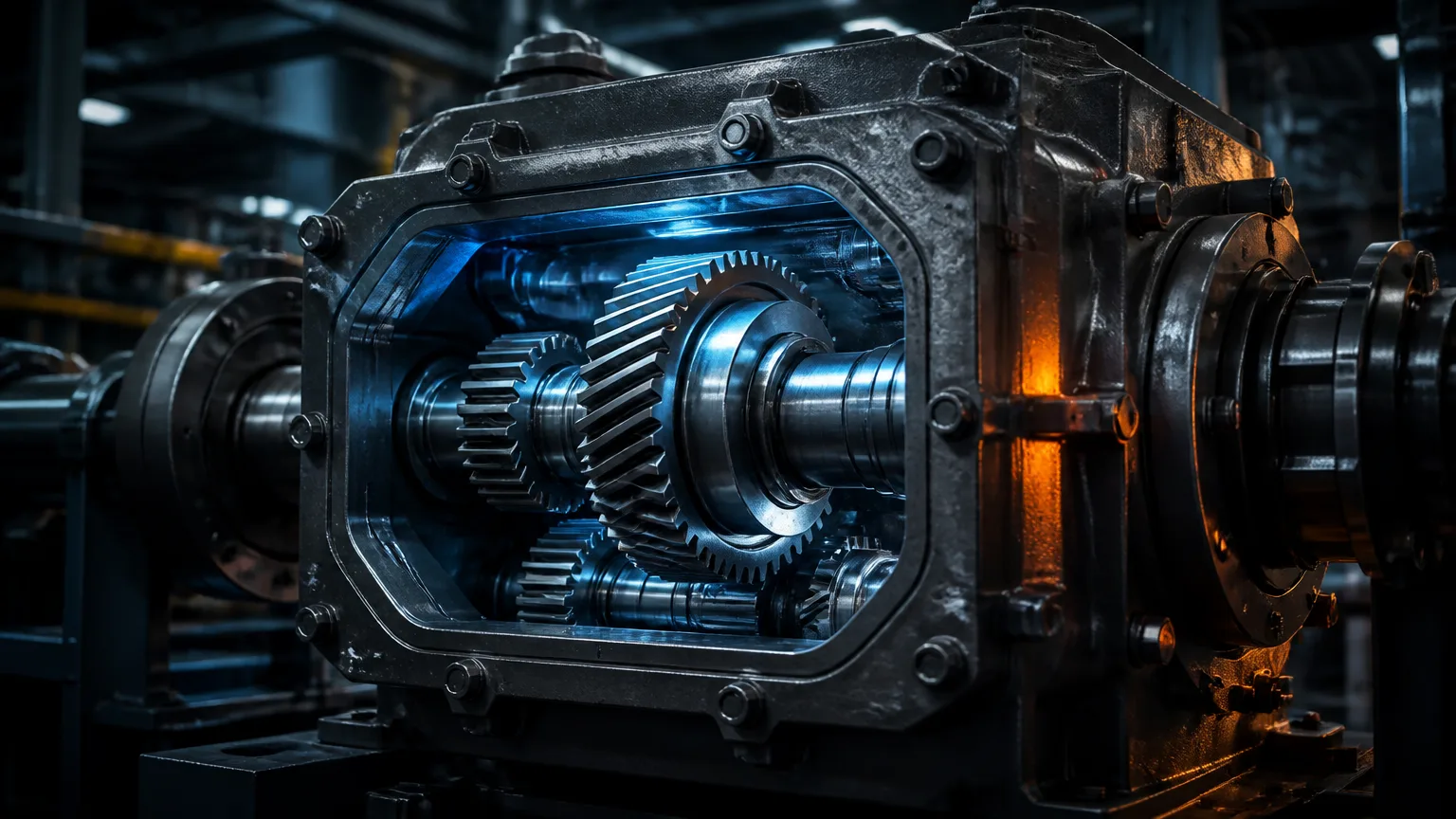
Gearbox efficiency is the share of input power that reaches the output as useful work. In equipment that runs long shifts, even a small efficiency gap can increase energy use and operating costs over time.
Those costs go beyond power lost inside the gearbox. Poor performance can generate excess heat, accelerate wear, and contribute to unplanned downtime. Gearbox condition, application demands, and selection all affect efficiency—and the total cost of ownership.
A suitable gear ratio helps match output speed and torque to the job. Understanding how gear ratio affects speed and torque can help prevent a mismatch that wastes energy or strains equipment. The right approach treats efficiency as both an energy measure and a practical maintenance concern.
Where Gearbox Energy Losses Come From
Even with a suitable gear ratio, some input power is lost before it reaches the driven equipment. Gear teeth and bearings create friction as they move under load. Lubricant also produces drag, especially when it is too viscous or the gearbox runs outside its intended speed range. Some of this lost energy becomes heat, which can raise operating costs and increase wear.
Efficiency varies with gearbox design, size, speed, load, lubrication, and condition. Misalignment can increase friction and uneven loading, while contaminated or degraded lubricant may fail to protect moving surfaces. Running far below or above the gearbox’s intended load or speed range can also add losses. A gearbox selected by torque alone may not suit the actual duty.
Suitable gearing and accurate application specifications help limit avoidable losses without oversizing. Specifying precision gearing for industrial applications can support efficient power transmission when the gearbox is matched to the equipment’s real speed, torque, and operating conditions. Regular checks for heat, noise, leakage, and lubricant condition can help identify emerging problems before they drive up energy use.
Translating Efficiency into Energy and Operating Costs
A gearbox that loses more power converts more of the motor’s input energy into heat instead of useful output. That loss can increase electricity use, while extra heat may add to cooling demands and accelerate lubricant or component wear.
To estimate the direct energy cost of an efficiency gap, multiply the power demand by the difference in losses, then by annual operating hours and the electricity rate. For example, a 100 kW load with a one-percentage-point increase in losses wastes about 1 kW. At 6,000 operating hours and $0.12 per kWh, that represents roughly $720 in additional electricity costs per year. This is an illustration, not a universal savings forecast.
For a useful estimate, use actual motor load, run hours, and utility rates, alongside measured or manufacturer-provided gearbox performance data. Compare losses under similar operating conditions; nameplate values alone may not reflect real production loads.
The electricity calculation captures only measurable energy costs. Excess heat can mean more cooling, while frequent maintenance, reduced throughput, and downtime may add further expense. These effects depend on the equipment and process, so assess them separately using maintenance records and production data. A modest reduction in losses can still accumulate across continuous or multi-shift operation.
How Load, Selection, and Condition Change the Equation
Efficiency depends on more than a gearbox’s rated performance. The unit must suit the load, speed, duty cycle, and conditions it faces. High-torque applications need adequate capacity and service factors, but a larger or heavier gearbox is not automatically more efficient. Correct sizing helps avoid unnecessary losses while protecting components from excessive strain. For more on choosing a high-torque gearbox for industrial service, consider the application’s actual operating demands.
Condition also affects energy use over time. Worn gears, damaged bearings, poor lubrication, or misalignment can increase friction and reduce power transmission. Rising temperature, unusual noise or vibration, lubricant leakage, and changing power demand are reasons to investigate—not definitive proof that the gearbox has failed. Compare readings with operating history and check the equipment before drawing conclusions.
The next step is to determine whether the gearbox is mismatched to the duty or needs attention. An application review may reveal that a different ratio, capacity, or service rating is needed. If the selection is sound, inspection and repair may restore performance; replacement may make more sense when damage is extensive or remaining life is limited. Compare these options against downtime constraints and lifecycle cost. A practical guide to gearbox repair and replacement can help frame that decision.
Practical Steps to Improve Gearbox Efficiency
A focused maintenance routine can reduce avoidable losses and show when a gearbox needs attention. Track operating temperature, vibration, noise, lubricant condition, and load over time. Comparing readings with a baseline can reveal changes before they lead to higher energy use or unplanned downtime.
Follow the manufacturer’s guidance for lubricant type, fill level, inspection intervals, and alignment. Generic adjustments may worsen performance or damage components. For example, incorrect lubricant levels can increase friction and heat, while poor alignment can add load to gears and bearings.
Review gearbox performance against the machine’s actual duty, including speed, torque, load, and operating hours. If energy use rises or performance changes, investigate the cause rather than assuming the gearbox is undersized or worn out. Compare continued operation with repair or replacement, accounting for energy costs, maintenance, and the production impact of downtime.
Treat Gearbox Efficiency as a Lifecycle Cost
Gearbox efficiency affects more than electricity use. Correct application, sound condition, and consistent maintenance help limit avoidable energy losses while supporting reliability and controlling repair and production costs over the equipment’s service life.
Use operating data, maintenance records, and a condition assessment to compare continued maintenance, repair, and replacement. If performance changes or the best option is unclear, review your needs with an industrial gearbox solutions provider.