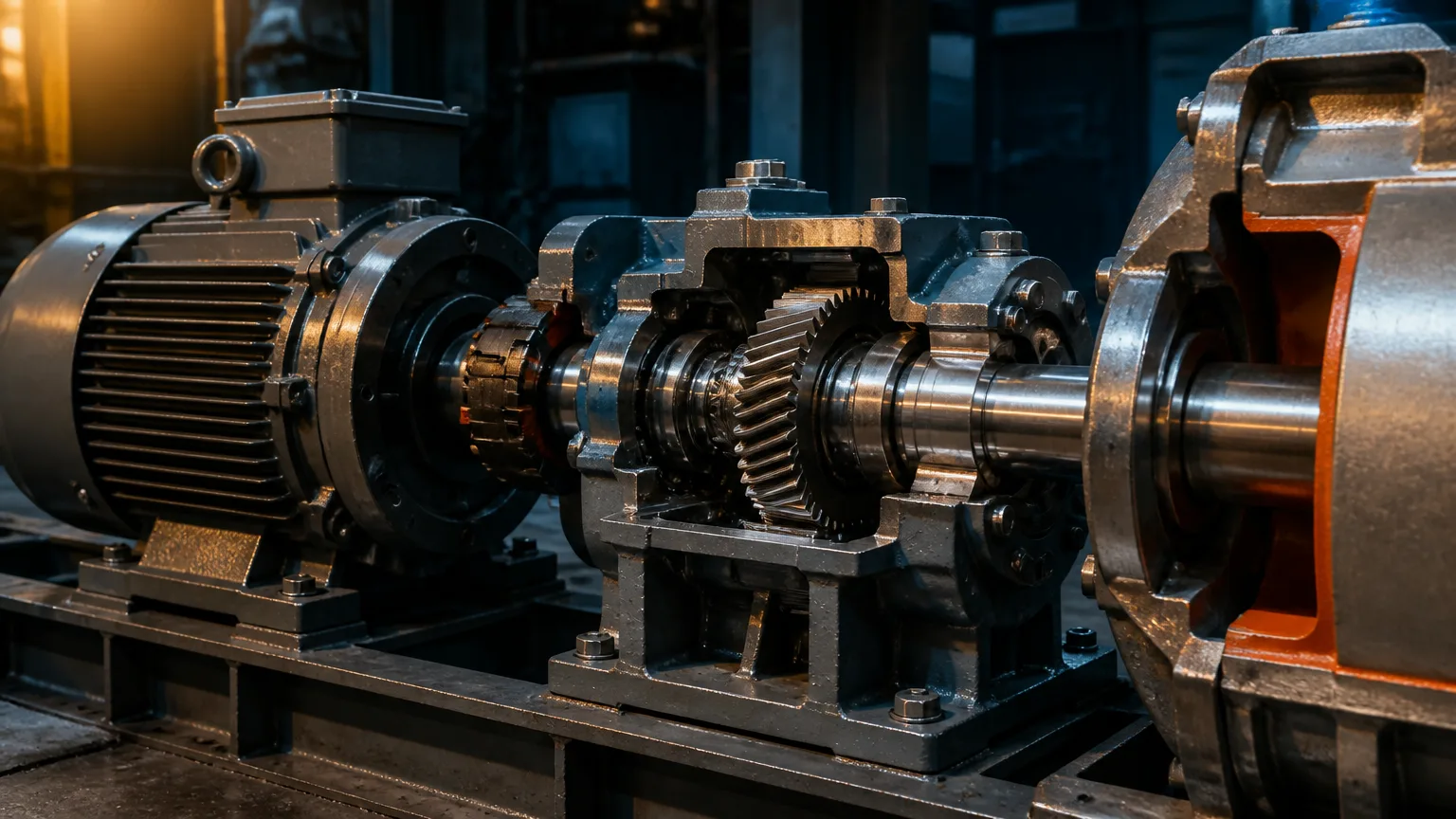
A drive mechanism transfers and controls power from a prime mover to industrial equipment. It typically includes the motor, coupling, gearbox, shafts, bearings, and driven load. Together, these components determine how efficiently torque and speed reach the machine.
When a gearbox shows noise, heat, or vibration, replacement is not always the answer. Correct diagnosis begins by examining how torque, speed, and load requirements interact. The selected electric motor types and connected components must work as one system.
Gearbox reliability affects production output, workplace safety, maintenance costs, and equipment life. This article establishes the fundamentals manufacturers and facility teams need when evaluating repair, refurbishment, or replacement options. Understanding the complete power path helps identify practical solutions before a minor issue becomes a costly failure.
The Core Components of an Industrial Drive System
An industrial drive mechanism begins with a motor or engine, which supplies the power. A coupling transfers that power to the gearbox while accommodating minor misalignment and reducing shock loads. The gearbox changes speed and torque to match the needs of conveyors, mixers, pumps, compressors, and other driven equipment.
Inside the gearbox, gears transmit motion and establish the selected ratio. Shafts carry torque between components, while bearings support rotation and control alignment. Seals retain lubrication and prevent water, dust, and process contaminants from entering. Lubrication reduces friction, removes heat, and protects gear and bearing surfaces from wear.
The output connection transfers controlled power to the equipment. A problem anywhere in this path can create misleading symptoms. For example, coupling misalignment may cause gearbox vibration, while a failing driven machine can produce heat, noise, or unusual power draw that appears to originate in the gearbox. Oil contamination can also result from environmental exposure or seal failure, not only internal gear damage.
Effective drive system selection considers service factor, load type, duty cycle, gear ratio, mounting arrangement, and operating environment. These factors determine component capacity and alignment requirements. Review the complete drive train before authorizing repairs, refurbishment, or replacement.
How Gearboxes Control Speed, Torque, and Direction
An industrial gearbox modifies motor power to suit the driven equipment. A reduction gearbox lowers rotational speed while increasing available torque. A speed increaser does the opposite, raising output speed while reducing torque capacity; specialized speed increaser gearbox repair solutions can help restore this performance.
Gearbox families suit different operating demands. Helical gears provide efficient, quiet power transmission and handle continuous loads well. Bevel gearboxes change the direction of rotation, often through 90 degrees. Worm gearboxes offer compact right-angle drives and high reduction ratios, but typically generate more heat and require closer lubrication control.
Planetary designs deliver high torque density in a compact package. They also distribute loads across multiple gears, supporting demanding equipment and shock loading. Spur gearboxes are straightforward and cost-effective, but usually produce more noise and handle less demanding alignment conditions.
Selecting the correct ratio establishes output speed and available torque. Sizing must also account for torque capacity, radial and axial loads, starting conditions, shock loads, duty cycle, and service factor. These variables determine whether the drive mechanism starts reliably and survives sustained operation.
A replacement gearbox must match the original unit’s performance, ratio, load ratings, shaft arrangement, and mounting specifications. Matching physical dimensions alone can cause misalignment, overload, or premature failure.
Common Drive Mechanism Problems and What They Reveal
Unusual grinding, whining, knocking, or rumbling sounds can indicate damaged gear teeth, bearing wear, inadequate lubrication, or misalignment. However, noise alone does not confirm gearbox failure. Maintenance teams should compare the sound with load, speed, temperature, and operating history before drawing conclusions.
Excessive temperature may result from overload, incorrect oil, poor ventilation, leaking seals, or internal friction. Oil leaks, metal particles, vibration, backlash, and inconsistent output speed are also warning signs. Document each symptom and arrange a structured inspection rather than removing the equipment immediately.
Before taking a drive mechanism out of service, collect operating data, load history, lubrication records, vibration readings, and clear photographs. These records help distinguish repairable wear from conditions that justify replacement. Severe housing damage, obsolete components, repeated failures, or machining costs that exceed replacement value may support replacement.
For repair planning, choosing the right gearbox rebuilder can help determine whether inspection, refurbishment, or a new unit best fits the application. A documented diagnosis reduces unnecessary downtime and supports a more accurate decision.
Repair, Rebuild, or Replace: Choosing the Right Solution
Repair is often appropriate when individual components can be replaced or machined, while the housing and major geometry remain sound. Examples include damaged bearings, seals, shafts, or accessible gear surfaces. A professional inspection should confirm that the drive mechanism can return to service safely.
A gearbox rebuild involves disassembly, cleaning, dimensional inspection, bearing and seal replacement, gear assessment, reassembly, and testing. This approach can restore reliable performance without changing a proven configuration. Gearbox refurb can further reduce cost when serviceable equipment remains structurally sound.
Replacement may be necessary when damage affects the housing, gear geometry, or overall capacity. Evaluate lead time, compatibility, efficiency, controls, mounting, shaft dimensions, lubrication, and production downtime costs. The lowest purchase price may not represent the lowest total cost.
Whichever option you choose, require root-cause analysis. Misalignment, overload, contamination, or incorrect installation can damage a new or rebuilt unit. Refurbishment is especially valuable when it restores dependable equipment while preserving a configuration already proven in the application.
Building a More Reliable Industrial Drive
Reliable drive performance depends on the entire system, not one component. The motor, gearbox, coupling, driven load, lubrication, and installation conditions must work together. Recurring noise, heat, vibration, leakage, or performance loss should be treated as diagnostic signals, not isolated inconveniences.
Condition monitoring helps connect these symptoms to potential causes before failure occurs. Experienced gearbox specialists can compare repair, rebuild, and replacement paths based on equipment condition, application demands, uptime requirements, and long-term value. The operational takeaway is clear: evaluate the complete drive mechanism, identify root causes early, and choose service actions that protect dependable production.