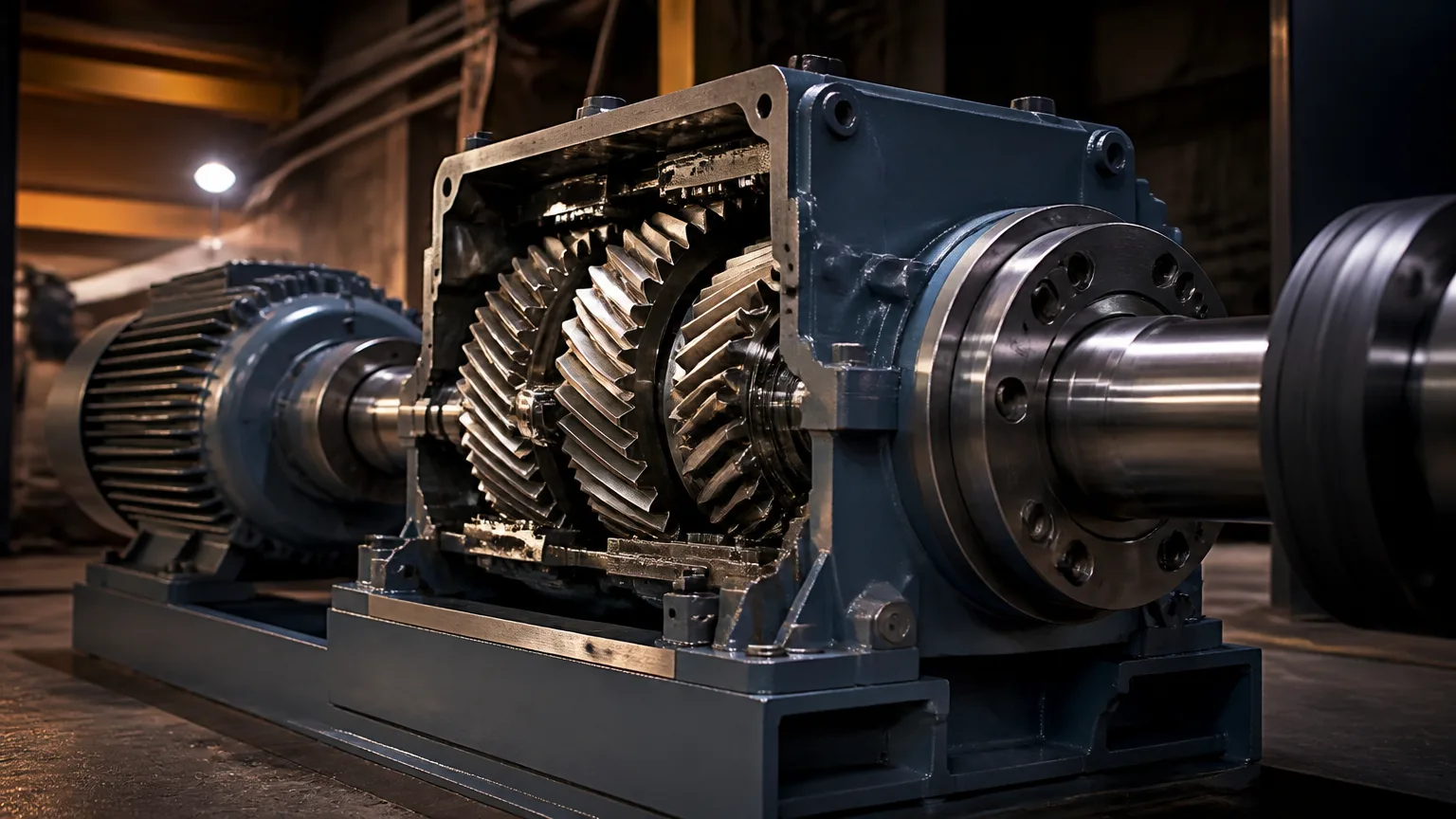
Correct gearbox torque sizing is essential to reliable operation and a good fit for industrial equipment. Whether you’re replacing a gearbox or checking an existing drive, the gearbox must meet the driven machine’s torque demand under real operating conditions—not simply match the motor’s nameplate power. Then use our industrial gearbox selection guide to check mounting, duty and application requirements.
An undersized gearbox can face repeated overloads and premature wear. An oversized unit may add unnecessary cost or create fit issues. This article explains how to estimate the torque requirement and account for operating conditions that affect gearbox selection, alongside other gearbox specification considerations.
Start with the Load and Operating Conditions
Begin by identifying what the gearbox will drive and how that equipment operates. A conveyor carrying a steady, consistent load has different torque needs from a crusher that handles changing material or a mixer that starts with a full vessel.
Distinguish steady loads from variable, shock, reversing, and frequent-start applications. Average torque may not reflect the highest demand: a jam, sudden impact, or loaded restart can create peaks that stress the gearbox. Account for the duty cycle, including operating hours and starts per hour, as repeated starts can increase thermal and mechanical demands.
Consider the operating environment and any changes in the process. High or low ambient temperatures, contamination, changing material, or planned increases in throughput can affect gearbox performance and required capacity. A gearbox selected for today’s load may be inadequate if the machine’s operating conditions change.
Gather reliable data before estimating torque. Check equipment manuals, motor and drive specifications, and process documentation. Where available, use measured load or drive data, especially for applications with variable or shock loading. Avoid relying on rough estimates alone; inaccurate inputs can lead to an unsuitable gearbox.
Calculate Output Torque from Power and Speed
Gearbox torque formula (metric): T (N·m) = 9550 × P (kW) ÷ n (rpm), where P is the power delivered at the shaft being evaluated and n is that shaft’s rotational speed. For example, a 7.5 kW motor feeding a reducer operating at 90% efficiency delivers approximately 6.75 kW at the output. At 150 output rpm, the theoretical available output torque is approximately 430 N·m (9550 × 6.75 ÷ 150). This is not a substitute for checking the actual load torque, startup/peak loads, duty cycle, service factor, thermal limits and manufacturer ratings.
Power, rotational speed, and torque are closely related: at a given power, torque increases as speed decreases. To estimate required output torque, use the driven shaft’s required speed and the motor’s available power. Our industrial torque calculator can help check the calculation. Keep units consistent, because the conversion factor depends on whether you use watts, kilowatts, horsepower, revolutions per minute, or other units.
For example, a gearbox that reduces speed can increase torque at the output. However, some input power is lost through friction and other inefficiencies, so actual output torque will be lower than an ideal calculation predicts. Account for gearbox efficiency when estimating what the unit can deliver.
This calculation provides a starting point, not a final gearbox selection. Compare the estimate with the load’s real torque demand, including any variation or shock loading, then check the manufacturer’s ratings and operating limits. When choosing a high-torque gearbox, verify that its rated output torque suits the application rather than relying on the theoretical figure alone.
Account for Gear Ratio, Efficiency, and Service Factor
Once you have estimated the load’s torque demand, account for how the gearbox changes speed and torque. Ideally, output torque rises in proportion to the reduction ratio: a 10:1 reduction provides about ten times the input torque while reducing output speed by a factor of ten. In practice, friction and other losses lower the available output torque. For a closer estimate, factor in gearbox efficiency and its impact on operating costs. For more detail, see how gear ratio affects speed and torque.
Next, select an appropriate service factor. This factor reflects operating severity and duty, including factors such as operating hours, starts and stops, and shock loading. Use the gearbox manufacturer’s guidance and the application’s actual operating details; a higher factor is not a substitute for understanding the load or correcting an unsuitable design.
Compare the resulting torque requirement with the gearbox’s rated output capacity, using ratings that apply to your operating conditions. Torque rating alone is not enough. Also verify thermal capacity, shaft and bearing limits, mounting arrangement, and allowable input speed. These checks help confirm the gearbox can handle the application as a complete system, not just meet its calculated torque demand.
Verify the Rating and Plan for Repair or Replacement
Compare the application’s calculated torque demand with the gearbox’s rated output torque. Include appropriate overload and service considerations, then confirm with the manufacturer how the rating is defined and which operating conditions it assumes. A rating may not cover every duty cycle or shock load.
If an existing unit repeatedly overheats, makes unusual noise, vibrates, leaks, or fails, investigate its condition and actual operating loads. These symptoms may point to wear, misalignment, lubrication issues, or an application problem—not simply an undersized gearbox. Review gear reducer repair options before deciding whether to repair or replace the unit.
When consulting a gearbox specialist, gather the model and serial details, motor data, output speed, and duty information. Describe failure symptoms and include clear photographs of the gearbox and installation. These details help the specialist assess fit, condition, and replacement needs; see details to include in a gearbox quote request.
Make Torque Sizing an Application-Based Decision
Reliable gearbox sizing starts with defining the load, then combining power and speed calculations with real duty, shock loads, efficiency, and equipment constraints. Compare the resulting torque requirement with manufacturer ratings, and check thermal capacity, shafts, bearings, and operating condition before deciding on a unit.
If any calculation or condition is uncertain, consult a qualified gearbox provider before committing to repair or replacement. Gather operating and unit information so a specialist can validate the selection and advise on the right next step.